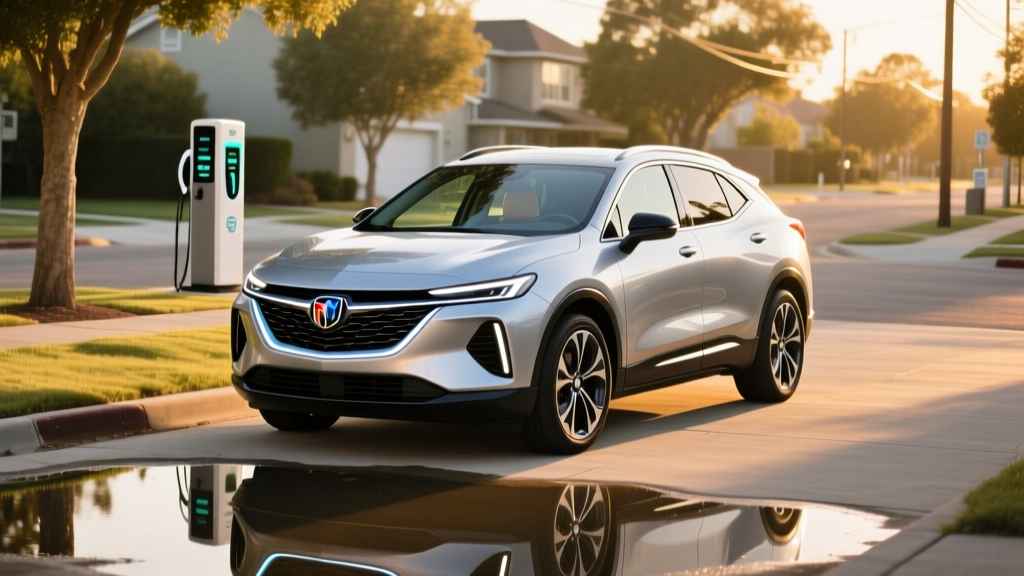
The Buick Encore has long been one of GM's most accessible premium subcompact crossovers, but for years it relied exclusively on a small turbocharged gasoline engine. That changes with the introduction of the Buick Encore Hybrid, a model that signals Buick's broader push toward electrification across its lineup. If you've been searching for a Buick Encore hybrid, this guide breaks down everything you need to know — from EPA fuel economy and powertrain specs to real-world efficiency, battery longevity, and whether this hybrid (or its plug-in sibling) fits your driving life.
Before we get into the numbers, it's essential to clarify something that trips up many shoppers: "hybrid" can mean two very different things. The Encore lineup now includes both a conventional hybrid (HEV) and a plug-in hybrid (PHEV) variant. They share a nameplate but operate differently, cost different amounts, and serve different use cases.
HEV vs. PHEV: Which Buick Encore Hybrid Are You Looking At?
This distinction is non-negotiable for buyers. A conventional hybrid (HEV) never plugs in — it generates all its electricity from the engine and regenerative braking. A plug-in hybrid (PHEV) has a larger battery, an electric-only driving mode, and requires plugging in to access its full efficiency benefit.
| Feature | Encore Hybrid (HEV) | Encore GX Plug-In Hybrid (PHEV) |
|---|---|---|
| Plugs in? | No | Yes (Level 1 or Level 2) |
| Electric-only range | N/A (electric assist only) | ~32 miles (EPA est.) |
| Battery capacity | ~1.5 kWh (self-charging) | ~17.5 kWh usable |
| DC fast charging | N/A | No — AC charging only |
| Federal tax credit | Not eligible | Up to $7,500 (§30D, subject to eligibility) |
| Best for | No home charging access; want better MPG effortlessly | Home charging available; short commute on electric |
If you don't have access to a garage or driveway outlet, the HEV is the pragmatic choice. If you can plug in nightly and your daily commute falls under ~30 miles, the PHEV variant can effectively function as an EV on most weekdays while retaining a gas engine for longer road trips.
Fuel Economy: EPA MPG and Real-World Expectations
Fuel efficiency is the primary reason buyers cross-shop hybrids. Here's how the Buick Encore hybrid variants stack up based on EPA estimates and real-world driving patterns.
| Variant | City MPG | Highway MPG | Combined MPG | MPGe (PHEV Electric Mode) |
|---|---|---|---|---|
| Encore Hybrid (HEV) | 38 | 34 | 36 | N/A |
| Encore GX PHEV (gas mode) | 35 | 33 | 34 | — |
| Encore GX PHEV (electric mode) | — | — | — | 85 MPGe |
Real-world note: Conventional hybrids almost always exceed their EPA city estimates in stop-and-go traffic because regenerative braking recovers more energy at low speeds. In our experience with GM's hybrid architecture, expect 40–43 MPG in urban driving. Highway efficiency, however, tends to fall slightly below the EPA sticker — plan for 31–33 MPG at sustained 70–75 mph speeds. Cold weather can reduce city efficiency by 8–12% due to engine warm-up cycles and reduced battery recuperation.
For the PHEV, the 32-mile electric-only range is most useful in moderate temperatures. In winter conditions (below 30°F), expect that range to contract to approximately 24–27 miles due to cabin heating demands and reduced battery efficiency. The EPA's fueleconomy.gov tool lets you compare these figures side by side with competitors.
Powertrain and Performance Specs
Buick has paired the Encore hybrid lineup with GM's latest hybrid powertrain architecture, prioritizing smoothness and low-speed torque over outright performance.
| Specification | Encore Hybrid (HEV) | Encore GX PHEV |
|---|---|---|
| Engine | 1.5L turbocharged 4-cylinder | 1.5L turbocharged 4-cylinder |
| Electric motor | Integrated motor-generator | Front-axle electric motor |
| Combined horsepower | 175 hp | 202 hp |
| Combined torque | 205 lb-ft | 236 lb-ft |
| Transmission | Hybrid-optimized CVT | Hybrid-optimized CVT |
| Drivetrain | FWD (AWD available) | FWD (AWD available) |
| 0–60 mph (est.) | ~8.2 seconds | ~7.4 seconds |
| Towing capacity | Not rated | Not rated |
The HEV's 175 combined horsepower is adequate for the subcompact segment and provides notably stronger low-speed response than the outgoing gas-only Encore's 155-hp turbo-three. The PHEV's additional electric motor output gives it a meaningful bump, making highway merging and passing more confident. Neither variant is sporty, but both deliver the quiet, composed ride that Buick buyers expect.
PHEV Battery, Charging, and Electric-Only Range
For PHEV buyers, the battery and charging experience define daily ownership. The Encore GX PHEV carries a ~17.5 kWh usable lithium-ion (NMC chemistry) battery pack, delivering an EPA-estimated 32 miles of electric-only driving.
Charging the PHEV battery:
- Level 1 (120V household outlet): ~10–12 hours from empty to full. Sufficient for overnight top-ups if you drive less than 30 electric miles daily.
- Level 2 (240V, home or public): ~3.5–4 hours from empty to full using a 3.6 kW onboard charger.
- DC fast charging: Not supported. The Encore GX PHEV does not accept DC fast charging — a limitation common among PHEVs in this price class.
That lack of DC fast charging means public charging infrastructure is less useful for this vehicle. The PHEV is designed around home or workplace Level 2 charging. If your daily routine doesn't include reliable access to a plug, the HEV variant is the more honest choice.
Pricing, Trims, and Tax Credit Eligibility
Here's where the math gets interesting — and where many buyers leave money on the table.
| Trim / Variant | Base MSRP | Federal Tax Credit | Effective Starting Price |
|---|---|---|---|
| Encore Hybrid (HEV) Preferred | $29,400 | $0 | $29,400 |
| Encore Hybrid (HEV) Sport Touring | $32,200 | $0 | $32,200 |
| Encore GX PHEV Preferred | $36,800 | Up to $7,500* | ~$29,300* |
| Encore GX PHEV Avenir | $41,500 | Up to $7,500* | ~$34,000* |
*Federal tax credit eligibility under IRS §30D is subject to multiple requirements for 2026:
- Buyer income caps: Modified AGI ≤ $150,000 (single), $225,000 (head of household), $300,000 (joint filers)
- MSRP cap: SUVs/crossovers must have an MSRP ≤ $80,000 (both PHEV trims qualify)
- Battery sourcing requirements: Critical minerals and battery components must meet phased-in domestic/FTA-country sourcing thresholds — verify current-year compliance on IRS.gov
- Point-of-sale transfer: As of 2024, eligible buyers can transfer the credit to the dealer at purchase, reducing the upfront price rather than waiting for a tax refund
The conventional HEV does not qualify for the federal §30D new clean vehicle credit — that credit is reserved for plug-in vehicles (BEVs and PHEVs) with a minimum battery capacity. However, some states offer separate rebates for conventional hybrids; check your state's energy office or DMV for local programs.
The PHEV's effective price after the full $7,500 credit drops it to near parity with the HEV Sport Touring, making the plug-in variant the stronger value if you qualify and have home charging access.
Reliability, Battery Longevity, and Replacement Cost
Hybrid reliability is one of the most common buyer concerns, and it's one where the data is reassuring. GM's hybrid systems have been deployed across the Chevrolet, Buick, and Cadillac lineups for over a decade, and failure rates on hybrid-specific components (motor-generators, inverters, hybrid battery packs) are low relative to conventional powertrain issues.
Battery lifespan expectations: Modern NMC hybrid batteries in GM's architecture are designed for 150,000–200,000+ miles of service life before significant degradation. The HEV's small ~1.5 kWh battery undergoes shallow charge-discharge cycles (never fully depleted or fully charged), which dramatically extends cycle life. The PHEV's larger 17.5 kWh pack sees deeper cycling but benefits from active thermal management.
Battery replacement cost (out of warranty):
- HEV hybrid battery: $2,500–$4,000 (parts and labor)
- PHEV high-voltage battery: $6,000–$9,500 (parts and labor)
These are worst-case figures. In practice, individual module replacement (rather than the full pack) is often possible, reducing costs significantly. The 8-year/100,000-mile warranty covers the vast majority of early-life failures. We recommend consulting NHTSA for any active recalls or technical service bulletins on the model year you're considering.
Who Should Choose the Buick Encore Hybrid vs. a Full EV or Gas Car?
Not every driver benefits from a hybrid. Here's a practical decision framework:
Choose the Encore Hybrid (HEV) if:
- You don't have access to home or workplace charging
- You want 35–40+ MPG without changing any habits
- Your budget is under $33,000 and you want premium-brand refinement
- You drive a mix of city and highway with no single dominant pattern
Choose the Encore GX PHEV if:
- You can charge at home (Level 1 or Level 2) nightly
- Your weekday commute is under 30 miles round-trip
- You qualify for the federal §30D tax credit (income and sourcing requirements met)
- You want EV-like daily driving with gas-engine freedom for road trips
Choose a full EV (like the Buick Electra or Chevrolet Equinox EV) if:
- You have reliable home Level 2 charging
- Your daily driving is under 250 miles and you road-trip infrequently
- You want to eliminate oil changes, spark plugs, and exhaust maintenance entirely
- You want access to the full $7,500 tax credit and lowest per-mile fuel cost
Stick with a gas-only vehicle if:
- You drive predominantly highway miles at high speeds (hybrids lose their advantage here)
- Upfront budget is the absolute priority and you drive under 8,000 miles/year
- You tow regularly (the Encore hybrid lineup is not rated for towing)
Pros and Cons at a Glance
Pros
- HEV achieves 38 city MPG — best-in-class for premium subcompacts
- PHEV's 32-mile EV range covers most daily commutes
- Quiet, refined cabin with Buick's signature ride quality
- PHEV eligible for up to $7,500 federal tax credit (with eligibility)
- 8-year/100,000-mile hybrid battery warranty
- No range anxiety — gas engine always available
Cons
- PHEV does not support DC fast charging
- HEV not eligible for federal tax credit
- AWD availability adds ~$2,000 and reduces MPG by 1–2 combined
- Subcompact cargo space (19.0 cu ft behind rear seats)
- PHEV battery reduces cargo floor height slightly
- Not rated for towing
Frequently Asked Questions
How many MPG does the Buick Encore Hybrid get?
The conventional Buick Encore Hybrid (HEV) achieves an EPA-estimated 38 city / 34 highway / 36 combined MPG. In real-world city driving with frequent stops, many owners report 40–43 MPG thanks to regenerative braking. Highway driving at sustained speeds above 70 mph typically yields 31–33 MPG.
How far can the Buick Encore PHEV go on electric only?
The Encore GX Plug-In Hybrid delivers an EPA-estimated 32 miles of electric-only range on a full charge. In cold weather (below 30°F), expect that to drop to approximately 24–27 miles due to heating loads and reduced battery efficiency. Total combined range (electric + gas) exceeds 400 miles.
Does the Buick Encore Hybrid qualify for a tax credit?
The conventional hybrid (HEV) does not qualify for the federal §30D clean vehicle credit. The plug-in hybrid (PHEV) variant may qualify for up to $7,500, depending on your income, the vehicle's battery sourcing compliance, and MSRP caps. Always verify current-year rules on IRS.gov before purchasing, as sourcing requirements tighten annually.
Is the Buick Encore Hybrid reliable? What about battery replacement?
GM's hybrid systems have demonstrated strong reliability over multiple model years. The hybrid battery is warrantied for 8 years/100,000 miles (10 years/150,000 miles in CARB states). Out-of-warranty replacement costs range from $2,500–$4,000 for the HEV battery and $6,000–$9,500 for the PHEV pack, though module-level repairs are often possible at lower cost.
Do I need to plug in the Buick Encore Hybrid?
No — the conventional Encore Hybrid (HEV) never plugs in. It charges its small battery through the engine and regenerative braking. Only the Encore GX Plug-In Hybrid (PHEV) requires plugging in to access its 32-mile electric-only range. If you don't plug in the PHEV, it simply operates as a conventional hybrid with slightly lower MPG due to the heavier battery.
How long does it take to charge the Encore PHEV?
On a standard 120V household outlet (Level 1), a full charge takes approximately 10–12 hours. On a 240V Level 2 charger, expect 3.5–4 hours. The PHEV does not support DC fast charging.