Quick Verdict: The BMW XM Is a PHEV, Not a Conventional Hybrid
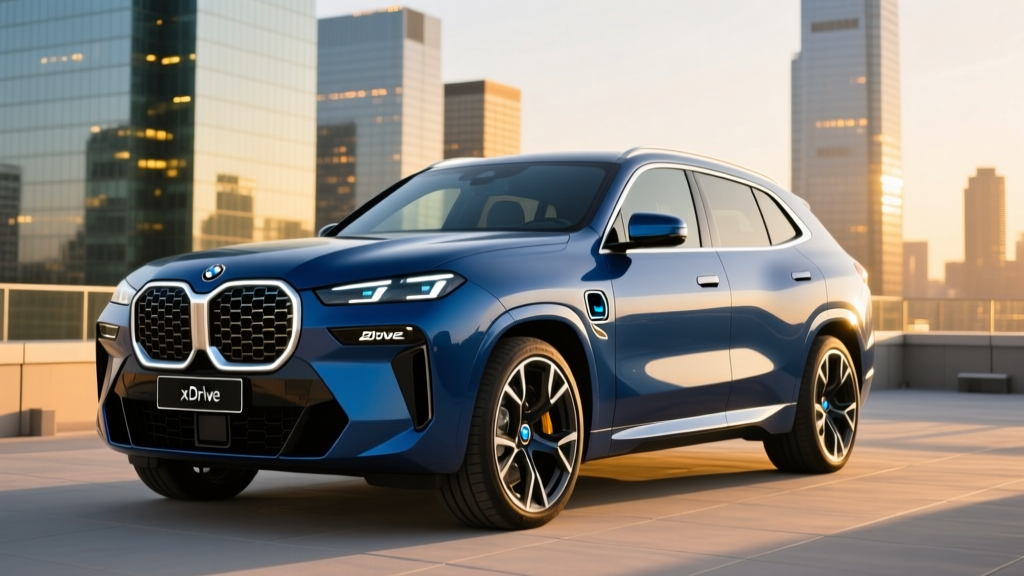
The 2026 BMW XM is not a conventional hybrid (HEV) — it is a plug-in hybrid electric vehicle (PHEV). That distinction matters for buyers cross-shopping this flagship SUV. A conventional hybrid like the Toyota RAV4 Hybrid recharges its small battery entirely through regenerative braking and the gasoline engine; you never plug it in. The BMW XM, by contrast, carries a 25.7 kWh (gross) lithium-ion battery pack that you can recharge from a wall outlet or charging station, enabling roughly 30 miles of pure electric driving before the twin-turbo V8 wakes up.
With 644 horsepower in the base XM and up to 738 hp in the Label Red variant, the XM is BMW M's first standalone model since the legendary M1. It is also one of the most expensive PHEVs on the market, starting near $159,995. This guide breaks down the real-world efficiency, electric-only range, charging logistics, and ownership economics you need to evaluate before spending supercar money on a plug-in hybrid SUV.
HEV vs PHEV: Why the Distinction Matters for the XM
| Attribute | Conventional Hybrid (HEV) | Plug-In Hybrid (PHEV) — BMW XM |
|---|---|---|
| Battery size | 1–2 kWh | 25.7 kWh (gross) |
| Plug-in charging | No — self-charging via regen/engine | Yes — Level 1/Level 2 AC |
| Electric-only range | 0.5–2 miles at low speed | ~30 miles (EPA est.) |
| DC fast charging | N/A | Not available on XM |
| Federal tax credit (§30D) | Not eligible | Eligible (subject to rules) |
| Typical use case | Set-and-forget efficiency | Short EV commutes + gas road trips |
If you do not have access to a Level 2 home charger, much of the XM's PHEV advantage evaporates. You will be driving a heavy twin-turbo V8 SUV on gasoline alone, and its fuel economy drops accordingly. We will quantify that below.
EPA Fuel Economy and Real-World MPG
Because the BMW XM is a PHEV, the EPA reports its efficiency in two ways: MPGe (miles per gallon equivalent) when operating on combined electric and gasoline power, and standard MPG when the battery is depleted and the V8 handles all propulsion.
| Metric | BMW XM (Base / Label Red) |
|---|---|
| Combined MPGe (charge-sustaining + electric) | ~46 MPGe |
| Combined MPG (gas only, battery depleted) | ~14 MPG combined |
| City MPG (gas only) | ~12 MPG |
| Highway MPG (gas only) | ~17 MPG |
| Electric-only range | ~30 miles |
| Total combined range (EV + gas) | ~370 miles |
| Fuel tank capacity | 18.2 gallons (premium required) |
Real-world caveat: The 14 MPG combined figure is what you should expect on longer road trips once the battery is depleted. In city driving with frequent regenerative braking, you may see 15–16 MPG. On sustained 75+ mph highway runs, expect closer to 16–18 MPG. These numbers are low — the XM weighs over 5,900 pounds and pairs a 4.4-liter twin-turbo V8 with an electric motor. If you charge nightly and commute under 30 miles round-trip, you may burn very little gasoline day to day. But this is not a vehicle you buy for fuel savings.
Source: EPA Fuel Economy — BMW XM.
Powertrain: 644 to 738 Horsepower Explained
The BMW XM uses a PHEV powertrain that pairs a 4.4-liter BMW M TwinPower Turbo V8 with an electric motor integrated into the eight-speed M Steptronic transmission.
| Specification | XM (Base) | XM Label Red |
|---|---|---|
| Gasoline engine | 4.4L twin-turbo V8 | 4.4L twin-turbo V8 (revised) |
| Engine output | 483 hp / 479 lb-ft | 577 hp / 553 lb-ft |
| Electric motor output | 194 hp / 207 lb-ft | 194 hp / 207 lb-ft |
| Combined system output | 644 hp / 590 lb-ft | 738 hp / 738 lb-ft |
| 0–60 mph | 4.1 seconds | 3.7 seconds |
| Top speed | 155 mph (168 w/ M Driver's Pkg) | 180 mph |
| Drivetrain | M xDrive AWD | M xDrive AWD |
| Transmission | 8-speed M Steptronic | 8-speed M Steptronic |
| Curb weight | ~5,960 lbs | ~6,050 lbs |
The electric motor fills in torque at low RPM before the turbos spool, giving the XM instant throttle response unusual for a vehicle this size. In Electric mode, the XM drives silently at speeds up to 87 mph — adequate for most suburban and highway merging scenarios. The transition from electric to hybrid mode is well-managed; the V8 fires up with minimal lurch.
Battery, Charging, and Electric-Only Range
The XM's high-voltage battery is a 25.7 kWh gross / approximately 19.2 kWh usable lithium-ion pack (NMC chemistry). BMW limits the usable buffer to protect long-term battery health — a standard practice among PHEV and EV manufacturers.
| Battery & Charging Spec | Value |
|---|---|
| Gross battery capacity | 25.7 kWh |
| Usable battery capacity | ~19.2 kWh |
| Chemistry | NMC (nickel manganese cobalt) |
| EPA electric-only range | ~30 miles |
| Level 1 charging (120V, 12A) | ~1.4 kW — ~14 hours (0–100%) |
| Level 2 charging (240V, 32A) | ~7.4 kW — ~3.25 hours (0–100%) |
| DC fast charging | Not supported |
| Charge connector | J1772 (AC only) |
| Max electric-only speed | 87 mph |
Key ownership insight: The XM cannot DC fast charge. This is typical for PHEVs — the battery is small enough that Level 2 AC charging replenishes it in a few hours, which suits overnight home charging. However, it means you cannot top up quickly on a road trip. Once those ~30 electric miles are used, you are on the V8 until you plug in again at home or at a Level 2 destination charger.
If you install a 240V / 32A Level 2 home charger (a ~$500–$1,200 installation depending on your electrical panel), you will wake up to a full battery every morning. This is the ideal PHEV ownership pattern: short weekday commutes on electricity, gasoline for longer trips.
Pricing, Trims, and Federal Tax Credit Eligibility
The 2026 BMW XM is offered in two trims:
- XM: Starting at approximately $159,995 MSRP (including destination)
- XM Label Red: Starting at approximately $185,995 MSRP
Options, BMW Individual paints, and packages can push the Label Red well past $200,000.
Does the BMW XM Qualify for the Federal EV Tax Credit?
Under IRS §30D rules, PHEVs can qualify for up to $7,500 in federal tax credits — but several conditions apply, and the XM faces a significant hurdle:
- MSRP cap: SUVs must have an MSRP at or below $80,000. The XM starts at ~$159,995 — it exceeds the cap and does not qualify for the §30D new-vehicle credit.
- Buyer income limits: Even if the price were eligible, modified AGI must not exceed $300,000 (joint), $225,000 (head of household), or $150,000 (individual).
- Battery sourcing: Critical mineral and battery component requirements must be met (phased percentages increase yearly through 2030).
- Point-of-sale transfer: Eligible credits can be transferred to the dealer at purchase for an immediate price reduction — but only if the vehicle itself qualifies.
Bottom line: The BMW XM does not qualify for the federal §30D new clean vehicle credit because its MSRP far exceeds the $80,000 SUV cap. Some state-level incentives may still apply depending on your jurisdiction — check your state's energy office or DMV for current programs. Consult a tax professional for personalized guidance. Source: IRS §30D Clean Vehicle Credits.
Battery Warranty, Reliability, and Replacement Costs
BMW provides the following warranty coverage for the XM's high-voltage battery and hybrid components:
- High-voltage battery warranty: 8 years / 80,000 miles (whichever comes first), with a capacity retention threshold typically set at 70% of original capacity.
- Hybrid-specific components: 8 years / 80,000 miles (electric motor, power electronics, onboard charger).
- Basic vehicle warranty: 4 years / 50,000 miles.
- Powertrain warranty: 4 years / 50,000 miles (BMW's standard coverage — shorter than many competitors).
Is the BMW XM Reliable?
The XM is a low-volume, first-generation M performance PHEV, which means long-term reliability data is limited. BMW's PHEV systems in the 7 Series and X5 xDrive50e have proven generally robust, but the XM's higher-output powertrain and bespoke tuning introduce unknowns. BMW's overall brand reliability has been middling in recent Consumer Reports and J.D. Power rankings. For a $160,000+ vehicle, purchasing an extended warranty beyond the factory coverage is worth considering.
Battery Replacement Cost
If the high-voltage battery requires out-of-warranty replacement, expect costs in the range of $12,000–$18,000 including parts and labor, based on comparable BMW PHEV battery pricing. However, PHEV batteries are smaller and generally experience less stress than full-EV packs, and BMW's buffer management is designed to minimize degradation. Most owners should not need a battery replacement within typical ownership periods.
Who Should Buy the BMW XM — and Who Should Look Elsewhere
Pros
- 644–738 hp from a PHEV powertrain with genuine 30-mile EV commute capability
- Exotic, head-turning design with a premium M-performance interior
- Electric-only driving up to 87 mph — usable for real highway merging
- No range anxiety: V8 + 18.2-gallon tank provides ~370-mile total range
- AWD with rear-biased M xDrive torque distribution
Cons
- ~14 MPG gas-only — punishing fuel cost on road trips
- No DC fast charging — electric range is home-charger dependent
- MSRP far exceeds §30D tax-credit cap — no federal incentive
- 5,960+ lb curb weight is felt in corners despite M tuning
- Polarizing exterior design and steep depreciation risk
Hybrid vs PHEV vs EV — Which Fits You?
- Choose the BMW XM (PHEV) if: You want a high-performance luxury SUV that can handle a 20–30 mile daily commute on electricity, you have home Level 2 charging, and you want the option of long gas-powered road trips without planning charging stops.
- Choose a full BEV (e.g., BMW iX M60, Tesla Model X Plaid) if: You want zero tailpipe emissions, lower per-mile energy costs, DC fast charging for road trips, and you drive in a region with robust public charging infrastructure.
- Choose a conventional HEV (e.g., BMW X5 xDrive40 mild-hybrid) if: You cannot charge at home, want simpler ownership with no plug-in logistics, and prioritize moderate efficiency gains over electric-only driving.
Ownership Cost Snapshot
The XM's fuel cost depends entirely on your driving pattern. If you charge nightly and commute 25 miles round-trip, you may use only 1–2 gallons of gasoline per week. At $4.00/gallon premium and $0.15/kWh residential electricity:
- Electric cost per mile (EV mode): ~$0.05–$0.06/mile
- Gas cost per mile (V8 only): ~$0.28–$0.30/mile at 14 MPG
- Blended cost (50/50 EV and gas): ~$0.17/mile
For comparison, a BMW X5 xDrive40i (non-hybrid, ~24 MPG combined) costs roughly $0.17/mile on gasoline alone. The XM's PHEV system only saves money if you actually plug it in regularly. Insurance premiums for the XM are substantial — expect $3,500–$5,000+ annually depending on your profile and location.
Frequently Asked Questions
How many MPG does the BMW XM hybrid SUV get?
The BMW XM achieves approximately 46 MPGe when operating with a charged battery (combined electric and gasoline). Once the battery is depleted, the V8-only fuel economy drops to roughly 14 MPG combined (12 city / 17 highway). Real-world highway driving at 75+ mph may yield 16–18 MPG thanks to the eight-speed transmission's tall overdrive gearing.
How far can the BMW XM go on electric only?
The EPA estimates approximately 30 miles of electric-only range. Real-world results vary: in mild weather with gentle driving, you may see 28–32 miles. In cold weather (below 32°F) or at sustained highway speeds, expect 20–25 miles before the V8 engages.
Does the BMW XM qualify for any tax credit?
No. Under current IRS §30D rules, new SUVs must have an MSRP at or below $80,000 to qualify for the federal clean vehicle credit. The XM starts at ~$159,995, making it ineligible. Some state-level incentives may apply — check your state's energy office for details.
Can the BMW XM charge at a DC fast charger?
No. The XM supports only AC charging via a J1772 connector at up to 7.4 kW (Level 2). A full charge from empty takes approximately 3.25 hours on a 240V Level 2 home charger. There is no DC fast-charge port.
Is the BMW XM reliable, and what does battery replacement cost?
Long-term reliability data is limited given the XM's recent launch. BMW covers the high-voltage battery for 8 years / 80,000 miles with a 70% capacity retention guarantee. Out-of-warranty battery replacement is estimated at $12,000–$18,000, though PHEV batteries typically experience modest degradation with normal use.
Is the BMW XM a conventional hybrid or a plug-in hybrid?
The BMW XM is a plug-in hybrid (PHEV). It has a larger battery than a conventional hybrid and must be plugged in to realize its electric-only range and efficiency benefits. If you never plug it in, it operates as a heavy, thirsty V8 SUV.