2026 BMW X6 xDrive50e: The Luxury PHEV SUV at a Glance
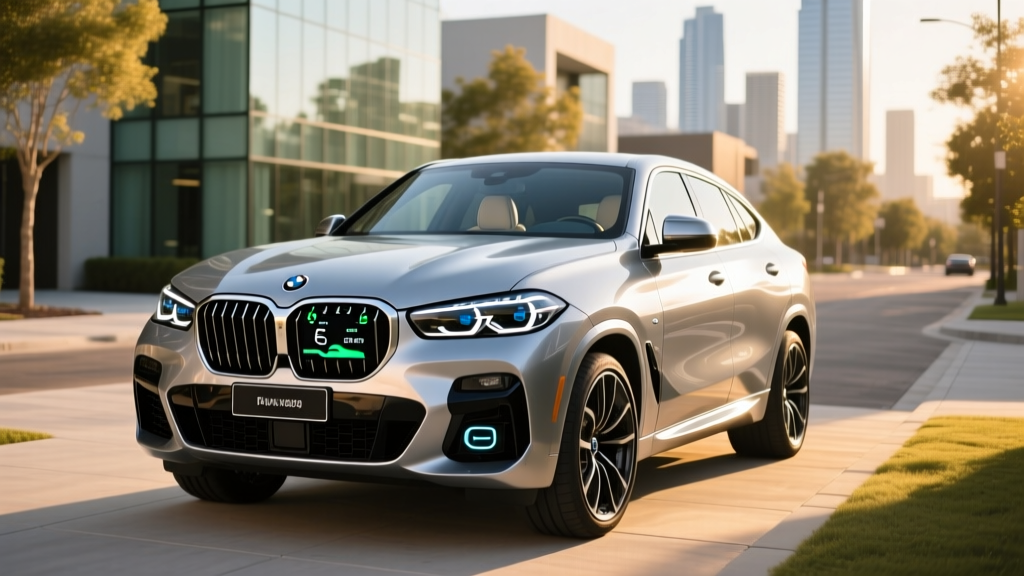
The BMW X6 has always been the sportier, more polarizing sibling of the X5. For 2026, the BMW X6 hybrid — officially badged as the X6 xDrive50e — carries forward as a plug-in hybrid electric vehicle (PHEV), blending a turbocharged inline-six with a potent electric motor for a combined 483 horsepower. It's not a conventional hybrid you simply fill with gas and forget; this is a PHEV that rewards owners who plug in regularly with roughly 31 miles of zero-tailpipe-emission driving before the gasoline engine takes over.
If you're researching the BMW X6 hybrid, you likely want to know the real numbers: How far does it actually go on electricity? What MPG do you get once the battery depletes? Does it qualify for the federal tax credit? And how does it compare to going full EV? This guide breaks down every spec that matters.
| Spec | Value |
|---|---|
| Powertrain | 3.0L turbocharged I-6 + integrated electric motor |
| Combined Output | 483 hp / 516 lb-ft torque |
| 0–60 mph | 4.6 seconds |
| Battery (usable) | ~25.7 kWh (lithium-ion, NMC chemistry) |
| EPA Electric Range | ~31 miles |
| EPA MPG (charge-depleted) | ~22 combined (21 city / 24 highway) |
| MPGe (electric + gas) | ~56 MPGe |
| Level 2 AC Charging | 7.4 kW (0–100% in ~4.25 hours) |
| DC Fast Charging | Not available |
| Total Range (est.) | ~400+ miles |
| Base MSRP | ~$82,600 (incl. destination) |
| Federal §30D Tax Credit | Up to $3,750 (subject to eligibility) |
| Powertrain Warranty | 4 yr / 50,000 mi |
| Hybrid Battery Warranty | 8 yr / 80,000 mi |
HEV vs. PHEV: What the BMW X6 Hybrid Actually Is
Before diving deeper, it's critical to understand what you're buying. The term "BMW X6 hybrid" can be ambiguous, so let's clarify:
| Feature | HEV (e.g., Toyota RAV4 Hybrid) | PHEV (e.g., BMW X6 xDrive50e) |
|---|---|---|
| Plug-in required? | No — charges via regen & engine | Yes — plug in to access electric range |
| Electric-only range | 0–1 mile at low speed | ~31 miles (EPA) |
| Battery size | ~1–2 kWh | ~25.7 kWh usable |
| External charging | Not possible | Level 2 AC (7.4 kW) |
| Tax credit eligible | No | Potentially — up to $3,750 |
| Best for | No home charging; want better MPG | Home/work charging; short EV commutes |
The 2026 BMW X6 xDrive50e is a PHEV. That means it has a substantially larger battery than a conventional hybrid, and to extract its full value, you need to plug it in — ideally at home with a Level 2 (240V) charger. Drive it without ever plugging in, and you're essentially hauling 500+ pounds of battery dead weight, getting around 22 MPG combined. Plug in nightly, and your daily commute might not burn a drop of gasoline.
Electric Range, MPG, and Real-World Efficiency
The EPA rates the 2026 X6 xDrive50e at approximately 31 miles of electric-only range. In real-world use, expect that number to fluctuate:
- Ideal conditions (mild weather, city driving, gentle acceleration): 29–33 miles
- Highway at 70+ mph: 22–26 miles (aerodynamic drag drains the battery faster)
- Cold weather (below 32°F): 20–24 miles (lithium-ion chemistry loses efficiency in the cold; cabin heating draws significant power)
Once the battery depletes, the turbocharged 3.0-liter inline-six takes over, and the X6 operates as a conventional hybrid. EPA ratings put charge-sustaining fuel economy at approximately:
| Driving Condition | MPG |
|---|---|
| City | ~21 MPG |
| Highway | ~24 MPG |
| Combined | ~22 MPG |
That 22 MPG combined figure won't impress compared to a Toyota Highlander Hybrid's 35 MPG combined, but context matters. The X6 is a 5,300-pound luxury performance SUV producing 483 hp. Against rivals like the Porsche Cayenne E-Hybrid or Mercedes-Benz GLE 450e, it's competitive. And for owners who plug in daily and commute under 30 miles, the gasoline engine may not run for weeks at a time.
Real-World MPG vs. EPA: What Owners Report
PHEVs are notoriously difficult to assign a single MPG number because efficiency depends entirely on charging behavior. Owners who charge daily and drive 25–30 miles report effectively using zero gasoline on weekdays, filling up only on longer weekend trips. Owners who never plug in consistently report 20–23 MPG in mixed driving. The EPA's 56 MPGe rating assumes regular charging and a blend of electric and gasoline driving — treat it as a best-case benchmark, not a guarantee.
Powertrain and Performance
The xDrive50e powertrain pairs BMW's B58 3.0-liter turbocharged inline-six (widely regarded as one of the best engines in the industry) with an electric motor integrated into the ZF 8-speed automatic transmission housing. Combined output:
- Engine alone: ~312 hp
- Electric motor: ~184 hp
- System combined: 483 hp / 516 lb-ft
- 0–60 mph: 4.6 seconds
BMW's xDrive all-wheel system distributes torque to all four wheels, and the electric motor provides instant torque fill at low RPMs — eliminating the turbo lag that traditional inline-sixes exhibit. The result is a luxury SUV that launches with the urgency of a sports sedan while returning to comfortable, quiet cruising once you lift off the accelerator.
Driving modes include Electric (EV-only up to ~84 mph), Hybrid (automatic blending), and Sport (maximum combined output). The X6 also features adaptive regenerative braking that adjusts regen intensity based on traffic and navigation data — a feature that works well in practice and reduces the need for friction braking in daily driving.
Charging: What You Need to Know
The X6 xDrive50e charges via a J1772 connector (standard for non-Tesla PHEVs in the US) at up to 7.4 kW on Level 2 AC power. There is no DC fast charging capability — this is typical for PHEVs, whose smaller batteries don't justify the added cost and weight of DC hardware.
| Charging Level | Power | 0–100% Time | Practical Use |
|---|---|---|---|
| Level 1 (120V household) | ~1.4 kW | ~18+ hours | Emergency / trickle only |
| Level 2 (240V, 32A) | 7.4 kW | ~4.25 hours | Home / workplace charging |
| DC Fast Charge | N/A | N/A | Not supported |
A full Level 2 charge in roughly 4.25 hours means you can easily replenish the battery overnight or during a workday. Most PHEV owners install a Level 2 home charger (expect $500–$1,500 for equipment plus $800–$2,500 for electrician installation, depending on panel capacity and run length). If your daily drive is under 30 miles, a single overnight charge covers your commute entirely on electricity.
Pricing, Trims, and Tax Credit Eligibility
The 2026 BMW X6 xDrive50e starts at approximately $82,600 including destination. BMW typically offers the xDrive50e in a single well-equipped trim, with options packages (Driving Assistance Professional, Executive Package, Bowers & Wilkins audio) adding $5,000–$15,000 to the sticker.
Federal §30D Tax Credit
The X6 xDrive50e may qualify for a federal plug-in hybrid tax credit of up to $3,750 under IRS §30D rules. This is not the full $7,500 available to some BEVs — PHEVs with smaller batteries receive a prorated credit based on battery capacity. Key eligibility requirements for 2026:
- Income caps: Modified AGI ≤ $150,000 (single), $225,000 (head of household), $300,000 (joint)
- MSRP cap: SUVs/vans/pickups ≤ $80,000 — the X6's base price hovers near this threshold; loaded examples may exceed it
- Battery sourcing: Critical mineral and battery component requirements must be met (BMW's supply chain compliance varies by production batch)
- Point-of-sale transfer: Eligible buyers can apply the credit as a down payment reduction at the dealer, rather than waiting for a tax refund
Always verify current eligibility on IRS.gov's clean vehicle credits page and confirm with your BMW dealer before purchase. Tax rules change, and eligibility is not guaranteed.
Battery Warranty, Reliability, and Replacement Costs
The high-voltage battery in the X6 xDrive50e is covered by BMW's hybrid components warranty: 8 years or 80,000 miles, whichever comes first. This warranty guarantees the battery will retain a minimum percentage of its original capacity (typically 70% state-of-health) — if degradation exceeds that threshold within the warranty period, BMW will repair or replace the pack.
BMW PHEV Battery Warranty Summary
- Duration: 8 years / 80,000 miles
- Capacity retention guarantee: ~70% SoH minimum
- Coverage: Cell replacement, module repair, or full pack replacement
- Out-of-warranty replacement cost (estimated): $8,000–$14,000
BMW's B58 inline-six engine has an excellent reliability track record in the broader BMW lineup, and the ZF 8-speed transmission is one of the most proven automatics in the industry. The PHEV-specific components (electric motor, power electronics, battery) add complexity, but BMW has been iterating on this architecture since the 40e generation. According to NHTSA data, there are no widespread battery failure campaigns specific to the current X6 PHEV.
If you plan to own the X6 beyond the 8-year warranty window, budget conservatively for eventual battery service. Partial module replacement (replacing degraded cell groups rather than the entire pack) is sometimes possible and less expensive, but full-pack replacement at a BMW dealer could run $8,000–$14,000 depending on parts availability and labor.
BMW X6 Hybrid vs. Full EV vs. Gas: Which Fits You?
Choosing between the X6 xDrive50e, a fully electric SUV (like the BMW iX), or a gasoline X6 xDrive40i depends on your driving patterns, charging access, and priorities:
Choose the BMW X6 xDrive50e (PHEV) if:
- You have home or workplace Level 2 charging
- Your daily commute is under ~30 miles (you'll rarely burn gas on weekdays)
- You take frequent long road trips and don't want to plan around DC charging stations
- You want meaningful fuel savings without full EV commitment
Choose a full EV (BMW iX or similar) if:
- You have reliable home charging and want zero gasoline expenses
- Your daily driving is predictable and within the EV's range (~300+ miles)
- You want the full $7,500 federal tax credit (if eligible)
- You prioritize minimal maintenance (no oil changes, fewer moving parts)
Choose the gasoline X6 xDrive40i if:
- You have no access to home or workplace charging
- Your driving is predominantly highway/long-distance
- You want a lower purchase price (~$73,000 base) and don't mind 22–24 MPG
Pros and Cons of the 2026 BMW X6 xDrive50e
Pros
- 483 hp delivers genuine sports-sedan acceleration in an SUV body
- ~31 miles of EV range covers most daily commutes
- B58 inline-six is refined, proven, and powerful
- No range anxiety — gas engine provides 400+ total miles
- Luxury interior with BMW's latest iDrive infotainment
- Adaptive regen braking works intuitively
Cons
- Base price near $83K; options push past $95K
- 22 MPG once the battery depletes — mediocre for a hybrid
- No DC fast charging
- Tax credit capped at ~$3,750, not the full $7,500
- MSRP cap for §30D eligibility ($80K SUV limit) may disqualify optioned-up examples
- Coupe-like roofline compromises rear headroom and cargo vs. X5
Frequently Asked Questions
How many MPG does the BMW X6 hybrid get?
The 2026 BMW X6 xDrive50e achieves approximately 22 MPG combined (21 city / 24 highway) once the battery is depleted. When factoring in electric driving, the EPA rates it at ~56 MPGe. Real-world MPG depends heavily on charging frequency — plug in daily and you may use almost no gasoline for short commutes.
How far can the BMW X6 PHEV go on electric only?
The EPA rates the X6 xDrive50e at approximately 31 miles of electric-only range. Real-world results range from about 20 miles in freezing weather to 33 miles in mild conditions with gentle driving. The electric motor can propel the X6 up to ~84 mph before the gasoline engine must engage.
Does the BMW X6 hybrid qualify for a tax credit?
The X6 xDrive50e may qualify for a federal §30D plug-in hybrid tax credit of up to $3,750 — not the full $7,500 available to some BEVs. Eligibility depends on your income, the vehicle's MSRP (capped at $80,000 for SUVs), and battery component/critical-mineral sourcing rules. Verify on IRS.gov before purchasing.
Is the BMW X6 hybrid reliable, and what does battery replacement cost?
The B58 engine and ZF transmission are among the most reliable in BMW's lineup. The PHEV battery is warrantied for 8 years / 80,000 miles with a ~70% capacity retention guarantee. Out-of-warranty battery replacement is estimated at $8,000–$14,000. Long-term PHEV-specific reliability data is still accumulating, but early indicators are positive.
Do I need to plug in the BMW X6 xDrive50e?
You don't have to — the X6 will operate as a conventional hybrid using the gasoline engine and regenerative braking. However, you'll miss the entire value proposition of the PHEV. Without plugging in, you're getting ~22 MPG in a $83,000 vehicle. Plug in nightly and you may go weeks without visiting a gas station.
Can the BMW X6 hybrid DC fast charge?
No. The X6 xDrive50e supports only Level 2 AC charging at up to 7.4 kW. This is standard for PHEVs — the ~25.7 kWh battery is small enough that Level 2 charging fully replenishes it in about 4.25 hours, making DC fast charging unnecessary for most owners.