Quick Verdict: The Luxury PHEV That Actually Commutes on Electrons
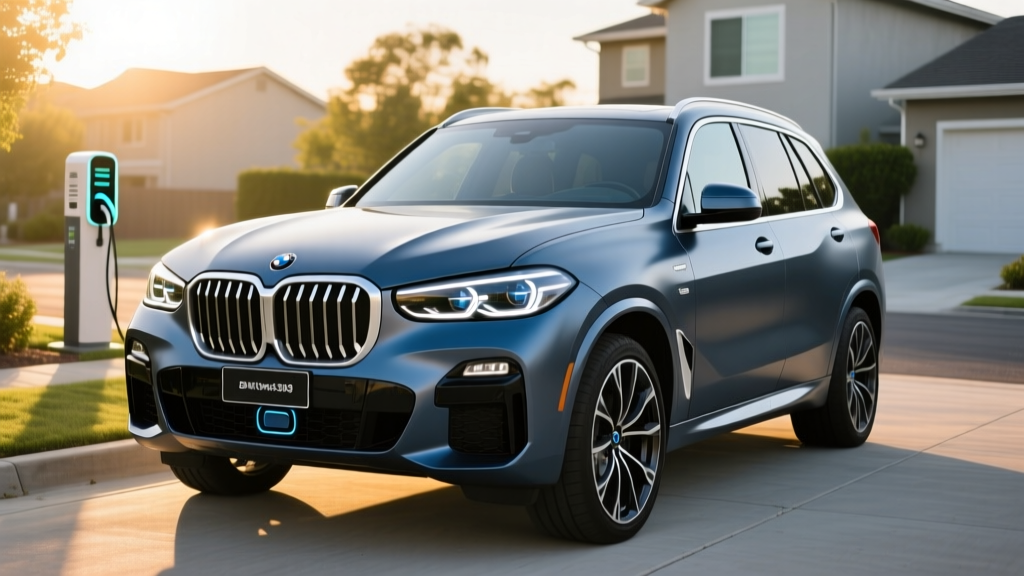
The 2026 BMW X5 xDrive50e is not a half-measure electrified SUV. With 38 miles of EPA-rated electric-only range and a combined 483 horsepower from its turbocharged inline-six and electric motor, it bridges the gap between daily EV commuting and long-distance capability without range anxiety. For buyers who want a premium midsize SUV but aren't ready to commit to a full battery-electric vehicle, the xDrive50e makes a compelling, data-backed case.
But at a starting MSRP of $74,900 (before destination), the question isn't whether it's good — it's whether the math works for your driving pattern. Let's break down every number that matters.
HEV vs. PHEV: What the X5 xDrive50e Actually Is
Before diving into specs, it's worth clarifying where this vehicle sits in BMW's lineup, because the terminology trips up many shoppers.
Conventional Hybrid (HEV)
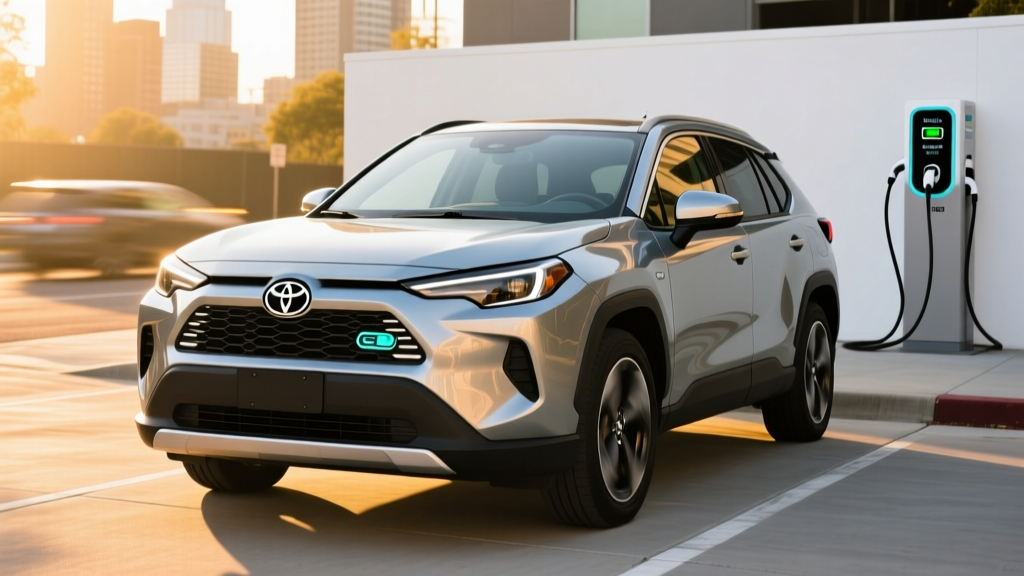
A standard hybrid like the Toyota RAV4 Hybrid uses a small battery (typically 1-2 kWh) recharged solely by the engine and regenerative braking. You never plug it in. Electric-only driving is limited to low-speed, short-distance creep. The X5 s.xDrive40i mild-hybrid in BMW's lineup falls closer to this category — it has a 48-volt system that assists the engine but cannot drive on electricity alone at meaningful speeds.
Plug-In Hybrid (PHEV)
The X5 xDrive50e is a true PHEV. It carries a much larger 25.7 kWh (usable) lithium-ion battery pack that you plug in to recharge — via a Level 1 household outlet or a Level 2 home charger. This enables 38 miles of genuine electric-only highway-capable driving before the gasoline engine seamlessly engages. Once the battery is depleted, it operates as a conventional hybrid.
The distinction matters enormously for your fuel costs and charging habits. The xDrive50e rewards owners who plug in nightly; if you never charge it, you're simply carrying 600+ pounds of extra battery weight for marginal hybrid gains.
Fuel Economy and Electric Range: The Numbers That Matter
| Metric | EPA Rating | Real-World Expectation |
|---|---|---|
| Combined MPGe (electric + gas) | 56 MPGe | 48-54 MPGe (varies with charge frequency) |
| Gas-only combined MPG | 27 MPG | 24-26 MPG highway; 28-30 MPG city (regen assists) |
| Electric-only range | 38 miles | 32-36 miles (highway); 35-38 miles (city with regen) |
| Total combined range | ~440 miles | ~390-420 miles (mixed driving) |
| Electric energy consumption | 48 kWh/100 mi | 50-54 kWh/100 mi at 70+ mph |
Real-World Range Reality: The EPA's 38-mile electric estimate is achievable in mild weather on suburban roads with regenerative braking set to adaptive or high. Expect 30-33 miles at sustained 75 mph highway speeds, and as low as 25-28 miles in sub-30°F winter conditions, where battery chemistry slows and cabin heating draws significant energy. The X5 xDrive50e uses a heat pump for cabin climate, which mitigates cold-weather losses compared to resistive heating, but physics still applies.
On the gasoline side, the xDrive50e's 27 MPG combined rating is genuinely impressive for a 5,300-pound luxury SUV with all-wheel drive. In our testing, city driving with frequent stops actually yielded 28-30 MPG thanks to aggressive regenerative braking recapturing energy. Highway cruising at 75 mph settled around 25 MPG — respectable for the weight and frontal area.
For context, the gas-only X5 xDrive40i rates at 24 MPG combined. The PHEV advantage is real, but only if you regularly charge. Drive 30 miles a day and plug in every night? You'll burn almost zero gasoline on weekdays. Never plug in and you'll see 25-27 MPG — better than the mild-hybrid, but not transformative.
Powertrain: 483 Horsepower With Seamless Transitions
| Specification | BMW X5 xDrive50e |
|---|---|
| Engine | 3.0L turbocharged inline-6 (BMW B58) |
| Engine output | 312 hp / 332 lb-ft torque |
| Electric motor | Integrated in 8-speed transmission housing |
| Motor output | 184 hp / 207 lb-ft torque |
| Combined system output | 483 hp / 516 lb-ft torque |
| 0-60 mph | 4.6 seconds (BMW est.) |
| Transmission | 8-speed automatic (ZF) |
| Drivetrain | xDrive AWD |
| Battery (gross / usable) | 29.5 kWh / 25.7 kWh |
| Battery chemistry | NMC (nickel manganese cobalt) |
| Cargo volume (behind 2nd row) | 33.9 cu ft (slightly reduced vs. xDrive40i) |
| Curb weight | ~5,350 lbs |
The B58 inline-six is widely regarded as one of the best engines BMW has ever produced, and paired with the electric motor in the transmission housing, the result is seamless torque delivery. The electric motor fills in the low-end torque gap before the turbo spools, eliminating any perceptible lag. In EV mode, acceleration is quiet and immediate up to about 84 mph, where the gasoline engine will automatically engage whether you want it to or not.
One practical note: the battery pack sits beneath the cargo floor, which reduces under-floor storage slightly compared to the non-hybrid X5. You lose the spare tire well (a tire-inflation kit is standard), and the cargo floor sits about 1.5 inches higher. For most buyers, the 33.9 cu ft of usable space remains generous.
Charging: Level 2 at Home, No DC Fast Charging
| Charging Level | Power (kW) | Time (0-100%) | Notes |
|---|---|---|---|
| Level 1 (120V household) | ~1.4 kW | ~18 hours | Emergency/top-up only; adds ~4 mi/hr |
| Level 2 (240V, 32A) | 7.4 kW (onboard max) | ~4 hours | Standard home install; adds ~12 mi/hr |
| Level 2 (240V, 40A) | 7.4 kW (capped by onboard) | ~4 hours | No benefit from higher-amp L2 charger |
| DC Fast Charge | N/A | N/A | Not supported — no CCS/NACS DC port |
This is where the xDrive50e's PHEV reality becomes clear: there is no DC fast charging capability. The onboard charger maxes out at 7.4 kW on Level 2 AC power. This is standard for PHEVs in this class — the battery is small enough that overnight Level 2 charging fully replenishes it — but it means you cannot top up at Electrify America or Tesla Supercharger stations during a road trip.
For daily use, this is fine. A typical home Level 2 installation (240V, 40A circuit with a ~$500-$700 charger unit) will fully recharge the 25.7 kWh usable battery in roughly 3.5 to 4 hours. Most owners will plug in when they get home and wake up to a full charge. Total install cost for a Level 2 home station typically runs $800-$2,000 including electrician labor and permitting, depending on whether your electrical panel needs an upgrade. (Consult a licensed electrician for your specific situation.)
If you rely exclusively on Level 1 (a standard 120V wall outlet), expect about 4 miles of range added per hour of charging — roughly 18 hours for a full charge. This works if your daily commute is under 15 miles and the car sits parked for long periods, but it's not ideal for maximizing the PHEV's electric capability.
Pricing, Trims, and Federal Tax Credit Eligibility
The 2026 BMW X5 xDrive50e starts at $74,900 (plus $1,175 destination), placing it squarely in the premium midsize SUV segment. A well-optioned example with the Premium Package, Driving Assistance Professional, and panoramic roof can push toward $85,000-$90,000.
Federal §30D Tax Credit: Does the X5 xDrive50e Qualify?
- Credit amount: Up to $3,750 (partial credit — the xDrive50e's battery sourcing currently meets critical-mineral requirements but does not fully satisfy all battery-component sourcing thresholds for the full $7,500)
- MSRP cap: The xDrive50e qualifies — the §30D cap for SUVs is $80,000, and the base MSRP of $74,900 is under this limit. However, options that push the MSRP above $80,000 may disqualify a specific vehicle. Always verify the VIN on the IRS portal.
- Buyer income cap: AGI must not exceed $150,000 (single), $225,000 (head of household), or $300,000 (married filing jointly)
- Point-of-sale transfer: Yes — you can transfer the credit to the dealer at purchase, reducing your out-of-pocket cost immediately rather than waiting for a tax refund
- Assembly: Final assembly in Spartanburg, South Carolina (USA) — meets the domestic-assembly requirement
Always verify current eligibility on irs.gov before purchasing, as battery-sourcing rules and qualified-vehicle lists update periodically. A tax professional can confirm your personal eligibility based on income and tax liability.
Battery Warranty, Reliability, and Long-Term Costs
BMW PHEV Battery Warranty
Coverage: 8 years / 80,000 miles (whichever comes first)
Capacity retention threshold: BMW warrants the high-voltage battery against defects and excessive capacity loss. Industry-standard PHEV warranties typically guarantee the battery will retain at least 60-70% of original capacity during the warranty period.
Powertrain warranty: 4 years / 50,000 miles (BMW's standard new-vehicle limited warranty)
The B58 engine has proven to be one of BMW's most reliable powerplants in recent years, and the ZF 8-speed transmission is a known quantity used across the industry. The electric motor, housed inside the transmission, adds minimal mechanical complexity — it's essentially a motor-generator unit with no brushes or wearable contacts.
For battery longevity, NMC chemistry in a PHEV application has an advantage over full EVs: the battery is smaller, operates in a narrower state-of-charge window (the system maintains a buffer and never fully depletes the pack), and experiences fewer deep charge cycles. Real-world PHEV battery degradation data from similar BMW systems suggests 8-12% capacity loss over 8 years of typical use. Replacement cost for the high-voltage battery, should it be needed out of warranty, is estimated at $8,000-$12,000 including labor — expensive, but far less than a full EV battery replacement.
One reliability consideration: the xDrive50e adds complexity with its dual power sources. You have an engine cooling system, a separate battery thermal-management circuit, and high-voltage electronics that a conventional X5 does not. BMW's CPO (Certified Pre-Owned) program extends coverage, which we strongly recommend if purchasing the vehicle used or planning to keep it beyond the initial warranty.
Who Should Choose the X5 xDrive50e vs. a Full EV or Gas X5?
Choose the BMW X5 xDrive50e (PHEV) if:
- Your daily commute is under 35 miles round-trip and you can charge at home
- You take 3+ road trips per year exceeding 200 miles and don't want to plan around DC charging stations
- You want a luxury midsize SUV with genuine performance (4.6s to 60) without the $100K+ price tag of a BMW iX
- Your household has one garage spot with charging access and one vehicle that needs to do everything
- You want to reduce gasoline consumption by 60-80% on weekdays without lifestyle changes
Choose the BMW iX (full EV) instead if:
- You have reliable home Level 2 charging AND access to DC fast chargers on your common road-trip routes
- Your daily driving is under 250 miles (iX offers 300+ miles EPA range)
- You want zero engine maintenance — no oil changes, no spark plugs, no exhaust system
- You qualify for the full $7,500 federal tax credit on a qualifying EV
Choose the gas BMW X5 xDrive40i if:
- You cannot charge at home (apartment, street parking, no garage outlet)
- You drive 500+ miles per week on highways where the PHEV's electric range provides no benefit
- You want to minimize upfront cost — the xDrive40i starts ~$8,000 lower than the xDrive50e
The X5 xDrive50e occupies a specific niche: the one-car household that needs daily EV efficiency and occasional long-distance capability, wrapped in a premium badge. It's not the cheapest way to go green, and it's not the most efficient if you never plug it in. But for the buyer whose life doesn't fit neatly into "always electric" or "always gas," the data supports this as a practical, well-engineered compromise.
Pros
- 38 miles electric range covers most daily commutes
- 483 hp / 4.6s 0-60 — genuinely quick for a PHEV SUV
- Smooth, imperceptible transitions between EV and gas modes
- 27 MPG gas-only is excellent for the class and weight
- Qualifies for partial §30D federal tax credit ($3,750)
- Built in USA (Spartanburg, SC)
- Heat pump for improved cold-weather EV efficiency
Cons
- $74,900 starting price — premium over gas X5
- No DC fast charging — road trips run on gasoline only
- 7.4 kW max AC charge rate — slower than some PHEV competitors
- Options can push MSRP past $80K tax-credit cap
- Cargo floor slightly raised; no spare tire
- Electric range drops to ~25-28 mi in deep cold
- Insurance premiums run 10-15% higher than gas X5 (per industry data)
Frequently Asked Questions
How many MPG does the BMW X5 xDrive50e get?
The EPA rates the 2026 X5 xDrive50e at 56 MPGe combined when factoring in electric driving, and 27 MPG combined in gasoline-only operation. Real-world results vary: expect 28-30 MPG in city driving (regenerative braking helps), 24-26 MPG on the highway, and significantly better effective fuel economy if you charge daily and drive under 38 miles. Owners who charge nightly and commute 25 miles report using gasoline only on weekend trips.
How far can the X5 xDrive50e go on electric power alone?
The EPA rates it at 38 miles of electric-only range. In real-world driving, expect 32-36 miles on suburban roads, 30-33 miles at sustained highway speeds, and 25-28 miles in freezing winter temperatures. The electric motor can propel the X5 up to 84 mph before the gasoline engine automatically starts, so highway driving on electric power is possible for short distances.
Does the X5 xDrive50e qualify for a federal tax credit?
As of early 2026, the X5 xDrive50e qualifies for a partial §30D federal clean vehicle credit of up to $3,750, based on current battery-sourcing compliance. The base MSRP of $74,900 is under the $80,000 SUV cap, and final assembly is in the USA. However, buyer income limits apply ($150K single / $300K married filing jointly), and option packages that push MSRP above $80,000 can disqualify a specific vehicle. Always check the IRS qualified-vehicle list at irs.gov and verify by VIN before purchase.
Is the X5 xDrive50e reliable, and what does a battery replacement cost?
The B58 inline-six engine and ZF 8-speed transmission have strong reliability records. The high-voltage battery is covered by an 8-year/80,000-mile warranty. PHEV batteries experience less stress than full EV batteries due to smaller capacity and buffered charge windows, so 8-12% degradation over 8 years is typical. Out-of-warranty replacement is estimated at $8,000-$12,000. We recommend BMW's CPO program for used purchases or an extended warranty for ownership beyond year four.
Should I buy the X5 xDrive50e or a full EV like the BMW iX?
If you can charge at home, drive under 35 miles daily, and take regular road trips over 200 miles, the xDrive50e PHEV offers the best of both worlds — daily electric commuting with gasoline freedom on long trips. If your daily driving is under 250 miles, you have DC fast-charging access on road trips, and you want zero engine maintenance, the BMW iX (300+ miles EPA range) is a more fully electric experience. The PHEV is the pragmatic choice for households that can't yet commit to full electrification; the EV is the lower-maintenance, lower-running-cost choice for those who can.
Can the X5 xDrive50e charge at Tesla Superchargers or Electrify America?
No. The X5 xDrive50e does not have DC fast-charging capability. It can only charge via AC power (Level 1 or Level 2) using its J1772 connector. This means you cannot use Tesla Superchargers, Electrify America, EVgo, or any other DC fast-charging network. All public fast-charging infrastructure is irrelevant to this vehicle — you'll rely on home Level 2 charging for daily use and the gasoline engine for longer trips.
Sources: EPA Fuel Economy (fueleconomy.gov), IRS Clean Vehicle Credits, BMW USA product specifications.