Quick Verdict: The BMW Plug-In Hybrid X5 Makes Sense If You Can Charge at Home
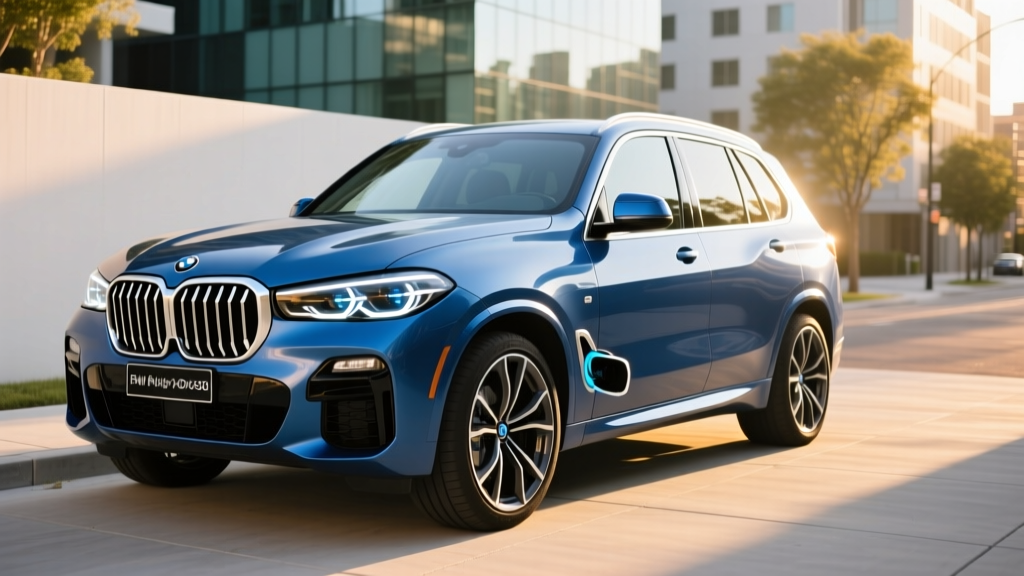
The BMW plug-in hybrid X5 — badged as the xDrive50e for the current generation — occupies a specific niche: luxury SUV buyers who want electric daily commuting without surrendering the 350+ mile total range of a gas tank. With 38 miles of EPA-rated electric-only driving, a combined 56 MPGe when the battery is charged, and 483 combined horsepower, the xDrive50e is the most compelling electrified X5 BMW has built.
But the PHEV value equation hinges on one variable: home charging access. Plug in nightly and you'll burn almost no gasoline on weekday commutes. Treat it like a conventional hybrid and never plug in, and you're carrying 600+ pounds of battery dead weight at roughly 22 MPG. This guide breaks down the exact numbers you need to decide whether the BMW plug-in hybrid X5 fits your driving pattern — or whether a full BEV or conventional HEV serves you better.
HEV vs PHEV: What the BMW Plug-In Hybrid X5 Actually Is
Before diving into specs, it's worth clarifying the distinction, because BMW's X5 lineup can confuse first-time electrified buyers.
Conventional Hybrid (HEV)
A standard hybrid like the Toyota RAV4 Hybrid uses a small battery (typically 1-2 kWh) that recharges through regenerative braking and the engine. You never plug it in. Electric-only driving is limited to brief low-speed moments. MPG gains come from engine optimization and regen, not grid electricity.
Plug-In Hybrid (PHEV) — The xDrive50e
The BMW plug-in hybrid X5 carries a much larger battery (25.7 kWh usable) and a more powerful electric motor. You plug it into a wall outlet or Level 2 charger to fill the battery, giving you 38 miles of genuine electric-only driving at highway speeds. Once the battery depletes, the gas engine takes over and it operates like a conventional hybrid.
The xDrive50e does not have a non-plug-in HEV sibling in the US X5 lineup. BMW offers the X5 sDrive40i and xDrive40i (mild-hybrid gas models with a 48V system that provides minimal electric assist) and the full BEV iX. The xDrive50e is the dedicated plug-in option.
Spec Table: BMW X5 xDrive50e at a Glance
| Specification | BMW X5 xDrive50e |
|---|---|
| Powertrain | 3.0L turbocharged inline-6 + electric motor integrated into 8-speed auto |
| Combined Horsepower | 483 hp |
| Combined Torque | 516 lb-ft |
| 0-60 mph | 4.6 seconds |
| Battery (usable) | 25.7 kWh (NMC lithium-ion) |
| EPA Electric-Only Range | 38 miles |
| Total Combined Range | ~440 miles (electric + 18.5 gal tank) |
| MPGe (charge-sustaining + electric) | 56 MPGe combined |
| Gas-Only MPG (battery depleted) | 22 city / 25 hwy / 23 combined |
| AC Charging (Level 2) | 7.4 kW max (0-100% in ~4.25 hours) |
| DC Fast Charging | Not available |
| Drivetrain | xDrive AWD |
| Towing Capacity | 5,000 lbs (with factory hitch) |
| Cargo Volume | 33.9 cu ft (rear seats up) / 74.9 cu ft (folded) |
| Base MSRP | $72,100 (before destination) |
| Battery Warranty | 8 years / 80,000 miles |
How Many MPG Does the BMW Plug-In Hybrid X5 Get?
The answer depends entirely on whether you charge the battery. The EPA rates the xDrive50e at 56 MPGe combined when operating in blended electric-gas mode with a full charge. But MPGe is a blended metric that includes electric miles, so it only reflects reality if you actually plug in regularly.
| Driving Scenario | City | Highway | Combined |
|---|---|---|---|
| EPA — Charge-Depleted (Gas Only) | 22 MPG | 25 MPG | 23 MPG |
| EPA — Blended (MPGe w/ Full Charge) | 58 MPGe | 54 MPGe | 56 MPGe |
| Real-World — Daily Commute (Plugged In) | ~80-100+ MPGe* | — | Varies by trip length |
| Real-World — Road Trip (No Plug-In) | ~20 MPG | ~24 MPG | ~21 MPG |
*If your daily round-trip commute is under 38 miles and you charge nightly, you'll use zero gasoline on most weekdays. Your effective MPGe approaches infinity for those trips. Source: fueleconomy.gov
Real-World MPG Reality Check
Owners who plug in consistently report 70-90 MPGe over mixed driving because a large share of miles are electric-only. Owners who never plug in average 20-23 MPG — worse than the mild-hybrid X5 xDrive40i (25 MPG combined) because the PHEV carries roughly 650 lbs of extra battery mass. The BMW plug-in hybrid X5 rewards charging discipline. Ignore the plug and you're penalized.
Electric-Only Range and Charging: 38 Miles, Level 2 Only
The xDrive50e's 25.7 kWh usable battery delivers an EPA-rated 38 miles of electric-only range. In real-world conditions:
- Ideal conditions (55-65°F, flat terrain, moderate speed): Expect 35-40 miles.
- Highway driving at 75+ mph: Expect 28-32 miles. Aerodynamic drag drains the battery faster.
- Cold weather (below 32°F): Expect 25-30 miles. Battery chemistry is less efficient, and cabin heating draws significant energy.
- Aggressive acceleration: The electric motor can push the X5 to 87 mph on battery alone, but hard throttle cuts range substantially.
Charging is straightforward but limited to AC power:
- Level 1 (120V household outlet): ~1.4 kW — full charge in approximately 18 hours. Useful for overnight top-ups but slow for a full replenishment.
- Level 2 (240V, 7.4 kW max): Full charge in approximately 4 hours and 15 minutes. This is the practical daily-charging solution — plug in when you get home, and the battery is full by morning.
- DC Fast Charging: Not supported. The xDrive50e uses a J1772/Type 1 AC inlet only. You cannot use CCS or NACS DC fast chargers to replenish the traction battery.
The lack of DC fast charging is a deliberate engineering choice: BMW prioritized packaging and cost. For a PHEV with a 25.7 kWh battery, a 4-hour Level 2 charge is acceptable because most owners charge overnight at home. But it means public fast-charging stations are irrelevant for this vehicle — you're dependent on Level 2 infrastructure.
Powertrain: 483 HP From Inline-6 + Electric Motor
The xDrive50e pairs BMW's B58 3.0-liter turbocharged inline-six (295 hp on its own) with a 145 kW (194 hp) electric motor integrated into the ZF 8-speed automatic transmission housing. Combined system output is 483 hp and 516 lb-ft of torque.
The result is a 0-60 mph time of 4.6 seconds — quicker than the gas-only xDrive40i (5.2 seconds) and approaching the old V8 X5 models. The electric motor fills in the torque curve below 2,000 RPM, eliminating turbo lag and delivering seamless acceleration from a stop.
Three drive modes govern the powertrain:
- Electric: Battery-only, up to 87 mph. Default mode when the battery has charge.
- Hybrid: The system blends gas and electric for optimal efficiency. The engine starts under hard acceleration or when battery depletes.
- Battery Hold / Battery Control: Preserves or actively recharges the battery using the engine — useful when you want to save electric miles for city driving after a highway segment.
The inline-six is one of the smoothest engines in production, and the electric motor's integration is seamless. There's no jarring transition between electric and gas power — a weakness in some competitor PHEVs. BMW's xDrive all-wheel-drive system sends torque to all four wheels regardless of power source.
Pricing, Tax Credits, and Total Cost of Ownership
The 2025/2026 BMW X5 xDrive50e starts at $72,100 (plus $995 destination), placing it roughly $6,000 above the gas-only xDrive40i. Options packages (Premium, Executive, M Sport) can push a well-equipped example past $85,000.
Federal Tax Credit Eligibility (§30D)
The BMW plug-in hybrid X5 xDrive50e is assembled at BMW's Spartanburg, South Carolina plant, which satisfies the North American final assembly requirement. However, the full $7,500 federal tax credit under IRS §30D is not guaranteed for every buyer. Eligibility depends on:
- MSRP cap: SUVs must be under $80,000 MSRP. A base xDrive50e qualifies; a heavily optioned one may exceed the cap.
- Buyer income limits: Modified AGI must not exceed $150,000 (single), $225,000 (head of household), or $300,000 (joint).
- Battery component and critical mineral sourcing: A percentage of battery components must be manufactured or assembled in North America, and critical minerals must be sourced from the US or FTA partners. These thresholds tighten annually. As of the current tax year, the xDrive50e may qualify for $3,750 (half credit) or $7,500 (full credit) depending on BMW's supply chain compliance. Verify current status at IRS.gov.
- Point-of-sale transfer: Buyers can transfer the credit to the dealer at purchase for an immediate price reduction, rather than waiting to claim it on their tax return.
Always confirm credit eligibility with your tax professional and the dealer before purchase, as sourcing requirements and BMW's compliance status can shift between model years.
Five-Year Ownership Cost Estimate
Assuming 12,000 miles/year, $0.14/kWh home electricity, $3.50/gal gasoline, and 70% of miles driven on electric (plugging in nightly):
- Fuel cost (5 years): ~$4,200 (vs. ~$10,500 for the gas xDrive40i at 25 MPG)
- Fuel savings vs gas X5: ~$6,300 over 5 years
- Insurance premium: Typically 10-15% higher than gas X5 (PHEV repair cost factor)
- Maintenance: Lower than gas-only (less engine runtime = fewer oil changes, less brake wear from regen)
The PHEV premium over the xDrive40i is approximately $6,000. With a $7,500 tax credit, the xDrive50e is actually cheaper net-net at purchase — and continues to save on fuel. Without the credit, the payback period is roughly 4-5 years for high-mileage commuters who charge regularly.
Battery Warranty, Reliability, and Replacement Cost
BMW High-Voltage Battery Warranty
Coverage: 8 years or 80,000 miles (whichever comes first)
Capacity threshold: BMW warrants the battery against defects and excessive capacity loss below 70% of original capacity during the warranty period.
What's covered: Battery cell defects, module failures, BMS malfunctions, and capacity degradation below the threshold.
Source: BMW USA Warranty Information
The xDrive50e's NMC (nickel manganese cobalt) lithium-ion battery is engineered for daily shallow cycling rather than deep discharge. PHEV batteries experience less stress than full BEV batteries because the buffer is larger relative to daily use — you're typically cycling through 60-80% of the pack's capacity each day rather than 90%+.
Long-term degradation expectations: Based on data from the previous-generation X5 xDrive45e (which used a similar chemistry), owners report 5-10% capacity loss over 5 years / 60,000 miles. This would reduce the 38-mile electric range to approximately 34-36 miles — still very usable.
Out-of-warranty replacement cost: A full high-voltage battery replacement for the xDrive50e is estimated at $12,000-$18,000 including parts and labor at a BMW dealership. Individual module replacement (if only specific cells fail) can be significantly less, around $3,000-$5,000. BMW's modular battery design allows section-by-section repair rather than full-pack replacement in many cases.
General reliability: The B58 inline-six is widely regarded as one of BMW's most reliable modern engines. The ZF 8-speed transmission has an excellent track record. The primary reliability concern for PHEVs is the added complexity of two powertrains — but BMW's system is now in its second generation, and early-build issues from the xDrive45e launch have been largely resolved. The xDrive50e has not appeared on major recall lists as of the current model year.
Who Should Buy the BMW Plug-In Hybrid X5 — And Who Shouldn't
Pros
- 38-mile electric range covers most daily commutes gas-free
- 483 hp with seamless gas-electric transitions
- 440+ mile total range eliminates road-trip range anxiety
- No DC fast-charging dependency — Level 2 at home is sufficient
- Luxury interior, strong towing capacity (5,000 lbs)
- Potential $7,500 federal tax credit makes it price-competitive with gas X5
- Smooth B58 inline-six with excellent refinement
Cons
- No DC fast charging — public charging is impractical
- 22-23 MPG gas-only is worse than the mild-hybrid xDrive40i
- $72,100+ starting price; options push past $85,000 (MSRP cap risk)
- Cargo floor slightly higher than gas X5 (battery packaging)
- Electric range drops to ~25-30 miles in winter cold
- Tax credit eligibility depends on income, sourcing, and MSRP cap
- Insurance premiums 10-15% higher than gas equivalent
Choose the BMW Plug-In Hybrid X5 If:
- You have home Level 2 charging (or can install it) and your daily commute is under 40 miles round-trip.
- You take road trips several times a year and want total range flexibility without charging-network dependency.
- You want luxury SUV performance (483 hp, 5,000-lb towing) with daily electric efficiency.
- You're not ready for a full BEV due to apartment living, unreliable charging access, or frequent long-distance travel.
Choose a Full EV Instead If:
- You drive more than 50 miles daily and want to eliminate gasoline entirely.
- You want DC fast charging for road trips (the BMW iX offers 200+ kW DC charging and 300+ mile range).
- You have reliable home and workplace charging and rarely exceed 250 miles in a day.
Choose the Gas X5 xDrive40i Instead If:
- You cannot charge at home or at work. An uncharged PHEV is a less efficient, heavier gas car.
- Your budget is under $65,000 and you don't qualify for the federal tax credit.
- You drive mostly highway miles at high speeds, where the PHEV's electric advantage is minimal.
Frequently Asked Questions
How far can the BMW plug-in hybrid X5 go on electric only?
The EPA rates the xDrive50e at 38 miles of electric-only range. In real-world driving, expect 35-40 miles in mild weather at moderate speeds, 28-32 miles at sustained highway speeds, and 25-30 miles in freezing temperatures. The electric motor can propel the X5 up to 87 mph without the engine engaging.
Does the BMW X5 PHEV qualify for the $7,500 federal tax credit?
It may qualify for the full $7,500, a partial $3,750, or nothing — depending on the current model year's battery sourcing compliance, your income (capped at $300,000 joint AGI), and the vehicle's MSRP (capped at $80,000 for SUVs). The xDrive50e is assembled in South Carolina, satisfying the final assembly requirement. Check the latest eligibility list at fueleconomy.gov and confirm with a tax professional before purchase.
Can the BMW X5 xDrive50e DC fast charge?
No. The xDrive50e supports only AC charging — Level 1 (120V, ~1.4 kW) and Level 2 (240V, up to 7.4 kW). A full Level 2 charge takes approximately 4.25 hours. This is typical for PHEVs with batteries under 30 kWh; DC fast charging hardware adds cost and weight that BMW determined wasn't justified for a pack this size.
What happens when the battery runs out on the highway?
The X5 seamlessly transitions to hybrid mode, operating like a conventional hybrid. The 3.0L inline-six takes over, and regenerative braking recovers small amounts of energy. You'll get approximately 22-25 MPG in this charge-sustaining mode. There's no performance cliff — the system maintains full AWD and strong acceleration even with a depleted battery.
How long will the BMW X5 PHEV battery last?
BMW warrants the high-voltage battery for 8 years or 80,000 miles against defects and capacity loss below 70%. Based on real-world data from the previous-generation xDrive45e, expect 90-95% capacity retention at 5 years with daily charging. The battery should remain functional well beyond the warranty period, though with gradually reduced electric range. Full replacement costs $12,000-$18,000 out of warranty, but modular repair can reduce this to $3,000-$5,000.
Is the BMW plug-in hybrid X5 better than the BMW iX?
They serve different needs. The iX is a full BEV with 300+ miles of range, DC fast charging at up to 200 kW, and zero gasoline use — but a higher starting price (~$87,000) and no gas backup. The X5 xDrive50e offers 38 electric miles for daily driving plus a gas tank for long trips, at a lower entry price and with more cargo versatility. If you can charge at home and rarely drive over 300 miles in a day, the iX is the more forward-looking choice. If you need range flexibility or tow frequently, the PHEV is more practical.
Do I need to install a Level 2 charger at home for the X5 PHEV?
You don't need one — the X5 will charge on a standard 120V outlet — but you'll strongly want one. Level 1 charging takes roughly 18 hours for a full battery, which is impractical for daily use. A Level 2 home charger (240V, 32-40 amp circuit) replenishes the battery in about 4 hours. Home Level 2 installation typically costs $500-$2,000 depending on panel proximity and electrical work required. Given the xDrive50e's 7.4 kW onboard charger, a 32-amp Level 2 unit (7.7 kW) is the sweet spot — no need to overspend on a 48-amp unit since the car can't accept more than 7.4 kW.