Quick Verdict: The PHEV That Bridges Two Worlds
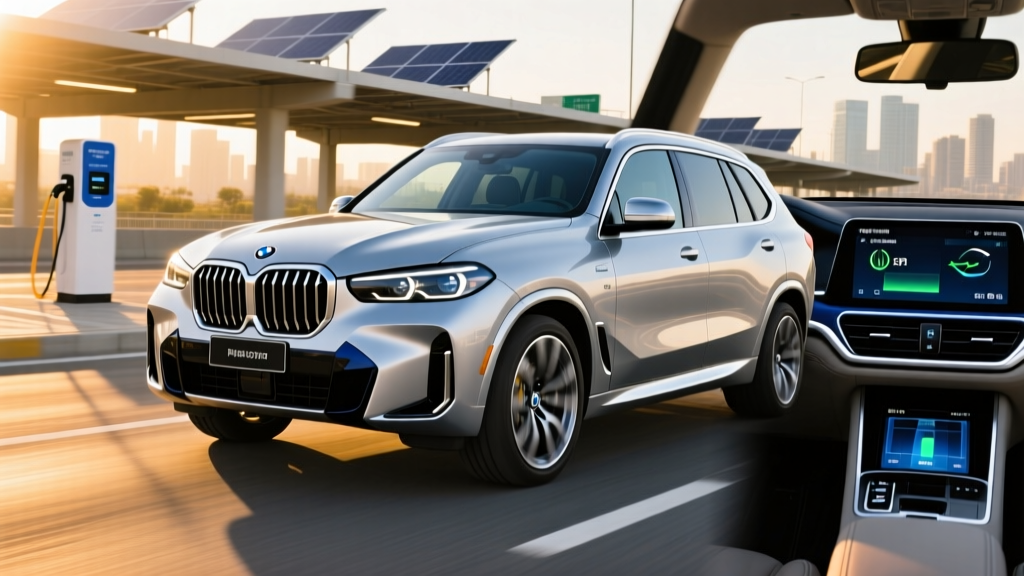
The BMW X5 xDrive50e is one of the most compelling plug-in hybrid SUVs on the market for buyers who want meaningful electric-only commuting without sacrificing the ability to road-trip without charging stops. With an EPA-estimated 38 miles of electric-only range and a combined 483 horsepower from its inline-six-plus-motor powertrain, it threads the needle between daily EV practicality and long-distance flexibility. But at a starting MSRP around $72,575, the question isn't whether it's good — it's whether the math works for your driving habits.
| Spec | Value |
|---|---|
| Powertrain | 3.0L turbocharged I-6 + electric motor |
| Combined Horsepower | 483 hp / 516 lb-ft torque |
| Battery (usable) | 25.7 kWh (lithium-ion NMC) |
| EPA Electric-Only Range | 38 miles |
| Total Combined Range | ~440 miles (gas + electric) |
| EPA MPGe (electric+gas) | 56 MPGe combined |
| EPA MPG (gas-only, blended) | 27 MPG combined |
| 0–60 mph | 4.6 seconds |
| Max AC Charge Rate | 7.4 kW (Level 2) |
| DC Fast Charging | Not available |
| Level 2 Charge Time (0–100%) | ~4.0 hours |
| Base MSRP | $72,575 |
| Battery Warranty | 8 years / 80,000 miles |
HEV vs. PHEV: What the BMW X5 Plug-In Hybrid Actually Is
Before diving into the numbers, it's essential to understand what you're buying. The BMW X5 lineup includes only one electrified variant in the U.S. — the xDrive50e — and it is a plug-in hybrid electric vehicle (PHEV), not a conventional hybrid (HEV).
| Feature | Conventional Hybrid (HEV) | Plug-In Hybrid (PHEV) |
|---|---|---|
| Battery Size | 1–2 kWh | 15–30 kWh (X5: 25.7 kWh) |
| Plug-In Charging | No — regenerates internally | Yes — plug in for full range |
| Electric-Only Range | 0–2 miles at low speed | 20–50 miles at highway speed |
| Gas Engine | Always available | Always available after battery depletes |
| Federal Tax Credit | No | Potentially — up to $3,750 (see below) |
| Example | Toyota RAV4 Hybrid | BMW X5 xDrive50e |
The distinction matters practically: if you never plug the X5 xDrive50e in, you're carrying around 500+ pounds of dead battery weight and getting roughly 27 MPG combined — respectable, but not meaningfully better than a mild-hybrid six-cylinder SUV. The PHEV advantage only unlocks when you charge regularly.
Fuel Economy: EPA Numbers and Real-World MPG
According to fueleconomy.gov, the 2026 BMW X5 xDrive50e carries the following ratings:
| Mode | City | Highway | Combined |
|---|---|---|---|
| Electric + Gas (MPGe) | 58 MPGe | 54 MPGe | 56 MPGe |
| Gas-Only (MPG) | 25 MPG | 29 MPG | 27 MPG |
Real-world expectations: The 56 MPGe combined figure assumes you're regularly charging and using the 38-mile electric buffer before the engine kicks in. In practice, owners who charge nightly and commute under 35 miles round-trip report using almost zero gasoline during the work week. On a pure highway road trip with a depleted battery, expect the gas-only figure to land closer to 26–28 MPG at 70–75 mph — slightly below the EPA highway estimate due to the vehicle's 5,400-pound curb weight and aerodynamic profile.
In city driving with a charged battery, the electric motor handles most low-speed propulsion, and the inline-six stays dormant. This is where PHEVs shine: stop-and-go traffic is precisely where electric motors are most efficient, and regenerative braking recaptures energy that a gas-only vehicle wastes as heat.
Electric-Only Range and Charging: The Daily-Commute Equation
The X5 xDrive50e's 25.7 kWh usable battery delivers an EPA-estimated 38 miles of electric-only driving. In real-world conditions, expect:
- Mild weather (60–80°F), mixed driving: 34–38 miles
- Cold weather (below 35°F): 26–32 miles (battery chemistry loses efficiency, and cabin heating draws significant energy)
- Highway-heavy (70+ mph): 30–34 miles (higher aerodynamic drag drains the pack faster)
For the median U.S. commute of roughly 16 miles one-way (per FHWA data), 38 miles of electric range covers a full round-trip without the engine ever starting — provided you charge at home or work.
Charging Speeds and Connectors
The X5 xDrive50e uses a standard J1772 connector for AC charging. It does not support DC fast charging — a notable limitation compared to some competitors like the Volvo XC90 Recharge, which also lacks DCFC, but worth flagging if you expected rapid top-ups.
| Level | Power | 0–100% Time | Use Case |
|---|---|---|---|
| Level 1 (120V outlet) | ~1.4 kW | ~18 hours | Overnight top-up only; impractical for daily full charge |
| Level 2 (240V home charger) | 7.4 kW | ~4.0 hours | Daily charging; full recharge overnight or during workday |
| DC Fast Charge | N/A | N/A | Not supported |
At 7.4 kW on a Level 2 home charger, the X5's battery fills from empty in about four hours. This means a standard overnight charge window (say, 10 PM to 6 AM) provides more than enough time for a full recharge, even with off-peak electricity rates. A Level 2 home charger installation typically costs $800–$2,000 depending on your electrical panel capacity and run length — budget for a 40-amp circuit minimum to maximize the 7.4 kW onboard charger.
Powertrain Performance: 483 Horsepower With a Conscience
The xDrive50e pairs BMW's smooth B58 3.0-liter turbocharged inline-six with an electric motor integrated into the eight-speed automatic transmission. Combined output is 483 horsepower and 516 lb-ft of torque, sent to all four wheels via BMW's xDrive AWD system.
The 0–60 mph sprint takes 4.6 seconds — quick for a 5,400-pound SUV and only a half-second behind the non-hybrid X5 M60i. More importantly for daily driving, the electric motor provides instant torque from 0 RPM, making the X5 feel responsive off the line and effortless in merging situations. The transition between electric-only and hybrid modes is nearly imperceptible; BMW's powertrain management is among the best in the segment for seamlessness.
Three driving modes let you control the powertrain behavior:
- Hybrid (default): The car decides the optimal blend of electric and gas based on route, speed, and battery state.
- Electric: Forces pure electric driving up to ~84 mph, preserving gas engine for later.
- Battery Control: Runs the gas engine to maintain or increase battery charge — useful when approaching a city zone where you want to switch to electric.
Pricing, Tax Credits, and Ownership Economics
The 2026 BMW X5 xDrive50e starts at an MSRP of approximately $72,575 (including destination). Popular options — the Premium Package, Driving Assistance Professional, and larger wheels — can push a well-equipped example to $80,000–$85,000.
Federal Tax Credit Eligibility
Under the current IRS §30D Clean Vehicle Credit rules, the BMW X5 xDrive50e may qualify for a partial federal tax credit. Because the vehicle is assembled in the United States (at BMW's Spartanburg, SC plant), it clears the North American assembly requirement. However, the credit amount depends on critical-mineral and battery-component sourcing thresholds that shift annually:
- Maximum potential credit: Up to $3,750 (critical minerals portion; battery component sourcing for BMW's supply chain may not meet the full threshold)
- MSRP cap for SUVs: $80,000 — the base xDrive50e qualifies, but heavily optioned examples may exceed this cap
- Buyer income cap: $150,000 single / $300,000 married filing jointly (modified AGI)
- Point-of-sale transfer: Available — you can apply the credit as a down-payment reduction at the dealer rather than waiting for tax filing
Eligibility rules are complex and subject to change. Verify your specific vehicle's VIN and your tax situation with a qualified tax professional or the IRS source linked above.
Five-Year Cost Snapshot
For a buyer who charges nightly and commutes 30 miles round-trip on weekdays, the fuel savings are meaningful. At $3.50/gallon and 12,000 miles/year, a gas-only X5 xDrive40i (25 MPG combined) would cost roughly $1,680/year in fuel. The xDrive50e, running 70% of miles on electricity at $0.14/kWh, drops to approximately $800–$950/year in combined fuel and electricity — a savings of $700–$850 annually. Over five years, that's $3,500–$4,250 in fuel savings, which partially offsets the PHEV's price premium over the gas X5.
Reliability, Battery Warranty, and Long-Term Costs
BMW High-Voltage Battery Warranty: 8 years or 80,000 miles (whichever comes first), covering defects and capacity loss below 70% of original capacity. The hybrid system components — electric motor, power electronics, and transmission — are covered under the same 8-year/80,000-mile warranty. BMW's standard new-vehicle warranty covers 4 years/50,000 miles.
BMW's B58 inline-six is one of the most reliable modern engines in the luxury segment, with a strong track record since its 2015 introduction. The electric motor and power electronics are relatively simple components with fewer failure points than a traditional transmission. The main long-term cost concern is the high-voltage battery pack itself.
Battery replacement cost: If the 25.7 kWh battery requires out-of-warranty replacement (unlikely before 100,000+ miles based on current NMC degradation data), expect a cost in the range of $8,000–$12,000 including parts and labor. However, PHEV batteries experience shallower charge cycles than full EVs (you're using 38 miles of range and recharging, not draining a 100 kWh pack to zero), which generally extends calendar life. Most PHEV batteries in the field are showing less than 10% degradation at the 8-year mark.
BMW's reliability ratings have improved in recent years, though the brand still trails Toyota/Lexus in long-term dependability surveys. The X5 platform is mature — the current generation (G05) has been in production since 2019, and most early-build issues have been resolved.
Who Should Choose the X5 PHEV vs. a Full EV or Gas SUV
Choose the BMW X5 xDrive50e (PHEV) if:
- Your daily commute is under 40 miles round-trip and you can charge at home
- You take regular road trips (200+ miles) where charging infrastructure is sparse or unreliable
- You want one vehicle that does both electric commuting and gas-powered touring without compromise
- You value the inline-six's refinement and don't want to give up the sound and feel of a combustion engine
Choose a full EV (like the BMW iX) if:
- You have reliable home charging and your longest regular trip is under 250 miles
- You want zero maintenance on the powertrain (no oil changes, no spark plugs, no exhaust system)
- You want access to the full $7,500 federal tax credit (more EVs qualify for the full amount)
- You prioritize instant torque, one-pedal driving, and the lowest per-mile fuel cost
Choose the gas X5 xDrive40i if:
- You cannot install a home charger (apartment, street parking, no garage)
- Your budget is tighter and the $8,000+ PHEV premium doesn't pencil out
- You drive mostly long highway miles where the electric range provides minimal benefit
Pros
- 38 miles of real electric range covers most commutes
- 483 hp with seamless gas-electric transitions
- No range anxiety — 440+ miles total range
- Refined B58 inline-six is proven and smooth
- U.S.-assembled — partial federal tax credit possible
- Premium interior with latest iDrive 8.5 infotainment
Cons
- No DC fast charging capability
- Heavy at 5,400 lbs — gas-only MPG is merely average
- $72,575 base price; options push past $80K MSRP cap
- Partial tax credit only ($3,750 max), not the full $7,500
- Cargo space slightly reduced vs. gas X5 (battery under floor)
- Cold weather cuts electric range to ~26–32 miles
Frequently Asked Questions
How many MPG does the BMW X5 plug-in hybrid get?
The EPA rates the 2026 BMW X5 xDrive50e at 56 MPGe combined when using both electric and gas power, and 27 MPG combined in gas-only mode after the battery is depleted. Real-world gas-only highway driving yields approximately 26–28 MPG.
How far can the BMW X5 PHEV go on electric only?
The EPA estimates 38 miles of electric-only range. In real-world conditions, expect 34–38 miles in mild weather and 26–32 miles in cold weather (below 35°F). Highway driving at 70+ mph reduces range to approximately 30–34 miles.
Does the BMW X5 hybrid plug-in qualify for a tax credit?
Under current IRS §30D rules, the X5 xDrive50e may qualify for up to $3,750 in federal tax credits, depending on battery-component and critical-mineral sourcing requirements. Buyer income must be under $150,000 (single) or $300,000 (married), and vehicle MSRP must stay under $80,000. The credit can be transferred to the dealer at point of sale. Consult a tax professional for your specific situation.
Is the BMW X5 PHEV reliable, and what does battery replacement cost?
The B58 engine has a strong reliability record, and the electric motor has few failure points. The high-voltage battery is warranted for 8 years/80,000 miles against defects and capacity loss below 70%. Out-of-warranty battery replacement costs approximately $8,000–$12,000, though PHEV batteries typically show less than 10% degradation at the 8-year mark due to shallow charge cycles.
Should I get the BMW X5 PHEV or a full EV like the BMW iX?
If you regularly drive more than 250 miles in a single trip, lack reliable public charging on your routes, or want a single vehicle for both electric commuting and long-distance touring, the X5 PHEV is the better fit. If your trips are shorter, you have dependable home charging, and you want the lowest operating costs and zero powertrain maintenance, the BMW iX (320+ mile range) is the stronger choice.
Can the BMW X5 xDrive50e charge at a DC fast charger?
No. The X5 xDrive50e only supports AC charging up to 7.4 kW via a J1772 connector. A full charge on a Level 2 home charger takes approximately 4 hours. DC fast charging is not available on this model.
Do I have to plug the X5 PHEV in, or does it charge itself?
You don't have to plug it in — the gas engine will operate normally if the battery is depleted, and regenerative braking recaptures some energy. However, you'll lose the electric-only range benefit and the improved MPGe. To get the full value of the PHEV, daily plug-in charging (ideally at home on a Level 2 charger) is strongly recommended.