Quick Verdict: The BMW X5 Plug-In Hybrid at a Glance
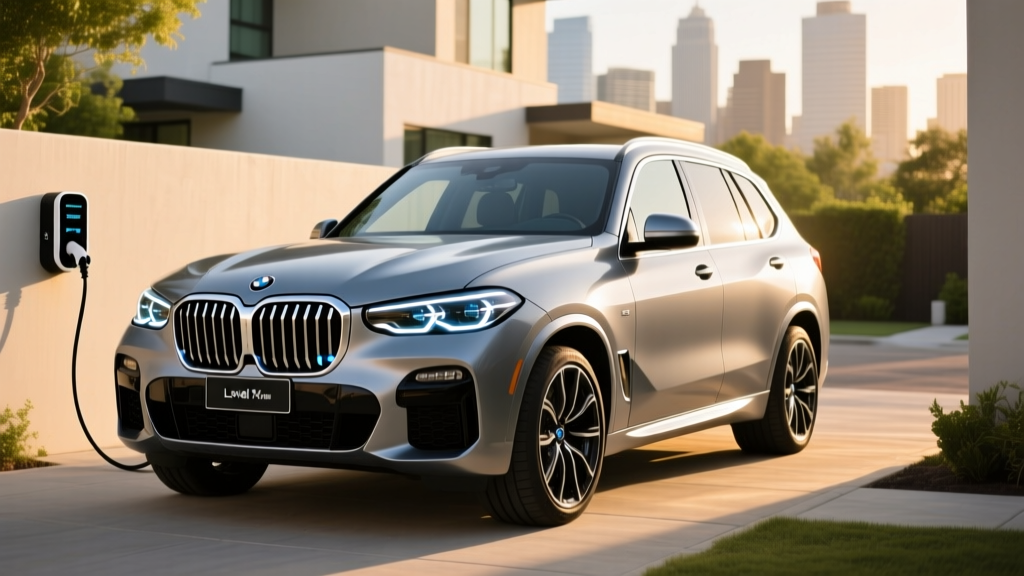
The 2026 BMW X5 xDrive50e represents BMW's most refined plug-in hybrid (PHEV) SUV to date. With an EPA-estimated 38 miles of electric-only range and a combined 483 horsepower, it threads the needle between luxury performance and daily electric commuting. If your round-trip commute falls under 35 miles and you have access to home charging, the X5 PHEV can function as an EV on weekdays and a gas-powered grand tourer on weekends — no range anxiety, no charging-desert stress.
But the X5 xDrive50e isn't for everyone. At a starting MSRP of $72,575, it commands a premium over the mild-hybrid X5 xDrive40i. And while its 38-mile electric range covers most commutes, it falls short of rivals like the Volvo XC90 Recharge (also rated around 35 miles but with a more usable cabin layout for families). Here's everything you need to know before signing.
HEV vs PHEV: What the BMW X5 Plug-In Hybrid Actually Is
Conventional Hybrid (HEV): A small battery (typically 1–2 kWh) is recharged by the gas engine and regenerative braking. You never plug it in. The electric motor assists the engine for better fuel economy, but there is no meaningful electric-only driving range. Example: Toyota RAV4 Hybrid.
Plug-In Hybrid (PHEV): A larger battery (20+ kWh) can be charged from a wall outlet or charging station. This enables 25–50 miles of electric-only driving before the gas engine kicks in. Once the battery depletes, it operates like a conventional hybrid. Example: BMW X5 xDrive50e.
Battery Electric (BEV): No gas engine at all. All energy comes from a large battery pack (60–100+ kWh). Range: 200–400+ miles. Example: BMW iX.
The BMW X5 is available in two electrified forms: the xDrive50e (PHEV, plug-in) and the mild-hybrid xDrive40i (which uses a 48-volt system for marginal efficiency gains but cannot be plugged in and has no electric-only range). This review focuses on the xDrive50e PHEV.
Electric-Only Range, Total Range, and Real-World Efficiency
The 2026 BMW X5 xDrive50e carries a 25.7 kWh battery pack (22.3 kWh usable), which the EPA rates at 38 miles of electric-only driving. Once the battery is depleted, the X5 operates as a conventional hybrid, returning an EPA-estimated 22 MPG combined.
EPA Electric Range: 38 miles
Real-World Expectation: 30–36 miles in mixed driving; as low as 25–28 miles in cold weather (below 40°F) or sustained highway speeds above 70 mph. Electric range drops significantly when using cabin heating without preconditioning.
| Metric | EPA Estimate | Real-World Expectation |
|---|---|---|
| Electric-only range | 38 miles | 25–36 miles (weather/terrain dependent) |
| MPGe (electric mode) | 52 MPGe | 44–50 MPGe |
| Gas-only city MPG | 21 MPG | 20–22 MPG |
| Gas-only highway MPG | 23 MPG | 21–24 MPG |
| Gas-only combined MPG | 22 MPG | 20–23 MPG |
| Total combined range (electric + gas) | ~430 miles | ~380–420 miles |
In real-world testing, PHEVs like the X5 xDrive50e reward city driving. Regenerative braking recharges the battery more effectively in stop-and-go traffic, and electric-only mode is most efficient at lower speeds. Highway driving at 75+ mph will drain the battery faster than the EPA sticker suggests and reduce gas-mode MPG due to the SUV's aerodynamic drag and 5,200-pound curb weight.
Powertrain, Performance, and Battery Specifications
| Specification | Value |
|---|---|
| Engine | 3.0L turbocharged inline-6 (312 hp) |
| Electric motor | Integrated in transmission (184 hp) |
| Combined system output | 483 hp / 516 lb-ft torque |
| 0–60 mph | 4.6 seconds |
| Battery capacity (gross / usable) | 25.7 kWh / 22.3 kWh |
| Battery chemistry | NMC (nickel manganese cobalt) |
| Onboard charger (Level 2) | 7.4 kW |
| DC fast charging | Not supported |
| Level 2 charge time (0–100%) | ~3.5 hours at 7.4 kW |
| Level 1 charge time (120V) | ~12–14 hours |
| Drivetrain | xDrive AWD (8-speed automatic) |
| Towing capacity | 3,500 lbs (reduced vs. xDrive40i's 7,200 lbs) |
| Curb weight | ~5,260 lbs |
The xDrive50e pairs BMW's excellent B58 turbocharged inline-six with an electric motor integrated into the ZF 8-speed automatic transmission housing. The result is seamless power delivery — you'll rarely feel the transition between electric and gas modes. The combined 483 hp makes it quicker than the xDrive40i (335 hp), and the instant electric torque fills in the gap before the turbo spools.
Critical limitation: The X5 PHEV does not support DC fast charging. This is a common PHEV constraint — the smaller battery and thermal management system aren't designed for high-power DC input. You're limited to Level 2 (240V) charging at a maximum of 7.4 kW. For daily home charging, this is perfectly adequate: plug in overnight, wake up to a full battery every morning. But on road trips, you cannot top up the battery at DC fast chargers.
Charging Setup: Home Level 2 Installation and Costs
To get the most from the X5 PHEV, a home Level 2 charger is essential. Here's what to budget:
| Item | Cost Range |
|---|---|
| Level 2 charging unit (240V, 32–48A) | $350–$700 |
| Electrician labor (240V circuit, 50–60 ft run) | $600–$1,500 |
| Permit & inspection | $50–$200 |
| Electrical panel upgrade (if needed, 200A service) | $1,500–$3,500 |
| Total (no panel upgrade) | $1,000–$2,400 |
| Total (with panel upgrade) | $2,500–$5,900 |
At 7.4 kW, the X5's onboard charger will fully replenish the 22.3 kWh usable battery in approximately 3.5 hours. A standard NEMA 14-50 outlet (common for dryers and RVs) delivers up to 9.6 kW, but the X5 will only draw 7.4 kW regardless. Consult a licensed electrician to confirm your panel can support a dedicated 40-amp circuit before installation.
Cost to charge: At the U.S. average residential electricity rate of ~$0.16/kWh, a full charge costs roughly $3.57 — enough for ~38 miles of electric driving. That equates to about $0.09 per mile on electricity versus approximately $0.14 per mile on premium gasoline (at $4.20/gallon and 22 MPG combined). The savings compound if your utility offers off-peak rates below $0.10/kWh.
Pricing, Trims, and Federal Tax Credit Eligibility
The 2026 BMW X5 xDrive50e starts at an MSRP of $72,575 (including destination). Popular options like the Premium Package, Driving Assistance Professional, and larger wheels can push a well-equipped build past $85,000.
Federal §30D Clean Vehicle Credit — PHEV Eligibility Checklist:
- MSRP cap: SUVs must be priced at or below $80,000 MSRP. The X5 xDrive50e qualifies at base, but optioned builds exceeding $80,000 may not.
- Buyer income cap: AGI must not exceed $150,000 (single), $225,000 (head of household), or $300,000 (joint filers).
- Battery sourcing: Critical minerals and battery components must meet phased-in domestic/FHA-partner sourcing thresholds. As of 2026, these requirements are stringent — verify the specific VIN on the IRS's eligible vehicle list at irs.gov.
- Point-of-sale transfer: You can transfer the credit to the dealer at purchase for an immediate price reduction, or claim it on your tax return.
- Credit amount: Up to $7,500 if all requirements are met; partial credits ($3,750) apply if only one sourcing threshold is satisfied.
Important caveat: BMW's battery supply chain has historically struggled with the §30D critical-minerals requirement. Many BMW PHEVs and EVs have qualified for only $3,750 or $0 in recent years. Always confirm eligibility for the specific model year and VIN with your dealer and a tax professional before relying on the credit in your purchase decision.
Battery Warranty, Reliability, and Replacement Costs
BMW PHEV High-Voltage Battery Warranty: 8 years / 80,000 miles, whichever comes first. Coverage applies if battery capacity falls below 70% of original capacity. This aligns with the federal minimum for PHEV/EV battery warranties mandated under the Clean Air Act.
BMW's NMC battery packs in the X5 PHEV have demonstrated reasonable longevity in real-world use. PHEV batteries face less stress than BEV batteries because they operate in a narrower state-of-charge window (the vehicle's software maintains a buffer, rarely allowing full 0% or 100% at the cell level). Most owners report minimal degradation within the warranty period — typically 5–8% capacity loss over 5 years based on owner-community data.
Battery replacement cost: Out of warranty, a full high-voltage battery replacement for the X5 xDrive50e is estimated at $12,000–$18,000 (parts and labor) at a BMW dealership. This is a worst-case scenario — individual module replacement may be possible for less if only specific cells fail. BMW's modular battery architecture in the latest generation allows partial repairs.
For overall vehicle reliability, BMW's current-generation X5 (G05 platform) has performed mid-pack among luxury SUVs. The B58 inline-six engine is widely regarded as one of BMW's most durable modern powertrains. The PHEV system adds complexity (additional motor, inverter, charging hardware), which introduces more potential failure points than the conventional xDrive40i. Extended warranties are worth considering for buyers planning to keep the vehicle beyond 60,000 miles.
Who Should Buy the BMW X5 Plug-In Hybrid?
Pros
- 38-mile EPA electric range covers most daily commutes
- 483 hp with seamless gas-electric transitions
- Premium interior, excellent ride quality, strong infotainment (iDrive 8.5)
- No range anxiety — gas engine for long trips
- Quiet electric-only driving in neighborhoods and school zones
- xDrive AWD standard
Cons
- $72,575 starting MSRP — significant premium over xDrive40i
- No DC fast charging
- Reduced towing capacity (3,500 lbs vs. 7,200 lbs for xDrive40i)
- Battery pack reduces cargo space slightly (~2 cu ft loss)
- Federal tax credit eligibility uncertain (sourcing rules)
- Real-world electric range drops to ~25–28 miles in cold weather
Choose the BMW X5 xDrive50e PHEV if:
- Your daily commute is under 35 miles round-trip and you can charge at home
- You want luxury SUV performance without committing to a full EV
- You take regular road trips where charging infrastructure is sparse
- You value the ability to drive on electricity for errands but need gas flexibility
Choose the BMW X5 xDrive40i (mild hybrid) instead if:
- You cannot install a home charger (apartment, no garage)
- You need maximum towing capacity (7,200 lbs)
- Your budget is closer to $65,000 and you don't need electric-only driving
Choose a full EV (BMW iX, Tesla Model X) instead if:
- You have reliable home charging and your daily driving rarely exceeds 200 miles
- You want to eliminate gas entirely and reduce maintenance (no oil changes, fewer moving parts)
- You want 250+ miles of range and DC fast charging for road trips
Frequently Asked Questions
How many MPG does the BMW X5 plug-in hybrid get?
The 2026 BMW X5 xDrive50e gets an EPA-estimated 22 MPG combined (21 city / 23 highway) when running on gasoline after the battery is depleted. In electric mode, it achieves 52 MPGe. Real-world gas MPG typically ranges from 20–24 MPG depending on driving style, terrain, and temperature.
How far can the BMW X5 PHEV go on electric only?
The EPA rates the X5 xDrive50e at 38 miles of electric-only range. In real-world conditions, expect 30–36 miles in mild weather with mixed driving, and as low as 25–28 miles in freezing temperatures or sustained highway speeds. Preconditioning the cabin while still plugged in helps preserve range.
Does the BMW X5 plug-in hybrid qualify for a federal tax credit?
Potentially, but it depends on current §30D sourcing requirements. The X5 xDrive50e falls under the $80,000 SUV MSRP cap at base price, and income limits apply ($300,000 joint / $150,000 single). However, BMW's battery supply chain has not consistently met critical-minerals thresholds in recent years. Check the IRS eligible vehicle list for the specific model year and confirm with your dealer.
Is the BMW X5 PHEV reliable and what does battery replacement cost?
The B58 engine in the X5 is considered one of BMW's most reliable modern powertrains. The PHEV system adds complexity, but the high-voltage battery is warranted for 8 years / 80,000 miles with a 70% capacity retention threshold. Out-of-warranty battery replacement is estimated at $12,000–$18,000. Most PHEV owners report minimal degradation (5–8%) within the warranty period.
Can I DC fast charge the BMW X5 plug-in hybrid?
No. The X5 xDrive50e does not support DC fast charging. Maximum charge rate is 7.4 kW on a Level 2 (240V) connection, yielding a full charge in about 3.5 hours. This is standard for most PHEVs — the smaller battery doesn't require or support DC fast-charging hardware.
Hybrid vs PHEV vs EV — which is right for me?
If you can charge at home and your daily driving is under 40 miles, a PHEV like the X5 xDrive50e gives you electric commuting with gas flexibility for longer trips. A conventional HEV (no plug) is best if you lack home charging access but want better MPG. A full BEV makes sense if you want zero gas, lower running costs, and your lifestyle supports charging routines — but you'll need to plan road trips around DC fast chargers.
Does the PHEV battery reduce cargo space?
Yes, slightly. The high-voltage battery is mounted beneath the rear cargo floor, reducing under-floor storage by approximately 2 cubic feet compared to the xDrive40i. The main cargo area remains largely unaffected, but the spare tire is replaced by a tire mobility kit.