Quick Verdict: The BMW X5 Hybrid Balances Luxury and Electrification
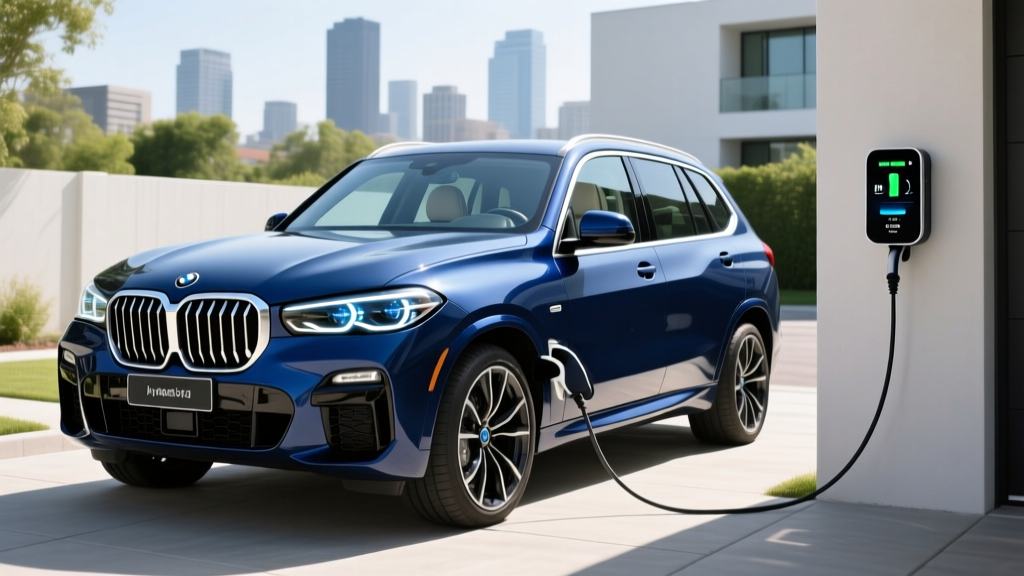
The 2026 BMW X5 xDrive50e plug-in hybrid is one of the most compelling luxury PHEVs on the market. With 38 miles of EPA-rated electric-only range, a combined 483 horsepower, and the ability to operate as a conventional hybrid once the battery depletes, it serves buyers who want daily electric commuting without sacrificing the range confidence of a gasoline engine. Starting at $68,900 MSRP, the xDrive50e qualifies for a partial federal tax credit under current IRS §30D rules — though full eligibility depends on battery sourcing and buyer income.
This is not a conventional hybrid (HEV) that simply sips less fuel. The X5 xDrive50e is a plug-in hybrid (PHEV), meaning it carries a substantially larger battery you charge from a wall outlet or charger, enabling genuine zero-tailpipe-emission driving for most daily commutes before the turbocharged inline-six engine ever starts.
HEV vs PHEV: Understanding the X5 Hybrid Lineup
BMW offers the X5 in two electrified configurations, and confusing them is a common buyer mistake:
| Feature | X5 xDrive40i (Mild Hybrid) | X5 xDrive50e (PHEV) |
|---|---|---|
| Powertrain type | 48V mild-hybrid (HEV assist) | Plug-in hybrid (PHEV) |
| Plug-in charging | No — regenerative braking only | Yes — Level 1 and Level 2 |
| Electric-only driving | No (motor assists engine only) | Yes — up to 38 miles |
| Battery capacity | ~0.5 kWh (48V system) | 25.7 kWh usable (lithium-ion NMC) |
| Combined horsepower | 375 HP | 483 HP |
| EPA combined fuel economy | 24 MPG | 56 MPGe / 24 MPG (gas-only) |
| Starting MSRP | $66,900 | $68,900 |
The xDrive40i's 48-volt mild-hybrid system provides marginal efficiency gains through stop-start smoothing and brief torque fill. It cannot drive on electricity alone and does not plug in. The xDrive50e, by contrast, is the true "X5 hybrid" most buyers are searching for — a vehicle you plug in, drive electrically for 38 miles, and then operate as a standard hybrid with the inline-six engine and regenerative braking maintaining the battery.
Range, Efficiency, and Real-World MPG
The 2026 X5 xDrive50e carries EPA ratings that make it competitive with rivals like the Volvo XC90 Recharge and Porsche Cayenne E-Hybrid, though its inline-six engine gives it a performance edge.
| Metric | EPA Rating | Real-World Expectation |
|---|---|---|
| Electric-only range | 38 miles | 32–36 miles (highway/cold weather) |
| MPGe (electric + gas combined) | 56 MPGe | 48–54 MPGe (depends on charging frequency) |
| Gas-only MPG (city) | 23 MPG | 24–27 MPG (city regen advantage) |
| Gas-only MPG (highway) | 24 MPG | 22–24 MPG |
| Gas-only MPG (combined) | 24 MPG | 23–25 MPG |
| Total range (electric + gas) | ~430 miles | ~380–420 miles |
The key insight for PHEV ownership: your actual MPGe depends entirely on how often you charge. If you plug in nightly and drive under 38 miles daily, you may use almost no gasoline for months. The EPA's 56 MPGe figure assumes a mix of electric and gas driving per the fueleconomy.gov test cycle.
Once the 25.7 kWh (usable) battery depletes, the X5 xDrive50e operates as a conventional hybrid. Expect roughly 24 MPG combined — respectable for a 5,500-pound luxury SUV, and notably, hybrids often exceed their EPA city rating in real-world stop-and-go driving thanks to regenerative braking recapturing energy that would otherwise be lost as heat.
Powertrain: 483 Horsepower from Inline-Six Plus Electric Motor
The xDrive50e pairs BMW's B58 3.0-liter turbocharged inline-six with a 168-kW electric motor integrated into the eight-speed automatic transmission. Combined output is 483 horsepower and 516 lb-ft of torque — enough to move this heavy SUV to 60 mph in 4.6 seconds.
| Specification | 2026 BMW X5 xDrive50e |
|---|---|
| Engine | 3.0L turbocharged inline-six |
| Electric motor | 168 kW (225 HP), integrated in transmission |
| Combined horsepower | 483 HP |
| Combined torque | 516 lb-ft |
| 0–60 mph | 4.6 seconds |
| Transmission | 8-speed automatic (ZF) |
| Drivetrain | xDrive AWD |
| Battery (usable) | 25.7 kWh, NMC lithium-ion |
| Towing capacity | 5,950 lbs (with factory hitch) |
| Cargo volume | 33.3 cu ft (rear seats up) / 72.3 cu ft (folded) |
Unlike the prior-generation xDrive45e, which used a four-cylinder engine, the 50e's inline-six delivers smooth, linear power whether you're running on electricity, gasoline, or both. The transition between electric and gas power is nearly imperceptible — a hallmark of BMW's hybrid integration.
Charging: Level 2 Only, No DC Fast Charging
The X5 xDrive50e supports Level 1 (120V household outlet) and Level 2 (240V) AC charging. It does not support DC fast charging — a limitation shared with most PHEVs in this class.
| Charging Level | Power | Time (0–100%) | Miles of Range per Hour |
|---|---|---|---|
| Level 1 (120V, 12A) | ~1.4 kW | ~18 hours | ~2.5 miles |
| Level 2 (240V, 32A) | 7.7 kW | ~3.5 hours | ~11 miles |
| DC Fast Charge | Not supported | N/A | N/A |
For daily use, Level 2 is the practical choice. A home Level 2 wallbox charger (such as the ChargePoint Home Flex or BMW's own Wallbox) will fully replenish the battery overnight in about 3.5 hours. Since most PHEV owners charge nightly and drive within the electric range, the lack of DC fast charging is rarely a limitation — you won't be stopping at Electrify America stations on road trips. The gasoline engine handles long-distance driving.
The charging port uses the standard J1772 connector for AC charging. There is no NACS or CCS port on the xDrive50e, since DC fast charging is not supported.
Pricing, Trims, and Tax Credit Eligibility
The 2026 BMW X5 xDrive50e starts at $68,900 MSRP (including destination). This positions it between the xDrive40i ($66,900) and the V8-powered M60i ($88,600). Options packages — Driving Assistance Professional, Premium Package, Executive Package — can push the price to $80,000+.
Federal Tax Credit Under IRS §30D
The X5 xDrive50e qualifies for a partial federal tax credit under current IRS §30D rules. Because BMW sources some battery components and critical minerals from non-qualifying supply chains, the credit may be reduced from the maximum $7,500. As of the 2026 tax year:
- MSRP cap: SUVs must be priced at or below $80,000 — the base xDrive50e qualifies, but heavily optioned builds may exceed the cap.
- Buyer income cap: Modified AGI must not exceed $150,000 (single), $225,000 (head of household), or $300,000 (married filing jointly).
- Battery sourcing: The credit is split into two $3,750 halves — one for critical minerals, one for battery components. The xDrive50e may qualify for one or both halves depending on current BMW supply chain certification.
- Point-of-sale transfer: Eligible buyers can transfer the credit to the dealer at purchase, reducing the purchase price directly rather than waiting for tax filing.
Check the latest eligibility details on the IRS clean vehicle credits page before purchasing, as sourcing requirements tighten annually. Some states offer additional PHEV rebates — check your state's energy office for details.
Reliability, Battery Warranty, and Replacement Cost
BMW covers the X5 xDrive50e's high-voltage battery with a warranty of 8 years or 80,000 miles (whichever comes first), guaranteeing a minimum of 70% capacity retention. This aligns with federal requirements and is standard for the luxury PHEV segment.
Coverage: 8 years / 80,000 miles
Capacity retention guarantee: ≥70% of original capacity
Powertrain warranty: 4 years / 50,000 miles
New vehicle limited warranty: 4 years / 50,000 miles
In practice, BMW's NMC lithium-ion batteries in PHEV applications have demonstrated strong longevity. Because PHEV batteries are smaller and operate within a narrower state-of-charge window (the system maintains a buffer to protect longevity), degradation tends to be modest. Owners of the previous-generation xDrive45e have reported minimal range loss over 4–5 years of ownership.
What Does Battery Replacement Cost?
Out-of-warranty high-voltage battery replacement for the X5 xDrive50e is estimated at $12,000–$18,000 including parts and labor, based on BMW PHEV battery pricing. This is a worst-case scenario — battery failures within the warranty period are covered, and most PHEV batteries outlast the vehicle's ownership cycle. The B58 inline-six engine, meanwhile, is one of BMW's most reliable powerplants and has no major known failure patterns.
For reliability data, consult IIHS safety ratings and owner surveys from Consumer Reports, which generally rate BMW's PHEV systems as average to above-average for the luxury segment.
Who Should Buy the X5 Hybrid vs a Full EV or Gas SUV?
- Your daily commute is under 35 miles and you can charge at home
- You want electric daily driving but take road trips where charging infrastructure is sparse
- You need a luxury midsize SUV with towing capability (5,950 lbs)
- You want to reduce fuel consumption without full EV commitment
- You have reliable home Level 2 charging
- Your daily driving rarely exceeds 200 miles
- You want zero tailpipe emissions and minimal maintenance
- You want to maximize fuel savings and qualify for the full $7,500 credit
- You cannot charge at home (apartment, no garage outlet)
- You drive long distances daily and don't want to manage charging
- The $2,000 price difference matters and your mileage is low
The PHEV sweet spot is clear: homeowners with short commutes who also take regular road trips. If you can plug in every night and drive 20–35 miles daily, you'll use gasoline rarely — potentially visiting a gas station once a month or less. But if you lack home charging access, the PHEV's electric advantage shrinks dramatically, and the conventional xDrive40i or a full EV (depending on your situation) makes more sense.
- 38 miles of real electric range covers most commutes
- 483 HP with smooth inline-six + electric integration
- No range anxiety — gas engine for long trips
- Strong towing capacity (5,950 lbs)
- Quiet, luxurious cabin with iDrive 8.5
- Partial federal tax credit eligibility
- No DC fast charging
- Resistive cabin heater reduces winter electric range
- MSRP cap limits tax credit on optioned builds
- Cargo space slightly reduced vs non-hybrid X5
- Heavier than xDrive40i (~5,500 lbs curb weight)
- Partial credit only — may not reach full $7,500
Frequently Asked Questions
How many MPG does the BMW X5 hybrid get?
The 2026 X5 xDrive50e is rated at 56 MPGe when combining electric and gasoline operation, and 24 MPG combined (23 city / 24 highway) when running on gasoline alone after the battery depletes. Real-world gas-only MPG often reaches 25–27 MPG in city driving thanks to regenerative braking, per EPA data.
How far can the X5 xDrive50e go on electric only?
The EPA rates the xDrive50e at 38 miles of electric-only range. In real-world driving, expect 32–36 miles in mild weather and 28–32 miles in cold weather (below 32°F). Highway speeds above 65 mph also reduce electric range due to aerodynamic drag.
Does the BMW X5 hybrid qualify for a tax credit?
The X5 xDrive50e qualifies for a partial federal tax credit under IRS §30D — potentially up to $7,500, but the exact amount depends on battery sourcing compliance and your income. The base MSRP of $68,900 falls under the $80,000 SUV cap, but heavily optioned builds may exceed it. Check the IRS clean vehicle credits page for current eligibility.
Do I need to plug in the X5 hybrid?
If you choose the xDrive50e (PHEV), yes — plugging in is how you access the 38 miles of electric range. Without plugging in, it operates as a conventional hybrid at ~24 MPG, which wastes much of its potential. The xDrive40i mild-hybrid does not plug in but offers far less electrification.
Is the X5 hybrid reliable and what is battery replacement cost?
BMW's PHEV system and B58 inline-six engine have strong reliability records. The high-voltage battery is warranted for 8 years / 80,000 miles at ≥70% capacity. Out-of-warranty replacement is estimated at $12,000–$18,000, though most PHEV batteries last well beyond the warranty period due to conservative state-of-charge management.
Can the X5 xDrive50e DC fast charge?
No. The X5 xDrive50e supports Level 1 (120V) and Level 2 (240V) AC charging only, with a maximum charge rate of 7.7 kW. A full charge on Level 2 takes approximately 3.5 hours. This is standard for PHEVs — DC fast charging is typically reserved for full battery-electric vehicles.