2026 BMW X5 xDrive50e: Plug-In Hybrid Cost and Ownership Breakdown
The BMW X5 has long been the benchmark midsize luxury SUV, and the current-generation xDrive50e plug-in hybrid (PHEV) adds meaningful electric-only capability to the formula. For buyers weighing the BMW X5 hybrid cost against a full EV like the BMW iX or a gas-only X5 xDrive40i, the numbers tell a nuanced story — one where daily electric commuting meets long-distance gasoline flexibility, but where pricing and incentive eligibility require careful attention.
This guide covers the 2026 BMW X5 xDrive50e PHEV's purchase price, real-world efficiency, battery longevity, tax-credit eligibility, and total ownership economics — everything you need to decide whether it fits your driveway.
BMW X5 xDrive50e at a Glance: Key Specs
| Attribute | Value |
|---|---|
| Powertrain Type | Plug-In Hybrid (PHEV) |
| Engine | 3.0L turbocharged inline-6 + electric motor |
| Combined Horsepower | 483 hp / 516 lb-ft torque |
| 0–60 mph | 4.6 seconds |
| Battery Capacity (gross / usable) | 29.5 kWh / ~25.7 kWh |
| Battery Chemistry | NMC (nickel manganese cobalt) |
| EPA Electric-Only Range | 38 miles |
| EPA MPGe (combined) | 56 MPGe |
| EPA MPG (gas-only, combined) | 22 MPG combined (21 city / 24 highway) |
| Total Combined Range | ~440 miles |
| Level 2 AC Charge Rate | 7.4 kW (J1772 connector) |
| DC Fast Charging | Not available |
| Charge Time (0–100%, Level 2) | ~4.0 hours |
| Base MSRP | $68,300 (+ $995 destination) |
| Federal Tax Credit (§30D) | Up to $3,750 (see eligibility below) |
| Battery / Powertrain Warranty | 8 years / 80,000 miles |
Understanding the X5 Hybrid Lineup: PHEV, Not HEV
Before diving into cost, it's essential to distinguish what BMW actually offers. The X5 xDrive50e is a plug-in hybrid (PHEV), not a conventional hybrid (HEV). BMW does not sell a self-charging HEV version of the X5 in the U.S. market.
HEV vs. PHEV: What's the Difference?
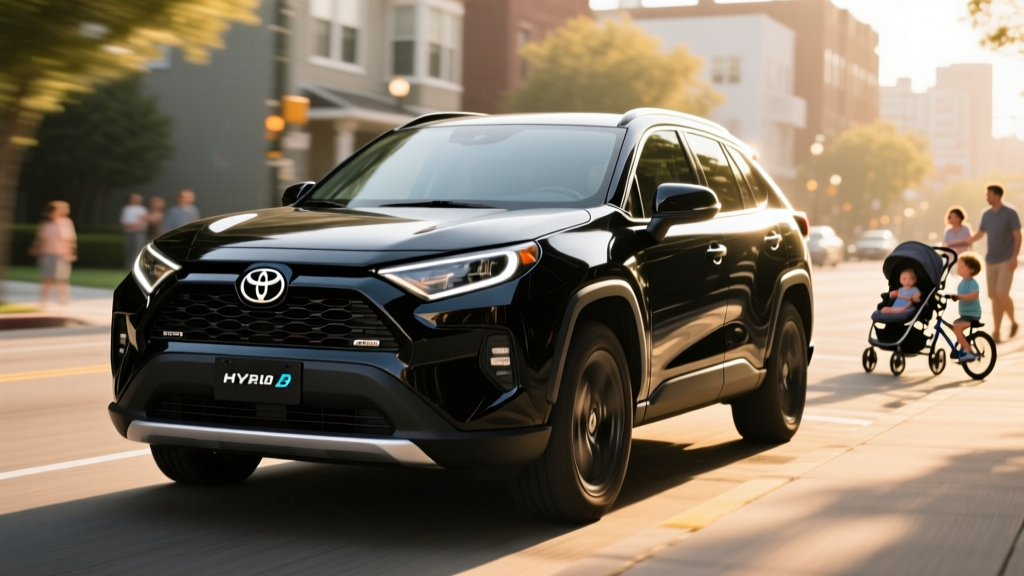
Conventional Hybrid (HEV): A small battery (typically 1–2 kWh) recharges solely through regenerative braking and the engine. You never plug it in. Electric-only driving is limited to brief low-speed assists. Think Toyota RAV4 Hybrid.
Plug-In Hybrid (PHEV): A much larger battery (the X5 uses 29.5 kWh) charges from a wall outlet or charger. It provides genuine electric-only range — 38 EPA miles in the X5 — before the gas engine engages. You can drive it without plugging in, but you lose the efficiency and cost benefits that justify the premium.
This distinction matters for cost calculations: if you can't charge at home or work, a PHEV becomes an expensive, heavy gas SUV. The X5 xDrive50e rewards owners who plug in nightly.
Efficiency in the Real World: MPG and MPGe
| Mode | City | Highway | Combined |
|---|---|---|---|
| Charge-Depleting (EV mode) | 56 MPGe combined | ||
| Charge-Sustaining (gas only) | 21 MPG | 24 MPG | 22 MPG |
The 56 MPGe figure applies when you're operating within the electric range with a charged battery. Once the battery depletes to its buffer threshold (roughly 5–7% state of charge), the inline-six takes over and you're burning gasoline at 22 MPG combined.
Real-world observations: In mixed suburban driving with daily Level 2 charging, owners commonly report using gasoline only 20–30% of the time across a year, translating to effective annual fuel consumption far below the gas-only sticker suggests. On a pure highway road trip with no charging, expect 23–25 MPG at 70 mph — slightly above the EPA highway estimate thanks to the inline-six's efficiency at steady cruise. In winter cold (below 30°F), electric-only range typically drops to 28–32 miles due to cabin heating demands and reduced battery output.
Compared to the gas-only X5 xDrive40i (24 MPG combined), the PHEV's advantage is almost entirely dependent on how often you charge and how short your daily trips are.
Electric Range and Charging: What 38 Miles Gets You
The X5 xDrive50e's 38-mile EPA electric range covers the daily round-trip commute for a significant portion of U.S. drivers. According to FHWA data, the average American drives roughly 37 miles per day — meaning many X5 PHEV owners could commute all week on electricity and only use gasoline for weekend trips.
EPA Electric Range: 38 miles
Real-world expectations: 32–36 miles in mild weather with moderate HVAC use; 26–30 miles in sub-freezing cold with cabin heat; 34–38 miles in ideal conditions (60–75°F, no heavy acceleration, flat terrain).
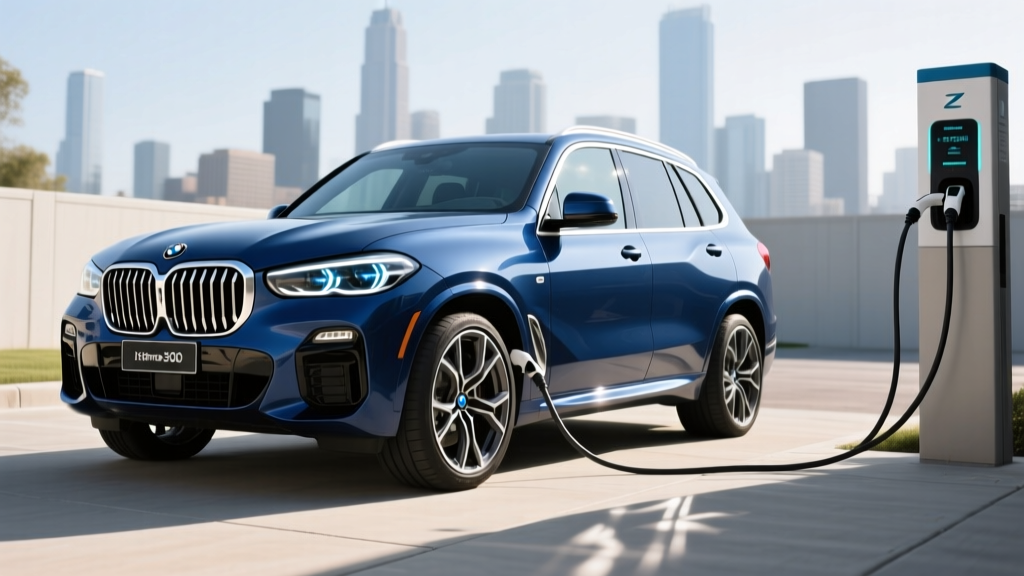
Charging specifics: The X5 xDrive50e charges via a J1772 connector at up to 7.4 kW on Level 2 AC power. A full 0–100% charge takes approximately 4 hours on a 32-amp Level 2 home charger. On a standard 120V household outlet (Level 1 at ~1.4 kW), a full charge takes roughly 18–20 hours — functional for overnight top-ups but impractical for a fully depleted battery.
Critically, the X5 xDrive50e does not support DC fast charging. This is typical for PHEVs in this class — the battery is too small to justify the hardware cost and thermal management complexity of DCFC. If you rely on public fast-charging networks, this vehicle won't use them.
Purchase Price, Trims, and Tax Credit Eligibility
The 2026 BMW X5 xDrive50e starts at $68,300 (plus $995 destination), placing it roughly $5,000–$7,000 above the gas-only xDrive40i. Popular option packages — the Premium Package, Driving Assistance Professional, and larger wheels — can push a well-equipped example to $78,000–$85,000.
Federal Tax Credit: §30D Eligibility
Under the current IRS §30D Clean Vehicle Credit, the BMW X5 xDrive50e qualifies for up to $3,750 — not the full $7,500. Here's why:
- Battery sourcing requirement: The $3,750 half of the credit requires critical minerals sourced from the U.S. or FTA partners; the other $3,750 requires battery components manufactured in North America. The X5 xDrive50e (built in Spartanburg, SC) meets the battery-component requirement but may not fully satisfy the critical-minerals threshold, yielding $3,750.
- MSRP cap: SUVs must have an MSRP at or below $80,000 to qualify. A base or moderately optioned X5 xDrive50e fits; a heavily optioned one exceeding $80,000 does not.
- Buyer income cap: Modified adjusted gross income must not exceed $150,000 (single), $225,000 (head of household), or $300,000 (joint filers).
- Point-of-sale transfer: Eligible buyers can transfer the credit to the dealer at purchase, reducing the out-of-pocket price immediately rather than waiting for a tax refund.
Always verify current-year eligibility with your tax professional and the IRS, as battery-sourcing compliance can shift with supply-chain changes.
Total First-Year Cost Snapshot
| Item | Estimated Cost |
|---|---|
| Base MSRP + destination | $69,295 |
| Typical options (Premium Pkg, 21" wheels) | +$6,500 |
| Federal tax credit (§30D) | −$3,750 |
| Home Level 2 charger install (240V/32A) | $800–$2,000 |
| First-year insurance (national avg. for luxury SUV) | $2,400–$3,200 |
| Effective first-year outlay (approx.) | $73,200–$77,200 |
Battery Longevity, Warranty, and Replacement Cost
BMW High-Voltage Battery Warranty
Coverage: 8 years or 80,000 miles (whichever comes first)
Capacity retention threshold: BMW warrants the high-voltage battery against defects and excessive capacity loss. If the battery falls below approximately 70% of its original usable capacity during the warranty period, BMW will repair or replace it at no cost.
Powertrain warranty: 4 years / 50,000 miles (BMW's standard new-vehicle coverage).
The 29.5 kWh NMC battery in the X5 xDrive50e benefits from BMW's liquid thermal management system, which keeps cell temperatures within optimal operating ranges during charging and discharging. This significantly slows degradation compared to passively cooled packs.
Long-term degradation data: Based on real-world PHEV fleet data and BMW's prior-generation 45e (which used a similar chemistry), owners typically see 5–10% capacity loss over the first 5 years / 60,000 miles. A well-maintained X5 PHEV battery should retain 80–85% of its original capacity at the 8-year mark — comfortably above the warranty threshold.
Out-of-warranty replacement cost: If the battery requires replacement after warranty expiration, expect a dealer quote in the range of $12,000–$18,000 (parts and labor). This is a significant sum, though battery costs have trended downward and third-party refurbishment options are increasingly available for older PHEVs. For most original owners who sell or trade within 6–8 years, this is unlikely to be a personal expense.
Reliability context: BMW's B58 inline-six engine is widely regarded as one of the most reliable modern turbocharged engines. The electric motor and power electronics add complexity but have fewer moving parts than a traditional transmission. IIHS and NHTSA safety ratings for the X5 platform have been strong, though specific 2026 crash-test results should be verified at purchase time.
Who Should Buy the X5 xDrive50e — and Who Shouldn't
Choose the BMW X5 xDrive50e PHEV if:
- You can install a Level 2 charger at home (garage or driveway with 240V access)
- Your daily round-trip commute is under 35–38 miles
- You want luxury SUV comfort and performance without committing to full EV range planning on road trips
- You frequently drive in areas with sparse DC fast-charging infrastructure
- You value the inline-six's refinement and 483 hp combined output
Choose a full EV (e.g., BMW iX) instead if:
- Your daily commute exceeds 40 miles and you want to eliminate gasoline entirely
- You have reliable access to DC fast charging (home or public)
- You want the lowest per-mile energy cost and minimal maintenance
- You qualify for the full $7,500 federal credit on an eligible EV
Choose the gas-only X5 xDrive40i if:
- You cannot charge at home or work
- You want the lowest upfront purchase price in the X5 lineup
- Your driving is predominantly long highway trips where the PHEV's electric range provides minimal benefit
5-Year Ownership Cost Comparison
| Cost Category | xDrive50e (PHEV) | xDrive40i (Gas) |
|---|---|---|
| Purchase price (after credit) | $68,045* | $63,500 |
| Fuel / electricity (5 yr) | $5,500–$7,000 | $11,500–$13,000 |
| Maintenance (5 yr) | $3,800–$4,500 | $4,500–$5,500 |
| Insurance (5 yr) | $13,000–$16,000 | $12,000–$14,500 |
| Depreciation (est. 5 yr) | $28,000–$33,000 | $25,000–$30,000 |
| Estimated 5-year total | $118,000–$129,000 | $117,000–$127,000 |
*Assumes $3,750 federal credit applied. Actual costs vary by state, driving habits, electricity/gas prices, and insurance profile.
The PHEV's higher purchase price is partially offset by fuel savings (especially if most driving is electric) and slightly lower maintenance (less engine runtime means fewer oil changes and reduced brake wear from regenerative braking). However, insurance premiums for the PHEV tend to run 5–10% higher due to the replacement cost of the high-voltage system. Depreciation is broadly similar, though PHEV resale values are increasingly competitive as buyer demand for electrified luxury SUVs grows.
Pros
- 38-mile electric range covers most daily commutes gasoline-free
- 483 hp combined — significantly more powerful than the gas xDrive40i
- No range anxiety — gas engine provides 440+ total miles for road trips
- Liquid-cooled battery with 8-year/80,000-mile warranty
- Built in Spartanburg, SC — strong North American content for tax credit
- Regenerative braking extends brake life
Cons
- $5,000–$7,000 premium over gas-only X5
- No DC fast charging capability
- Only $3,750 federal tax credit (not the full $7,500)
- MSRP cap ($80K) limits tax credit on well-optioned builds
- Electric range drops to ~28 miles in cold weather
- Added weight from battery slightly reduces cargo capacity vs. gas model
Frequently Asked Questions
How many MPG does the BMW X5 hybrid get?
The 2026 BMW X5 xDrive50e achieves 56 MPGe combined when operating in electric mode with a charged battery. Once the battery depletes, the gasoline engine delivers an EPA-estimated 22 MPG combined (21 city / 24 highway). Real-world highway driving at 70 mph typically yields 23–25 MPG on gas alone.
How far can the BMW X5 xDrive50e go on electric only?
The EPA rates the X5 xDrive50e at 38 miles of electric-only range. In real-world conditions, expect 32–36 miles in mild weather and 26–30 miles in freezing temperatures when cabin heating draws additional energy from the battery.
Does the BMW X5 hybrid qualify for a federal tax credit?
Yes, partially. Under current IRS §30D rules, the X5 xDrive50e qualifies for up to $3,750 — half of the maximum $7,500 credit. Eligibility depends on your income (under $300K joint), the vehicle's MSRP staying at or below $80,000, and battery-sourcing compliance. The credit can be transferred to the dealer at point of sale. Always confirm with a tax professional before purchasing.
Is the BMW X5 PHEV reliable, and what does a battery replacement cost?
The B58 inline-six engine in the X5 is widely considered one of BMW's most reliable modern powerplants. The high-voltage battery is liquid-cooled and warranted for 8 years / 80,000 miles against excessive capacity loss. Out-of-warranty battery replacement costs an estimated $12,000–$18,000, though most original owners will not face this expense within typical ownership periods.
Hybrid vs. PHEV vs. EV — which BMW SUV fits me?
If your commute is under 38 miles and you can charge at home, the X5 xDrive50e PHEV gives you daily electric driving with gasoline flexibility for road trips. If you want zero gasoline and have DC fast-charging access, the fully electric BMW iX (300+ mile range) is a stronger EV play. BMW does not offer a conventional (non-plug-in) hybrid X5 in the U.S., so the choice is PHEV, gas, or full EV.
Can I charge the X5 xDrive50e at a Tesla Supercharger or DC fast charger?
No. The X5 xDrive50e only supports AC charging via a J1772 connector at up to 7.4 kW (Level 2). It has no DC fast-charge port. You can charge at any public Level 2 station (ChargePoint, EVgo Level 2, etc.) or at home with a 240V wall charger.
Does the X5 PHEV battery degrade quickly?
Real-world data from BMW's prior PHEV generations suggests 5–10% capacity loss over 5 years with normal use. The liquid thermal management system actively protects cell health. Staying between 20–80% state of charge for daily use and avoiding frequent full 100% charges will further extend battery life — though the vehicle's built-in buffer already protects the top and bottom of the charge window.