Quick Verdict: The 2018 BMW X5 xDrive40e at a Glance
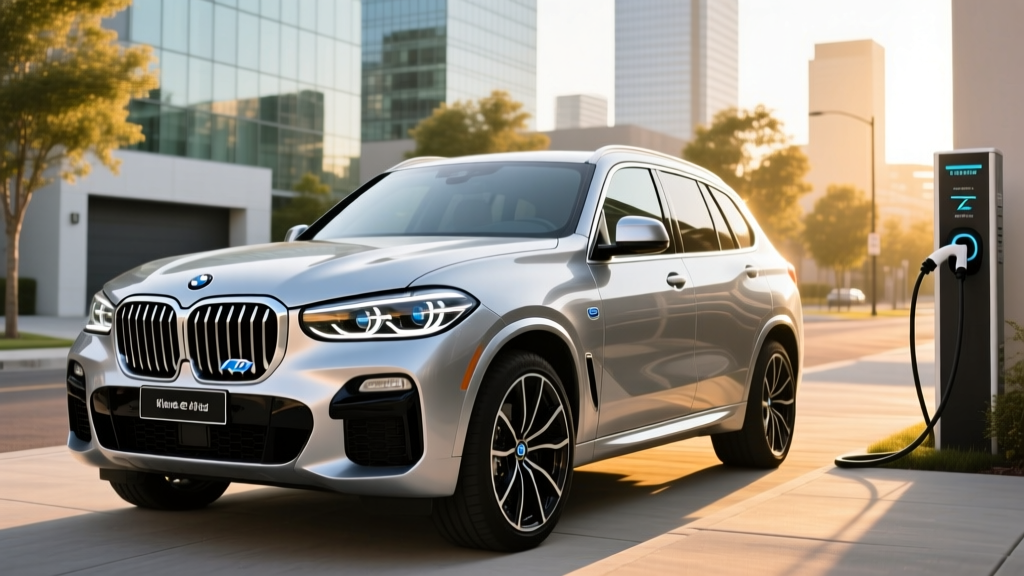
The 2018 BMW X5 xDrive40e was BMW's first plug-in hybrid SUV sold in the United States, pairing a turbocharged four-cylinder engine with an electric motor integrated into the 8-speed automatic transmission. With just 14 miles of EPA-rated electric-only range and a modest 9.4 kWh battery pack, this PHEV is best understood as a mild electrification play — useful for short commutes and providing all-wheel-drive confidence, but not a serious EV substitute. In 2026, the xDrive40e is exclusively available on the used market, where its value proposition hinges on battery health, maintenance history, and realistic expectations about what a first-generation luxury PHEV delivers.
| Spec | Value |
|---|---|
| Powertrain | 2.0L turbo I4 + electric motor (PHEV) |
| Combined Horsepower | 308 hp / 332 lb-ft torque |
| Battery (Usable) | ~7.0 kWh usable (9.4 kWh gross), NMC lithium-ion |
| EPA Electric-Only Range | 14 miles |
| EPA Combined MPGe | 56 MPGe (charge-sustaining + electric) |
| EPA MPG (Gas Only) | 24 combined (23 city / 25 highway) |
| Total Combined Range | ~350 miles (est.) |
| 0–60 mph | 6.5 seconds |
| Level 2 Charge Time (0–100%) | ~2.5 hours at 3.7 kW |
| DC Fast Charging | Not supported |
| Drivetrain | xDrive AWD |
| Original MSRP (2018) | ~$64,000 (before options) |
| Typical Used Price (2026) | $22,000–$32,000 depending on mileage/condition |
| Federal Tax Credit (New) | $4,918 (expired for new purchases; used credit may apply) |
HEV vs PHEV: Where the X5 xDrive40e Fits
Before evaluating the 2018 X5 hybrid, it's critical to distinguish the two hybrid architectures buyers encounter:
- Conventional Hybrid (HEV): Charges its small battery via regenerative braking and the engine. No plug. Examples: Toyota RAV4 Hybrid, Honda CR-V Hybrid. The driver never plugs in.
- Plug-in Hybrid (PHEV): Carries a larger battery that can be charged from a wall outlet or charging station, enabling a limited electric-only driving range before the gasoline engine kicks in. The 2018 BMW X5 xDrive40e is a PHEV.
The xDrive40e requires plug-in charging to access its electric-only range. If you never plug it in, it operates as a heavy, somewhat less efficient conventional hybrid — you'll see roughly 24 MPG combined from its 2.0-liter turbocharged four-cylinder engine, which is unimpressive for a vehicle of this size without the electric assist doing meaningful work.
Fuel Economy: EPA Numbers vs Real-World MPG
| Mode | City | Highway | Combined |
|---|---|---|---|
| Charge-Sustaining (Gas Only) | 23 MPG | 25 MPG | 24 MPG |
| Blended (Electric + Gas) | 56 MPGe combined | ||
The EPA rates the xDrive40e at 24 MPG combined when running purely on gasoline after the battery is depleted. According to fueleconomy.gov, that breaks down to 23 city and 25 highway.
Real-world expectations: Owners who plug in nightly and drive fewer than 14 miles per trip may rarely use gasoline, achieving effective MPGe figures well above the EPA sticker. However, once the battery depletes — which happens quickly given the 7.0 kWh usable capacity — you're hauling a 5,200-pound SUV on a four-cylinder engine. On highway road trips with no charging, expect 22–24 MPG at best. In cold weather (below 30°F), the electric-only range shrinks by 20–30%, dropping to roughly 10–11 miles, and the engine engages sooner to provide cabin heat.
The 56 MPGe combined figure is meaningful only if you regularly charge and drive within the electric range. For buyers who cannot charge at home or work, the practical fuel economy is the 24 MPG gas-only number — and at that rate, a diesel X5 xDrive35d from the same era actually delivers better highway efficiency.
Electric-Only Range, Battery, and Charging
The xDrive40e's 9.4 kWh gross battery pack (approximately 7.0 kWh usable due to BMW's conservative buffer to protect longevity) uses NMC (nickel-manganese-cobalt) lithium-ion cells mounted beneath the rear cargo floor. This placement reduces cargo capacity slightly compared to the gas-only X5 — you lose the spare tire well and gain a modest floor height increase.
Electric-only range: The EPA rates this PHEV at 14 miles. In real-world mixed driving at moderate temperatures, expect 11–14 miles. Highway-speed driving at 70+ mph will drain the pack in roughly 9–10 miles. In winter, plan for 8–11 miles.
Charging options:
- Level 1 (120V household outlet): Approximately 7–8 hours for a full charge using the included portable cordset. Fine for overnight top-ups if you start each day with a partially depleted pack.
- Level 2 (240V, up to 3.7 kW): Roughly 2.5 hours from empty to full. The xDrive40e's onboard charger is limited to 3.7 kW (single-phase, 16A), meaning even a 7.2 kW or 11.5 kW home charger will only deliver 3.7 kW to this vehicle.
- DC Fast Charging: Not available. The 2018 X5 xDrive40e has no DC fast-charge capability. You cannot use CCS, CHAdeMO, or Tesla Supercharger stations to charge this vehicle.
This is a significant limitation by 2026 standards. Modern PHEVs like the BMW X5 xDrive50e (the current-generation successor) offer over 35 miles of electric range and larger batteries. The xDrive40e's short range and slow charging mean it works best for owners with predictable, short commutes and reliable overnight home charging.
Powertrain and Performance
The xDrive40e combines a 2.0-liter BMW TwinPower Turbo inline-four (240 hp, 258 lb-ft on its own) with a 111-hp electric motor integrated into the ZF 8-speed automatic transmission. Combined system output is 308 horsepower and 332 lb-ft of torque, routed through BMW's xDrive all-wheel-drive system.
The electric motor provides instant torque fill at low speeds, masking the four-cylinder's turbo lag and making the X5 feel brisk around town. The 0–60 mph time of 6.5 seconds is respectable for a midsize luxury SUV, though the heavier six-cylinder X5 xDrive35i of the same era hits 6.2 seconds. Where the xDrive40e shines is in stop-and-go traffic, where regenerative braking recaptures energy and the electric motor handles low-speed crawling silently.
BMW offers three driving modes: Auto eDrive (default, blends gas and electric), Max eDrive (electric-only up to ~75 mph), and Save Battery (preserves charge for later use, such as entering a city center with emissions restrictions). The Save Battery mode is particularly useful on road trips — you can run the engine on the highway and save your electric range for city driving at your destination.
Battery Reliability, Warranty, and Replacement Cost
Original Battery Warranty: BMW covered the xDrive40e's high-voltage battery for 8 years or 80,000 miles (whichever comes first) against defects and capacity loss below a specified threshold (typically 70% of original capacity, though BMW's exact degradation threshold language should be confirmed with a dealer for your specific VIN).
2026 Status: For a 2018 model year vehicle, the 8-year warranty window expired in 2026. If you are purchasing a used 2018 xDrive40e today, the original hybrid battery warranty has likely expired unless the vehicle has unusually low mileage and BMW certified pre-owned (CPO) coverage was applied. Always verify warranty status with a BMW dealer using the VIN before purchase.
Real-world battery degradation: The xDrive40e's relatively small battery undergoes frequent charge-discharge cycles, which accelerates wear compared to larger PHEV or BEV packs. Owners reporting on forums and platforms like NHTSA.gov have noted electric-range reduction of 15–25% over 6–8 years of regular use. A vehicle that originally delivered 14 miles of electric range may show 10–12 miles at 80,000+ miles.
Battery replacement cost: As of 2026, a complete high-voltage battery replacement for the F15-generation X5 xDrive40e runs approximately $8,000–$12,000 including parts and labor at a BMW dealership. Independent hybrid-battery specialists may offer refurbished or module-level repairs for $4,000–$7,000. Given the vehicle's used market value of $22,000–$32,000, a full battery replacement represents a significant percentage of the car's worth — a critical factor in your purchase decision.
Pre-purchase recommendation: Before buying any used 2018 X5 xDrive40e, request a battery State of Health (SoH) reading from a BMW dealer or qualified independent shop. The iDrive system and BMW's diagnostic tools can report remaining battery capacity as a percentage. Anything below 80% SoH should factor into price negotiations or be treated as an upcoming expense.
Tax Credits and Used Purchase Economics
Original federal tax credit: When new, the 2018 X5 xDrive40e qualified for a federal plug-in electric vehicle tax credit of $4,918 under the pre-2023 IRS rules (the credit amount was based on battery capacity, and the xDrive40e's 9.4 kWh pack fell below the threshold for the maximum $7,500).
2026 used-EV credit (§25E): Under current IRS §25E rules, buyers of qualifying used plug-in hybrids may be eligible for a tax credit of up to $4,000 (30% of the sale price, capped at $4,000). To qualify:
- The vehicle must be purchased from a licensed dealer (private-party sales do not qualify).
- The sale price must be $25,000 or less.
- Buyer income caps apply: $75,000 single / $112,500 head of household / $150,000 married filing jointly (modified adjusted gross income).
- The vehicle must have a battery capacity of at least 7 kWh (the xDrive40e's 9.4 kWh gross pack qualifies).
- The credit is non-refundable — you must have sufficient tax liability to claim it.
Given typical 2026 used pricing, an xDrive40e listed at $24,500 from a dealer could yield the full $4,000 used-vehicle credit for income-eligible buyers, effectively reducing the net cost to around $20,500. Always consult a tax professional to confirm eligibility for your specific situation.
Who Should Choose the 2018 X5 xDrive40e?
Pros
- Luxury cabin with premium materials, iDrive infotainment, and quiet ride
- AWD capability with xDrive for snow and rain
- Electric-only mode for short, silent commutes
- Smooth powertrain integration — transitions between gas and electric are seamless
- Strong used-market value with potential §25E tax credit eligibility
Cons
- Only 14 miles EPA electric range (10–12 real-world)
- No DC fast charging; Level 2 limited to 3.7 kW
- 24 MPG gas-only is mediocre for a luxury midsize SUV
- Hybrid battery warranty likely expired; replacement costs $8K–$12K
- Reduced cargo space vs. gas X5 due to battery placement
- Four-cylinder engine sounds strained under hard acceleration compared to the I6
Buy this if: You want a luxury-badged AWD SUV at a used-market discount, your daily commute is under 12 miles round-trip, you can charge at home every night, and you accept that the battery may need replacement during your ownership.
Skip this if: You regularly drive more than 20 miles one-way (the electric range is negligible for longer commutes), you need maximum cargo space, you want strong fuel economy on road trips without plugging in, or you're uncomfortable with potential $8K+ battery repair costs on a depreciated vehicle.
Consider instead: The 2024+ BMW X5 xDrive50e offers 38 miles of electric range, a 25.7 kWh battery, and DC fast-charge capability — a generational leap. On the used market, the Toyota RAV4 Prime (42 miles electric, far lower maintenance costs) or the Volvo XC90 T8 (similar luxury, slightly more electric range) may serve PHEV buyers better depending on priorities.
Frequently Asked Questions
How many MPG does the 2018 BMW X5 hybrid get?
The EPA rates the 2018 X5 xDrive40e at 24 MPG combined (23 city / 25 highway) when running on gasoline alone after the battery is depleted. When factoring in electric-only driving, the combined rating is 56 MPGe. Real-world gas-only MPG on highway road trips typically falls between 22–24 MPG.
How far can the 2018 X5 xDrive40e go on electric only?
The EPA rates it at 14 miles of electric-only range. Real-world results vary from 9–14 miles depending on speed, temperature, and terrain. In cold weather, expect 8–11 miles.
Does the 2018 X5 hybrid qualify for a tax credit in 2026?
The original new-vehicle credit of $4,918 is no longer available. However, the IRS §25E used clean vehicle credit may provide up to $4,000 for eligible buyers purchasing from a dealer at or below $25,000, subject to income caps. Consult a tax professional for your specific situation.
Is the 2018 X5 xDrive40e reliable, and what does battery replacement cost?
The powertrain and ZF transmission are generally reliable, but the high-voltage battery is now 8 years old and likely out of warranty. Replacement costs range from $8,000–$12,000 at a dealer, or $4,000–$7,000 through independent specialists. Always check battery State of Health before purchasing.
Hybrid vs PHEV vs EV — which should I choose?
If you can charge at home and your daily driving is under 30 miles, a PHEV like the xDrive40e eliminates most gasoline use while retaining a gas engine for road trips. A conventional hybrid (HEV) like the Toyota Highlander Hybrid requires no plug but offers no electric-only range. A full BEV (battery electric vehicle) like the Tesla Model X or BMW iX eliminates gasoline entirely but requires reliable charging access and a higher upfront budget. For most buyers in 2026, a modern PHEV with 35+ miles of range or a long-range BEV offers a better ownership experience than this first-generation PHEV.
Can the 2018 X5 xDrive40e use DC fast chargers?
No. The 2018 X5 xDrive40e supports only Level 1 (120V) and Level 2 (240V, up to 3.7 kW) AC charging. It has no DC fast-charge port or capability.