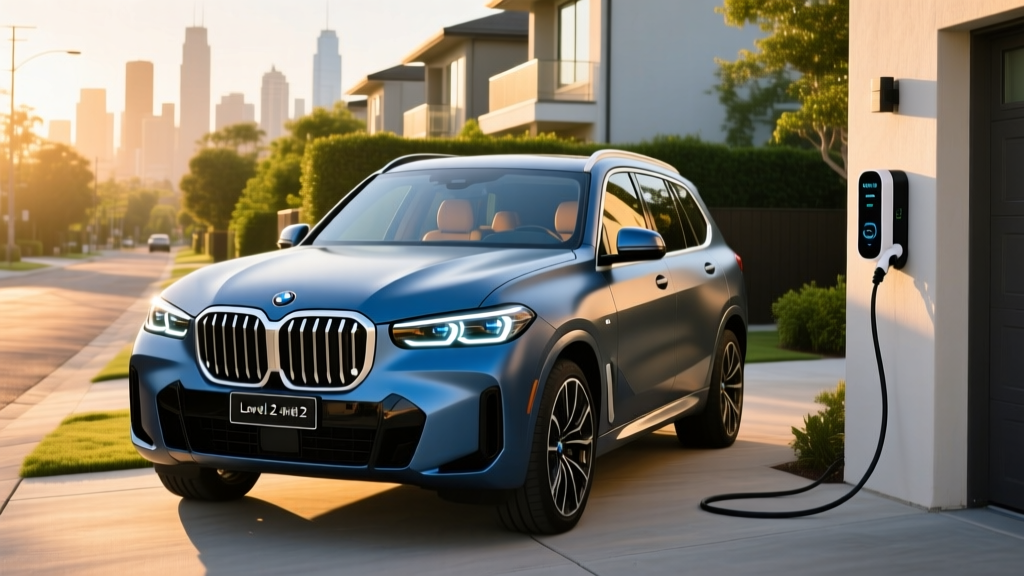
Quick Verdict: The BMW X5 eDrive Hybrid at a Glance
The 2026 BMW X5 xDrive50e is a plug-in hybrid (PHEV) luxury SUV that bridges the gap between a conventional gas-powered X5 and the all-electric BMW iX. With an EPA-estimated 38 miles of electric-only range, a combined 483 horsepower, and the ability to drive as a pure EV for most daily commutes, it targets buyers who want electric daily driving without range anxiety on longer trips.
But PHEV ownership is nuanced. Charging habits, tax credit eligibility, and real-world fuel economy all depend heavily on how you use it. This guide breaks down every spec that matters — from the 25.7 kWh battery to the EPA numbers to whether you'll actually qualify for federal incentives.
| Spec | Value |
|---|---|
| Powertrain | 3.0L turbocharged I6 + electric motor (PHEV) |
| Combined Horsepower | 483 hp / 516 lb-ft torque |
| Battery Capacity (usable) | 25.7 kWh (NMC lithium-ion) |
| EPA Electric-Only Range | 38 miles |
| EPA MPGe (electric + gas) | 56 MPGe combined |
| EPA MPG (gas-only, charge-depleted) | 22 city / 24 hwy / 22 combined |
| Total Combined Range | ~440 miles (electric + gas tank) |
| AC Charging (Level 2) | 7.4 kW max (0–100% in ~4.25 hrs) |
| DC Fast Charging | Not supported |
| 0–60 mph | 4.6 seconds |
| Drivetrain | xDrive AWD (8-speed automatic) |
| Cargo Volume | 33.3 cu ft (rear seats up) |
| Base MSRP (xDrive50e) | $67,775 (incl. destination) |
| Battery / Powertrain Warranty | 8 yr / 80,000 mi (battery) · 4 yr / 50,000 mi (powertrain) |
HEV vs. PHEV: Where the X5 eDrive Fits
Before evaluating the X5 xDrive50e, it's worth clarifying what type of hybrid it is — and what it isn't.
| Feature | Conventional Hybrid (HEV) | Plug-In Hybrid (PHEV) |
|---|---|---|
| Plug-in charging? | No — charges via regen + engine | Yes — plug in to charge battery |
| Electric-only range | 0–2 miles at low speed | 20–50+ miles typical |
| Battery size | 1–2 kWh | 12–30+ kWh |
| Federal tax credit | Not eligible | Potentially eligible (§30D) |
| Example | Toyota RAV4 Hybrid | BMW X5 xDrive50e |
The BMW X5 xDrive50e is a plug-in hybrid (PHEV). It has a 25.7 kWh battery pack that you charge by plugging in — either at home on a Level 2 charger or on a standard 120V outlet (Level 1). Unlike a conventional hybrid such as the Toyota Highlander Hybrid, the X5 eDrive can operate as a pure electric vehicle for up to 38 EPA-rated miles before the gasoline engine engages.
If you never plug it in, the X5 xDrive50e still functions as a hybrid — the engine and regenerative braking keep the battery partially charged — but you'll lose the electric-only range advantage and default to the gas-only MPG figures (22 combined). To get the most from this vehicle, regular plug-in charging is essential.
Fuel Economy: EPA Numbers vs. Real-World MPG
| Mode | City | Highway | Combined |
|---|---|---|---|
| Charge-sustaining (gas only) | 22 MPG | 24 MPG | 22 MPG |
| Blended (MPGe, electric + gas) | — | — | 56 MPGe |
| Electric-only efficiency | ~2.0 kWh/mi (estimated) | ||
The EPA rates the X5 xDrive50e at 56 MPGe combined when operating in blended electric-gas mode. MPGe (miles per gallon equivalent) converts electrical energy into a gasoline-equivalent figure for comparison purposes — it's useful for comparing against pure EVs and gas vehicles, but it doesn't tell the whole story.
Real-world expectations:
- With daily charging (short commutes under 35 miles): You'll use almost zero gasoline in daily driving. Owners who charge nightly and commute 20–30 miles report effectively 80–100+ MPGe over weeks of use, with gas consumption limited to occasional long trips.
- Without regular charging (road trips or no home charger): Expect the charge-sustaining figure of roughly 22 MPG combined. In highway-heavy driving at 75+ mph, real-world numbers may dip to 20–21 MPG due to the vehicle's 5,300+ lb curb weight.
- Cold weather impact: Electric-only range drops 20–30% in freezing temperatures. A 38-mile EPA range may shrink to 26–30 miles in winter, meaning the gas engine kicks in sooner on your commute.
According to fueleconomy.gov, the X5 xDrive50e's combined 56 MPGe is competitive among luxury midsize PHEV SUVs, though the Volvo XC90 Recharge and Lincoln Aviator Grand Touring offer similar blended figures with different electric-range trade-offs.
Electric-Only Range and Charging Specs
The X5 xDrive50e's 25.7 kWh usable battery delivers an EPA-estimated 38 miles of electric-only range. For context, the average American one-way commute is roughly 16 miles (FHWA data), meaning most daily round-trips fall within the electric envelope — if you charge regularly.
EPA electric range: 38 miles
Warm weather, mixed driving: ~34–38 miles
Highway-only at 70 mph: ~28–32 miles
Cold weather (below 32°F): ~26–30 miles
Charging the X5 xDrive50e:
| Charging Level | Power | Time (0–100%) | Notes |
|---|---|---|---|
| Level 1 (120V household) | ~1.4 kW | ~18 hours | Emergency/trickle only |
| Level 2 (240V home/public) | 7.4 kW max | ~4.25 hours | Recommended for daily use |
| DC Fast Charging | N/A | N/A | Not supported on X5 xDrive50e |
The lack of DC fast charging is a notable limitation. On a road trip, you cannot quickly top up the battery at a highway Electrify America or Tesla Supercharger station. The battery recharges only through the gasoline engine (in hybrid mode) or via Level 1/Level 2 AC charging. For most PHEV owners who charge at home overnight, this isn't a dealbreaker — but it's worth understanding before purchase.
The vehicle uses a J1772 connector for AC charging (standard for all non-Tesla EVs and PHEVs in North America). A BMW Wallbox Level 2 home charger (7.4 kW) is available through dealers, though any J1772-compatible Level 2 station will work.
Powertrain, Performance, and Driving Dynamics
The xDrive50e pairs BMW's B58 3.0-liter turbocharged inline-six with an electric motor integrated into the 8-speed automatic transmission. Combined output is 483 horsepower and 516 lb-ft of torque, routed through BMW's xDrive all-wheel-drive system.
The inline-six alone produces 312 hp, while the electric motor contributes up to 184 hp. The system manages power blending seamlessly — in Electric mode, the X5 accelerates briskly from the motor alone (adequate for city merging and passing). In Hybrid or Sport mode, both power sources combine for a 4.6-second 0–60 mph sprint.
Driving modes include:
- Electric: Pure EV operation up to ~84 mph (motor-limited). Engine stays off unless you floor the accelerator.
- Hybrid: Default mode — the system decides when to use electric, gas, or both based on speed, load, and battery state.
- Sport: Engine always on, maximum combined power, sharper throttle and steering response.
- Battery Hold / Battery Control: Preserves or recharges the battery via the engine — useful on highway stretches when you want electric range available for city driving at your destination.
Regenerative braking is moderate. The X5 xDrive50e does not offer true one-pedal driving like a full BEV; you'll still use the friction brakes regularly. Adaptive recuperation adjusts regen intensity based on traffic and navigation data when equipped with the optional Driving Assistance Professional package.
Pricing, Trims, and Tax Credit Eligibility
The 2026 BMW X5 xDrive50e starts at $67,775 including destination. BMW offers the PHEV powertrain in two trim configurations:
| Trim | Base MSRP | Key Additions |
|---|---|---|
| xDrive50e (base) | $67,775 | SensaTec upholstery, 12.3" + 14.9" curved display, adaptive LED headlights, panoramic roof |
| xDrive50e Premium (option package) | ~$71,000+ | Vernasca leather, heads-up display, Harman Kardon audio, heated steering wheel |
Popular standalone options (M Sport package, Executive package with glass controls and soft-close doors, air suspension) can push a well-equipped X5 xDrive50e past $80,000.
Does the BMW X5 xDrive50e Qualify for a Federal Tax Credit?
- Vehicle must have ≥ 7 kWh battery capacity (X5 xDrive50e: 25.7 kWh ✓)
- Vehicle must be assembled in North America (X5 is built in Spartanburg, SC ✓)
- MSRP must be ≤ $80,000 for SUVs (base xDrive50e qualifies; heavily optioned units may exceed the cap)
- Buyer AGI limits: $150k single / $225k head of household / $300k joint
- Battery critical minerals and components must meet phased-in sourcing thresholds
- Credit amount: up to $7,500, but depends on meeting both critical minerals ($3,750) and battery components ($3,750) requirements
- Available as point-of-sale rebate (dealer reduces purchase price) or as tax credit on your return
Source: IRS §30D Clean Vehicle Credit. Eligibility changes frequently — verify at the time of purchase. Consult a tax professional for personal eligibility.
The BMW X5 xDrive50e has historically qualified for a partial or full federal credit, but battery-sourcing requirements tighten annually. As of the 2026 model year, buyers should verify the exact credit amount with their BMW dealer at the point of sale, as the IRS updates its eligible-vehicle list periodically. The vehicle's North American assembly (Spartanburg, South Carolina) satisfies the assembly requirement, and the MSRP of the base trim falls under the $80,000 SUV cap.
State incentives vary: California's CVRP program, Colorado's state credit, and other state-level rebates may stack on top. Check your state's energy office for current programs.
Battery Warranty, Reliability, and Replacement Costs
Coverage: 8 years / 80,000 miles (whichever comes first)
Capacity threshold: BMW warrants the high-voltage battery against defects and excessive degradation. If capacity falls below ~70% of original within the warranty period, BMW will repair or replace the battery at no cost.
Powertrain warranty: 4 years / 50,000 miles (engine, transmission, drivetrain)
Longevity outlook: BMW's NMC lithium-ion packs in the PHEV lineup have shown solid durability. Because PHEV batteries are smaller and operate in a narrower state-of-charge window (the system buffers the top and bottom to reduce stress), degradation tends to be slower than in full BEVs that regularly charge to 100%. Most PHEV batteries lose 10–15% capacity over 8–10 years based on industry data — meaning your 38-mile electric range might become ~32–34 miles after a decade of use.
Out-of-warranty replacement cost: A full high-voltage battery replacement for the X5 xDrive50e is estimated at $8,000–$12,000 including parts and labor at a BMW dealer. However, BMW can often replace individual battery modules rather than the full pack, reducing costs to $2,000–$5,000 if only specific modules degrade. Module-level repair is increasingly common and is covered under the warranty process when applicable.
General reliability: The B58 inline-six is widely regarded as one of BMW's most reliable modern engines. The electric motor adds minimal mechanical complexity (no brushes, few moving parts). The main reliability risk areas are the high-voltage electronics (inverter, onboard charger) and the 8-speed transmission — both of which are mature components in BMW's lineup. According to IIHS and NHTSA, the X5 platform carries strong safety ratings across model years.
Who Should Choose the X5 eDrive vs. a Full EV or Gas X5?
- 38 miles electric covers most daily commutes gas-free
- 483 hp provides genuine performance SUV acceleration
- No range anxiety — gas engine for road trips (440+ mi total range)
- North American assembly supports §30D credit eligibility
- Quiet, refined electric-only city driving
- Strong build quality and BMW driving dynamics
- No DC fast charging — road-trip battery recharging is slow
- Heavier than gas X5 (~5,350 lbs), hurting gas-only MPG
- Electric range drops significantly in cold weather
- Cargo space slightly reduced vs. gas X5 (battery under floor)
- Options packages push price past $80k, risking MSRP credit cap
- Must plug in regularly to realize fuel savings
- Choose the X5 xDrive50e (PHEV) if: You have home or workplace Level 2 charging, your daily round-trip is under ~35 miles, you want electric commuting but take road trips 3+ times per year, and you want a luxury midsize SUV without committing to full EV ownership.
- Choose the all-electric BMW iX if: You have reliable home charging, rarely drive more than 300 miles in a day, want zero tailpipe emissions, and are ready for full EV ownership with DC fast charging capability (~300+ mi EPA range).
- Choose the gas BMW X5 xDrive40i if: You lack consistent charging access, drive long distances daily, want the lowest purchase price, and don't want to manage charging logistics. Expect ~24 MPG combined.
Frequently Asked Questions
How many MPG does the BMW X5 xDrive50e get?
The EPA rates the X5 xDrive50e at 56 MPGe combined (blended electric + gas) and 22 MPG combined when running on gasoline alone after the battery is depleted. Real-world gas-only MPG on the highway may be 20–24 MPG depending on speed and terrain. If you charge daily and commute under 38 miles, you may use almost no gasoline during the week.
How far can the BMW X5 eDrive go on electric only?
The EPA estimates 38 miles of electric-only range. In warm-weather mixed driving, expect 34–38 miles. Highway driving at 70+ mph reduces this to roughly 28–32 miles, and cold weather (below freezing) can drop it to 26–30 miles. The electric motor can propel the X5 up to approximately 84 mph before the gas engine must engage.
Hybrid vs. PHEV vs. EV — which fits me?
A conventional hybrid (HEV) like the Toyota Highlander Hybrid never plugs in and offers no electric-only range — it simply improves MPG (typically 30–35 MPG combined). A plug-in hybrid (PHEV) like the X5 xDrive50e plugs in for 20–50 miles of electric driving, then operates as a hybrid. A full EV (BEV) like the BMW iX has no gas engine, offers 250–350 miles of range, and requires charging infrastructure. PHEVs suit buyers who want electric commuting but need gas flexibility for road trips.
Is the BMW X5 xDrive50e reliable, and what does a battery replacement cost?
The B58 engine and electric motor combination has proven reliable in BMW's lineup. The high-voltage battery is warrantied for 8 years / 80,000 miles against defects and excessive degradation. Full battery replacement is estimated at $8,000–$12,000 out of warranty, but module-level repairs ($2,000–$5,000) are more common. PHEV batteries tend to degrade slowly because the system buffers charge to protect cell health.
Does the 2026 BMW X5 xDrive50e qualify for a federal tax credit?
It may qualify for up to $7,500 under the IRS §30D Clean Vehicle Credit, subject to battery-sourcing requirements, buyer income limits ($300k joint / $150k single), and the $80,000 MSRP cap for SUVs. The X5 is assembled in Spartanburg, SC (meets North American assembly rule), and the base MSRP is under the cap. However, heavily optioned vehicles may exceed $80,000 and lose eligibility. The credit can be applied as a point-of-sale rebate through a registered dealer. Always verify current eligibility on IRS.gov at time of purchase.
Can the BMW X5 xDrive50e DC fast charge?
No. The X5 xDrive50e supports only AC charging — Level 1 (120V, ~1.4 kW) and Level 2 (240V, up to 7.4 kW). A full charge on Level 2 takes approximately 4.25 hours. DC fast charging is not available on this PHEV. On road trips, the battery recharges through the gasoline engine in hybrid mode.
How much does it cost to charge the X5 xDrive50e at home?
Charging the 25.7 kWh battery from empty to full on Level 2 at the U.S. average electricity rate of ~$0.16/kWh costs roughly $4.11. That gives you 38 miles of electric range — equivalent to about $0.11 per mile. By comparison, the gas-only X5 xDrive40i at 24 MPG and $3.40/gallon costs about $0.14 per mile. Savings are modest per mile but compound over thousands of electric miles, and the PHEV produces zero tailpipe emissions during electric operation.