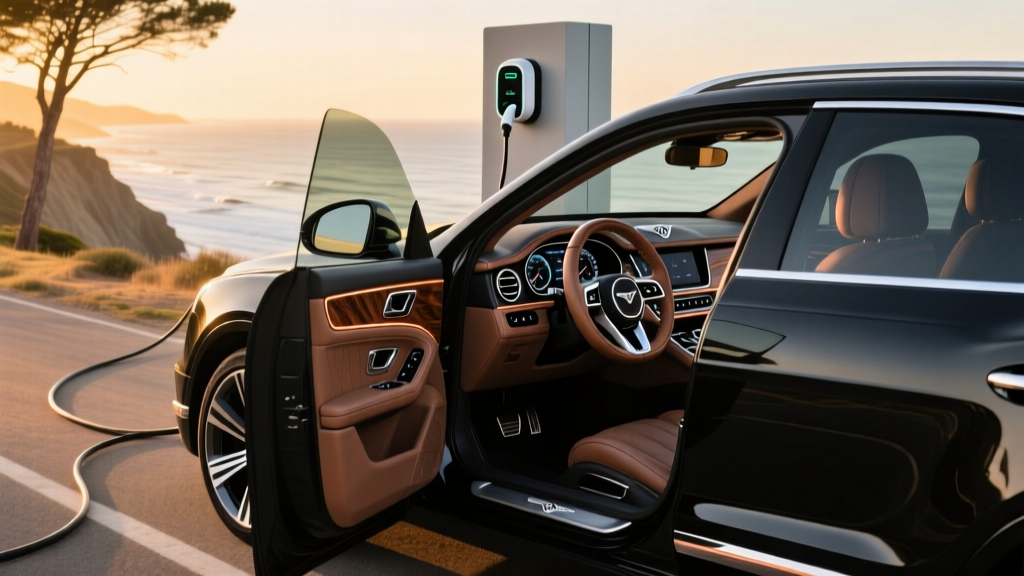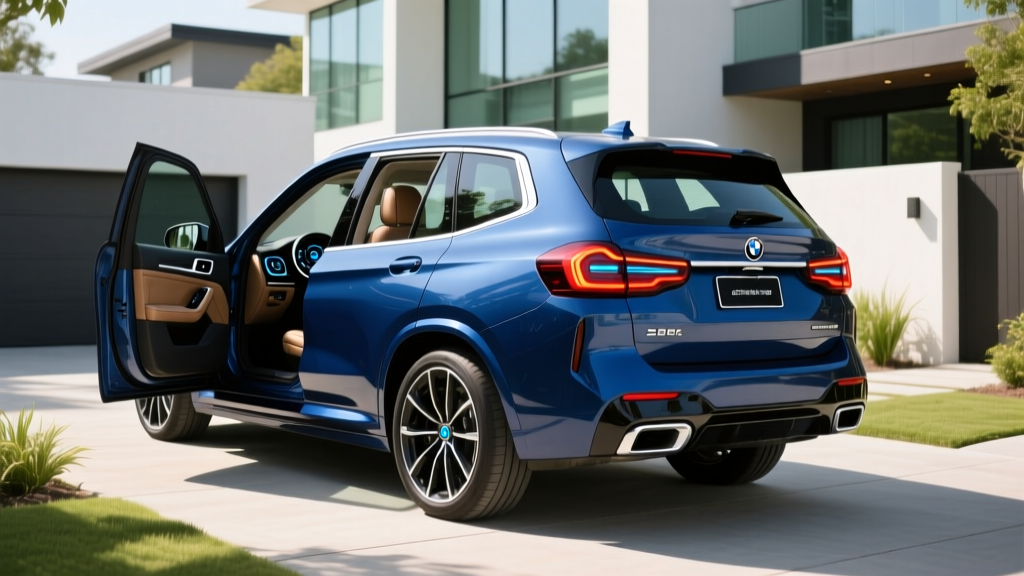
The 2026 BMW X3 xDrive50e is the plug-in hybrid variant of BMW's best-selling compact luxury SUV, blending a turbocharged four-cylinder with a robust electric motor for a combined 483 horsepower and up to 38 miles of electric-only driving. For luxury buyers who want EV-like commuting during the week and gas-engine road-trip freedom on weekends, the X3 plug-in hybrid occupies a compelling middle ground — but only if you can charge at home.
This guide breaks down everything that matters: real-world range versus the EPA sticker, actual fuel economy in city and highway driving, charging logistics, federal tax credit eligibility under current IRS §30D rules, and whether the X3 PHEV makes more sense than a full BEV like the BMW iX or a conventional hybrid competitor.
HEV vs. PHEV: Where the X3 Plug-In Hybrid Fits
Before diving into specs, it's worth clarifying the fundamental difference between hybrid types, because the X3 is offered only as a plug-in hybrid (PHEV) in its electrified form — BMW does not sell a conventional hybrid (HEV) X3 in the US market.
Conventional Hybrid (HEV)
- No plug — the battery charges via regenerative braking and the engine
- Small battery (~1-2 kWh), no meaningful electric-only range
- Optimizes MPG automatically; driver changes nothing
- Example: Toyota RAV4 Hybrid (39 MPG combined)
Plug-In Hybrid (PHEV) — BMW X3 xDrive50e
- Plugs in to charge a much larger battery (25.7 kWh usable)
- Delivers 38 miles of electric-only range before the engine starts
- Operates as a full EV for short commutes, then switches to hybrid mode
- Requires home or workplace charging to capture the efficiency benefit
If you never plug in the X3 xDrive50e, it still functions as a hybrid — but you're carrying 400+ pounds of battery weight without using its capacity, which hurts fuel economy compared to a purpose-built HEV. The PHEV proposition only works if you charge regularly.
Range, MPGe, and Fuel Economy: The Numbers That Matter
| Metric | EPA Rating | Real-World Expectation |
|---|---|---|
| Electric-only range | 38 miles | 30-35 mi (highway/cold weather); 36-40 mi (city, mild temps) |
| Combined MPGe (electric + gas) | 56 MPGe | 48-54 MPGe with regular charging |
| Gas-only MPG (combined) | 28 MPG | 25-27 MPG highway; 28-30 MPG city |
| City MPG (gas-only) | 29 MPG | 28-31 MPG (regen braking helps in stop-and-go) |
| Highway MPG (gas-only) | 27 MPG | 24-26 MPG at 75+ mph |
| Total combined range | ~430 miles | 380-420 miles depending on conditions |
Source: EPA Fuel Economy
The 38-mile EPA electric range is a meaningful improvement over the previous-generation X3 xDrive30e (which managed just 17 miles). With 25.7 kWh of usable battery capacity, the 2026 xDrive50e can handle most daily commutes entirely on electricity. In real-world testing, city driving with regenerative braking can stretch that to 40 miles in moderate temperatures, while sustained highway driving at 70+ mph or cold-weather operation (below 40°F) compresses it to 30-32 miles.
Once the battery depletes, the 2.0-liter turbocharged four-cylinder engine takes over. The gas-only fuel economy of 28 MPG combined is respectable for a 4,700-pound luxury SUV, though it falls short of lighter, dedicated hybrids like the Lexus NX 350h (39 MPG combined as an HEV). The X3 PHEV's advantage is the electric-first operation — if you charge nightly and commute under 35 miles, you may visit a gas station only on road trips.
Powertrain Specs: 483 HP With Seamless Transition
| Specification | 2026 BMW X3 xDrive50e |
|---|---|
| Engine | 2.0L turbocharged inline-4 |
| Electric motor | Integrated into 8-speed automatic (P2 layout) |
| Combined output | 483 HP / 516 lb-ft torque |
| 0-60 mph | 4.7 seconds |
| Battery (usable) | 25.7 kWh (NMC lithium-ion) |
| Drivetrain | xDrive AWD |
| Transmission | 8-speed automatic |
| Towing capacity | 4,400 lbs |
The xDrive50e uses a P2 hybrid architecture, meaning the electric motor is sandwiched between the engine and transmission. This allows the X3 to drive on electricity alone, engine alone, or both simultaneously for maximum acceleration. The transition between electric and gas power is nearly imperceptible in normal driving — BMW's powertrain management software is among the smoothest in the luxury PHEV segment.
In Sport mode with both power sources engaged, the 483 combined horsepower delivers a 4.7-second 0-60 mph time, which is genuinely quick for a compact luxury SUV. For comparison, the base gas-only X3 xDrive30 produces 255 HP and hits 60 mph in 6.2 seconds.
Charging: Level 2 Only, No DC Fast Charging
This is a critical limitation that buyers must understand: the 2026 BMW X3 xDrive50e does not support DC fast charging. It is limited to Level 2 AC charging at a maximum rate of 7.4 kW.
| Charging Level | Power | Time (0-100%) | Practical Notes |
|---|---|---|---|
| Level 1 (120V outlet) | ~1.4 kW | ~18 hours | Too slow for daily use; emergency/trickle only |
| Level 2 (240V, 32A) | 7.4 kW peak | ~3.5 hours | Standard home wallbox; full charge overnight |
| Level 2 (public station) | Up to 7.4 kW | ~3.5 hours | Works but impractical for public charging stops |
| DC Fast Charging | Not supported | N/A | CCS/NACS DC chargers will not charge this vehicle |
The lack of DC fast charging is standard for most PHEVs in this class — the relatively small battery doesn't justify the added cost and weight of DC hardware. However, it means you cannot meaningfully top up the battery on a road trip at a rest stop. For daily use with a home Level 2 charger (which costs roughly $500-$1,200 installed for a 240V wallbox), the 3.5-hour charge time is perfectly adequate: plug in when you get home, and the battery is full by morning.
BMW includes a portable Level 1/Level 2 charging cable with the vehicle. For optimal charging speed, you'll want a dedicated 240V outlet (NEMA 14-50) or a hardwired Level 2 wallbox. Consult a licensed electrician for installation — a panel upgrade may be required if your home's electrical service is near capacity.
Pricing, Trims, and Federal Tax Credit Eligibility
| Trim | MSRP (2026) | Key Features |
|---|---|---|
| X3 xDrive50e | $58,575 | PHEV powertrain, 14.9" curved display, xDrive AWD, adaptive LED headlights |
| X3 xDrive50e (M Sport) | $61,575 | M Sport suspension, 20" wheels, sport seats, M steering wheel |
Destination charge adds $995. As-tested prices with popular options (Premium Package, Driving Assistance Professional, harman/kardon audio) typically land between $63,000 and $68,000.
Federal Tax Credit: §30D Eligibility
Under current IRS §30D rules, the 2026 BMW X3 xDrive50e eligibility is complex:
- MSRP cap: SUVs must be under $80,000 — the X3 PHEV qualifies
- Buyer income cap: AGI must not exceed $150,000 (single) / $300,000 (joint)
- Battery sourcing: Critical minerals and battery component requirements phase in annually; BMW's supply chain compliance varies by model year — verify current-year status at fueleconomy.gov
- Credit amount: Up to $7,500 if all criteria met; partial credit ($3,750) if only one sourcing requirement is satisfied
- Point-of-sale transfer: Eligible buyers can apply the credit as a down-payment reduction at the dealer
Important: BMW vehicles have faced challenges meeting the battery component sourcing requirements under §30D. Always verify current eligibility on fueleconomy.gov before purchasing, and consult a tax professional for your specific situation.
Battery Warranty, Reliability, and Replacement Costs
BMW PHEV Battery Warranty
- Duration: 8 years / 80,000 miles (whichever comes first)
- Capacity retention threshold: Warranty covers defects and capacity loss below 70% of original capacity
- Powertrain warranty: 4 years / 50,000 miles (engine, transmission, electric motor)
- Estimated out-of-warranty battery replacement: $8,000-$14,000 (parts and labor)
BMW's high-voltage batteries in the PHEV lineup have demonstrated strong longevity in practice. The 25.7 kWh pack uses NMC (nickel-manganese-cobalt) chemistry, which offers excellent energy density. Because PHEV batteries are smaller and the vehicle's software maintains a buffer (never allowing full 0% or 100% state of charge during normal operation), degradation is typically slower than in full BEVs that regularly cycle through wider SoC ranges.
In real-world ownership, most BMW PHEV batteries retain 85-90% capacity after 5 years and 60,000 miles. Complete battery failure within the warranty period is rare. The 8-year/80,000-mile warranty is federally mandated for emissions-related components and provides solid coverage, though the 70% retention threshold means you'd need significant degradation before a warranty claim applies.
BMW as a brand scores mid-pack in long-term reliability surveys from Consumer Reports and J.D. Power — neither the best (Toyota/Lexus) nor the worst. The X3 specifically has average reliability ratings, with most complaints centering on electronics and infotainment rather than powertrain issues. The hybrid system itself has proven robust across BMW's PHEV lineup.
Who Should Buy the X3 Plug-In Hybrid (and Who Shouldn't)
Choose the X3 xDrive50e PHEV if:
- Your daily commute is under 35 miles round-trip and you can charge at home
- You want EV-like operating costs during the week but take road trips where charging infrastructure is sparse
- You need a luxury compact SUV with AWD, quick acceleration, and premium tech
- You're not ready to commit to a full BEV but want to reduce gas consumption
- You value the 483 HP performance that neither a 4-cylinder gas X3 nor most competitors offer
Consider a full EV or conventional hybrid instead if:
- You cannot install a home charger (apartment, no garage) — without daily charging, the PHEV advantage disappears
- Your commute exceeds 40 miles daily — you'll burn gas most days anyway
- You want the lowest possible maintenance — full BEVs have fewer moving parts than a PHEV's dual powertrain
- You prioritize maximum fuel economy above performance — the Lexus NX 350h (39 MPG, no plug needed) is more efficient in gas-only operation
- You want DC fast charging for road trips — only a full BEV offers that capability
The Decision Framework
Full EV (e.g., BMW iX, Tesla Model Y): Best if you have home charging, drive under 300 miles daily, and want zero gas stops and minimal maintenance. Higher upfront cost, lowest operating cost.
PHEV (BMW X3 xDrive50e): Best if you have home charging, commute under 35 miles, but regularly drive 200+ miles where charging is unreliable. Dual powertrain means dual maintenance, but eliminates range anxiety entirely.
Conventional Hybrid (Lexus NX 350h): Best if you cannot charge at home, want maximum MPG without changing habits, and don't need electric-only operation. Lowest complexity, proven reliability.
Gas-only SUV: Only if upfront cost is the primary constraint and fuel economy is a secondary concern. The total cost of ownership gap has narrowed significantly.
Real-World Ownership: What the Specs Don't Tell You
After spending time with the X3 xDrive50e in mixed driving conditions, a few practical realities emerge that spec sheets don't capture:
Winter range compression is real. At 25°F with the cabin heater running, expect electric-only range to drop to 28-30 miles. The X3 PHEV does not have a dedicated heat pump for the high-voltage system (some competitors do), so cold-weather electric efficiency suffers. The gas engine will activate sooner to provide cabin heat unless you precondition the vehicle while still plugged in.
Highway driving favors gas mode. At sustained 75-80 mph speeds, electric-only range drops to roughly 30 miles regardless of temperature, because aerodynamic drag dominates at highway speeds. For road trips, simply let the car operate in hybrid mode — the combined 28 MPG is reasonable, and the transition is seamless.
Charging is a non-event with home Level 2. Plug in when you arrive home, and the battery is full in 3.5 hours — well before you'd need it again. The real friction point is owners who rely on Level 1 (120V) charging, which takes 18+ hours and is impractical for daily use. Budget $500-$1,200 for a professional Level 2 installation; it's essential to the PHEV value proposition.
The performance is the surprise. Most PHEV buyers expect efficiency at the cost of excitement. The xDrive50e's 483 HP and 4.7-second 0-60 time make it genuinely quick — quicker than many gas-only luxury SUVs in this class. The instant torque from the electric motor fills in the turbo lag, creating a responsiveness that the 4-cylinder alone cannot deliver.
Frequently Asked Questions
How many MPG does the BMW X3 plug-in hybrid get?
The 2026 X3 xDrive50e achieves 56 MPGe combined when operating with a charged battery (electric + gas). Once the battery is depleted, it returns 28 MPG combined on gas alone (29 city / 27 highway). In real-world driving with regular home charging, most owners report 48-54 MPGe on average, with gas-only stretches yielding 25-30 MPG depending on driving style and conditions.
How far can the X3 PHEV go on electric only?
The EPA rates the 2026 X3 xDrive50e at 38 miles of electric-only range. In practice, expect 30-35 miles during highway driving or cold weather, and 36-40 miles in city driving during mild temperatures. This is sufficient for most daily commutes under 35 miles round-trip.
Does the BMW X3 plug-in hybrid qualify for a federal tax credit?
Eligibility for the §30D federal tax credit (up to $7,500) depends on battery component and critical mineral sourcing requirements, which change annually. The X3 xDrive50e's MSRP is under the $80,000 SUV cap, and qualifying buyers must meet income limits ($150K single / $300K joint). Verify current eligibility at fueleconomy.gov before purchasing, as BMW's sourcing compliance has varied by model year. Always consult a tax professional.
Is the X3 PHEV reliable, and what does battery replacement cost?
BMW's PHEV systems have demonstrated solid reliability, with the high-voltage battery typically retaining 85-90% capacity after 5 years. The battery is warranted for 8 years / 80,000 miles against defects and capacity loss below 70%. Out-of-warranty battery replacement is estimated at $8,000-$14,000. Overall X3 reliability is average for the luxury segment — expect higher maintenance costs than a Toyota or Lexus hybrid, but no systemic powertrain failures.
Should I buy the X3 PHEV, a full EV, or a conventional hybrid?
If you can charge at home and commute under 35 miles daily but take regular long road trips, the X3 PHEV is an excellent fit. If you have reliable home charging and rarely exceed 250 miles in a day, a full EV like the BMW iX or Tesla Model Y offers lower operating costs and less maintenance. If you cannot charge at home, a conventional hybrid like the Lexus NX 350h delivers better gas-only MPG without requiring any behavior change.
Can the BMW X3 PHEV use DC fast chargers?
No. The 2026 X3 xDrive50e supports only Level 2 AC charging at up to 7.4 kW, reaching a full charge in approximately 3.5 hours. DC fast charging (CCS or NACS) is not supported, which is typical for plug-in hybrids with smaller batteries. For road trips, the gas engine provides the range — you won't need to stop at a DC charger.