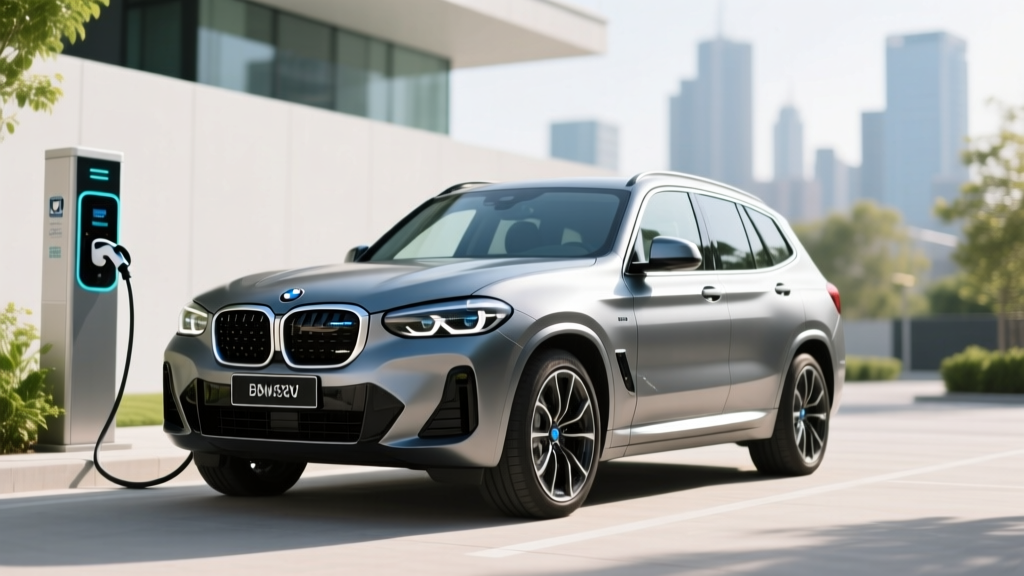
The BMW X3 has long been one of the best-selling compact luxury crossovers in the U.S., and for 2026, the electrified variant — the BMW X3 xDrive30e plug-in hybrid — carries over with meaningful updates following the model's full redesign for the 2025 model year. If you've been searching for a BMW X3 hybrid, this is the version to know: it's a plug-in hybrid (PHEV), not a conventional hybrid, meaning it offers genuine electric-only commuting capability alongside a turbocharged gas engine for longer trips.
Below, we break down the 2026 X3 xDrive30e's powertrain, electric range, real-world MPG expectations, charging logistics, pricing, tax-credit eligibility, and whether this PHEV makes more sense for your garage than a full battery-electric vehicle like the BMW iX3 (not sold in the U.S.) or a conventional X3 xDrive30.
2026 BMW X3 xDrive30e: Powertrain and Performance Specs
The 2026 X3 xDrive30e pairs a 2.0-liter turbocharged inline-four with an electric motor integrated into the eight-speed automatic transmission. Combined output is rated at 299 horsepower and 332 lb-ft of torque, with BMW's xDrive all-wheel drive standard. The internal combustion engine produces 192 hp on its own, while the electric motor contributes up to 184 hp (net combined figures are lower due to powertrain integration).
| Spec | Value |
|---|---|
| Powertrain | 2.0L turbo I-4 + electric motor (PHEV) |
| Combined Output | 299 hp / 332 lb-ft |
| Transmission | 8-speed automatic (ZF) |
| Drivetrain | xDrive AWD |
| Battery (usable) | 19.7 kWh (NMC lithium-ion) |
| EPA Electric Range | 35 miles |
| EPA MPGe (combined) | 60 MPGe |
| EPA MPG (gas-only, combined) | 29 MPG |
| Total Combined Range | ~430 miles |
| 0-60 mph | 5.9 seconds |
| Max AC Charge Rate | 7.4 kW (Level 2) |
| DC Fast Charging | Not available |
| Base MSRP | $51,975 (incl. destination) |
The 19.7 kWh usable battery pack (22.0 kWh gross) is an NMC (nickel manganese cobalt) lithium-ion unit mounted beneath the rear floor. This is a meaningful capacity for a compact luxury PHEV — large enough to cover most daily commutes on electricity alone, yet compact enough to preserve cargo space (though the xDrive30e loses roughly 2 cu ft of under-floor storage compared to the gas-only X3).
EPA MPG Breakdown and Real-World Fuel Economy
Fuel economy in a PHEV depends entirely on how you use it. The EPA provides two figures: MPGe (miles per gallon equivalent, measuring efficiency when running on both electricity and gasoline) and standard MPG (gasoline-only operation after the battery is depleted).
| Mode | City | Highway | Combined |
|---|---|---|---|
| Charge-Depleting + Gas (MPGe) | — | — | 60 MPGe |
| Gas-Only (MPG) | 27 MPG | 32 MPG | 29 MPG |
Real-world expectations: In mixed suburban driving with regular plug-in charging, owners typically report achieving 60–80+ MPGe equivalent over the first 30–40 miles of a trip, since most of that distance is covered on electricity. Once the battery is depleted, expect 26–30 MPG combined in real-world conditions — slightly below the EPA's 29 MPG figure during aggressive highway driving or in cold weather, but potentially higher during gentle city driving where the engine can shut off frequently.
If you rarely plug in, the X3 xDrive30e will function as a heavy hybrid and deliver roughly 26–29 MPG — respectable for a 4,400-lb luxury AWD crossover, but not dramatically better than the gas-only X3 xDrive30 (EPA 27 MPG combined). The PHEV advantage only materializes when you charge regularly.
Electric-Only Range and Charging Logistics
Real-World Electric Range: 28–33 miles (mixed driving); 22–26 miles in sustained cold weather (below 35°F) or at highway speeds above 70 mph.
Total Combined Range (electric + gas): ~430 miles
The 35-mile EPA electric range is sufficient for a large share of American commutes. According to FHWA data, the average one-way commute is roughly 16 miles, meaning a round-trip commute of ~32 miles falls within the xDrive30e's electric envelope — provided you charge at home overnight.
Charging options:
- Level 1 (120V household outlet): ~1.4 kW — full charge in approximately 14 hours. Viable for overnight top-ups if you drive fewer than 25 electric miles per day.
- Level 2 (240V home charger, 32A): 7.4 kW — full charge in approximately 2 hours 45 minutes. This is the recommended setup and easily replenishes the battery overnight.
- DC Fast Charging: Not supported. The X3 xDrive30e does not have a CCS or NACS DC fast-charge port. This is typical for compact PHEVs — the battery is small enough that Level 2 charging is adequate for overnight use.
For PHEV owners, home Level 2 charging is the practical standard. Public charging is rarely necessary since the gas engine eliminates range anxiety on longer trips. A basic Level 2 home charger (e.g., ChargePoint Home Flex or Emporia Vue) costs $500–$700 for equipment, with installation typically running $800–$2,000 depending on panel proximity and local permitting.
HEV vs PHEV vs Full EV: Which Is Right for You?
BMW does not offer a conventional hybrid (HEV) version of the X3 in the U.S. market. Your choices within the X3 lineup are the gas-only xDrive30, the xDrive30e plug-in hybrid, or stepping outside the X3 to the fully electric BMW iX (a larger, more expensive crossover). Here's how the PHEV compares to the alternatives:
Conventional Hybrid (HEV)
Example: Toyota RAV4 Hybrid
Plugs in? No
Electric range: ~1 mile (assist only)
Best for: Drivers who want better MPG without changing habits
Plug-in Hybrid (PHEV)
Example: BMW X3 xDrive30e
Plugs in? Yes
Electric range: 35 miles
Best for: Home-charging access + occasional road trips
Full EV (BEV)
Example: Tesla Model Y / BMW iX
Plugs in? Yes (required)
Electric range: 280–340 miles
Best for: Reliable home charging + mostly <250-mi trips
Choose the X3 xDrive30e PHEV if: You have Level 2 home charging, your daily driving is under 35 miles, but you take road trips several times a year and don't want to plan around DC fast-charging infrastructure.
Choose a full EV instead if: Your daily mileage regularly exceeds 40 miles (making the PHEV's gas engine kick in frequently), you have access to reliable DC fast charging, and you want to eliminate gasoline entirely for environmental or cost reasons.
Choose a conventional hybrid (not the X3) if: You cannot charge at home — an apartment dweller or street parker, for example. A PHEV you never plug in is just an expensive, heavy hybrid.
Pricing, Trims, and Tax Credit Eligibility
The 2026 BMW X3 xDrive30e starts at $51,975 (including $995 destination). This represents a premium of approximately $5,500 over the gas-only X3 xDrive30 ($46,475). Key standard features include BMW's iDrive 9 infotainment on a 14.9-inch curved display, wireless Apple CarPlay/Android Auto, heated front seats, and BMW's Driving Assistant (forward collision warning, automatic emergency braking, lane departure warning).
Popular options that push the price toward $58,000–$62,000 include the Premium Package (panoramic moonroof, head-up display, Harman Kardon audio), M Sport Package, and the Driving Assistant Professional Package (adaptive cruise with stop-and-go, lane-keeping assist — a Level 2 SAE driver-assistance system, not autonomous driving).
Federal Tax Credit: §30D Eligibility
Under the current IRS §30D Clean Vehicle Credit, PHEVs can qualify for up to $7,500 — but eligibility depends on multiple requirements:
- MSRP Cap: SUVs/crossovers must be at or below $80,000. The X3 xDrive30e clears this easily at $51,975 base.
- Buyer Income Cap: Modified AGI must not exceed $150,000 (single), $225,000 (head of household), or $300,000 (joint filers).
- Battery Sourcing: Critical minerals and battery components must meet phased-in domestic/FHA-partner sourcing thresholds. BMW's supply chain compliance for the X3 xDrive30e's battery has been variable by model year — confirm current-year eligibility on fueleconomy.gov before purchasing.
- Point-of-Sale Transfer: As of 2024, eligible buyers can transfer the credit to the dealer at purchase, reducing the out-of-pocket price immediately rather than waiting for a tax refund.
Critical caveat: Battery sourcing requirements have disqualified many European-built PHEVs from the full $7,500 credit in recent years. The X3 xDrive30e is assembled at BMW's Spartanburg, South Carolina plant, but battery cell sourcing determines credit eligibility. Consult a tax professional and verify on fueleconomy.gov before counting on the credit.
Battery Warranty, Reliability, and Long-Term Costs
General Powertrain Warranty: 4 years / 50,000 miles
Estimated Battery Replacement Cost: $12,000–$18,000 (out of warranty, based on current BMW PHEV battery pricing)
The 8-year/80,000-mile battery warranty is federally mandated for PHEVs and EVs classified as advanced-technology vehicles. BMW's warranty covers capacity degradation below 70% — meaning if your 35-mile electric range drops below ~24 miles within the warranty period, BMW will repair or replace the battery at no cost.
Reliability context: BMW's PHEV powertrains have proven generally reliable in owner surveys. The B48 2.0L turbo engine is well-established across BMW's lineup, and the ZF 8-speed transmission is widely regarded as one of the most durable automatics in the industry. The primary concern is the complexity of integrating two powertrains — you have an engine, turbo, exhaust system, electric motor, power electronics, and high-voltage battery all requiring maintenance. Long-term ownership costs may be higher than a simpler BEV (fewer moving parts) or a conventional hybrid from Toyota (decades of proven hybrid reliability data).
Battery degradation reality: PHEV batteries are smaller than BEV batteries and cycle more frequently (daily full charge-discharge). Expect 10–15% capacity loss over 8–10 years based on industry data from similar NMC PHEV packs. This translates to roughly 30 miles of electric range after a decade — still useful for short commutes but noticeably reduced.
Driving Impressions and Practical Considerations
The xDrive30e drives like a conventional X3 with extra low-end torque. The electric motor's 184 hp fills in the torque curve below 2,000 RPM, giving the PHEV a responsive, almost V6-like feel from a stop. The 0-60 mph time of 5.9 seconds is brisk for the segment, and the transition between electric and gas power is well-managed — you'll rarely feel the engine start unless you're accelerating hard or the battery is depleted.
In EV-only mode, the X3 xDrive30e is quiet and smooth, with adequate power for city and suburban driving (up to ~80 mph before the engine kicks in). Regenerative braking is moderate — BMW offers adjustable regen levels through the iDrive system, but it does not offer true one-pedal driving like a BEV.
Cargo space: 28.7 cu ft behind the rear seats (vs. 31.5 cu ft in the gas-only X3), expanding to 60.0 cu ft with seats folded. The loss is modest and primarily affects under-floor storage.
Pros
- 35-mile electric range covers most commutes
- 299 hp provides strong acceleration
- No range anxiety on road trips
- Quiet, smooth electric-only driving
- Assembled in South Carolina (potential credit advantage)
- 8-year/80,000-mi battery warranty
Cons
- $5,500 premium over gas X3 requires fuel savings to recoup
- No DC fast charging
- Tax credit eligibility uncertain (battery sourcing rules)
- ~3 cu ft less cargo space than gas model
- Complex dual powertrain = higher long-term maintenance risk
- Heavy: ~4,400 lbs affects braking and tire wear
Who Should Buy the 2026 BMW X3 xDrive30e?
This PHEV is ideal for you if:
- You can install a Level 2 home charger (garage or driveway with 240V access)
- Your daily round-trip commute is 30 miles or less
- You take 4+ road trips per year exceeding 150 miles
- You want a luxury compact crossover without going fully electric
- You value the BMW driving experience and iDrive tech
Look elsewhere if:
- You cannot charge at home (a PHEV you never plug in wastes its advantage)
- Your daily driving exceeds 45 miles (you'll burn gas constantly)
- You want to eliminate gasoline entirely (consider the Tesla Model Y, Hyundai Ioniq 5, or BMW iX)
- You're on a strict budget (the $5,500 PHEV premium may not pay back without the tax credit)
Frequently Asked Questions
How many MPG does the BMW X3 hybrid get?
The 2026 BMW X3 xDrive30e is rated at 60 MPGe combined when operating in mixed electric-gas mode, and 29 MPG combined (27 city / 32 highway) when running on gasoline alone after the battery is depleted. Real-world gas-only MPG typically falls between 26–30 depending on driving style and conditions.
How far can the BMW X3 PHEV go on electric only?
The EPA rates the 2026 X3 xDrive30e at 35 miles of electric-only range. Real-world range is typically 28–33 miles in mild conditions, dropping to 22–26 miles in cold weather or at sustained highway speeds above 70 mph.
Does the BMW X3 hybrid qualify for a tax credit?
The X3 xDrive30e may qualify for up to $7,500 under the IRS §30D Clean Vehicle Credit, but eligibility depends on battery critical-mineral and component sourcing requirements, buyer income caps, and the $80,000 MSRP cap for SUVs. The MSRP and income requirements are easily met; battery sourcing compliance varies. Verify current eligibility on fueleconomy.gov and consult a tax professional before purchasing.
Is the BMW X3 PHEV reliable?
BMW's PHEV powertrain components (B48 engine, ZF transmission) are well-established and generally reliable. The high-voltage battery is covered by an 8-year/80,000-mile warranty. However, the dual-powertrain complexity means more potential failure points long-term compared to a pure EV or a Toyota hybrid system with decades of field data.
What does it cost to replace the BMW X3 PHEV battery?
Out-of-warranty replacement for the X3 xDrive30e's 19.7 kWh PHEV battery is estimated at $12,000–$18,000 including labor. This is significantly less than a full BEV battery replacement (typically $15,000–$25,000+) because the PHEV pack is smaller. Most owners will not need replacement within the 8-year warranty period.
Can I charge the BMW X3 PHEV at a DC fast charger?
No. The 2026 X3 xDrive30e does not support DC fast charging. It charges at up to 7.4 kW on Level 2 (240V), achieving a full charge in approximately 2 hours 45 minutes. For a PHEV with a 35-mile battery, overnight Level 2 charging at home is the intended use case.
Hybrid vs PHEV vs EV — which should I choose?
If you can charge at home and drive under 35 miles daily, the X3 xDrive30e PHEV gives you electric commuting with gas-engine flexibility for road trips. If you can't charge at home, skip the PHEV and consider a conventional hybrid (like the Lexus NX 350h). If you want zero gasoline use and have reliable charging access, a full EV like the Tesla Model Y or Hyundai Ioniq 5 offers lower running costs and less maintenance — but requires planning for longer trips.