Quick Verdict: The X3 Hybrid That Actually Plugs In
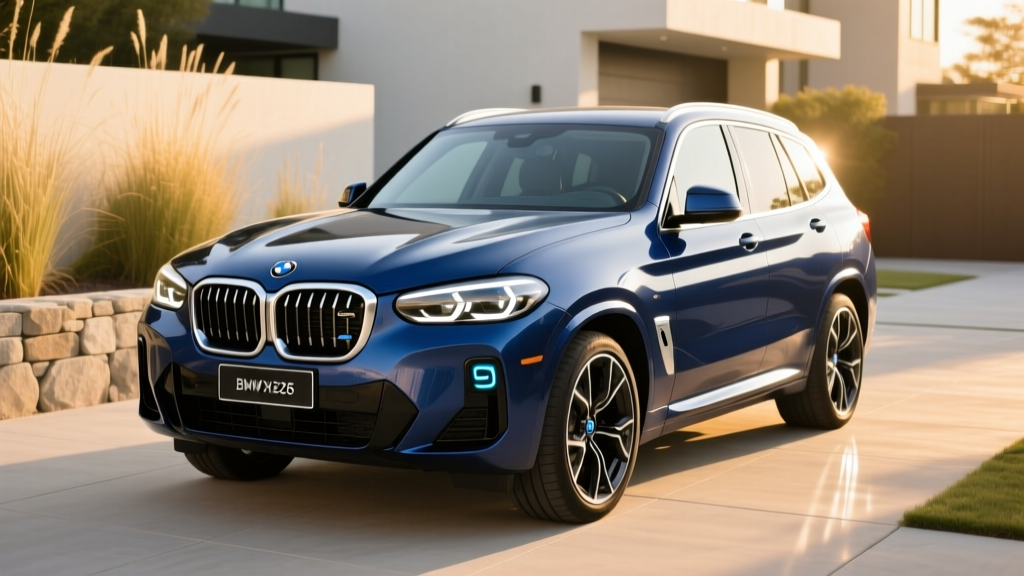
If you've been searching for an X3 hybrid, the 2026 BMW X3 xDrive50e is the model to know. This is BMW's plug-in hybrid (PHEV) version of its best-selling compact luxury SUV, and it occupies a specific niche: you get roughly 38 miles of electric-only driving for daily commutes, a turbocharged six-cylinder for highway passing, and the ability to road-trip without ever hunting for a charger. It is not a conventional hybrid (HEV) — it has a larger battery and a charge port — and that distinction matters for both your fuel bill and your tax situation.
For the 2026 model year, BMW has refined the X3 PHEV powertrain with a 19.7 kWh (usable) battery pack and a combined system output of 295 horsepower. The EPA rates it at 35 MPG combined when operating as a hybrid and 65 MPGe when factoring in electric driving. Starting MSRP sits at $58,575 including destination, placing it squarely against the Lexus NX 450h+, Volvo XC60 Recharge, and Mercedes-Benz GLC 350e.
HEV vs. PHEV: Which X3 Hybrid Are You Actually Looking At?
BMW does not sell a conventional hybrid (HEV) version of the X3 in the United States for the 2026 model year. Every electrified X3 is a plug-in hybrid. This is a common source of confusion among shoppers who type "X3 hybrid" into search engines expecting a self-charging setup like a Toyota RAV4 Hybrid.
| Feature | Conventional Hybrid (HEV) | Plug-In Hybrid (PHEV) — BMW X3 xDrive50e |
|---|---|---|
| Battery size | 1–2 kWh | 19.7 kWh usable |
| Electric-only range | Less than 1 mile | 38 miles (EPA) |
| Plugs in? | No — regenerative braking only | Yes — Level 1 or Level 2 |
| Charge port | None | J1772 (AC), no DC fast charge |
| Federal tax credit | Not eligible | Eligible if §30D requirements met |
| Best for | No home charging access | Home charging + short daily commute |
The practical upshot: if you cannot charge at home or at work, the X3 xDrive50e still functions as a hybrid once the battery depletes — you'll just miss out on the electric-only miles and the potential tax credit. If you can plug in nightly, you may go weeks without burning fuel on local errands.
Fuel Economy: EPA Ratings vs. Real-World MPG
The EPA publishes separate figures for the X3 xDrive50e's electric and gasoline operation. Here's the full breakdown per fueleconomy.gov:
| Mode | City | Highway | Combined |
|---|---|---|---|
| Charge-sustaining (hybrid) | 33 MPG | 37 MPG | 35 MPG |
| Charge-depleting (electric + gas) | 65 MPGe combined | ||
| Electric-only energy use | 35 kWh/100 mi | ||
Real-world expectation: Hybrids and PHEVs tend to exceed EPA city estimates because regenerative braking recovers energy in stop-and-go traffic. Owners who charge nightly and drive under 38 miles round-trip report using almost no gasoline during the work week. On long highway trips with a depleted battery, expect roughly 32–35 MPG at 70–75 mph — slightly below the EPA highway sticker due to the SUV's aerodynamic profile and weight (approximately 4,700 lbs curb weight).
Total combined range: With a full charge and a full 17.2-gallon tank, the X3 xDrive50e delivers approximately 480–520 miles of total range depending on driving style and terrain. Electric-only: 38 miles EPA; expect 30–34 miles at highway speeds or in cold weather below 35°F.
Powertrain, Battery, and Charging Specs
| Spec | Value |
|---|---|
| Engine | 2.0L turbocharged inline-4 |
| Electric motor | Integrated in 8-speed automatic (eDrive) |
| Combined system output | 295 hp / 330 lb-ft torque |
| 0–60 mph | 6.1 seconds (BMW est.) |
| Battery (usable) | 19.7 kWh, NMC lithium-ion |
| Electric-only range | 38 miles (EPA) |
| Top electric speed | 87 mph |
| Level 1 charging (120V) | ~1.4 kW — 14+ hours to full |
| Level 2 charging (240V) | 7.4 kW — ~3 hours to full |
| DC fast charging | Not available |
| Charge port | J1772 (AC only) |
| Drivetrain | xDrive AWD |
| Towing capacity | 4,400 lbs (est.) |
| Cargo volume | 31.5 cu ft (rear seats up) |
Charging Reality for PHEV Owners
The X3 xDrive50e does not support DC fast charging — this is typical for PHEVs with batteries under 20 kWh. The 7.4 kW onboard AC charger means a Level 2 home station (240V, 32A+) will replenish the battery in roughly 3 hours. On a standard 120V household outlet (Level 1), plan for an overnight charge of 14+ hours, which is still sufficient if your daily electric consumption is under 15 miles.
kW vs. kWh reminder: kW (kilowatts) measures charging power — how fast energy flows. kWh (kilowatt-hours) measures battery capacity — how much energy is stored. The X3's 7.4 kW charger fills its 19.7 kWh battery in under 3 hours (19.7 ÷ 7.4 ≈ 2.7 hours, plus tapering near full).
Pricing, Trims, and Federal Tax Credit Eligibility
The 2026 X3 xDrive50e starts at $58,575 (including destination). BMW typically offers it in a single well-equipped trim with options packages for premium leather, the Driving Assistance Professional package (Level 2 ADAS), and the Executive package with panoramic roof and gesture control.
Does the X3 Hybrid Qualify for a Federal Tax Credit?
Under current IRS §30D clean vehicle credit rules, the X3 xDrive50e may qualify for a partial or full credit up to $7,500, but eligibility depends on several moving targets:
- MSRP cap: SUVs must be under $80,000 MSRP — the X3 xDrive50e qualifies.
- Buyer income cap: AGI must not exceed $150,000 (single) / $300,000 (joint). Check your modified adjusted gross income.
- Battery sourcing: Critical minerals and battery components must meet phased-in percentages from U.S. or FTA-partner nations. BMW's supply chain has been adjusting, and eligible credit amounts can change mid-year.
- Point-of-sale transfer: As of 2024+, you can transfer the credit to the dealer at purchase for an immediate price reduction, but the dealer must be IRS-registered.
- Assembly: Final assembly must be in North America. Verify the VIN on the DOE's alternative fuels site.
Bottom line: Do not assume you'll receive the full $7,500. Check the IRS-eligible vehicle list at the time of purchase and consult a tax professional. Some buyers have seen the X3 PHEV qualify for $3,750 (partial critical-mineral compliance) rather than the full amount.
Battery Warranty, Reliability, and Replacement Cost
BMW PHEV Battery Warranty
BMW covers the X3 xDrive50e high-voltage battery for 8 years or 80,000 miles (whichever comes first), with a capacity-retention threshold of 70%. If the battery degrades below 70% of its original 19.7 kWh usable capacity within that window, BMW will repair or replace it at no cost. The conventional 12V auxiliary battery carries a separate 4-year/50,000-mile warranty.
Is the X3 Hybrid Reliable?
BMW's PHEV powertrain has matured significantly since the earlier X5 xDrive40e generation. The current eDrive system uses a simpler motor integration within the ZF 8-speed transmission, reducing failure points. NMC battery chemistry in BMW PHEVs has shown degradation rates of approximately 8–12% over 5 years/75,000 miles in fleet data — well within the 70% warranty threshold.
Battery replacement cost: Out of warranty, a full high-voltage battery replacement for the X3 PHEV runs approximately $8,000–$12,000 including labor, based on BMW dealer parts pricing. However, individual module replacement (if only specific cells degrade) can cost $2,000–$4,000. Most owners will never need this — PHEV batteries experience less stress than full BEV batteries due to smaller charge cycles and a conservative buffer.
Who Should Choose the X3 Hybrid vs. a Full EV or Gas Car?
The Decision Framework
Choose the BMW X3 xDrive50e (PHEV) if:
- You can charge at home (Level 2 ideal, Level 1 workable)
- Your daily round-trip commute is under 40 miles
- You take 3+ road trips per year exceeding 200 miles
- You want luxury-badge refinement without full-EV range planning
- You want AWD for snow/ice with electric torque to all wheels
Choose a full BEV (e.g., BMW iX, Tesla Model Y) if:
- You have reliable home and/or workplace charging
- You rarely drive more than 250 miles in a single day
- You want zero tailpipe emissions and lower per-mile fuel cost
- You want to eliminate oil changes and transmission fluid service
Choose a conventional gas X3 (xDrive30) if:
- You have no access to any charging (apartment, street parking)
- Your budget is under $48,000
- You drive fewer than 8,000 miles/year and fuel cost is minimal
Pros
- 38 mi electric range covers most commutes gas-free
- 35 MPG hybrid mode beats gas X3 by ~10 MPG
- Smooth, quiet electric driving in city traffic
- No range anxiety on road trips — just fill the tank
- Premium interior, iDrive 9 infotainment, strong resale
- Potential federal tax credit reduces effective price
Cons
- $58,575 starting price — $10K+ above gas X3
- No DC fast charging — irrelevant for daily use, limiting on rare long EV legs
- Cargo floor slightly raised for battery (1 cu ft loss)
- Tax credit eligibility uncertain — verify at purchase
- Level 1 charging is painfully slow for depleted battery
- Insurance premiums 8–15% higher than gas X3 equivalent
Frequently Asked Questions
How many MPG does the BMW X3 hybrid get?
The 2026 BMW X3 xDrive50e achieves 33 MPG city, 37 MPG highway, and 35 MPG combined in hybrid (charge-sustaining) mode per the EPA. When factoring in electric driving, it earns 65 MPGe combined. Real-world highway MPG with a depleted battery typically lands between 32–35 MPG at 70–75 mph.
How far can the X3 PHEV go on electric only?
The EPA rates the X3 xDrive50e at 38 miles of electric-only range. In real-world driving, expect 30–34 miles at sustained highway speeds or in cold weather (below 35°F), and up to 38 miles in mild conditions with city-speed driving where regenerative braking assists.
Hybrid vs. PHEV vs. EV — which fits my lifestyle?
A conventional hybrid (HEV) suits drivers with no charging access who want better MPG. A PHEV like the X3 xDrive50e is ideal if you can charge at home and want electric commuting plus gas road-trip flexibility. A full EV (BEV) makes sense if you charge at home, rarely exceed 250 miles daily, and want the lowest per-mile cost and zero tailpipe emissions. The PHEV is the compromise that asks you to maintain two systems (gas engine + electric drivetrain) but removes range anxiety entirely.
Is the BMW X3 hybrid reliable, and what does battery replacement cost?
BMW's current-generation eDrive PHEV system has proven reliable in fleet and owner data, with NMC battery degradation of roughly 8–12% over 5 years. The battery is warranted for 8 years/80,000 miles at 70% capacity retention. Out-of-warranty replacement costs approximately $8,000–$12,000 for a full pack, though module-level repair is cheaper. Most PHEV batteries outlast the vehicle's ownership cycle.
Does the BMW X3 hybrid qualify for a federal tax credit?
The X3 xDrive50e may qualify for up to $7,500 under IRS §30D, subject to MSRP caps (it passes at under $80K), buyer income limits ($150K single / $300K joint), critical-mineral and battery-component sourcing requirements, and North American final assembly. The eligible credit amount can change as BMW's supply chain evolves. Always verify on the IRS clean vehicle credit page before purchasing and consider consulting a tax professional.
Can I charge the X3 PHEV at a public DC fast charger?
No. The X3 xDrive50e only accepts AC charging via its J1772 port — Level 1 (120V, ~1.4 kW) or Level 2 (240V, up to 7.4 kW). DC fast chargers (CCS, NACS, CHAdeMO) will not connect. This is standard for PHEVs with sub-20 kWh batteries. A Level 2 home charger is the practical sweet spot, fully replenishing the battery in about 3 hours.
What happens if I never plug it in?
The X3 xDrive50e operates as a conventional hybrid once the battery depletes, delivering 35 MPG combined. You won't damage the vehicle by never charging — the system manages battery health automatically. However, you'll miss the electric-only miles, the MPGe advantage, and potentially the federal tax credit that helps justify the higher purchase price.