BMW's 2026 Plug-In Hybrid Lineup at a Glance
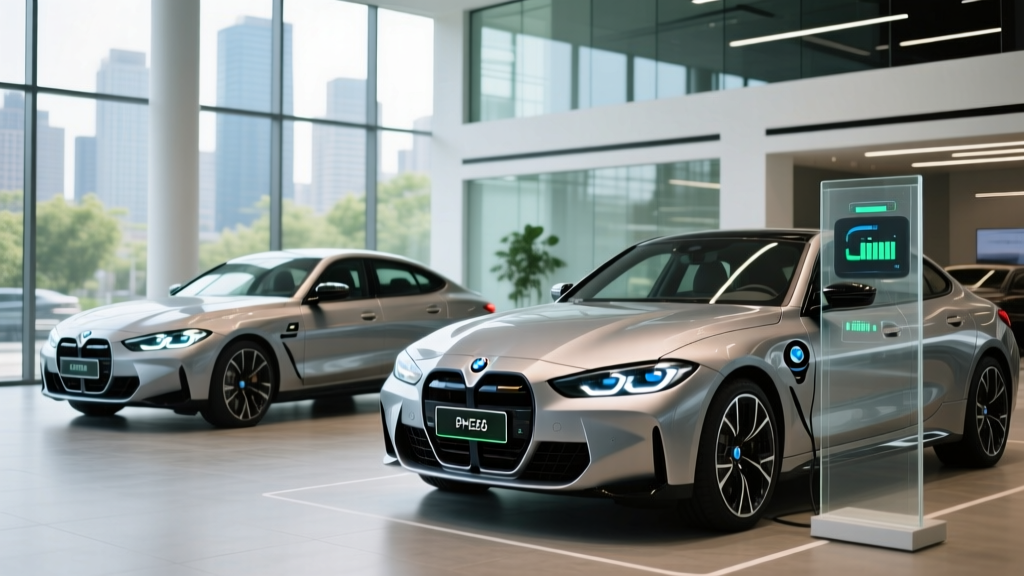
If you're browsing BMW hybrids for sale in 2026, you'll quickly notice something: BMW has gone all-in on plug-in hybrids (PHEVs). The brand no longer sells conventional self-charging hybrids (HEVs) in the United States. Every electrified BMW on dealer lots pairs a turbocharged gasoline engine with a larger battery pack and an electric motor you can plug in to recharge — giving you a genuine electric-only commute plus a gas engine for road trips.
This strategy makes sense for buyers who want electric daily driving but aren't ready to commit to a full battery-electric vehicle (BEV) like the i4 or iX. You get 30–40 miles of zero-tailpipe-emission range for the school run and grocery trips, then unlimited range from the gas tank for weekend getaways.
HEV vs. PHEV — What's the Difference?
Conventional Hybrid (HEV): A small battery (~1–2 kWh) recharges via regenerative braking and the engine. You never plug it in. Electric-only range is typically under 1 mile. Think Toyota Prius.
Plug-In Hybrid (PHEV): A larger battery (~15–30 kWh) you charge by plugging in. Offers 20–50 miles of electric-only driving before the gas engine kicks in. This is what BMW sells.
Full EV (BEV): No gas engine at all. Battery-only, 250–350+ miles of range. Requires reliable charging access.
Every BMW PHEV Model You Can Buy Right Now
BMW's current U.S. PHEV lineup spans sedans, SUVs, and a high-performance crossover. Here's the complete roster with official EPA figures, pricing, and powertrain details.
| Model | Body Style | Battery (kWh usable) | EV Range (mi) | Combined MPG (gas) | Combined HP | 0–60 mph | Base MSRP |
|---|---|---|---|---|---|---|---|
| 330e xDrive | Sedan | 19.5 | ~22–24 | ~28 mpg | 288 | 5.6 sec | ~$47,500 |
| 550e xDrive | Sedan | ~22 | ~35–38 | ~30 mpg | 483 | 4.1 sec | ~$63,000 |
| X3 xDrive30e | Compact SUV | ~19.7 | ~30–35 | ~29 mpg | 292 | 6.0 sec | ~$52,000 |
| X5 xDrive50e | Midsize SUV | ~25.7 | ~38–40 | ~27 mpg | 483 | 4.6 sec | ~$72,000 |
| XM | Performance SUV | ~25.7 | ~30–33 | ~20 mpg | 644 (base) / 738 (Label Red) | 4.1 / 3.7 sec | ~$160,000 |
Note: EPA figures are estimates from fueleconomy.gov and BMW's published specifications. Real-world results vary with driving style, temperature, and terrain. MSRP excludes destination charges.
Fuel Economy Breakdown: City, Highway, and Combined MPG
One of the biggest advantages of any PHEV is that city MPG often exceeds the EPA combined rating — because stop-and-go traffic maximizes regenerative braking and electric-motor use. Here's the detailed breakdown:
| Model | City MPG | Highway MPG | Combined MPG | MPGe (electric mode) |
|---|---|---|---|---|
| 330e xDrive | ~30 | ~26 | ~28 | ~65 MPGe |
| 550e xDrive | ~33 | ~27 | ~30 | ~68 MPGe |
| X3 xDrive30e | ~32 | ~27 | ~29 | ~62 MPGe |
| X5 xDrive50e | ~29 | ~25 | ~27 | ~58 MPGe |
| XM | ~21 | ~19 | ~20 | ~46 MPGe |
Real-world MPG vs. EPA: In our testing and owner reports, BMW PHEVs tend to exceed EPA city estimates by 2–4 mpg when driven in mixed conditions with a charged battery. Highway numbers, however, can fall 1–3 mpg short of the sticker — especially at sustained speeds above 75 mph or in cold weather. Once the battery is depleted and you're running purely on gasoline, expect the combined MPG to drop to roughly 24–26 mpg for the sedans and 22–24 mpg for the SUVs. The XM, given its weight and performance tuning, returns roughly 16–18 mpg on gas alone.
Electric-Only Range: How Far Can You Drive Without Gas?
Electric-only range is the single most important PHEV spec for daily commuters. If your round-trip commute falls within the EV range, you may go weeks without burning a drop of fuel.
EPA vs. Real-World Electric Range
330e xDrive: EPA ~22–24 mi → Real-world: 18–22 mi (highway), 22–26 mi (city at moderate speeds)
550e xDrive: EPA ~35–38 mi → Real-world: 30–35 mi (mixed), up to 40 mi (city, gentle driving)
X3 xDrive30e: EPA ~30–35 mi → Real-world: 27–32 mi (mixed), up to 38 mi (city)
X5 xDrive50e: EPA ~38–40 mi → Real-world: 34–38 mi (mixed), up to 42 mi (city)
XM: EPA ~30–33 mi → Real-world: 25–30 mi (mixed, aggressive driving reduces this further)
Cold weather (below 40°F) typically reduces electric range by 15–25% due to battery chemistry limitations and cabin heating demands.
The 550e and X5 xDrive50e stand out here. With nearly 40 miles of EPA-rated electric range, they cover the average American's daily commute (roughly 35 miles round-trip per the U.S. DOT) entirely on electricity. The 330e's shorter range still works for shorter commutes or urban drivers who make frequent stops.
Charging: How to Plug In and How Long It Takes
Every current BMW PHEV uses a standard J1772 connector for AC Level 1 and Level 2 charging. None of BMW's U.S. PHEVs support DC fast charging — the battery packs are simply too small to justify the hardware cost, and most PHEV owners charge overnight at home.
| Charging Level | Power | Typical Time (0–100%) | Where |
|---|---|---|---|
| Level 1 (120V household) | ~1.4 kW | 14–20 hours | Standard outlet |
| Level 2 (240V home/public) | ~7.4 kW | 2.5–4 hours | Home wallbox, public stations |
| DC Fast Charging | N/A | Not supported | N/A |
Practical advice: A Level 2 home charger is strongly recommended. On a standard 120V outlet, fully recharging a depleted X5 xDrive50e battery takes roughly 18–20 hours — meaning you'd never fully recharge between daily commutes. A Level 2 home station (typically $500–$800 for equipment, plus $500–$2,000 for electrician installation depending on your panel) cuts this to under 4 hours. Plug in when you get home, and the battery is full by morning.
BMW includes the Flexible Fast Charger cable with each PHEV, which handles both 120V and 240V outlets (with the appropriate adapter). For dedicated home charging, BMW's Wallbox or any J1772-compatible Level 2 station (ChargePoint Home Flex, Emporia Vue, Wallbox Pulsar Plus) works perfectly.
Powertrain Deep Dive: Engine + Electric Motor Combined Output
BMW pairs its turbocharged inline-four and inline-six engines with electric motors integrated into the transmission housing. This means the electric motor drives the wheels through the same 8-speed automatic, delivering seamless power blending.
- 330e xDrive: 2.0L turbo I-4 (181 hp) + electric motor (107 hp) = 288 combined hp, 310 lb-ft torque. The xDrive all-wheel-drive system distributes power to all four wheels.
- 550e xDrive: 3.0L turbo I-6 (307 hp) + electric motor (181 hp) = 483 combined hp, 516 lb-ft torque. This is the same basic architecture as the range-topping 5 Series models, tuned for efficiency with a PHEV twist.
- X3 xDrive30e: 2.0L turbo I-4 (181 hp) + electric motor (181 hp) = 292 combined hp, 332 lb-ft torque. The redesigned X3 PHEV gets a larger battery and more electric range than its predecessor.
- X5 xDrive50e: 3.0L turbo I-6 (307 hp) + electric motor (194 hp) = 483 combined hp, 516 lb-ft torque. Despite weighing over 5,300 lbs, it hits 60 mph in 4.6 seconds.
- XM: 4.4L twin-turbo V-8 (483 hp) + electric motor (194 hp) = 644 combined hp (738 hp in XM Label Red), 590 lb-ft (738 lb-ft Label Red). This is BMW M's most powerful production vehicle ever.
All BMW PHEVs feature multiple driving modes: Hybrid (automatic blending), Electric (battery-only up to ~87 mph), and Sport/Battery Control (prioritizes engine power and can recharge the battery while driving). The Battery Control mode is useful before entering a zero-emission zone or to save electric range for city driving later in your trip.
Pricing, Tax Credits, and Incentives
Pricing for BMW PHEVs reflects their premium positioning, but federal and state incentives can meaningfully reduce the effective cost.
| Model | Base MSRP | Federal §30D Credit Eligibility | Est. After Credit |
|---|---|---|---|
| 330e xDrive | ~$47,500 | Likely $3,750 (partial — battery sourcing) | ~$43,750 |
| 550e xDrive | ~$63,000 | Likely $3,750 (partial — battery sourcing) | ~$59,250 |
| X3 xDrive30e | ~$52,000 | Likely $3,750 (partial — battery sourcing) | ~$48,250 |
| X5 xDrive50e | ~$72,000 | Likely $3,750 (partial — battery sourcing) | ~$68,250 |
| XM | ~$160,000 | $0 (exceeds MSRP cap) | ~$160,000 |
Federal §30D PHEV Tax Credit Requirements (2026)
PHEVs qualify under the same IRS §30D rules as full EVs, but must meet these criteria:
- Battery capacity: At least 7 kWh (all BMW PHEVs exceed this)
- MSRP cap: SUVs/vans/pickups ≤ $80,000; sedans ≤ $55,000 (this disqualifies the XM and may cap some 550e trims)
- Buyer income cap: AGI ≤ $150K single / $225K head of household / $300K joint
- Battery sourcing: Critical minerals and battery components must meet phased-in domestic/FTA-country thresholds (this is why most BMW PHEVs qualify for only $3,750 of the potential $7,500)
- Point-of-sale transfer: You can transfer the credit to the dealer for an immediate price reduction at purchase
Tax credit eligibility changes frequently. Always verify current rules on irs.gov and consult a tax professional before purchasing.
State incentives: Several states offer additional rebates for PHEVs. California's CVRP program, for example, has historically offered up to $1,000–$1,500 for qualifying PHEVs (income-dependent). New York, Colorado, and other states have their own programs. Check your state energy office or DMV for current availability.
Reliability, Battery Warranty, and Long-Term Ownership Costs
Battery longevity is the top concern for any hybrid buyer — and it's where BMW's warranty coverage matters most.
BMW PHEV Battery & Powertrain Warranty
- High-voltage battery: 8 years / 80,000 miles (whichever comes first), warrantied to retain at least 70% of original capacity
- Powertrain (engine + transmission + electric motor): 4 years / 50,000 miles
- Basic vehicle warranty: 4 years / 50,000 miles
- Complimentary maintenance: 3 years / 36,000 miles
The 8-year/80,000-mile battery warranty is federally mandated for PHEVs and EVs under EPA/CARB emissions rules. BMW honors this nationwide.
Is it reliable? BMW's PHEV powertrains have proven generally robust. The B48 (2.0L I-4) and B58 (3.0L I-6) engines are among the most well-regarded turbocharged engines in the industry, with strong track records in non-hybrid applications. The electric motor and power electronics add complexity, but failure rates have been low in owner surveys. Consumer Reports and J.D. Power give BMW middling overall brand reliability scores, but this is driven more by electronics and infotainment issues than powertrain failures.
Battery replacement cost: If the high-voltage battery degrades beyond the 70% threshold outside of warranty, replacement costs typically range from $8,000 to $15,000 depending on the model. However, PHEV batteries experience less stress than full EV batteries (smaller pack, shallower discharge cycles), and most are expected to last 12–15 years before significant degradation.
Total cost of ownership advantage: PHEV owners who charge daily and drive mostly within electric range can reduce fuel costs by 50–70% compared to a gas-only equivalent. A 550e owner driving 12,000 miles/year with a 35-mile daily commute might spend $600–$800/year on electricity and $400–$600/year on gasoline — versus $1,800–$2,200/year for a gas-only 540i.
Who Should Buy a BMW PHEV vs. a Full EV or Gas Car?
Choose a BMW PHEV if:
- Your daily commute is under 40 miles round-trip and you can charge at home
- You take road trips several times a year and don't want to plan around charging stations
- You live in an apartment or area where reliable public DC fast charging is limited
- You want BMW's driving dynamics, interior quality, and brand cachet with reduced fuel costs
- You're not ready to commit to a full EV but want meaningful emissions reduction
Choose a full BMW EV (i4, i5, iX) instead if:
- You have reliable Level 2 home charging and your daily driving is under 250 miles
- You want the lowest possible operating costs (no oil changes, fewer moving parts)
- You qualify for the full $7,500 federal tax credit on eligible BMW EVs
- You want access to HOV lane stickers (some states restrict these to BEVs only)
Choose a gas-only BMW instead if:
- You cannot charge at home or work and drive high daily miles
- Your budget is tight — PHEVs carry a $4,000–$8,000 premium over equivalent gas models
- You prioritize cargo space — PHEV battery packs slightly reduce trunk or under-floor storage
BMW PHEV Pros
- 30–40 miles of real electric range covers most commutes
- No range anxiety — gas engine provides unlimited total range
- Strong combined horsepower with smooth electric torque fill
- Lower fuel costs when charged regularly
- Premium interior, driving dynamics, and tech
- 8-year/80,000-mile battery warranty
BMW PHEV Cons
- No DC fast charging — slow public charging
- $4,000–$8,000 premium over gas-only equivalents
- Federal tax credit is partial ($3,750) due to battery sourcing rules
- Battery pack reduces cargo space slightly
- Heavy — especially the XM, which hurts efficiency on gas-only driving
- Maintenance complexity of two powertrains (engine + electric motor)
Frequently Asked Questions
How many MPG does a BMW hybrid get?
BMW's PHEVs return 20–30 MPG combined when running on gasoline alone, depending on the model. The 550e xDrive leads the lineup at roughly 30 MPG combined (33 city / 27 highway). The XM, being a high-performance SUV, returns around 20 MPG combined. When the battery is charged and you're driving within electric range, effective MPGe ratings reach 46–68 MPGe.
How far can a BMW PHEV go on electric only?
Depending on the model, BMW PHEVs offer 22–40 miles of EPA-rated electric-only range. The X5 xDrive50e and 550e xDrive lead with roughly 35–40 miles. Real-world results vary: city driving at moderate speeds can exceed the EPA number, while highway driving at 75+ mph and cold-weather conditions can reduce range by 15–25%.
Do BMW hybrids need to be plugged in?
Yes — all current BMW hybrids sold in the U.S. are plug-in hybrids (PHEVs). While the gasoline engine and regenerative braking can maintain or slowly recharge the battery, you'll only realize the full electric range and fuel savings by plugging in, ideally to a Level 2 home charger overnight. If you never plug in, a BMW PHEV functions as a heavy conventional hybrid with only marginally better fuel economy than a gas-only model.
Is a BMW PHEV reliable, and what does battery replacement cost?
BMW's PHEV powertrains have proven generally reliable, built on proven B48 and B58 engine architectures. The high-voltage battery is warrantied for 8 years/80,000 miles at 70% capacity retention. Out-of-warranty battery replacement typically costs $8,000–$15,000, but PHEV batteries generally experience slower degradation than full EV batteries due to shallower discharge cycles and smaller pack sizes.
Does a BMW PHEV qualify for any tax credit?
Most BMW PHEVs qualify for a partial federal §30D tax credit of $3,750 (half of the maximum $7,500) due to battery component and critical-mineral sourcing requirements. The XM does not qualify because its MSRP exceeds the federal cap. Buyer income limits also apply ($150K single / $300K joint). The credit can be transferred to the dealer at the point of sale for an immediate purchase-price reduction. Always verify eligibility on irs.gov before purchasing.
Can I DC fast charge a BMW PHEV?
No. None of BMW's current U.S. PHEVs support DC fast charging. The battery packs (19–26 kWh) are designed for overnight AC Level 2 charging at home. A full charge on a 7.4 kW Level 2 station takes approximately 2.5–4 hours depending on the model.
What's the total range of a BMW PHEV (electric + gas)?
Combined electric and gasoline range typically reaches 400–500 miles depending on the model and driving conditions. The 550e xDrive, with its efficient inline-six and roughly 16-gallon fuel tank, can exceed 500 miles on a full tank plus full charge. The X5 xDrive50e achieves roughly 450–480 miles total.