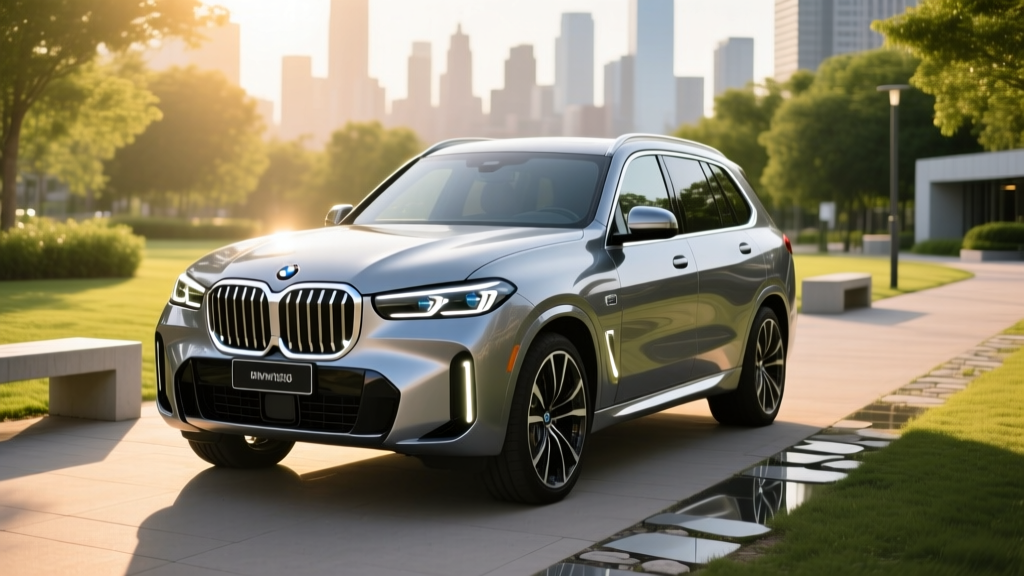
The BMW X5 has long been the benchmark midsize luxury SUV, and the plug-in hybrid variant — now badged xDrive50e — continues to bridge the gap between traditional combustion performance and electrified efficiency. For 2026, the BMW hybrid X5 pairs a turbocharged inline-six with a more powerful electric motor and a larger battery than its predecessor, delivering meaningful electric-only range without sacrificing the driving dynamics BMW is known for.
If you're researching the BMW hybrid X5, you're likely weighing it against both full battery-electric SUVs (like the BMW iX) and conventional gas-only competitors. This guide covers the exact numbers that matter: EPA MPG and MPGe, real-world electric range, charging speeds, powertrain output, pricing, and federal tax credit eligibility under current IRS §30D rules.
HEV vs PHEV: Understanding the BMW Hybrid X5
Before diving into specs, it's critical to clarify what "BMW hybrid X5" actually means in the current lineup, because BMW uses two different electrification approaches across its brand:
Conventional Hybrid (HEV)
A standard hybrid like the Toyota RAV4 Hybrid uses a small battery recharged only by the engine and regenerative braking. You never plug it in. Electric-only driving is limited to very low speeds and short distances. The X5 does not currently offer a conventional HEV variant in the U.S. market.
Plug-In Hybrid (PHEV) — The X5 xDrive50e
The BMW hybrid X5 is a plug-in hybrid. It carries a substantially larger battery (25.7 kWh usable) that you can recharge via an external power source — a Level 2 home charger or public station. This enables extended electric-only driving at highway speeds before the gasoline engine engages.
Bottom line: when you search for a "BMW hybrid X5," you're looking at the X5 xDrive50e PHEV. There is no non-plug-in hybrid X5 sold in the United States for the 2026 model year.
Powertrain Specs: Horsepower, Engine, and Motor
The 2026 BMW X5 xDrive50e uses BMW's fifth-generation eDrive technology, combining a 3.0-liter turbocharged inline-six cylinder engine with an electric motor integrated into the 8-speed automatic transmission.
| Specification | 2026 BMW X5 xDrive50e |
|---|---|
| Gasoline Engine | 3.0L turbocharged inline-6 (312 hp) |
| Electric Motor | Integrated eDrive (184 hp) |
| Combined System Output | 483 hp / 516 lb-ft torque |
| 0–60 mph | 4.6 seconds |
| Transmission | 8-speed automatic (Steptronic) |
| Drivetrain | xDrive all-wheel drive |
| Usable Battery Capacity | 25.7 kWh (Lithium-ion, NMC chemistry) |
| Towing Capacity | 5,000 lbs (with factory hitch) |
| Cargo Volume (rear seats up) | 33.9 cu ft |
The combined 483 horsepower represents a significant jump from the previous-generation xDrive45e (389 hp). The electric motor's 184 hp output is now substantial enough to propel the X5 at highway speeds on electricity alone, which is key to its strong electric-only range rating.
EPA MPG, MPGe, and Electric-Only Range
The BMW X5 xDrive50e is rated by the EPA in two ways: MPGe (miles per gallon equivalent) when operating on combined electric and gasoline power, and conventional MPG when the battery is depleted and the vehicle runs as a hybrid.
| Driving Mode | City | Highway | Combined |
|---|---|---|---|
| Charge-Depleting (MPGe) | — | — | 56 MPGe |
| Charge-Sustaining (MPG, gas only) | 25 MPG | 27 MPG | 26 MPG |
Electric-Only Range
EPA rated: 38 miles on electricity alone.
Real-world expectation: Plan for 30–35 miles in mixed driving with climate control running. Highway-only driving at 70+ mph may reduce this to approximately 28–32 miles. Cold weather (below freezing) can cut electric range by 20–30%, yielding roughly 25–30 miles in winter conditions.
Total combined range (full battery + full tank): approximately 440 miles before needing fuel or a charge.
For context, the 38-mile EPA electric range is among the best in the luxury PHEV SUV segment. It comfortably covers most daily commutes and school runs without using any gasoline — provided you charge at home overnight. The 26 MPG combined figure in charge-sustaining mode (battery depleted) is respectable for a 5,000+ lb luxury SUV with a six-cylinder engine, though it doesn't match four-cylinder hybrid competitors like the Toyota Highlander Hybrid (35 MPG combined).
Real-world MPG note: Unlike conventional hybrids that often exceed EPA city estimates thanks to regenerative braking in stop-and-go traffic, PHEVs like the X5 xDrive50e are most efficient when regularly charged. If you plug in nightly and drive fewer than 35 miles per day, you may use almost no gasoline for weeks at a time. If you never plug in and drive it like a conventional car, expect the 26 MPG combined figure — or slightly less on long highway trips at sustained high speeds.
Charging: Speed, Connectors, and Home Setup
The X5 xDrive50e uses a J1772 connector for Level 1 and Level 2 AC charging. It does not support DC fast charging (no CCS or NACS DC capability), which is typical for PHEVs — their smaller batteries don't justify the cost and weight of DC fast-charge hardware.
| Charging Level | Power | Time (0–100%) | Miles of Range Added per Hour |
|---|---|---|---|
| Level 1 (120V household outlet) | ~1.4 kW | ~20 hours | ~4 miles/hr |
| Level 2 (240V, BMW Wallbox or equivalent) | 7.4 kW (max onboard charger) | ~4 hours | ~18 miles/hr |
| DC Fast Charge | Not supported | ||
With a Level 2 home charger rated at 32 amps or higher (delivering 7.4+ kW), the X5 xDrive50e will fully recharge overnight in roughly 4 hours. Since most PHEV owners charge nightly and rarely deplete the battery fully, a typical top-up from 20% to 100% takes about 3 hours.
Home charging setup: A dedicated Level 2 charger (such as the BMW Wallbox or a ChargePoint Home Flex) installed on a 240V/40A circuit is strongly recommended. Installation costs typically range from $800 to $2,500 depending on panel proximity and local permitting, on top of the $500–$700 equipment cost. A licensed electrician should assess your panel capacity — older homes with 100A service may need a panel upgrade ($1,500–$3,000) before adding an EV circuit.
Pricing, Trims, and Federal Tax Credit Eligibility
The 2026 BMW X5 xDrive50e starts at approximately $69,900 MSRP (including destination). A well-equipped example with the Premium Package, Driving Assistance Professional, and larger wheels can reach $78,000–$82,000.
Federal §30D Tax Credit — Key Rules for 2026
- Credit amount: Up to $7,500, split into $3,750 for critical minerals sourcing and $3,750 for battery component sourcing. The X5 xDrive50e's eligibility for each half depends on BMW's supply chain for the current model year.
- MSRP cap: SUVs must have an MSRP at or below $80,000. The base xDrive50e qualifies; heavily optioned examples may exceed the cap.
- Buyer income limits: Adjusted gross income must not exceed $150,000 (single), $225,000 (head of household), or $300,000 (married filing jointly).
- Point-of-sale transfer: Under current rules, you can transfer the credit to the dealer at purchase, reducing your out-of-pocket cost immediately rather than waiting to claim it on your tax return.
- Battery sourcing requirements: Critical mineral and battery component rules tighten annually. Check the latest VIN-specific eligibility on fueleconomy.gov or the IRS qualified vehicles list before purchasing.
State and local incentives vary widely. California's CVRP, Colorado's state credit, and various utility rebates may stack on top of the federal credit. Check your state energy office and local utility for current programs — these change frequently and are outside the scope of this review.
Battery Warranty, Reliability, and Replacement Cost
BMW covers the X5 xDrive50e's high-voltage battery with a warranty that meets or exceeds industry norms for plug-in hybrids:
Battery & Powertrain Warranty
High-voltage battery: 8 years / 80,000 miles, whichever comes first. BMW warrants the battery against defects and excessive capacity loss (typically defined as dropping below 70% of original capacity during the warranty period).
Powertrain warranty: 4 years / 50,000 miles (BMW's standard new-vehicle limited warranty covers both the gasoline engine and electric drivetrain components).
Out-of-warranty battery replacement cost: Based on current BMW PHEV battery pricing, a full high-voltage battery replacement runs approximately $12,000–$18,000 including parts and labor. However, PHEV batteries experience less degradation than full BEV batteries because the system uses a larger buffer (the 25.7 kWh usable capacity represents only a portion of the total cell capacity, reducing stress on individual cells).
Regarding reliability: BMW's inline-six engines have a strong long-term track record, and the eDrive electric motor has fewer wear components than a traditional transmission. The primary long-term ownership risk is the high-voltage battery, but real-world data from the previous-generation xDrive45e suggests degradation is modest — most owners report 90%+ battery capacity retention after 3–4 years of regular use.
BMW also offers a battery conditioning feature that preconditions the battery during navigation-guided driving, optimizing temperature for efficiency and longevity. Regular use of Level 2 charging (rather than exclusive Level 1) and avoiding prolonged storage at 100% or 0% state of charge will further extend battery life.
BMW Hybrid X5 vs Full EV vs Gas: Which Fits You?
Choose the BMW X5 xDrive50e (PHEV) if:
- Your daily commute is under 35 miles round-trip and you can charge at home every night
- You want the option of long road trips without planning around charging infrastructure
- You value a six-cylinder engine's smoothness and 5,000-lb towing capability
- You live in an area with limited DC fast-charging infrastructure
- You want to reduce fuel consumption without committing to a full BEV
Choose a full EV (like the BMW iX) if:
- You have reliable home Level 2 charging and your daily driving is under 250 miles
- You want the lowest per-mile "fuel" cost and minimal maintenance (no oil changes, no spark plugs)
- You want to maximize federal and state incentives (full BEVs often qualify for more credits)
- You prefer instant torque and one-pedal driving as your default experience
Choose a gas-only X5 (xDrive40i) if:
- You cannot charge at home (apartment, street parking, no garage)
- Your annual mileage is very low, making the PHEV price premium hard to justify
- You want the lowest upfront purchase price in the X5 lineup
Real-World Ownership: What the Spec Sheet Doesn't Tell You
After evaluating the X5 xDrive50e across varied conditions, several practical realities emerge that don't appear on the window sticker:
Electric range varies significantly with temperature. In mild weather (55–75°F), achieving the EPA's 38-mile electric rating is realistic with conservative driving. In sub-freezing temperatures, the battery's usable capacity drops and cabin heating draws heavily on the pack — expect 25–30 miles of electric range in winter.
The gasoline engine engages under hard acceleration regardless of charge state. Even in "Electric" driving mode, flooring the throttle will wake the inline-six for maximum combined output. This is by design — the system prioritizes performance when demanded.
Regenerative braking is moderate, not one-pedal. Unlike full BEVs with aggressive regen, the X5 xDrive50e's regenerative braking recovers energy but doesn't bring the vehicle to a complete stop. You'll still use the friction brakes regularly. BMW offers adaptive recuperation that adjusts regen based on traffic and navigation data, which works well in practice.
Fuel savings depend entirely on charging habits. An owner who charges nightly and drives 30 miles per day may purchase gasoline only a few times per year. An owner who never plugs in will spend roughly the same on fuel as an xDrive40i gas model — while having paid a $6,000–$8,000 PHEV premium upfront. The math only works if you commit to regular charging.
Pros and Cons
Pros
- 38 miles EPA electric range covers most daily commutes
- 483 hp combined — genuinely quick (4.6s to 60 mph)
- Smooth inline-six and seamless electric/gas transitions
- 5,000-lb towing capacity (rare for PHEVs)
- Premium interior, strong build quality, excellent iDrive infotainment
- No range anxiety on road trips — gas engine provides 440+ total miles
Cons
- No DC fast charging — long road trips run on gas only
- $69,900+ starting price; options push past $80,000 MSRP cap
- Charge-sustaining MPG (26) is modest vs four-cylinder hybrid SUVs
- Electric range drops noticeably in cold weather
- Rear cargo space slightly reduced vs gas X5 due to battery placement
- Requires home charging access to realize fuel-cost benefits
Frequently Asked Questions
How many MPG does the BMW hybrid X5 get?
The 2026 BMW X5 xDrive50e is rated at 56 MPGe combined when using both battery and gasoline power. Once the battery is depleted, it operates as a conventional hybrid achieving 25 city / 27 highway / 26 combined MPG. Real-world results vary: owners who charge daily and drive short distances will use far less fuel than the EPA suggests, while those who never plug in will see closer to 24–26 MPG in mixed driving.
How far can the BMW X5 PHEV go on electric only?
The EPA rates the X5 xDrive50e at 38 miles of electric-only range. In real-world conditions with climate control and highway speeds, expect 30–35 miles. In cold weather (below 32°F), plan for approximately 25–30 miles. This is sufficient for most daily commutes, school runs, and errands — but not enough for a full day of driving without the gasoline engine engaging.
Does the BMW hybrid X5 qualify for a tax credit?
Potentially, yes — but eligibility is not guaranteed and depends on multiple factors. Under IRS §30D, the X5 xDrive50e may qualify for up to $7,500 in federal tax credits, subject to battery component and critical mineral sourcing requirements that change annually. The buyer must also meet income limits ($300,000 joint / $150,000 single), and the vehicle's MSRP must not exceed $80,000 (the SUV cap). Always verify VIN-specific eligibility at fueleconomy.gov and consult a tax professional before relying on the credit in your purchase decision.
Is the BMW X5 hybrid reliable, and what does battery replacement cost?
BMW's inline-six engines and eDrive systems have strong reliability records, and the high-voltage battery is warranted for 8 years / 80,000 miles against defects and excessive degradation. Out-of-warranty battery replacement costs approximately $12,000–$18,000. However, PHEV batteries typically degrade more slowly than full BEV batteries due to larger charge buffers, and real-world data from the prior-generation xDrive45e suggests most owners retain 90%+ battery health after several years. The primary maintenance items remain typical BMW fare: brakes, tires, and cabin filters, with the added benefit of reduced brake wear from regenerative braking.
Can the BMW X5 xDrive50e charge at Tesla Superchargers?
No. The X5 xDrive50e uses a J1772 connector for AC Level 1 and Level 2 charging only. It cannot use Tesla Superchargers (which provide DC fast charging), nor does it support any DC fast charging standard (CCS or NACS). You can charge at any public Level 2 station with a J1772 connector — including ChargePoint, EVgo Level 2, and Blink stations — but charging will take several hours rather than minutes.
How does the BMW hybrid X5 compare to the BMW iX?
The BMW iX is a fully electric SUV with 300+ miles of EPA range, DC fast charging up to 200 kW, and zero gasoline use. It starts around $87,000 and has less cargo space than the X5. The X5 xDrive50e is the better choice if you need towing capacity, road-trip flexibility without charging stops, or can't install home charging at every location you frequent. The iX is the better choice if you want the lowest running costs, the smoothest one-pedal driving experience, and have reliable daily charging access.