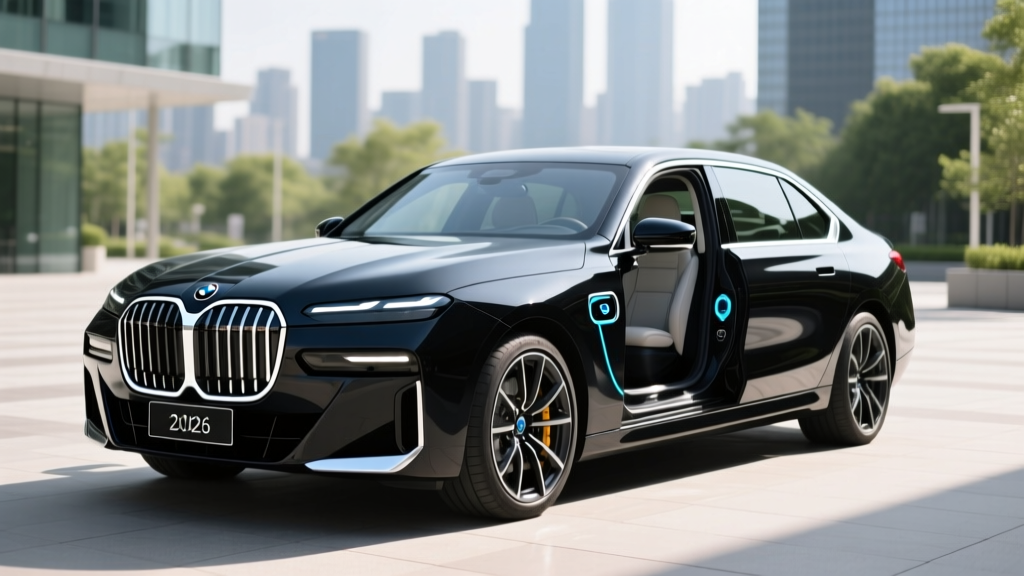
The BMW ActiveHybrid 7 occupies an unusual space in the luxury sedan market. As a conventional hybrid (HEV)—not a plug-in—it pairs a turbocharged inline-six with an electric motor to squeeze extra efficiency from every gallon without ever needing a charging cable. But with BMW's current 7 Series lineup now offering the fully electric i7 and the plug-in hybrid 750e xDrive, where does the older ActiveHybrid 7 badge stand for buyers browsing the used market in 2026?
This guide breaks down the real-world fuel economy, powertrain specs, battery longevity, and ownership economics so you can decide if a pre-owned ActiveHybrid 7 fits your garage—or if a newer PHEV or BEV alternative makes more financial sense.
What Exactly Is the BMW ActiveHybrid 7?
The ActiveHybrid 7 nameplate appeared across two distinct generations of the BMW 7 Series:
- F02 generation (2010–2012): Paired a 4.4L twin-turbo V8 with a 20-hp electric motor integrated into the 8-speed automatic transmission. Total output: 455 hp.
- F02 facelift (2013–2015): Switched to a 3.0L turbocharged inline-six paired with a more powerful 54-hp electric motor. Total output: 348 hp. This version delivered meaningfully better fuel economy.
Both versions are conventional hybrids (HEVs). They recharge their small battery packs through regenerative braking and the gasoline engine—there is no plug, no electric-only driving mode of any meaningful distance, and no external charging capability. This is a critical distinction from BMW's current plug-in hybrid 750e xDrive, which offers roughly 30 miles of electric-only range and can be plugged into a Level 2 charger.
HEV vs PHEV: What ActiveHybrid 7 Buyers Must Know
| Feature | ActiveHybrid 7 (HEV) | BMW 750e xDrive (PHEV) |
|---|---|---|
| Plug-in charging | No — self-charging only | Yes — Level 2 AC |
| Electric-only range | ~1 mile (low-speed assist) | ~30–34 miles EPA |
| Battery size | ~0.9 kWh (NiMH/Li-ion) | ~18.7 kWh usable (Li-ion) |
| Federal tax credit | None (used HEV) | Up to $7,500 if new & eligible |
Fuel Economy: EPA Numbers vs Real-World MPG
Fuel economy varies significantly between the two ActiveHybrid 7 powertrain generations. The post-2013 inline-six version is the efficiency pick.
| Model Year / Engine | City MPG | Highway MPG | Combined MPG |
|---|---|---|---|
| 2010–2012 (4.4L V8) | 17 | 24 | 19 |
| 2013–2015 (3.0L I-6) | 22 | 30 | 25 |
| 2024–2026 750e xDrive (PHEV, for comparison) | — | — | ~56 MPGe (combined gas+electric) |
Source: EPA Fuel Economy
Real-World MPG: What Owners Actually Report
Conventional hybrids like the ActiveHybrid 7 often exceed their EPA city estimates in stop-and-go traffic, where regenerative braking recaptures the most energy. Owners of the 2013–2015 inline-six variant commonly report 23–27 MPG in mixed driving, with highway cruising sometimes reaching 28–31 MPG. However, aggressive acceleration and cold-weather operation can pull combined figures down to 20–22 MPG.
Compared to the non-hybrid 740i of the same era (rated at 19 city / 28 highway / 22 combined), the ActiveHybrid 7's advantage is modest on paper—roughly 3 MPG combined—but the electric motor's torque fill makes the driving experience noticeably smoother around town.
Powertrain and Performance Specs
| Specification | 2010–2012 (V8) | 2013–2015 (I-6) |
|---|---|---|
| Engine | 4.4L Twin-Turbo V8 | 3.0L Turbo I-6 |
| Electric Motor | 20 hp | 54 hp |
| Combined Output | 455 hp / 515 lb-ft | 348 hp / 367 lb-ft |
| Transmission | 8-speed auto | 8-speed auto |
| 0–60 mph | ~4.7 sec | ~5.2 sec |
| Drivetrain | RWD (sDrive) | RWD (sDrive) |
| Battery Type | NiMH (~0.9 kWh) | Li-ion (~1.0 kWh) |
The inline-six generation is the more balanced package. While it sacrifices over 100 horsepower versus the V8, it gains meaningful fuel economy and sheds weight over the front axle, improving steering feel. The electric motor's 54 hp and instant torque provide seamless stop-start and low-speed electric assist, which is where the hybrid system earns its keep in daily commuting.
Battery Longevity, Warranty, and Replacement Cost
BMW Hybrid Battery Warranty (Original)
BMW originally warranted the ActiveHybrid 7's high-voltage battery for 8 years or 80,000 miles (whichever comes first), with some California-emissions states extending coverage to 10 years or 150,000 miles. By 2026, virtually all ActiveHybrid 7 models have exited factory battery warranty coverage.
How Long Does the Battery Actually Last?
The ActiveHybrid 7's hybrid battery is small (~1 kWh) and is never deeply cycled—it operates in a narrow state-of-charge window between roughly 40% and 70%, which is gentle on cell chemistry. Real-world data from owner forums and repair databases suggests these batteries typically last 120,000 to 160,000 miles before significant capacity loss triggers a check-engine light or reduced hybrid-function warning.
That said, age is as much a factor as mileage. A 2012 model with 80,000 miles may show more degradation than a 2015 model with 110,000 miles due to calendar aging of the cells.
Battery Replacement Cost
If the hybrid battery fails out of warranty, expect these costs:
- OEM replacement battery: $3,500–$5,500 (part only, depending on generation)
- Refurbished/aftermarket battery: $1,800–$3,000
- Labor (BMW specialist or dealer): $800–$1,500
- Total out-of-pocket: $2,600–$7,000 depending on source and shop
Some independent hybrid specialists offer cell-level repair (replacing individual bad cells rather than the entire pack) for $1,200–$2,000, which can be a cost-effective option for an older vehicle.
Does the ActiveHybrid 7 Qualify for Any Tax Credit?
No. The BMW ActiveHybrid 7 does not qualify for the federal §30D new clean vehicle tax credit. That credit applies only to new vehicles meeting specific battery capacity, critical-mineral sourcing, MSRP caps, and buyer income limits under current IRS rules. As a discontinued, used conventional hybrid, the ActiveHybrid 7 is ineligible.
The federal used clean vehicle credit (up to $4,000 or 30% of sale price, whichever is less) applies only to used plug-in electric vehicles and fuel-cell vehicles—not conventional HEVs. So even buying a used ActiveHybrid 7 from a dealer does not trigger this credit.
Some states offer modest incentives for hybrid purchases, but these are increasingly targeted at PHEVs and BEVs. Check your state's energy office or DMV for current programs.
Pricing in 2026: What You'll Pay on the Used Market
Since the ActiveHybrid 7 was last sold new in the 2015 model year, all purchases in 2026 are on the pre-owned market. Pricing varies by generation, mileage, condition, and region:
| Generation | Typical Mileage | Price Range (2026) |
|---|---|---|
| 2010–2012 V8 ActiveHybrid 7 | 90,000–140,000 mi | $9,000–$16,000 |
| 2013–2015 I-6 ActiveHybrid 7 | 70,000–120,000 mi | $14,000–$24,000 |
At these prices, the ActiveHybrid 7 is an entry point into 7 Series luxury. However, maintenance costs remain those of a flagship BMW—expect $1,200–$2,500 annually for routine service and wear items, with air suspension, electronics, and cooling system repairs adding to long-term budgets.
ActiveHybrid 7 vs Newer Alternatives: Which Should You Choose?
✓ Reasons to Buy the ActiveHybrid 7
- Low entry price for a flagship luxury sedan ($14K–$24K)
- No charging infrastructure needed — works like a gas car
- Smooth electric torque fill in city driving
- Modest fuel savings over a non-hybrid 740i (~3 MPG combined)
- Strong build quality and cabin materials (F02 generation)
✗ Reasons to Look Elsewhere
- No electric-only driving — it's a mild efficiency boost, not a PHEV
- Out of factory warranty — battery and drivetrain risk is on you
- No federal or state tax credit eligibility
- High maintenance costs as the vehicle ages past 100K miles
- BMW has moved on — no parts or software update support priority
Decision Framework
Choose the ActiveHybrid 7 if: You want an affordable luxury sedan with slightly better fuel economy than a gas-only 7 Series, you don't have home charging access, and you're comfortable budgeting $2,000–$4,000/year for maintenance on a 10+ year-old BMW.
Choose a BMW 750e xDrive (PHEV) if: You have Level 2 home charging, want 30+ miles of daily electric-only commuting, and can budget $90,000+ for a new or certified pre-owned 7 Series with warranty coverage.
Choose the BMW i7 (BEV) if: You want zero tailpipe emissions, 300+ miles of EPA range, access to DC fast charging, and eligibility for potential tax credits on a new purchase.
Choose a Toyota Prius or Honda Accord Hybrid if: Efficiency and low running costs matter more than badge prestige — both deliver 44–57 MPG combined with new-car warranties and sub-$35,000 pricing.
Frequently Asked Questions
How many MPG does the BMW ActiveHybrid 7 get?
The 2013–2015 inline-six ActiveHybrid 7 is EPA-rated at 22 city / 30 highway / 25 combined MPG. The earlier 2010–2012 V8 version is rated at 17 city / 24 highway / 19 combined. Real-world owners of the I-6 variant typically report 23–27 MPG in mixed driving.
Can the ActiveHybrid 7 drive on electric power only?
Only in very limited low-speed situations (under ~3 mph, such as creeping in traffic). The electric motor primarily assists the gasoline engine rather than powering the car independently. There is no meaningful electric-only range—this is a conventional hybrid, not a plug-in.
Is the BMW ActiveHybrid 7 reliable?
The hybrid system itself is generally robust, with the battery lasting 120,000–160,000 miles in most cases. However, the F02 7 Series is a complex luxury vehicle with known issues around air suspension, electronic control modules, and cooling system components. Reliability is average for a German flagship of this era—budget for regular specialist maintenance.
What does it cost to replace the ActiveHybrid 7 hybrid battery?
An OEM replacement runs $3,500–$5,500 for the part alone, with labor adding $800–$1,500. Refurbished or aftermarket packs cost $1,800–$3,000. Cell-level repair at a hybrid specialist can be as low as $1,200–$2,000.
Does the BMW ActiveHybrid 7 qualify for a tax credit?
No. As a used conventional hybrid, it is ineligible for the federal §30D new vehicle credit and the used clean vehicle credit (which applies only to plug-in EVs and fuel-cell vehicles). Some state-level incentives may exist but are increasingly PHEV/BEV-focused.
Should I buy an ActiveHybrid 7 or a newer PHEV?
If you have home charging and a higher budget, a newer PHEV like the BMW 750e xDrive offers dramatically more electric capability (30+ miles EV range), modern safety tech, warranty coverage, and potential tax credit eligibility. The ActiveHybrid 7 makes sense only as a budget luxury option where plug-in charging isn't available.
Sources: EPA Fuel Economy (fueleconomy.gov), IRS Clean Vehicle Credits, BMW of North America historical specifications.