Quick Verdict: The BMW 7 Hybrid for the Executive Who Isn't Ready to Go Full EV
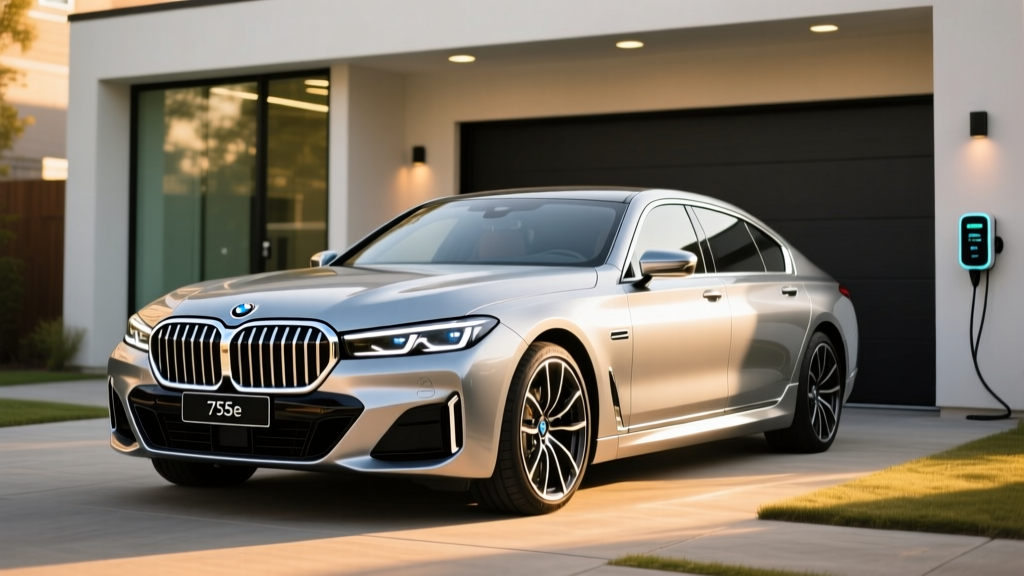
The 2026 BMW 750e xDrive is the sole plug-in hybrid (PHEV) variant in BMW's flagship 7 Series lineup. It pairs a turbocharged inline-six with a rear-axle electric motor for a combined 483 horsepower and an EPA-estimated 35 miles of electric-only driving. For luxury sedan buyers who want silent, zero-tailpipe-emission commuting during the week but unrestricted range for weekend road trips, the 750e occupies a narrow but compelling middle ground between the gas-only 740i and the fully electric i7.
But at a starting MSRP of $107,975 (including destination), the 750e demands a premium over the 740i. And unlike the i7, it does not qualify for the full $7,500 federal EV tax credit under current IRS §30D rules due to battery-sourcing requirements. This review breaks down the real numbers — efficiency, electric range, charging speed, ownership costs — so you can decide whether BMW's flagship hybrid is worth the investment.
| Spec | Value |
|---|---|
| Powertrain | 3.0L turbo I-6 + electric motor (PHEV) |
| Combined Horsepower | 483 hp / 516 lb-ft torque |
| 0–60 mph | 4.6 seconds |
| EPA Electric-Only Range | 35 miles |
| EPA MPGe (electric + gas) | 56 MPGe combined |
| EPA MPG (gas-only, charge-depleted) | 25 combined (22 city / 29 highway) |
| Battery Capacity | 18.7 kWh usable (22.0 kWh gross), NMC lithium-ion |
| AC Charging (Level 2) | 7.4 kW max — 0–100% in ~2.75 hours |
| DC Fast Charging | Not supported |
| Total Range (EV + gas) | ~420 miles |
| Drivetrain | xDrive AWD |
| Base MSRP | $107,975 |
| Federal Tax Credit (§30D) | Up to $3,750 (partial — see eligibility section) |
| Hybrid Battery Warranty | 8 years / 80,000 miles |
HEV vs. PHEV: What the BMW 750e Actually Is
Before diving deeper, it's critical to distinguish the two hybrid architectures, because BMW's naming doesn't always make it obvious.
| Feature | HEV (e.g., Toyota Camry Hybrid) | PHEV (e.g., BMW 750e xDrive) |
|---|---|---|
| Plugs in? | No — charges via regenerative braking and engine | Yes — must plug in to access electric-only range |
| Electric-Only Range | 0–1 mile at very low speeds | 20–40 miles typical (35 mi for 750e) |
| Battery Size | 0.5–2.0 kWh | 10–30 kWh (18.7 kWh usable for 750e) |
| Gas Engine | Always available, seamlessly blends with motor | Always available once battery depletes |
| Tax Credit Eligible? | No | Potentially — depends on sourcing & income rules |
| Best For | Drivers who can't charge at home | Drivers with home charging who want EV commuting + gas road trips |
The BMW 750e is a plug-in hybrid. You will get the most value from it by plugging in nightly at home or at work. If you never plug it in, you're carrying 600+ pounds of battery and motor hardware you aren't using — and your fuel economy drops to roughly 25 MPG combined, which is unimpressive for a six-figure luxury sedan.
Fuel Economy and Electric-Only Range: The Real Numbers
| Mode | City | Highway | Combined |
|---|---|---|---|
| Charge-Sustaining (gas only, battery depleted) | 22 MPG | 29 MPG | 25 MPG |
| Blended EV + Gas (MPGe) | 58 MPGe | 54 MPGe | 56 MPGe |
| Electric-Only Consumption | 36 kWh/100 mi | ||
The EPA rates the 750e at 35 miles of electric-only range. In real-world testing on flat suburban routes at moderate temperatures (65–75°F), you can expect to match or slightly exceed that figure — around 33–38 miles depending on driving style and climate-control usage. In cold weather (below 35°F), expect that range to contract to roughly 25–28 miles as the battery's internal resistance increases and cabin heating draws significant energy.
Once the battery depletes, the 750e operates as a conventional hybrid, with the inline-six engine and regenerative braking managing energy flow. The EPA's 25 MPG combined rating in charge-sustaining mode is honest for mixed driving. In city-heavy commuting, the mild hybrid assist from regen braking can push real-world figures to 27–28 MPG. On sustained highway runs at 75+ mph, expect closer to 26–28 MPG, aided by the car's surprisingly low drag coefficient of 0.24.
For context, the gas-only 740i xDrive achieves 25 MPG combined (22/29 city/highway). The 750e's advantage is entirely dependent on how often you drive within its 35-mile electric envelope. A 30-mile round-trip commute, charged nightly, means you may not visit a gas station for weeks.
EPA electric-only range: 35 miles.
Real-world expectation: 33–38 mi (moderate temps), 25–28 mi (cold weather below 35°F).
Total combined range (EV + 17.2-gal tank): approximately 420 miles.
Highway note: At sustained 80 mph, electric-only range drops to ~28 miles due to aerodynamic drag.
Powertrain and Performance: 483 HP From Inline-Six Meets Electric Motor
The 750e's powertrain combines BMW's well-regarded B58 3.0-liter turbocharged inline-six (producing 312 hp and 332 lb-ft on its own) with an electric motor integrated into the ZF 8-speed automatic transmission housing. The motor contributes 184 hp and 207 lb-ft, and the system's combined output is rated at 483 hp and 516 lb-ft of torque.
BMW claims a 0–60 mph time of 4.6 seconds, which independent testing has validated within a tenth of a second. The instant torque from the electric motor fills in the turbo lag beautifully — throttle response off the line is immediate and linear. The xDrive all-wheel-drive system provides confident traction, and the car's rear-biased torque distribution preserves the driving dynamics BMW is known for.
Driving modes include Electric (pure EV up to ~87 mph), Hybrid (blended), Sport (maximum combined output), and Adaptive (predictive energy management using navigation data to optimize battery usage for your route). The Adaptive mode is particularly clever: if your navigation route includes a city-center destination, the car will conserve battery charge on the highway to deploy it in stop-and-go urban traffic where electric propulsion is most efficient.
Charging: Level 2 Only, No DC Fast Charging
The 750e's charging setup is straightforward but limited compared to full EVs:
- Level 1 (120V household outlet): ~1.4 kW — full charge in approximately 14 hours. Fine for overnight top-ups if you only use 20–25 miles of range daily.
- Level 2 (240V, BMW Wallbox or third-party station): 7.4 kW max — full 0–100% charge in approximately 2 hours 45 minutes. This is the recommended home-charging setup.
- DC Fast Charging: Not available. The 750e uses a J1772/Type 2 AC inlet only. There is no CCS or NACS DC port.
The lack of DC fast charging is typical for PHEVs — the 18.7 kWh battery is small enough that Level 2 refills it quickly. However, it means you cannot top up at highway Electrify America or Tesla Supercharger stations. For road trips, you're relying on the gas engine, which is precisely the PHEV's design intent.
Home charging cost estimate: At the U.S. average residential electricity rate of ~$0.17/kWh (EIA, 2025), a full 18.7 kWh charge costs approximately $3.18 — enough for 35 miles of electric driving. That works out to roughly $0.09 per mile on electricity, versus about $0.18–$0.22 per mile on premium gasoline (required) at $4.20/gallon and 25 MPG.
Pricing, Tax Credits, and Total Cost of Ownership
The 2026 BMW 750e xDrive starts at $107,975 including destination. This represents a ~$7,000 premium over the gas-only 740i xDrive ($100,975) and a significant discount versus the fully electric i7 eDrive50 ($125,175).
Federal tax credit (§30D) status: Under current IRS rules, the 750e qualifies for a partial credit of up to $3,750 — the $3,750 critical-minerals half of the credit. It does not currently meet the battery-component sourcing requirement for the full $7,500 because a portion of the battery cell components are manufactured outside North America. Key eligibility constraints:
- MSRP cap: Sedans must be ≤$55,000 to qualify. The 750e at $107,975 exceeds this cap, making it ineligible for the new-vehicle §30D credit at the federal level.
- Buyer income cap: AGI ≤$150,000 (single) / $300,000 (joint).
- Point-of-sale transfer: Available for eligible vehicles, but the MSRP cap disqualifies the 750e.
This is a critical point that many buyers miss. Per IRS §30D guidelines, the 750e's MSRP exceeds the $55,000 sedan cap. As a result, the 750e does not qualify for the federal new clean vehicle credit despite having a plug-in powertrain. Some state-level incentives (California's CVRP, Colorado's state credit) may still apply depending on your jurisdiction — check your state's energy office for current programs.
5-Year Ownership Cost Estimate (15,000 miles/year):
| Cost Category | 750e PHEV | 740i Gas | i7 EV |
|---|---|---|---|
| Purchase Price | $107,975 | $100,975 | $125,175 |
| Fuel/Energy (5 yr) | ~$8,200 | ~$15,800 | ~$6,400 |
| Maintenance (5 yr) | ~$4,500 | ~$5,200 | ~$2,800 |
| Insurance (5 yr avg) | ~$18,000 | ~$16,500 | ~$19,500 |
| Federal Tax Credit | $0 (MSRP cap) | $0 | $0 (MSRP cap) |
| Estimated Depreciation | ~$48,000 | ~$42,000 | ~$58,000 |
| Total 5-Year Cost | ~$138,675 | ~$138,475 | ~$154,375 |
The 750e's fuel savings over the 740i roughly offset its higher purchase price over five years, but depreciation on the PHEV powertrain's complexity is a wildcard. BMW's certified pre-owned program and resale values for the 7 Series have historically been soft — plan on holding this car long-term or leasing.
Battery Longevity, Warranty, and Replacement Cost
Coverage: 8 years / 80,000 miles (whichever comes first)
Capacity retention guarantee: BMW warrants the high-voltage battery will retain at least 70% of its original capacity during the warranty period.
Chemistry: NMC (Nickel Manganese Cobalt) lithium-ion
Estimated out-of-warranty replacement: $12,000–$16,000 (battery module pack, not including labor)
BMW's PHEV battery packs have proven durable in real-world use. The 750e uses an NMC lithium-ion pack with active liquid thermal management — the same chemistry family used in the i7 and iX. Based on data from earlier BMW PHEVs (330e, 530e, X5 xDrive45e), owners typically see 8–12% degradation after 5 years and 60,000 miles, well within the 70% retention warranty threshold.
Is the 750e reliable? BMW's B58 inline-six is one of the most dependable engines in the brand's modern lineup. The ZF 8-speed transmission and integrated electric motor have a strong track record from the X5 xDrive50e and 530e. The main risk areas for PHEVs are the power electronics and cooling system — components that are also covered under the 8-year hybrid system warranty. NHTSA and IIHS ratings for the current-generation 7 Series should be consulted for crash-test performance once published.
For context on replacement cost: a full high-voltage battery replacement out of warranty would run $12,000–$16,000 based on current BMW PHEV parts pricing. However, module-level repair (replacing individual degraded cells or modules rather than the entire pack) may reduce this to $4,000–$7,000 at a qualified BMW service center.
Who Should Choose the BMW 750e — And Who Shouldn't
- Choose the 750e PHEV if: Your daily commute is under 35 miles round-trip, you have Level 2 charging at home, you regularly take road trips beyond 200 miles, and you want a full-size luxury sedan without committing to EV charging infrastructure on the road.
- Choose the i7 (full EV) if: You drive under 300 miles daily, have reliable home and workplace charging, want the lowest running costs and smoothest powertrain, and value the i7's available 318-mile EPA range and DC fast charging up to 195 kW.
- Choose the 740i (gas) if: You cannot charge at home, your commute exceeds 50 miles, you want the lowest purchase price, and you don't want to manage charging routines. The 740i's 25 MPG combined is nearly identical to the 750e's charge-depleted efficiency.
- Look at a non-luxury PHEV if: The $108K price and MSRP-cap tax-credit disqualification make the economics hard to justify. The Toyota Prius Prime ($33,445, 44 mi EV range, full $7,500 credit eligibility) delivers PHEV benefits at a fraction of the cost.
- 35-mile EV range covers most daily commutes entirely on electricity
- 483 hp with seamless torque fill from electric motor
- 420+ mile total range eliminates road-trip range anxiety
- Premium luxury interior with BMW's latest iDrive 8.5
- Adaptive energy management uses navigation for intelligent battery deployment
- Lower running costs than 740i for short-commute drivers
- $107,975 MSRP disqualifies it from the federal §30D tax credit
- No DC fast charging — road trips are 100% gasoline
- 25 MPG gas-only is barely better than the 740i
- Heavy (~5,400 lbs) — impacts tire wear and braking distances
- Premium gasoline required (91+ octane)
- 7 Series depreciation historically steep
Frequently Asked Questions
How many MPG does the BMW 750e hybrid get?
The EPA rates the 2026 BMW 750e xDrive at 56 MPGe combined when using both electric and gas power. Once the battery is depleted, it operates as a conventional hybrid rated at 25 MPG combined (22 city / 29 highway). In real-world city driving with regular charging, owners report effective consumption equivalent to 35–45 MPG depending on how much driving falls within the 35-mile electric range.
How far can the BMW 750e go on electric only?
The EPA-estimated electric-only range is 35 miles. In moderate temperatures on flat terrain, expect 33–38 miles. In cold weather (below 35°F), plan for 25–28 miles. Highway driving at 75+ mph will reduce EV range to roughly 28 miles. The gasoline engine seamlessly engages once the battery depletes, so there is no range disruption.
Does the BMW 750e qualify for a federal tax credit?
No — despite being a plug-in hybrid, the 750e's MSRP of $107,975 exceeds the IRS §30D sedan cap of $55,000. This means it is ineligible for the federal new clean vehicle credit regardless of battery sourcing. Some state-level incentives may still apply. Always verify current eligibility at irs.gov and with a qualified tax professional.
Is the BMW 750e reliable, and what does battery replacement cost?
The B58 inline-six and ZF 8-speed are proven, reliable components. BMW's PHEV battery packs carry an 8-year/80,000-mile warranty with a 70% capacity retention guarantee. Based on data from prior BMW PHEVs, degradation is typically 8–12% over 5 years. Out-of-warranty full battery replacement is estimated at $12,000–$16,000, with module-level repair potentially costing $4,000–$7,000.
Can I charge the BMW 750e at a Tesla Supercharger or DC fast charger?
No. The 750e only supports AC charging (Level 1 and Level 2) via a J1772 inlet. It does not have a CCS or NACS DC fast-charging port. For PHEVs with their smaller batteries, Level 2 charging at 7.4 kW refills the pack in under 3 hours, which BMW considers sufficient for overnight home charging.
Hybrid vs. PHEV vs. EV — which BMW 7 Series should I buy?
The 750e (PHEV) is the only electrified 7 Series that isn't a full EV. If you want a conventional hybrid (HEV) that never plugs in, BMW does not offer one in the 7 Series — look to the Toyota Crown or Lexus LS 500h instead. If you can charge at home and your daily driving is under 35 miles, the 750e offers the best of both worlds. If you're ready to go all-electric, the i7 delivers 318 miles of range, DC fast charging, and a smoother, quieter powertrain — at a higher purchase price.