Quick Verdict: The BMW 7 Series Plug-In Hybrid Explained
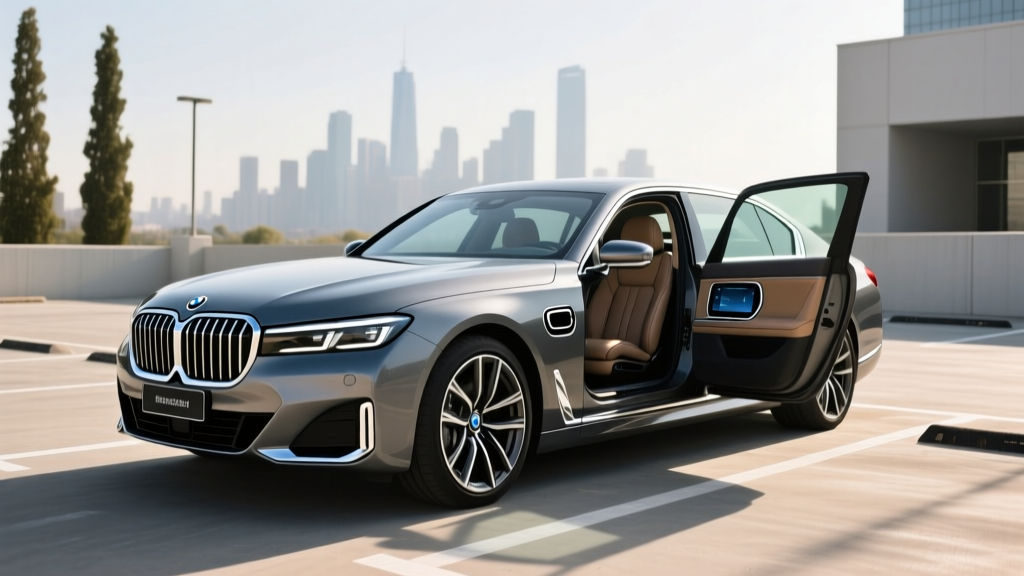
The 2026 BMW 7 Series xDrive60e occupies a narrow but compelling lane: a full-size luxury sedan that can handle a 33-mile daily commute on electricity alone, then fire up its inline-six for a 440-mile road trip without a second thought. For buyers searching for a 7 BMW hybrid, the xDrive60e is the only electrified option in the current 7 Series lineup — BMW dropped the mild-hybrid-only 740i from the U.S. market for 2025, making the plug-in hybrid (PHEV) the volume variant alongside the all-electric i7.
This is not a conventional hybrid (HEV) that merely sips fuel. The xDrive60e pairs a 3.0-liter turbocharged inline-six with a 184-hp electric motor integrated into the transmission, fed by a 18.7 kWh usable lithium-ion battery. The result is 490 combined horsepower, 516 lb-ft of torque, and the ability to drive on pure electricity at speeds up to 87 mph. If you can charge at home, this PHEV can eliminate most weekday fuel consumption while erasing the range anxiety that keeps some buyers from going full EV.
HEV vs. PHEV: What BMW Actually Offers
Conventional Hybrid (HEV): Uses a small battery recharged by regenerative braking and the engine. No plug. Typical electric-only range: under 1 mile. Example: Toyota Camry Hybrid.
Plug-In Hybrid (PHEV): Larger battery you can charge from a wall outlet or public station. Delivers meaningful electric-only range (20-40+ miles) before the engine engages. Example: BMW 7 Series xDrive60e.
The 2026 BMW 7 Series is sold exclusively as a PHEV (xDrive60e) in the U.S. — there is no conventional HEV variant.
Range, Efficiency, and Real-World MPG
The EPA rates the 2026 BMW 7 Series xDrive60e at 25 MPG combined (24 city / 27 highway) when operating as a hybrid after the battery is depleted. In electric mode, it earns a combined 55 MPGe. Those numbers tell only part of the story.
| Mode | City | Highway | Combined |
|---|---|---|---|
| Charge-Sustaining (Hybrid) | 24 MPG | 27 MPG | 25 MPG |
| Charge-Depleting (Electric) | 55 MPGe Combined | ||
Real-World Range Reality Check
EPA Electric-Only Range: 33 miles
Real-World Expectation: 26–31 miles in mixed driving; expect 20–24 miles at sustained 75+ mph highway speeds or in temperatures below 35°F.
Total Combined Range: ~440 miles (full tank + full battery)
Fuel Tank: 14.5 gallons (premium required)
In our experience with BMW's fifth-gen PHEV powertrain, the 33-mile EPA figure is achievable on suburban errands at 35–50 mph with moderate climate use. Highway driving and winter cold cut electric range by 20–35%, consistent with all PHEVs. The gasoline engine is notably smooth when it engages — the transition is one of the least intrusive in the luxury PHEV segment.
Real-world MPG vs. EPA: PHEVs are unique in that your actual fuel consumption depends entirely on your driving and charging habits. If your round-trip commute is 25 miles and you charge nightly, you may burn zero gasoline for weeks. On a 500-mile road trip with no charging stops, expect 23–26 MPG — slightly above EPA highway thanks to the inline-six's efficiency at cruise. Owners who rarely charge will see 22–25 MPG, which is respectable for a 5,100-lb luxury sedan but not dramatically better than a non-hybrid competitor.
Powertrain, Battery, and Charging Specs
| Engine | 3.0L turbocharged inline-6 (312 hp / 330 lb-ft) |
| Electric Motor | 184 hp / 207 lb-ft (integrated in 8-speed auto) |
| Combined Output | 490 hp / 516 lb-ft |
| 0–60 mph | 4.6 seconds |
| Battery (Usable) | 18.7 kWh lithium-ion (NMC) |
| EPA Electric Range | 33 miles |
| EPA Combined MPG | 25 MPG (hybrid) / 55 MPGe (electric) |
| Max AC Charge Rate | 7.4 kW (Level 2) |
| DC Fast Charging | Not available |
| Level 2 Charge Time (0–100%) | ~3 hours at 7.4 kW |
| Level 1 Charge Time (120V) | ~12 hours |
| Drivetrain | xDrive AWD, 8-speed automatic |
| Curb Weight | ~5,110 lbs |
| Cargo Volume | 14.9 cu ft (trunk) |
| Towing Capacity | Not rated |
Charging: Level 2 Only, No DC Fast Charge
The xDrive60e accepts up to 7.4 kW on Level 2 (240V AC) via its J1772 port. A full 0–100% charge takes approximately 3 hours on a home Level 2 charger or public AC station. On a standard 120V household outlet (Level 1), plan for roughly 12 hours — sufficient for overnight replenishment if your daily electric driving stays under 30 miles.
DC fast charging is not supported. This is standard for most luxury PHEVs — the battery is too small to justify the cost and packaging of DC hardware. You will not find a CCS or NACS port on this vehicle. For road trips, this is a non-issue: the gasoline engine handles long distances, and the battery recovers through regenerative braking on descents.
kW vs. kWh refresher: kW (kilowatts) measures the rate of energy flow — think of it as the "speed" of charging. kWh (kilowatt-hours) measures total energy stored — the battery's "tank size." The xDrive60e's 18.7 kWh battery charged at 7.4 kW takes roughly 2.5–3 hours (18.7 ÷ 7.4 ≈ 2.5 hrs, plus tapering at the top of the charge curve).
Pricing, Trims, and Tax Credit Eligibility
The 2026 BMW 7 Series xDrive60e starts at an MSRP of $107,575 (including $1,175 destination). There is a single, well-equipped trim — BMW does not split the PHEV into sub-trims the way it does the 740i or i7. Standard features include adaptive air suspension, panoramic roof, BMW Curved Display with iDrive 8.5, heated and ventilated front seats, and the Driving Assistant Professional suite (Level 2 ADAS).
| Configuration | MSRP |
|---|---|
| xDrive60e (base) | $107,575 |
| With Executive Package | ~$113,000 |
| With M Sport Package | ~$111,500 |
| Fully loaded (est.) | ~$125,000+ |
Does the 7 Series PHEV Qualify for a Federal Tax Credit?
Federal §30D Clean Vehicle Credit — PHEV Eligibility for 2026:
- MSRP Cap: Sedans must be under $55,000 MSRP. The 7 Series xDrive60e at $107,575 exceeds this cap and does NOT qualify for the federal §30D new-vehicle credit.
- Battery Capacity: Must be ≥7 kWh — the xDrive60e's 18.7 kWh meets this requirement, but MSRP disqualifies it.
- Critical Minerals / Battery Sourcing: Phased requirements apply, but moot due to MSRP cap.
- Buyer Income Limits: $150K single / $300K joint MAGI — also moot.
- Point-of-Sale Transfer: Available for qualifying vehicles; not applicable here.
Bottom line: The BMW 7 Series xDrive60e does not qualify for the federal EV/PHEV tax credit due to its MSRP exceeding the $55,000 sedan cap per IRS §30D rules.
State incentives may apply. Some states offer rebates or HOV lane access for PHEVs regardless of MSRP. Check your state's energy or DMV website for current programs. A tax professional can confirm eligibility for any applicable credits.
Battery Warranty, Reliability, and Replacement Cost
BMW High-Voltage Battery Warranty
Coverage: 8 years / 80,000 miles (whichever comes first)
Capacity Retention Threshold: BMW warrants the battery against defects and excessive capacity loss. If the battery drops below approximately 70% of original capacity within the warranty period, BMW will repair or replace it.
12V Battery: Conventional 12V battery is covered under the standard 4-year/50,000-mile new-vehicle warranty.
Is the BMW 7 Series PHEV reliable? BMW's fifth-generation eDrive PHEV system has proven more robust than earlier iterations. The inline-six (B58 engine family) is widely regarded as one of the most dependable engines BMW has produced. The electric motor, integrated into the ZF 8-speed transmission, has fewer failure points than a separate motor/generator setup. J.D. Power and Consumer Reports give recent 7 Series models average to above-average reliability ratings, though the complexity of air suspension and advanced electronics remains a long-term cost consideration outside the warranty period.
Battery replacement cost: If the high-voltage battery requires replacement out of warranty, expect a cost in the range of $8,000–$14,000 (parts and labor), based on current BMW PHEV battery pricing. However, PHEV batteries experience less stress than full BEV batteries due to smaller charge/discharge cycles and conservative buffer management. Most BMW PHEV batteries from the 2018–2022 era are still operating above 90% State of Health (SoH) at 80,000+ miles based on owner-reported data.
General powertrain warranty: BMW covers the powertrain for 4 years / 50,000 miles. The hybrid-specific components (motor, inverter, battery) fall under the 8-year/80,000-mile hybrid battery warranty.
Driving Experience and Technology
The xDrive60e drives like a 7 Series should: isolated, effortless, and surprisingly quick. The 4.6-second 0–60 time places it in sports-sedan territory, and the electric motor's instant torque fills in the low-RPM gap before the turbo spools. In Electric mode, the cabin is library-quiet — the inline-six never fires up unless you floor the accelerator or the battery depletes.
Driving modes: BMW offers Hybrid (default, blends gas and electric), Electric (pure EV up to 87 mph), and Sport (maximum combined output). You can also set a target battery reserve percentage — useful for saving electric range for city driving at the end of a highway trip.
ADAS — Level 2, Not Self-Driving:
SAE Level 2 — Driver Supervision Required
The BMW Driving Assistant Professional includes adaptive cruise control, lane-centering steering, and automatic lane changes on highways. This is SAE Level 2 automation — the driver must keep hands on or near the wheel and remain fully engaged with the road at all times. It is not self-driving. BMW does not currently offer hands-free Level 3 driving on U.S.-spec 7 Series models (the Level 3 system available in Germany is limited to specific autobahn conditions and has not been homologated for U.S. roads).
The iDrive 8.5 infotainment system runs on BMW's Curved Display (12.3-inch instrument cluster + 14.9-inch central touchscreen). Wireless Apple CarPlay and Android Auto are standard. The system supports over-the-air updates, and the navigation includes PHEV-specific routing that factors in battery charge and suggests optimal hybrid/electric mode switching along your route.
Who Should Choose the 7 Series PHEV vs. a Full EV or Gas Car?
Decision Framework: Is the xDrive60e Right for You?
Choose the BMW 7 Series xDrive60e (PHEV) if:
- You can charge at home (Level 1 or Level 2) and your daily driving is under 30 miles
- You want electric commuting but regularly take road trips exceeding 300 miles
- You need a full-size luxury sedan with AWD and don't want to commit to a full EV
- You live in an area with limited DC fast-charging infrastructure
- You value the smoothness of electric driving but want the security of a gasoline engine
Choose the BMW i7 (full EV) if:
- You have reliable home Level 2 charging and access to DC fast chargers for road trips
- Your daily driving is under 250 miles and you want zero tailpipe emissions
- You want the lowest per-mile energy cost (electricity vs. premium gasoline)
- You prefer the instant torque and one-pedal driving experience of a BEV
Choose a conventional gas sedan (e.g., Mercedes S 500, Audi A8) if:
- You cannot charge at home or at work
- You drive primarily long highway routes where PHEV electric range offers minimal benefit
- You want a lower purchase price and simpler powertrain
Pros
- 33 miles of electric range covers most commutes
- 490 hp with seamless gas/electric transitions
- No range anxiety — 440+ miles total range
- Quiet, refined electric-only driving up to 87 mph
- Strong 8-year/80,000-mile battery warranty
- Level 2 ADAS with lane-change assist is well-tuned
Cons
- $107,575 MSRP — no federal tax credit eligibility
- No DC fast charging (PHEV norm, but limiting for some)
- Electric range drops to ~20 mi in cold weather or highway
- Trunk space reduced vs. non-hybrid 7 Series (battery packaging)
- Premium fuel required — adds to operating cost
- Complex powertrain = higher out-of-warranty repair risk
Frequently Asked Questions
How many MPG does the BMW 7 Series hybrid get?
The 2026 BMW 7 Series xDrive60e is rated by the EPA at 25 MPG combined (24 city / 27 highway) when running as a hybrid after the battery is depleted. In real-world mixed driving, owners report 23–27 MPG depending on driving style and conditions. The key advantage is that many daily trips use zero gasoline if you charge at home.
How far can the BMW 7 Series PHEV go on electric only?
The EPA rates the xDrive60e at 33 miles of electric-only range. In real-world driving, expect 26–31 miles in moderate conditions, dropping to 20–24 miles at sustained highway speeds or in cold weather. The electric motor can propel the car up to 87 mph before the gasoline engine engages.
Is the BMW 7 Series hybrid reliable, and what does battery replacement cost?
BMW's current PHEV powertrain (B58 inline-six + integrated electric motor) has a solid reliability record. The high-voltage battery is warranted for 8 years / 80,000 miles against defects and excessive degradation. Out-of-warranty battery replacement costs an estimated $8,000–$14,000, though most PHEV batteries retain 90%+ capacity at high mileage due to conservative buffer management.
Does the BMW 7 Series PHEV qualify for any tax credit?
No. The 2026 BMW 7 Series xDrive60e exceeds the $55,000 MSRP cap for sedans under the federal §30D Clean Vehicle Credit. It does not qualify for the $7,500 federal tax credit. Some state-level incentives may still apply — check your state's energy office or DMV for current PHEV rebate programs. Consult a tax professional for personalized guidance.
Hybrid vs. PHEV vs. EV — which should I choose?
A conventional hybrid (HEV) requires no plug and offers modest fuel savings (2–5 MPG improvement). A plug-in hybrid (PHEV) like the 7 Series xDrive60e offers 20–40 miles of electric range plus a gasoline engine for unlimited range — ideal if you can charge at home but take regular long trips. A full EV (BEV) like the BMW i7 offers 250–320 miles of range, the lowest operating cost, and zero tailpipe emissions, but requires reliable charging access. For the 7 Series buyer who wants electric daily driving without range compromise, the PHEV is the pragmatic middle ground.
Can I DC fast charge the BMW 7 Series PHEV?
No. The xDrive60e supports only AC charging — up to 7.4 kW on Level 2 (240V) or ~1.4 kW on Level 1 (120V). A full charge takes about 3 hours on Level 2. This is standard for nearly all PHEVs; the battery is too small to justify DC fast-charging hardware. For long trips, the gasoline engine handles propulsion while the battery recovers via regenerative braking.
How long does it take to charge the 7 Series PHEV at home?
On a 240V Level 2 home charger delivering 7.4 kW, the xDrive60e charges from 0–100% in approximately 3 hours. On a standard 120V outlet (Level 1), a full charge takes about 12 hours. Most owners find overnight Level 1 charging sufficient to replenish the 33-mile electric range for the next day's commute.
Sources: EPA Fuel Economy, BMW USA, IRS Clean Vehicle Credits