Quick Verdict: The BMW 7 Series Plug-In Hybrid at a Glance
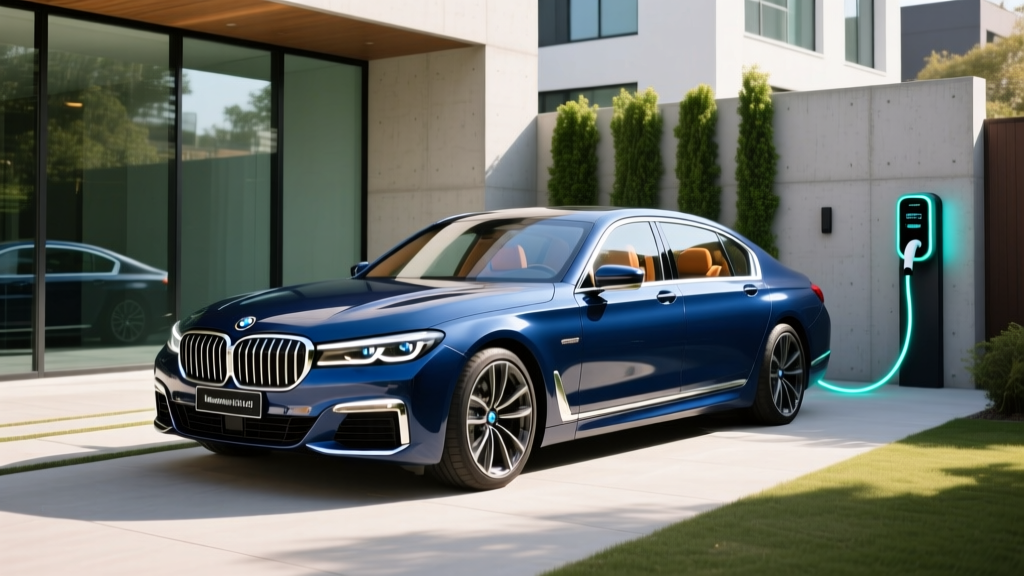
The BMW 750e xDrive occupies a narrow but compelling lane in the luxury sedan market: full-size executive comfort with enough electric-only range to handle a daily commute without burning a drop of gasoline. For 2026, BMW continues the G70-generation 750e with a turbocharged inline-six paired with an integrated electric motor, delivering 483 combined horsepower and an EPA-estimated 34 miles of electric-only driving. It's not a stealth EV, and it won't replace a dedicated battery-electric vehicle for road-trippers — but for buyers who want to electrify their weekday commute without sacrificing the 300-plus-mile total range and five-minute refueling that a flagship sedan demands, the 750e makes a rational case.
The trade-offs are real. The 18.7 kWh battery is modest by 2026 standards, DC fast charging isn't available, and at over $107,000 before options, the price of entry is steep. This guide breaks down every spec that matters — from real-world MPG to battery warranty — so you can decide whether the 7 Series PHEV fits your garage.
| Specification | Value |
|---|---|
| EPA Electric-Only Range | 34 miles |
| Total Combined Range (EV + Gas) | ~380 miles |
| Battery Capacity (usable) | 18.7 kWh (NMC lithium-ion) |
| Combined Horsepower | 483 hp / 516 lb-ft torque |
| Engine | 3.0L turbocharged inline-6 + integrated e-motor |
| EPA MPG (gas-only, combined) | 25 MPG combined |
| MPGe (electric + gas) | 54 MPGe |
| Level 2 Charge Time (0–100%) | ~3.5 hours at 7.4 kW |
| DC Fast Charging | Not available |
| 0–60 mph | 4.6 seconds |
| Base MSRP (750e xDrive) | $107,975 |
| Federal §30D Tax Credit | Not eligible (MSRP & sourcing) |
| Drivetrain | AWD (xDrive) |
| Battery Warranty | 8 years / 80,000 miles |
HEV vs. PHEV: What the 7 Series Plug-In Hybrid Actually Is
Before evaluating the 750e, it's worth clarifying the distinction between a conventional hybrid (HEV) and a plug-in hybrid (PHEV), because BMW markets both architectures and the confusion is common.
| Feature | Conventional Hybrid (HEV) | Plug-In Hybrid (PHEV) |
|---|---|---|
| Plugs in to charge? | No — charges via regen & engine | Yes — external plug + regen |
| Battery size | 1–2 kWh | 10–30+ kWh |
| Electric-only range | 0–2 miles (low speed only) | 20–50+ miles at highway speeds |
| Gas engine | Primary power, motor assists | Motor-primary for short trips, engine for long trips |
| Example (BMW) | BMW X5 xDrive50e (mild-hybrid assist) | BMW 750e xDrive (full PHEV) |
The 750e xDrive is a plug-in hybrid. It carries a substantially larger battery than a conventional hybrid, can be plugged into a Level 2 home charger or public charging station, and can drive up to 34 miles on electricity alone before the inline-six fires up. If you never plug it in, it will still operate as a hybrid — using regenerative braking and the engine to maintain charge — but you'll forfeit the electric-only commuting benefit and the fuel savings that come with it. To get the value from a PHEV, you need to plug it in regularly.
Electric-Only Range and Total Range: What to Expect
The EPA rates the 2026 BMW 750e xDrive at 34 miles of electric-only range. That figure assumes moderate temperatures, mixed driving, and a fully charged battery. In practice, several factors compress that number:
- Highway driving at 75+ mph: Expect 26–29 miles. Aerodynamic drag at speed drains the battery faster than the EPA's blended test cycle.
- Cold weather (below 32°F): Lithium-ion batteries lose efficiency in the cold, and cabin heating draws significant power. Expect 22–27 miles of real electric range in freezing conditions.
- Hilly terrain: Climbing consumes energy quickly; regenerative braking on descents recovers some, but net range drops on mountainous routes.
Once the battery is depleted, the 750e operates as a conventional hybrid. The EPA rates it at 25 MPG combined in gas-only operation, giving the car a total combined range (electric + full tank) of approximately 380 miles. That's comparable to a gas-only 740i and eliminates the range anxiety that still accompanies long road trips in many battery-electric vehicles.
Fuel Economy: EPA Ratings and Real-World MPG
The BMW 750e xDrive carries two sets of efficiency numbers, depending on whether you're driving on electricity, gasoline, or a blend of both.
| Mode | City | Highway | Combined |
|---|---|---|---|
| Gasoline Only (battery depleted) | 23 MPG | 27 MPG | 25 MPG |
| Electric + Gas (blended) | 54 MPGe | ||
| Electricity Consumption | 37 kWh/100 mi | ||
What these numbers mean in practice: MPGe (miles per gallon equivalent) converts electricity consumption into a gasoline-equivalent figure for easy comparison. The 54 MPGe rating reflects the blended cycle — part electric, part gas — and is the headline number. But the more useful metric for daily ownership is the gas-only 25 MPG combined. That's what you'll see on road trips or if you forget to charge.
Real-world MPG tends to beat the EPA in city driving for PHEVs. If your commute is under 34 miles round-trip and you charge nightly, you may use almost no gasoline for weeks at a time. Owners who charge diligently report gas-only fill-ups every 6–8 weeks, with the engine running primarily for cabin heat in winter or longer weekend trips. According to fueleconomy.gov, the 750e's combined city/highway gas efficiency is competitive with midsize sedans, not just full-size luxury cars.
Powertrain: 483 Horsepower from Six Cylinders and a Motor
The 750e's powertrain pairs BMW's well-regarded B58 3.0-liter turbocharged inline-six with an electric motor integrated into the eight-speed automatic transmission housing. The result is seamless power delivery with no turbo lag off the line — the electric motor fills the torque gap before the turbo spools.
- Gasoline engine: 312 hp / 332 lb-ft
- Electric motor: 184 hp / 207 lb-ft (at the transmission input)
- Combined system output: 483 hp / 516 lb-ft
- Drivetrain: xDrive all-wheel drive (rear-biased)
- Transmission: 8-speed ZF automatic
The 0–60 mph time of 4.6 seconds is brisk for a 5,100-pound sedan. More importantly, passing power from 50–80 mph is effortless — the combined torque curve is flat and wide. The inline-six is also notably refined; BMW has largely eliminated the four-cylinder drone that plagued earlier PHEV generations.
Charging: Level 2 Only, No DC Fast Charging
This is where the 750e reveals its PHEV limitations most clearly. The onboard charger maxes out at 7.4 kW on Level 2 (240V), and there is no DC fast charging capability. That's typical for PHEVs — the battery is small enough that Level 2 is sufficient — but it means you can't top up at a highway Electrify America or Tesla Supercharger station.
| Level | Voltage / Power | 0–100% Time | Miles Added per Hour |
|---|---|---|---|
| Level 1 (120V household) | ~1.4 kW | ~13 hours | ~4 miles/hr |
| Level 2 (240V, 32A) | 7.4 kW (max) | ~3.5 hours | ~10 miles/hr |
| DC Fast Charge | N/A | N/A | N/A |
The practical charging setup: Most 750e owners install a Level 2 home charger (such as a ChargePoint Home Flex or BMW Wallbox) on a 240V / 40A circuit. A full overnight charge takes about 3.5 hours, meaning you can plug in when you get home and wake up to a full battery. Level 1 (standard 120V outlet) works in a pinch but adds only about 4 miles of range per hour — barely enough to replenish a daily commute. Plan your home charging setup accordingly; a BMW Wallbox is available through dealers, or any certified J1772 Level 2 station will work.
Pricing, Tax Credits, and Ownership Costs
The 2026 BMW 750e xDrive starts at $107,975 including destination. That's roughly $3,000 more than the gas-only 740i xDrive and about $12,000 less than the fully electric i7 eDrive50. Options — particularly the Executive Package, Bowers & Wilkins audio, and rear-seat entertainment — can push the sticker past $125,000 quickly.
- ✗ MSRP cap: Sedans must be under $55,000 — the 750e at $107,975 does not qualify.
- ✗ Battery sourcing: Critical mineral and battery component requirements under the Inflation Reduction Act further limit eligibility for vehicles with non-North-American battery supply chains.
- ✓ Buyer income cap: Even if the car qualified, buyers must earn under $150,000 (single) or $300,000 (joint) to claim the credit.
- Verdict: The 750e does NOT qualify for the federal §30D credit. Some states (California, Colorado, New York) offer separate PHEV rebates — check your state's energy office for current programs.
For the latest rules, always consult IRS.gov §30D guidance or speak with a tax professional.
Five-year ownership economics: The 750e's fuel savings over a gas-only 740i depend heavily on your commute and electricity cost. Assuming 12,000 miles/year, $3.80/gallon gas, and $0.16/kWh electricity, a diligent charger saves roughly $1,200–$1,800 in fuel over five years compared to the 740i. That doesn't offset the $3,000 price premium, but it narrows the gap — and you gain the daily benefit of silent, zero-tailpipe-emission commuting.
Reliability, Battery Warranty, and Replacement Costs
BMW equips the 750e with an NMC (nickel manganese cobalt) lithium-ion battery pack. NMC offers higher energy density than LFP (lithium iron phosphate), which matters in a sedan where packaging space for the battery under the rear seat and trunk floor is limited.
- High-voltage battery: 8 years / 80,000 miles (whichever comes first), guaranteed to retain at least 70% of original capacity
- Powertrain (engine + transmission + e-motor): 4 years / 50,000 miles
- Limited vehicle warranty: 4 years / 50,000 miles
- Complimentary maintenance: 3 years / 36,000 miles
Real-world degradation data: PHEV batteries generally experience less stress than full EV batteries because they operate in a narrower state-of-charge window (the car's software maintains a buffer, never allowing a true 0% or 100% at the cell level). Based on data from earlier BMW PHEVs (X5 xDrive45e, 330e), expect 5–8% capacity loss over five years under normal use — meaning your 34-mile range might drop to 31–32 miles by year five. That's well within the 70% warranty threshold.
Battery replacement cost: If the high-voltage battery fails outside of warranty, replacement runs approximately $8,000–$12,000 including parts and labor at a BMW dealer. That's a significant sum, but catastrophic battery failure in modern BMW PHEVs is rare. The more common ownership concern is the complexity of the dual powertrain — you have both a turbocharged engine and a high-voltage system to maintain. Independent BMW specialists can handle routine service, but high-voltage work requires BMW-certified technicians.
Reliability outlook: BMW's B58 inline-six is one of the most reliable engines in the brand's modern lineup. The PHEV system adds complexity, but the e-motor has far fewer moving parts than a traditional transmission. According to IIHS and owner surveys, the G70 7 Series has performed comparably to rivals in initial quality, though long-term (7+ year) data for this generation is still accumulating.
- 34-mile EV range covers most daily commutes
- 483 hp with seamless electric torque fill
- 380+ mile total range — no road-trip compromises
- Quiet, refined inline-six (no four-cylinder drone)
- Flagship interior quality and technology
- AWD standard for all-weather confidence
- $108K+ base price, no federal tax credit
- No DC fast charging — Level 2 only
- 34-mile EV range trails rivals (Mercedes S 580e: ~40 mi)
- Heavy at 5,100 lbs — handling isn't sports-sedan sharp
- Complex dual powertrain = higher long-term maintenance risk
- Trunk space reduced by battery packaging
Who Should Buy the 750e vs. a Full EV or Gas Car
- Your round-trip commute is under 35 miles and you can charge at home nightly
- You regularly take road trips over 250 miles and don't want to plan around charging stops
- You want near-EV daily driving but aren't ready to commit to a battery-electric vehicle
- You value the 7 Series interior, ride quality, and status but want lower running costs on weekdays
- You have reliable home Level 2 charging and your daily driving rarely exceeds 250 miles
- You want zero tailpipe emissions and minimal drivetrain maintenance (no oil changes, no spark plugs)
- The i7's 318-mile EPA range and 200+ kW DC fast charging meet your road-trip needs
- You can't charge at home (apartment, no garage, no 240V circuit)
- Your commute is long enough that the 34-mile EV range is irrelevant
- You want the lowest purchase price and simplest maintenance profile
The 750e makes the most sense as a garage-queen commuter — plugged in every night, driven 20–30 miles on electricity daily, and unleashed for weekend road trips on gasoline. If that pattern matches your life, the PHEV delivers the best of both worlds. If you can't charge at home, the 34-mile EV advantage evaporates, and you're carrying 400+ pounds of battery dead weight. In that case, the 740i or i7 is the smarter buy.
Frequently Asked Questions
How many MPG does the BMW 7 Series plug-in hybrid get?
The 2026 BMW 750e xDrive achieves 25 MPG combined (23 city / 27 highway) when running on gasoline after the battery is depleted. In blended electric-plus-gas driving, it's rated at 54 MPGe. Real-world city MPG often exceeds the EPA estimate because regenerative braking recaptures energy in stop-and-go traffic. Highway MPG tends to run 1–2 MPG below the sticker at speeds above 75 mph.
How far can the BMW 750e go on electric only?
The EPA rates the 750e at 34 miles of electric-only range. In real-world driving, expect 26–29 miles at highway speeds and 22–27 miles in freezing temperatures. The electric motor can propel the car up to 87 mph without the gas engine engaging, so highway driving on electricity is fully supported — range is simply reduced at higher speeds.
Does the BMW 750e qualify for a federal tax credit?
No. Under current IRS §30D rules, the 750e does not qualify for the federal clean vehicle tax credit. The $55,000 MSRP cap for sedans excludes the 750e's $107,975 starting price, and battery sourcing requirements present an additional barrier. Some states offer separate PHEV rebates or HOV lane access — check your state's energy office or DMV for details. Always verify current rules at IRS.gov.
Is the BMW 7 Series hybrid reliable, and what does battery replacement cost?
The B58 inline-six engine is among BMW's most reliable modern powerplants, and the PHEV system adds fewer failure points than a conventional automatic transmission. The high-voltage battery is warrantied for 8 years / 80,000 miles with a 70% capacity retention guarantee. Out-of-warranty battery replacement costs approximately $8,000–$12,000. Real-world degradation for BMW PHEVs typically runs 5–8% over five years, which is modest and well within warranty thresholds.
Hybrid vs. PHEV vs. EV — which is right for me?
A conventional hybrid (HEV) is best if you can't plug in and want modest fuel savings with zero behavior change. A plug-in hybrid (PHEV) like the 750e is ideal if you can charge at home and want electric commuting for short trips plus gas flexibility for long ones. A full battery-electric vehicle (BEV) like the BMW i7 suits drivers who charge at home, drive under 300 miles daily, and want zero tailpipe emissions with minimal maintenance. The PHEV is the bridge option — it rewards you for plugging in but never strands you without a gas station option.
Can I charge the BMW 750e at a public DC fast charger?
No. The 750e does not have DC fast charging hardware. It charges exclusively via Level 1 (120V) or Level 2 (240V) AC charging using a standard J1772 connector. This is typical for PHEVs — the battery is small enough that Level 2 replenishes it fully in about 3.5 hours, making overnight home charging the intended use case.
How long does the BMW 750e battery last?
BMW warranties the high-voltage battery for 8 years or 80,000 miles with a 70% minimum capacity guarantee. Based on data from earlier BMW PHEV models, most batteries retain 92–95% capacity after five years of normal use. The battery management system maintains a top and bottom buffer (you never truly use 100% or 0% of the cells), which significantly extends cycle life. With proper care — avoiding prolonged storage at 100% charge in extreme heat — the battery should last well beyond the warranty period.