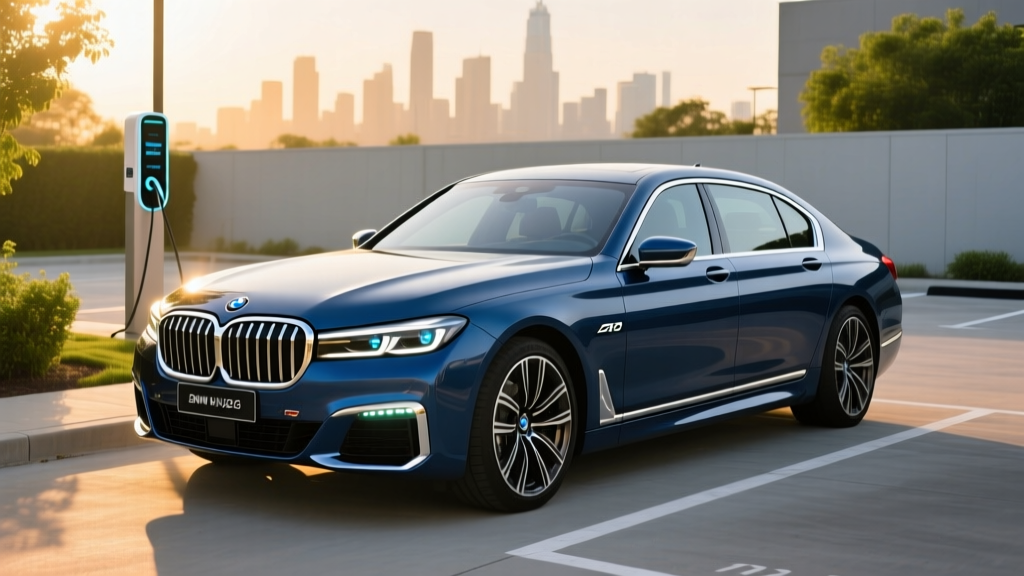
The full-size luxury sedan segment has largely gone silent on electrification, but BMW continues to offer the 7 Series as a plug-in hybrid. The 2026 BMW 750e xDrive pairs a turbocharged inline-six with an electric motor for a combined 483 horsepower, an EPA-estimated 35 miles of electric-only range, and the ability to operate as a conventional hybrid once the battery depletes. For buyers who want luxury-sedan refinement with daily electric commuting and zero range anxiety on road trips, the 7 Series hybrid occupies a narrow but compelling niche.
This review covers the 750e xDrive PHEV specifically. BMW does not offer a conventional (non-plug-in) hybrid variant of the current 7 Series in the U.S. market — if you see "7 Series hybrid" in BMW's lineup, it refers to this plug-in model.
2026 BMW 750e xDrive: Core Specifications
| Specification | 2026 BMW 750e xDrive |
|---|---|
| Powertrain | 3.0L turbo I-6 + electric motor (PHEV) |
| Combined Horsepower | 483 hp |
| Combined Torque | 516 lb-ft |
| Transmission | 8-speed automatic (ZF) |
| Drivetrain | xDrive AWD |
| Battery (Gross / Usable) | 18.7 kWh gross / ~15.0 kWh usable |
| Battery Chemistry | NMC (Nickel Manganese Cobalt) |
| EPA Electric-Only Range | 35 miles |
| EPA MPGe (Electric + Gas) | 54 MPGe combined |
| EPA MPG (Gas-Only, Battery Depleted) | 25 city / 29 hwy / 27 combined |
| Total Combined Range | ~400 miles |
| AC Charging (Level 2) | 7.4 kW max |
| DC Fast Charging | Not available |
| Level 2 Charge Time (0–100%) | ~2.5 hours at 7.4 kW |
| 0–60 mph | 4.6 seconds |
| Cargo Volume | 15.4 cu ft |
| Base MSRP | $107,975 (including destination) |
| Battery Warranty | 8 years / 80,000 miles |
| Powertrain Warranty | 4 years / 50,000 miles |
HEV vs. PHEV: What the 750e Actually Is
Before evaluating the 750e, it's essential to understand the distinction between the two hybrid architectures available in the broader market:
- Conventional Hybrid (HEV): Uses a small battery (typically 1–2 kWh) charged exclusively through regenerative braking and the gasoline engine. You never plug it in. Electric-only driving is limited to very low speeds and short distances. Examples: Toyota Camry Hybrid, Honda Accord Hybrid.
- Plug-in Hybrid (PHEV): Carries a much larger battery (15–30 kWh) that you charge via a wall outlet or Level 2 charger. Provides meaningful electric-only range (typically 20–50 miles) before the gasoline engine engages. Once the battery depletes, it operates like a conventional hybrid. The BMW 750e xDrive is a PHEV.
The 750e requires regular plug-in charging to realize its efficiency and cost advantages. If you never plug it in, you're carrying 400+ pounds of battery and motor hardware you're not using — and your fuel economy drops to the gas-only figure of roughly 27 MPG combined.
Fuel Economy and Electric Range: EPA vs. Real World
The EPA rates the 2026 BMW 750e xDrive at 54 MPGe combined when operating in blended electric-gas mode, and 27 MPG combined (25 city / 29 highway) once the battery is depleted. The electric-only range is rated at 35 miles. (Source: fueleconomy.gov)
Real-World Expectations: In mixed suburban driving with moderate temperatures, expect the 750e to deliver approximately 30–33 miles on electric power before the inline-six fires up. Highway driving at 70+ mph reduces electric range to roughly 22–26 miles due to aerodynamic drag and the lack of regenerative braking opportunities. In cold weather (below 30°F), plan for a 20–30% reduction in electric range — roughly 24–28 miles — as the battery's usable capacity shrinks and cabin heating draws additional energy.
Once the battery is depleted, real-world gas-only MPG typically lands between 24–26 MPG combined in mixed driving. However, PHEV owners who charge nightly and commute under 35 miles may go weeks without visiting a gas station, effectively achieving 80–100+ MPGe over a month of driving.
| Driving Scenario | EPA Estimate | Real-World Expectation |
|---|---|---|
| Electric-Only Range | 35 miles | 28–33 miles (varies by speed/temp) |
| Combined MPGe (blended) | 54 MPGe | 45–55 MPGe (depends on charge frequency) |
| Gas-Only City | 25 MPG | 22–25 MPG |
| Gas-Only Highway | 29 MPG | 26–29 MPG |
| Gas-Only Combined | 27 MPG | 24–27 MPG |
Charging: Level 2 Only, No DC Fast Charging
The 750e xDrive supports Level 2 AC charging at up to 7.4 kW, which replenishes the battery from empty to full in approximately 2.5 hours. A standard 120V household outlet (Level 1) will add roughly 3–4 miles of range per hour of charging, meaning a full charge from a wall outlet takes roughly 10–12 hours — feasible for overnight charging but impractical for quick top-ups.
DC fast charging is not available on the 750e. This is typical for PHEVs with smaller batteries — the 18.7 kWh pack simply doesn't warrant the added cost, weight, and complexity of DC hardware. For a PHEV buyer, the expectation is home or workplace Level 2 charging, not road-trip fast charging.
| Charging Level | Power | Time (0–100%) | Range Added per Hour |
|---|---|---|---|
| Level 1 (120V outlet) | ~1.4 kW | ~10–12 hours | ~3–4 miles |
| Level 2 (240V, 32A) | 7.4 kW | ~2.5 hours | ~14–16 miles |
| DC Fast Charge | N/A | N/A | N/A |
For home Level 2 installation, budget $800–$2,500 for a quality 40-amp or 48-amp wall connector plus electrician labor, assuming your electrical panel has capacity. A panel upgrade to 200A service, if needed, adds $1,500–$3,000. (Confirm all electrical work with a licensed electrician.)
Powertrain and Performance
The 750e xDrive combines BMW's B58 3.0-liter turbocharged inline-six (rated at approximately 312 hp on its own) with an electric motor integrated into the ZF 8-speed transmission housing (contributing approximately 184 hp). The system produces a combined 483 horsepower and 516 lb-ft of torque, routed through BMW's xDrive all-wheel-drive system.
The result is a 0–60 mph time of 4.6 seconds — genuinely quick for a 5,100-pound luxury sedan. The electric motor provides instant torque fill at low RPMs, eliminating the lag typical of turbocharged engines from a stop. In EV-only mode, acceleration is adequate for city driving but noticeably sedate; the gasoline engine engages under hard throttle regardless of selected drive mode.
BMW offers multiple driving modes: Electric (EV-only up to ~87 mph), Hybrid (automatic blending), and Sport (full combined output with sharper throttle mapping). The adaptive air suspension and rear-wheel steering contribute to ride quality that isolates occupants from road imperfections while maintaining composure in corners — a hallmark of the 7 Series platform.
Pricing, Trims, and Federal Tax Credit Eligibility
The 2026 BMW 750e xDrive starts at $107,975 including destination. BMW offers the 750e in a single well-equipped trim, with options packages adding features like the Executive Package (rear-seat entertainment, automatic doors), Bowers & Wilkins surround sound, and advanced driver-assistance upgrades.
A fully optioned 750e can reach $125,000–$130,000, placing it in direct competition with the Mercedes-Benz S 580e PHEV and the fully electric BMW i7.
Federal Tax Credit (§30D) Eligibility for the BMW 750e xDrive:
- Vehicle MSRP Cap: The 750e qualifies under the sedan cap of $55,000 — it does NOT qualify. The 750e's $107,975 base MSRP exceeds the $55,000 limit for sedans set by the Inflation Reduction Act. (SUVs, vans, and trucks have an $80,000 cap; sedans are capped at $55,000.)
- Buyer Income Cap: Even if the MSRP qualified, buyers must fall under modified AGI limits ($150K single / $300K joint). Most 7 Series buyers exceed these thresholds.
- Battery Sourcing Requirements: The 750e's battery components and critical minerals must meet phased-in sourcing thresholds. As a BMW assembled in Germany, the 750e faces additional sourcing challenges under current rules.
- Bottom Line: The 2026 BMW 750e xDrive does not qualify for the federal §30D tax credit due to its MSRP exceeding the sedan cap. (Source: IRS.gov)
Some states offer additional PHEV incentives that are not subject to the federal MSRP cap — check your state's energy office or DMV for current programs. These vary significantly by jurisdiction.
Battery Longevity, Warranty, and Replacement Cost
BMW PHEV Battery Warranty: The 750e's high-voltage battery is covered for 8 years or 80,000 miles, whichever comes first. BMW warrants the battery against defects and excessive capacity loss — typically defined as falling below 70% of original capacity during the warranty period.
Long-Term Degradation: PHEV batteries experience less stress than full EV batteries because they operate in a narrower state-of-charge window (the vehicle's software prevents full 0% or 100% usage, maintaining a buffer). NMC chemistry in PHEV applications typically shows 10–15% capacity loss over 10 years / 100,000 miles based on industry data. For the 750e, that means the 35-mile electric range might reduce to approximately 28–31 miles after a decade of use.
Replacement Cost: Out-of-warranty high-voltage battery replacement for the 750e is estimated at $8,000–$12,000 for the battery module plus $1,500–$2,500 in labor. However, PHEV battery replacements are uncommon before 150,000+ miles, and individual cell modules can sometimes be replaced rather than the entire pack, reducing cost.
The 750e's conventional 12V auxiliary battery (which powers electronics, not propulsion) should be replaced every 4–6 years at roughly $300–$500, similar to any modern luxury vehicle.
Who Should Choose the 750e PHEV vs. a Full EV or Gas Sedan?
Choose the BMW 750e xDrive PHEV if:
- You commute 25–35 miles round-trip and can charge at home nightly — you'll drive electric most weekdays and use gas only on longer trips.
- You want a full-size luxury sedan but aren't ready to commit to a full EV due to charging-infrastructure gaps in your area or on your frequent road-trip routes.
- You value the 7 Series' ride quality, interior materials, and technology suite and want the smoothest, quietest version — electric-mode city driving is nearly silent.
- Tax credit eligibility is not a primary purchase driver at this price point.
Choose a full EV (e.g., BMW i7, Mercedes EQS) if:
- You have reliable home Level 2 charging and your daily driving rarely exceeds 250 miles.
- You want zero tailpipe emissions and lower per-mile fuel costs — electricity at $0.14/kWh costs roughly $0.04/mile vs. $0.15–$0.20/mile for gasoline in the 750e.
- You want less mechanical complexity (no engine, no transmission, no oil changes).
Choose a gas-only luxury sedan (e.g., BMW 740i, Mercedes S 500) if:
- You cannot charge at home or at work — a PHEV you never plug in is a heavier, less efficient gas car.
- You want a lower purchase price — the 740i starts roughly $15,000 less than the 750e.
- Your annual mileage is low and fuel savings won't offset the PHEV premium over a reasonable ownership period.
Pros
- 35-mile electric range covers most daily commutes gas-free
- 483 hp with seamless electric torque fill — genuinely quick
- No range anxiety on road trips; operates as a 27-MPG hybrid when depleted
- Quiet, refined EV-mode driving in city traffic
- Flagship interior quality, ride comfort, and technology
Cons
- $108K+ base price with no federal tax credit eligibility
- No DC fast charging — Level 2 only
- Gas-only MPG (27 combined) is unremarkable for the price
- Heavy curb weight (~5,100 lbs) impacts handling dynamics vs. lighter rivals
- Trunk space slightly reduced vs. gas 7 Series due to battery placement
Frequently Asked Questions
How many MPG does the 2026 BMW 750e get?
The EPA rates the 750e at 54 MPGe combined when using both electric and gas power, and 27 MPG combined (25 city / 29 highway) when operating on gasoline alone after the battery is depleted. Real-world gas-only MPG typically falls between 24–27 MPG combined depending on driving style and conditions.
How far can the BMW 750e drive on electric only?
The EPA estimates 35 miles of electric-only range. In real-world driving, expect 28–33 miles in moderate conditions, dropping to 22–26 miles at sustained highway speeds or 24–28 miles in cold weather below 30°F.
Does the BMW 750e qualify for the federal tax credit?
No. The 750e's base MSRP of $107,975 exceeds the $55,000 sedan cap set by the Inflation Reduction Act for the §30D clean vehicle credit. Check your state's incentive programs for possible state-level PHEV rebates that may not have MSRP caps.
Is the BMW 750e hybrid reliable, and what does battery replacement cost?
BMW's B58 inline-six is widely regarded as one of the most reliable modern BMW engines. The high-voltage battery is warranted for 8 years / 80,000 miles. Out-of-warranty battery replacement is estimated at $8,000–$12,000 plus labor, though PHEV batteries rarely require full replacement before 150,000+ miles due to the protective charge buffers BMW programs into the battery management system.
Can I charge the 750e at a public DC fast charger?
No. The 750e supports only Level 1 (120V) and Level 2 (240V) AC charging, with a maximum charge rate of 7.4 kW. It does not have a DC fast-charging port. This is standard for PHEVs — the expectation is home or workplace charging.
What happens if I never plug in the 750e?
The car will still function as a conventional hybrid, using regenerative braking and the gasoline engine to maintain a small battery charge. However, your fuel economy drops to roughly 24–27 MPG combined — worse than many dedicated hybrids — and you forfeit the electric-commuting benefit that justifies the PHEV premium. If you cannot charge regularly, a gas-only 740i or a conventional hybrid sedan is a better financial choice.
How does the 750e compare to the fully electric BMW i7?
The i7 eDrive50 offers an EPA-estimated 318 miles of range, DC fast charging at up to 195 kW, and a starting price around $120,300. It eliminates gas-engine maintenance and delivers smoother, quieter acceleration. However, it requires commitment to charging infrastructure. The 750e is the better choice if you frequently drive 300+ miles in a day or lack reliable charging access. (Source: BMW USA)