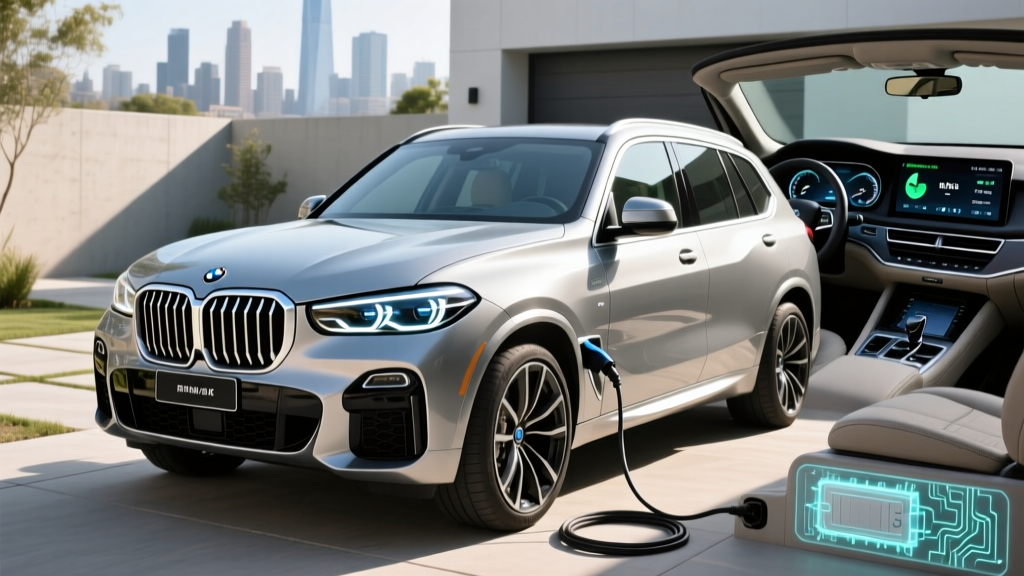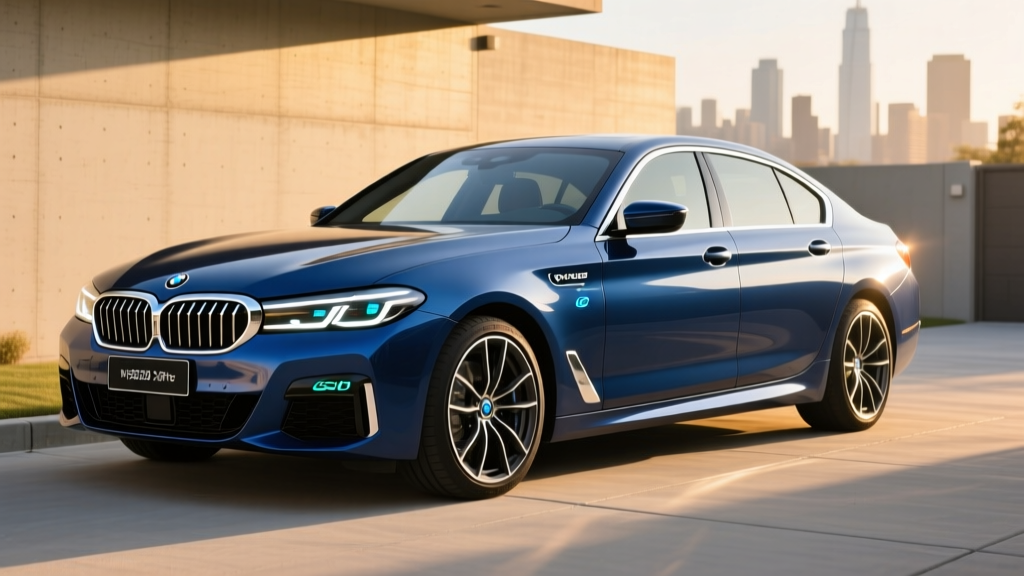
The 2026 BMW 550e xDrive slots into a narrow but compelling space: a plug-in hybrid executive sedan that delivers silent electric commuting, six-cylinder performance on demand, and zero range anxiety on road trips. For buyers searching for a BMW Serie 5 hybrid — the global shorthand for BMW's electrified 5 Series — the 550e is the current-generation answer, replacing the older 530e with substantially more power, battery capacity, and electric-only range.
This guide breaks down the 550e xDrive's real-world efficiency, electric range, charging behavior, powertrain specs, and ownership economics so you can decide whether this PHEV fits your daily driving pattern — or whether a full EV like the BMW i5 makes more sense.
BMW 5 Series Hybrid Lineup: HEV vs PHEV Explained
Before diving into specs, it's worth clarifying what BMW actually sells in the U.S. for the 5 Series hybrid lineup, because the terminology can confuse shoppers:
| Feature | Conventional Hybrid (HEV) | Plug-In Hybrid (PHEV) — 550e xDrive |
|---|---|---|
| Plug-in charging? | No — regenerative braking only | Yes — Level 2 AC charging |
| Electric-only driving | Brief assist, no EV-only mode | Up to 29 miles EPA |
| Battery size | ~1-2 kWh (small buffer) | 18.7 kWh usable |
| Tax credit eligible | No | Not under current §30D rules (see below) |
| U.S. availability | Not offered in 5 Series | 550e xDrive only |
Bottom line: BMW does not sell a conventional (non-plug-in) hybrid 5 Series in the United States for 2026. The only electrified 5 Series option is the 550e xDrive plug-in hybrid. If you want a self-charging hybrid BMW, you'd need to look at other models or brands. The 550e must be plugged in to realize its efficiency advantage — running it solely on gasoline wastes the battery's potential and reduces it to a heavy, less-efficient luxury sedan.
Powertrain: 483 HP From Inline-Six + Electric Motor
The 550e xDrive pairs a turbocharged 3.0-liter inline-six engine with an electric motor integrated into the eight-speed automatic transmission. Combined output is substantial:
| Specification | 2026 BMW 550e xDrive |
|---|---|
| Engine | 3.0L turbocharged inline-six |
| Electric motor | Integrated in transmission (P2 layout) |
| Combined horsepower | 483 hp |
| Combined torque | 516 lb-ft |
| 0-60 mph | 4.1 seconds |
| Drivetrain | xDrive (AWD) |
| Transmission | 8-speed automatic |
| Battery (usable) | 18.7 kWh |
| Battery chemistry | NMC (nickel manganese cobalt) |
| Fuel tank | 15.9 gallons |
The P2 hybrid architecture places the electric motor between the engine and transmission, allowing the car to drive on electric power alone, gasoline alone, or a blended combination. The inline-six gives the 550e a character advantage over four-cylinder PHEVs — it's genuinely quick and sounds good under hard acceleration, which matters in a $60,000+ sport sedan.
Electric-Only Range and Total Range
The EPA rates the 550e xDrive at 29 miles of electric-only range. In real-world testing, expect 24–28 miles on a full charge in mixed suburban driving. Highway-only use at 70+ mph reduces that to roughly 20–22 miles due to aerodynamic drag and the sedan's ~5,000-lb curb weight. Cold weather (below 32°F) can trim electric range by 15–25%, depending on cabin heating demand.
EPA electric range: 29 miles
Real-world expectation: 24–28 mi mixed / 20–22 mi highway / 18–22 mi cold weather
Total combined range (electric + gasoline): ~430 miles
Is 29 miles enough? For many commuters, yes. The average U.S. one-way commute is roughly 16 miles, according to Census Bureau data. If your round trip falls under 25 miles and you charge at home nightly, you could drive months without the engine starting — BMW's hybrid system supports electric-only speeds up to 87 mph.
MPG, MPGe, and Real-World Fuel Economy
The EPA publishes two efficiency figures for PHEVs: MPGe (miles-per-gallon-equivalent when running on electricity) and MPG (when operating as a conventional hybrid after the battery is depleted).
| Mode | City | Highway | Combined |
|---|---|---|---|
| Charge-depleting (MPGe) | — | — | 64 MPGe |
| Charge-sustaining (MPG) | 39 MPG | 37 MPG | 38 MPG |
Real-world MPG observations: In charge-sustaining mode (battery depleted, running as a hybrid), the 550e tends to deliver 34–37 MPG in mixed driving and 35–39 MPG on highway cruises. City driving with frequent regenerative braking can push it toward 40 MPG. These figures are impressive for a 483-hp AWD sedan weighing over two tons — for comparison, the gas-only 540i xDrive returns about 28 MPG combined.
On fueleconomy.gov, the 550e xDrive's official ratings confirm the 64 MPGe / 38 MPG combined figures. Your actual results depend heavily on how often you charge: a PHEV that's never plugged in is just a heavy hybrid.
Charging: Level 2 Only, No DC Fast Charging
The 550e xDrive accepts AC charging only — there is no DC fast-charge capability, which is typical for most PHEVs in this class. Here's what to expect:
| Charging Level | Power | 0-100% Time | Notes |
|---|---|---|---|
| Level 1 (120V household) | ~1.4 kW | ~14 hours | Emergency/trickle only |
| Level 2 (240V, 32A) | 7.4 kW | ~2.75 hours | Home wallbox or public Level 2 |
| DC Fast Charge | Not supported | N/A | CCS/NACS DC not available |
A home Level 2 charger is essentially mandatory to get real value from the 550e. At 7.4 kW, a full charge takes under three hours — meaning you can fully replenish during a workday if your office has Level 2 charging, or overnight at home easily. The onboard charger uses a J1772 connector (standard for non-Tesla AC charging). BMW has begun equipping newer models with the NACS port for DC charging, but since the 550e doesn't support DC, it retains J1772.
Cost to charge: At the U.S. average residential electricity rate of ~$0.16/kWh, fully recharging the 18.7 kWh battery costs roughly $3.00 — equivalent to about a gallon of premium gasoline for 25+ miles of electric driving.
Pricing, Tax Credits, and Ownership Costs
The 2026 BMW 550e xDrive starts at an MSRP of approximately $60,900 (including destination). With options like the Executive Package, Driving Assistance Professional, or M Sport Package, a well-equipped example lands between $65,000 and $72,000.
Federal Tax Credit Eligibility (§30D)
Under current IRS §30D clean vehicle credit rules, the BMW 550e xDrive does not qualify for the $7,500 federal tax credit. The reasons are twofold:
- MSRP cap: Sedans must be under $55,000 MSRP to qualify; the 550e exceeds this at $60,900.
- Battery sourcing: Even if priced within limits, BMW's battery supply chain for this model does not currently meet the critical-mineral and battery-component requirements that phase in through 2026.
Some states offer their own PHEV incentives (California, Colorado, and New York among them), but these vary by jurisdiction and income. Check your state's energy or DMV website for current programs. A tax professional can confirm eligibility for any credits you may claim.
Battery Warranty and Replacement Cost
BMW covers the 550e's high-voltage battery with an 8-year / 80,000-mile warranty (whichever comes first), with a capacity retention threshold of 70%. If the battery degrades below 70% of original capacity within the warranty period, BMW will repair or replace it.
Out-of-warranty replacement cost: Based on current BMW PHEV battery pricing, a full high-voltage battery replacement runs approximately $8,000–$12,000 including labor. However, PHEV batteries in this generation are designed for 150,000+ mile lifespans with normal use, and degradation is typically 10–15% over the first 8–10 years based on data from the previous-generation 530e.
Driving Modes and Daily Usability
The 550e offers three primary hybrid driving modes that let you manage the battery strategically:
- Hybrid (default): The car intelligently blends electric and gasoline power, optimizing for efficiency across your route using navigation data if a destination is set.
- Electric: Forces pure EV driving up to 87 mph — ideal for city centers, residential areas, or the last mile of your commute.
- Hybrid Eco Pro: Maximizes regenerative braking and throttle response for longest range; the coasting function disengages the drivetrain on highway lifts to reduce drag.
A useful feature: the Battery Control mode lets you set a target state of charge (SoC) that the engine maintains — handy if you want to save electric range for a zero-emission zone at your destination or for silent EV driving through your neighborhood on arrival.
Who Should Choose the BMW 550e xDrive?
Choose the 550e xDrive (PHEV) if:
- Your daily commute is under 30 miles round-trip and you can charge at home
- You regularly take road trips exceeding 200 miles (no charging-station dependency)
- You want executive-sedan refinement with genuine performance (4.1s 0-60)
- You lack reliable public DC fast-charging infrastructure near your routes
- You prefer the inline-six character over a silent EV powertrain
Choose the BMW i5 (full EV) instead if:
- You have home Level 2 charging and your daily driving is under 250 miles
- You want lower maintenance (no oil changes, no engine)
- You want to eliminate gasoline entirely and reduce fuel cost per mile
- The i5 eDrive40's 295-mile EPA range covers your needs
Choose a conventional gas 540i if:
- You cannot charge at home or at work
- Your budget is under $58,000 and you don't want a PHEV premium
- You drive mostly highway miles where PHEV electric-range advantages diminish
Pros
- 483 hp with inline-six smoothness; 4.1s 0-60
- 29 mi electric range covers most commutes
- 38 MPG combined in charge-sustaining mode
- No range anxiety on long trips — 430+ mi total
- Quiet EV driving around town
- Excellent build quality and iDrive 8.5 infotainment
Cons
- $60,900 MSRP — no federal tax credit
- No DC fast charging — AC only at 7.4 kW
- ~5,000 lb curb weight affects handling vs gas 5 Series
- Trunk space reduced by battery (~14.1 cu ft vs 17.3 in gas model)
- Must plug in regularly to realize efficiency gains
- Real-world electric range drops to ~20 mi in cold weather
FAQ: BMW 5 Series Hybrid Questions
How many MPG does the BMW 550e hybrid get?
The EPA rates the 550e xDrive at 38 MPG combined (39 city / 37 highway) when operating in charge-sustaining mode after the battery is depleted. Real-world results typically fall between 34–40 MPG depending on driving style and conditions. When running on electricity, it achieves 64 MPGe combined.
How far can the BMW 550e go on electric only?
The EPA rates the 550e at 29 miles of electric-only range. Real-world results are 24–28 miles in mixed driving, 20–22 miles at sustained highway speeds, and 18–22 miles in freezing temperatures. The electric motor can propel the car up to 87 mph without engine assistance.
Does the BMW 550e qualify for the federal EV tax credit?
No. The 550e xDrive's $60,900 MSRP exceeds the $55,000 sedan cap under current §30D rules, and its battery supply chain does not meet critical-mineral sourcing requirements. Some state-level incentives may apply — check your state's energy office for details.
Is the BMW 550e hybrid reliable?
BMW's PHEV powertrain has proven reasonably reliable since the previous-generation 530e launched in 2018. The high-voltage battery carries an 8-year/80,000-mile warranty. The inline-six (B58 engine family) is widely regarded as one of BMW's most durable modern engines. Expect typical BMW maintenance costs — higher than average for the segment, but in line with German luxury competitors.
What does it cost to replace the BMW 550e hybrid battery?
An out-of-warranty high-voltage battery replacement costs approximately $8,000–$12,000 including labor. However, PHEV batteries are engineered for 150,000+ mile lifespans, and most owners will never need a full replacement. The 70% capacity retention warranty threshold provides additional protection through the first 8 years.
Can I charge the BMW 550e at a Tesla Supercharger?
Not at DC Superchargers — the 550e does not support DC fast charging. For AC Level 2 charging, you can use a J1772 adapter at non-Tesla destination chargers. BMW does not use the NACS connector on the 550e since it lacks DC capability.
Hybrid vs PHEV vs EV — which BMW 5 Series should I buy?
The U.S. 5 Series lineup offers the 550e xDrive (PHEV), the i5 (full EV), and the gas 540i. If you can charge at home and drive under 30 miles daily but take regular long trips, the 550e PHEV is the most versatile. If you charge at home and rarely exceed 250 miles in a day, the i5 EV eliminates gasoline entirely. If you cannot charge at home, the 540i avoids the PHEV premium you'd never benefit from.
Sources: EPA Fuel Economy — BMW 550e xDrive, BMW USA 5 Series, IRS §30D Clean Vehicle Credits.