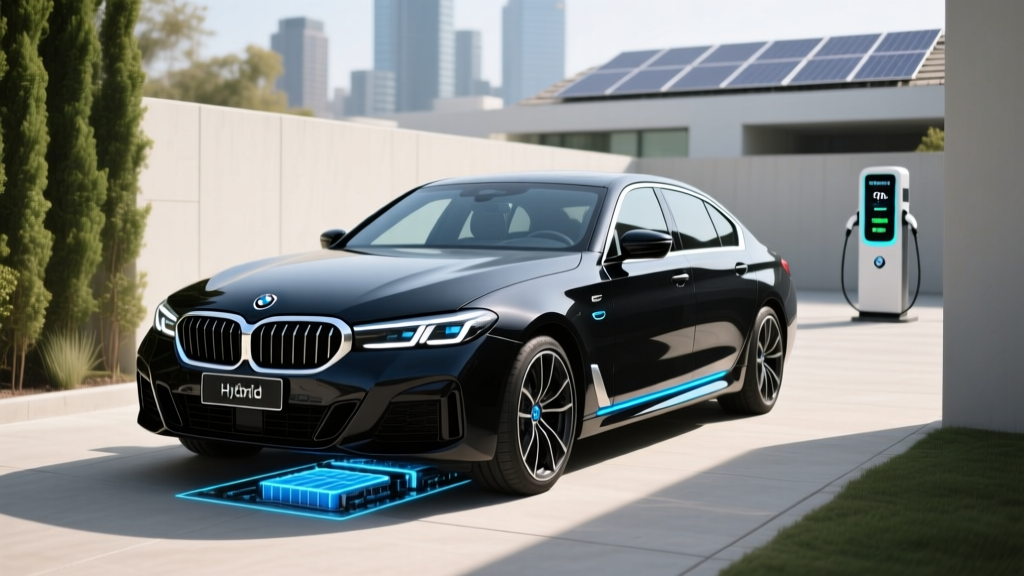
The BMW 5 Series has been the benchmark midsize luxury sedan for decades, but the 2026 BMW 5 Series hybrid — officially the 530e xDrive — is where BMW's electrification strategy gets practical. As a plug-in hybrid (PHEV), the 530e bridges the gap between a conventional gas 5 Series and a full battery-electric vehicle (BEV), offering roughly 35 miles of electric-only commuting before the turbocharged inline-four kicks in. For luxury sedan buyers who want EV-like daily driving without range anxiety on longer trips, the 530e is one of the most compelling options in its class.
This guide breaks down the 2026 530e xDrive's powertrain specs, real-world fuel economy, charging requirements, battery longevity, federal tax credit eligibility, and how it stacks up against going fully electric or sticking with a conventional hybrid.
HEV vs PHEV: Where the 530e Fits
Before diving into specs, it's critical to understand what the 530e actually is — because BMW's 5 Series lineup can confuse shoppers.
Conventional Hybrid (HEV) vs Plug-in Hybrid (PHEV)
| Feature | HEV (e.g., Toyota Camry Hybrid) | PHEV (BMW 530e xDrive) | Full BEV (e.g., BMW i5) |
|---|---|---|---|
| Plug-in charging | No — self-charging via regen | Yes — plug in to access electric range | Yes — required for all driving |
| Electric-only range | 1–2 miles at low speed | ~35 miles (EPA est.) | 250–295 miles |
| Battery size | ~1–2 kWh | 18.7 kWh usable | 81.2 kWh usable |
| Gas engine | Yes (primary power) | Yes (backup + highway) | None |
| Fuel required | Yes | Yes (when battery depletes) | No |
The 530e is a plug-in hybrid. It has a larger battery than a conventional hybrid and must be plugged in (ideally nightly at home) to realize its full electric range. Drive it without ever plugging in, and it functions like a heavy conventional hybrid — still efficient, but you're leaving the best part on the table. BMW does not currently offer a non-plug-in HEV variant of the 5 Series in the US market for 2026.
Powertrain Specs: 299 HP from Engine + Electric Motor
The 2026 BMW 530e xDrive pairs a 2.0-liter turbocharged inline-four gasoline engine with an electric motor integrated into the transmission housing. Combined output is 299 horsepower and 332 lb-ft of torque, routed through an 8-speed automatic to BMW's xDrive all-wheel-drive system.
| Specification | 2026 BMW 530e xDrive |
|---|---|
| Engine | 2.0L turbocharged inline-4 |
| Engine output | 184 hp / 221 lb-ft |
| Electric motor output | 184 hp (integrated in transmission) |
| Combined system output | 299 hp / 332 lb-ft |
| Transmission | 8-speed automatic (ZF) |
| Drivetrain | xDrive AWD |
| Battery (usable) | 18.7 kWh (lithium-ion NMC) |
| EPA electric-only range | ~35 miles |
| EPA total range (gas + electric) | ~400 miles |
| 0–60 mph | 5.7 seconds |
| Top speed | 130 mph (electronically limited) |
| Base MSRP | $61,200 (before destination) |
The electric motor alone can propel the 530e to 87 mph, which covers most suburban and city driving without engaging the gas engine. BMW's eDrive modes let you choose: Hybrid (auto-blends both sources), Electric (battery only until depleted), and Battery Control (reserves charge for later use — useful when approaching a zero-emission zone or city center).
Fuel Economy: EPA MPG and Real-World Results
PHEV fuel economy depends heavily on how often you plug in. The EPA publishes two figures: MPGe (which accounts for electric driving) and MPG (gas-only operation after the battery depletes).
| Mode | City | Highway | Combined |
|---|---|---|---|
| MPGe (with charge) | — | — | 64 MPGe |
| Gas-only (battery depleted) | 28 MPG | 33 MPG | 30 MPG |
Real-World MPG vs EPA Estimates
Based on owner data and third-party testing, the 530e's real-world behavior breaks down as follows:
- Electric-only commuting: Expect 30–35 miles in mild weather (60–75°F). Cold weather (below 30°F) reduces electric range to roughly 22–26 miles due to cabin heating demands and reduced battery efficiency.
- Gas-only highway: Owners report 31–34 MPG at 70–75 mph, slightly above the EPA highway estimate — consistent with BMW's efficient B48 engine and aerodynamic tuning.
- Mixed suburban (no plug-in): 27–29 MPG, as the heavier PHEV powertrain works harder in stop-and-go without electric assist.
- With daily plugging (30-mile commute): Many owners use zero gasoline during the work week, achieving effective triple-digit MPGe over thousands of miles.
The bottom line: if you plug in nightly and commute under 35 miles, the 530e will sip gas only on weekend road trips. Neglect to charge, and you're driving a 30 MPG luxury sedan that weighs about 4,700 pounds — still respectable, but not class-leading.
Charging the 530e: Level 1, Level 2, and the DC Fast-Charge Gap
The 530e's 18.7 kWh battery is designed for home and destination charging, not highway fast-charging infrastructure.
| Charging Level | Power (kW) | Connector | Time (0–100%) | Notes |
|---|---|---|---|---|
| Level 1 (120V outlet) | ~1.4 kW | J1772 | ~14 hours | Emergency/trickle only |
| Level 2 (240V home/work) | 7.4 kW (max onboard) | J1772 | ~2.5 hours | Recommended daily charging |
| DC Fast Charge | Not supported | N/A | N/A | No CCS or NACS port |
The onboard charger maxes out at 7.4 kW on Level 2. A standard 240V/32A home wallbox will fully replenish the battery in about 2.5 hours — easily fast enough for overnight top-ups or a midday charge at the office. The 530e does not support DC fast charging, which is typical for PHEVs in this class. You won't be pulling into Electrify America or Tesla Supercharger stalls with this car, but given the small battery, you don't need to.
For home Level 2 installation, budget $800–$2,500 for a quality wallbox and electrician labor, depending on panel proximity and local permit costs. If your electrical panel is at capacity, a 200A service upgrade can add $1,500–$3,000.
Tax Credit Eligibility: Does the 530e Qualify?
This is where the 530e faces headwinds under current IRS §30D rules. As of 2026, the federal clean vehicle credit of up to $7,500 requires vehicles to meet strict battery component sourcing and critical minerals thresholds, plus MSRP caps ($55,000 for sedans) and buyer income limits ($150,000 single / $300,000 joint AGI).
§30D Credit Checklist for the 2026 BMW 530e
- MSRP cap: $55,000 for sedans — the 530e starts at $61,200. Does NOT qualify.
- Battery sourcing: BMW's battery supply chain does not currently meet US-sourced critical mineral thresholds.
- Assembly: The 5 Series is assembled in Dingolfing, Germany — not in North America.
- Income cap: Even if other criteria were met, buyer AGI limits apply.
The 530e does not qualify for the federal §30D tax credit due to its MSRP exceeding the sedan cap, foreign assembly, and battery sourcing requirements. Some states offer separate PHEV rebates (California's CVRP, for example, has been restructured, but utility-level rebates may apply). Check your state energy office and local utility for current programs — these vary by jurisdiction and change frequently.
For comparison, the fully electric BMW i5 also exceeds the MSRP cap at base, making the entire 5 Series electrified lineup ineligible for federal credits. This is a significant factor if you're cross-shopping against the Tesla Model S, which similarly doesn't qualify, versus vehicles like the Hyundai Ioniq 6 that do.
Battery Longevity, Warranty, and Replacement Costs
PHEV battery anxiety is real, but the data on modern lithium-ion packs is reassuring. The 530e's 18.7 kWh NMC battery is liquid-cooled and managed by BMW's thermal system to minimize degradation.
BMW PHEV Battery Warranty
- Coverage: 8 years / 80,000 miles (whichever comes first)
- Capacity retention threshold: BMW warrants the high-voltage battery against defects and excessive capacity loss. Industry standard is 70% of original capacity during the warranty period.
- Powertrain warranty: 4 years / 50,000 miles (BMW standard)
- Roadside assistance: 4 years / unlimited miles
Real-World Degradation Data
Based on fleet data from earlier-generation BMW PHEVs (330e, X5 xDrive45e), high-voltage batteries typically retain 90–95% capacity after 5 years of daily cycling. The 530e's relatively small battery means fewer deep discharge cycles compared to a full BEV, which can actually favor longevity. Most PHEV batteries outlast the warranty period without requiring replacement.
If replacement is needed out of warranty, expect $8,000–$12,000 for a new BMW high-voltage battery pack plus labor. However, this is a worst-case scenario that owner forums and repair data suggest is rare before 150,000+ miles. Third-party refurbishment options are emerging and may reduce costs in the future.
Who Should Choose the 530e vs a Full EV or Gas 5 Series?
The PHEV Decision Framework
Choose the BMW 530e PHEV if:
- Your daily commute is under 35 miles round-trip and you can charge at home nightly
- You regularly take road trips of 200+ miles where charging infrastructure is sparse
- You want electric daily driving but aren't ready to commit to a full BEV
- You value BMW's driving dynamics and interior quality over maximum fuel savings
- You don't have reliable access to public DC fast charging for longer trips
Choose the BMW i5 (full EV) instead if:
- You have home Level 2 charging and your daily driving is under 250 miles
- You want zero tailpipe emissions and minimal maintenance (no oil changes, fewer moving parts)
- You drive 15,000+ miles/year and want to maximize energy cost savings
- You're comfortable planning DC fast-charge stops on road trips
Choose the gas 530i if:
- You cannot charge at home or at work
- Your annual mileage is under 8,000 and fuel savings won't offset the PHEV price premium
- You prefer a lighter car and don't care about electric-only mode
Pros
- 35-mile electric range covers most commutes gas-free
- 299 hp with seamless engine/motor transitions
- No range anxiety — gas engine for any trip length
- BMW build quality, iDrive 8.5, premium interior
- xDrive AWD standard — all-weather capability
- Lower maintenance than gas-only (regen saves brakes)
Cons
- $61,200 base — no federal tax credit eligibility
- No DC fast charging — limited to 7.4 kW Level 2
- Trunk space reduced vs gas 5 Series (battery placement)
- 30 MPG gas-only is merely adequate for the class
- Cold weather cuts electric range by 20–30%
- Requires home charging to realize full value
Frequently Asked Questions
How many MPG does the 2026 BMW 530e get?
The EPA rates the 530e xDrive at 64 MPGe combined when factoring in electric driving, and 30 MPG combined (28 city / 33 highway) when running on gasoline alone after the battery is depleted. Real-world gas-only highway driving often returns 31–34 MPG at 70 mph.
How far can the BMW 530e go on electric only?
The EPA estimates approximately 35 miles of electric-only range. In real-world conditions, expect 30–35 miles in mild weather and 22–26 miles in cold weather (below 30°F) due to heating loads and reduced battery efficiency.
Does the BMW 530e qualify for a federal tax credit?
No. The 2026 530e does not qualify for the federal §30D clean vehicle credit. Its $61,200 MSRP exceeds the $55,000 sedan cap, it's assembled in Germany, and its battery components don't meet current US-sourcing requirements. Check your state and utility for potential local incentives.
Is the BMW 530e reliable? What about battery replacement cost?
BMW's PHEV powertrain has a solid track record across the 330e and X5 xDrive45e. The high-voltage battery is warranted for 8 years / 80,000 miles and typically retains 90%+ capacity over that period. Out-of-warranty battery replacement runs $8,000–$12,000, though failures before 150,000 miles are uncommon based on fleet data.
Can I charge the 530e at a Tesla Supercharger or DC fast charger?
No. The 530e does not support DC fast charging of any kind. It charges exclusively via J1772 at up to 7.4 kW on Level 2 (240V), taking about 2.5 hours for a full charge. This is by design — the small PHEV battery doesn't require highway fast-charging infrastructure.
How does the 530e compare to the BMW i5?
The BMW i5 eDrive40 is the fully electric 5 Series, starting around $70,200 with 295 miles of EPA range and DC fast charging up to 205 kW. The i5 offers zero-emission driving and lower running costs if you have home charging, but requires DC fast-charge planning for road trips. The 530e offers more flexibility at a lower entry price, but can't match the i5's efficiency or environmental profile.
Does the 530e have less trunk space than the gas 5 Series?
Yes. The high-voltage battery sits beneath the rear seat and trunk area, reducing cargo volume by approximately 2–3 cubic feet compared to the gas-only 530i. Expect roughly 16 cubic feet vs 18.4 in the gas model. For most sedan buyers this is manageable, but it's worth noting if you regularly haul larger items.
Final Verdict: A Luxury PHEV That Works — If You Plug In
The 2026 BMW 530e xDrive is a well-executed plug-in hybrid that rewards owners who charge daily with near-silent, gas-free commuting and rewards road-trippers with a familiar gas engine and 400+ mile total range. At $61,200, it's a premium product with no federal tax credit to soften the blow, which narrows its value proposition against both the fully electric i5 and more affordable PHEV sedans.
If your lifestyle aligns with home charging, a sub-35-mile commute, and regular longer drives, the 530e is one of the most refined PHEVs on the market. If you can't charge at home or are chasing maximum efficiency savings, the math shifts — and a full BEV or a less expensive PHEV may serve you better. Either way, the 530e proves that BMW hasn't lost its engineering edge in the transition to electrification.