The BMW 330e xDrive: A Plug-In Hybrid That Bridges Two Worlds
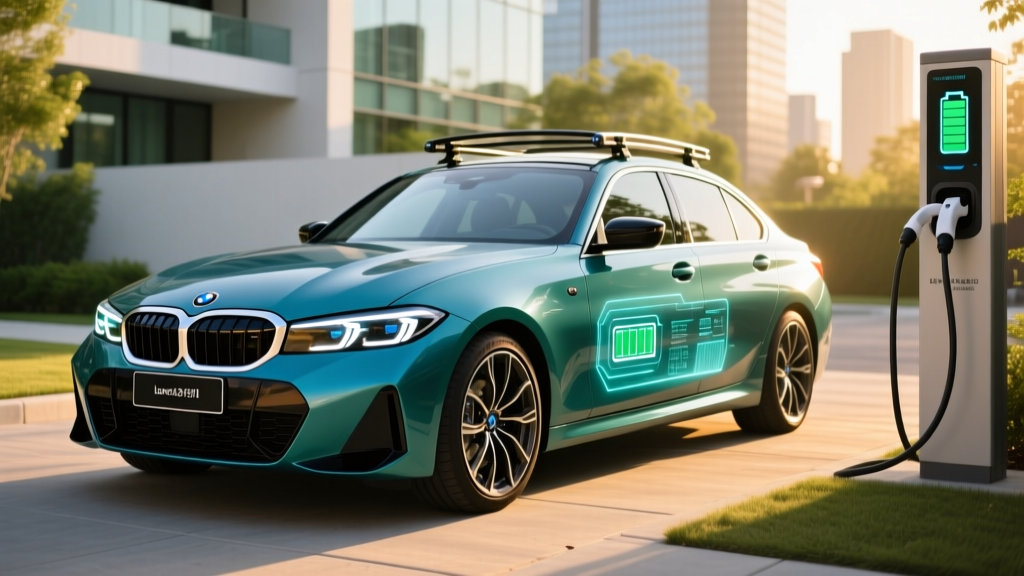
The BMW 330e xDrive occupies a specific niche: it's a luxury sport sedan that can commute on electricity alone yet still deliver BMW's signature driving dynamics when the turbocharged four-cylinder kicks in. For 2026, the 330e xDrive pairs a 2.0-liter turbocharged inline-four with an electric motor integrated into the eight-speed automatic transmission, producing a combined 292 horsepower and 310 lb-ft of torque. All-wheel drive comes standard.
But the real question for buyers in 2026 isn't whether this car is quick — it's whether a plug-in hybrid (PHEV) still makes sense as battery-electric vehicles proliferate and charging infrastructure matures. The answer depends entirely on your driving patterns, home charging access, and willingness to manage two energy sources.
HEV vs. PHEV: Why the 330e Is a Plug-In, Not a Conventional Hybrid
A conventional hybrid (HEV) like the Toyota Prius generates all its electricity from the gasoline engine and regenerative braking — you never plug it in. Its battery is small (typically 1-2 kWh), and electric-only driving is limited to low-speed creeping.
A plug-in hybrid (PHEV) like the BMW 330e xDrive carries a larger battery (19.5 kWh usable in the 2026 model) that you charge from a wall outlet or Level 2 charger. This enables meaningful electric-only range — in this case, an EPA-rated 22 miles — before the gas engine takes over. Think of a PHEV as an EV for short commutes and a hybrid for everything else.
Specs at a Glance: 2026 BMW 330e xDrive
| Specification | Value |
|---|---|
| Powertrain | 2.0L turbo I-4 + electric motor (integrated into 8-speed auto) |
| Combined Output | 292 hp / 310 lb-ft torque |
| Drivetrain | xDrive AWD |
| Battery (usable) | 19.5 kWh (NMC lithium-ion) |
| EPA Electric Range | 22 miles |
| EPA MPGe (electric + gas) | 75 MPGe |
| EPA MPG (gas-only) | 28 combined (25 city / 33 highway) |
| Total Range | ~420 miles (electric + gas tank) |
| 0-60 mph | 5.6 seconds |
| Level 2 Charge Time (0-100%) | ~3.0 hours at 7.4 kW |
| DC Fast Charging | Not supported |
| Base MSRP | $47,900 (before destination) |
| Federal Tax Credit (§30D) | Up to $3,750 (battery sourcing dependent) |
| Battery Warranty | 8 years / 80,000 miles |
Fuel Economy: What the EPA Says vs. What You'll Actually See
| Mode | City | Highway | Combined |
|---|---|---|---|
| Gas-only (battery depleted) | 25 MPG | 33 MPG | 28 MPG |
| Electric + gas (blended) | 75 MPGe combined | ||
| Electric-only | 22 miles EPA range (no MPG — pure electric) | ||
Real-world MPG note: The 28 MPG combined gas-only figure is what you'll see once the battery is depleted and you're driving on the gasoline engine alone. In practice, PHEV fuel economy is highly dependent on how often you charge. If you charge nightly and your commute is under 22 miles round-trip, you may use almost no gasoline for daily driving — effectively achieving triple-digit MPGe. Conversely, if you never plug in, the 330e xDrive operates as a heavy hybrid and you'll see closer to 25-27 MPG combined in mixed driving, slightly below the EPA estimate due to the added battery weight (~4,300 lbs curb weight).
On highway road trips where the battery depletes within the first 20-25 miles, expect the 33 MPG highway figure to hold reasonably well at 65-70 mph. At sustained 80+ mph speeds, real-world highway economy drops to approximately 29-30 MPG — consistent with the aerodynamic drag penalty all sedans face at higher speeds.
Electric-Only Range and Charging: The Daily Commute Equation
The 2026 BMW 330e xDrive carries a 19.5 kWh usable battery pack (gross capacity is approximately 22.5 kWh, with a software buffer to protect longevity). The EPA rates it at 22 miles of electric-only range. In real-world conditions:
- Mild weather, city/suburban driving (under 45 mph): Expect 20-24 miles — regenerative braking in stop-and-go traffic extends range.
- Highway driving (65-75 mph): Expect 16-18 miles — electric motors are less efficient at sustained high speeds.
- Cold weather (below 32°F): Expect 14-17 miles — cabin heating and reduced battery efficiency consume energy. The 330e includes a heat pump to mitigate this loss, but a 20-30% range reduction in deep cold is typical for all PHEVs.
For most PHEV owners, a Level 2 home charger is the practical minimum. A 240V NEMA 14-50 outlet or a hardwired wallbox (such as the BMW iX Wallbox or a ChargePoint Home Flex) delivers a full charge well before morning, even if you plug in at 10 PM.
Powertrain Deep Dive: Where the 292 Horsepower Comes From
The 330e xDrive's powertrain is a parallel hybrid system, meaning the gasoline engine and electric motor can drive the wheels independently or together:
- Gasoline engine: 2.0-liter turbocharged inline-four producing 184 hp and 258 lb-ft of torque on its own.
- Electric motor: Integrated into the ZF 8-speed automatic transmission housing, contributing up to 113 hp (though peak combined output is limited to 292 hp, not a simple sum, due to power-band overlap).
- xDrive AWD: BMW's all-wheel-drive system distributes torque front and rear. The electric motor drives through the same transmission, so AWD is maintained in both electric and hybrid modes.
The result is a 5.6-second 0-60 mph time — roughly 0.3 seconds quicker than the gas-only 330i xDrive. The electric motor fills in the torque curve at low RPMs before the turbo spools, eliminating the lag typical of small turbocharged engines. In Sport mode with a charged battery, the combined torque delivery is immediate and linear.
Driving modes include Electric (pure EV up to ~87 mph), Hybrid (automatic blending), and Sport (maximum combined output with aggressive throttle mapping). A Battery Hold mode preserves charge for later use — useful if you're highway-driving and want to save electric range for a city segment ahead.
Pricing, Tax Credits, and Total Cost of Ownership
The 2026 BMW 330e xDrive starts at $47,900 (MSRP before the $995 destination charge). That's approximately $4,500 more than the gas-only 330i xDrive. Key options that push the price higher include the Premium Package (~$3,100), Executive Package (~$3,500), and M Sport Package (~$4,200). A well-equipped 330e xDrive typically lands in the $55,000-$60,000 range before incentives.
Federal Tax Credit Eligibility (§30D)
Under current IRS rules for the §30D Clean Vehicle Credit, the BMW 330e xDrive may qualify for up to $3,750 — not the full $7,500. Here's why:
- Battery sourcing requirement: The 330e's battery cells are manufactured by CATL (China). Under 2026 critical-mineral and battery-component rules, vehicles with Chinese-sourced battery components are restricted from the full $7,500 credit. BMW has restructured some supply chains, but the 330e currently qualifies for the $3,750 half-credit (critical minerals portion only, subject to annual phase-in thresholds).
- MSRP cap: Sedans must be under $55,000 MSRP to qualify. The 330e's $47,900 base price clears this, but heavily optioned units may exceed the cap — verify the exact window-sticker price before purchase.
- Buyer income cap: Modified adjusted gross income must not exceed $150,000 (single), $225,000 (head of household), or $300,000 (joint filing).
- Point-of-sale transfer: As of 2024, the credit can be transferred to the dealer at purchase, reducing your out-of-pocket cost immediately rather than waiting for a tax refund.
Tax credit rules change frequently. Always verify current eligibility on IRS.gov and consult a tax professional before relying on credit amounts for purchase decisions.
Who Should Buy the BMW 330e xDrive — And Who Shouldn't
Choose the BMW 330e xDrive if:
- Your daily round-trip commute is under 25 miles and you can charge at home every night — you'll drive on electricity 80%+ of the time.
- You want a luxury sport sedan but aren't ready to commit to a full EV due to road-trip frequency or charging-desert concerns in your region.
- You value BMW's driving dynamics, interior quality, and iDrive 8.5 infotainment but need the flexibility of a gasoline engine for 300+ mile trips without route-planning around chargers.
- You live in a state with HOV-lane access for PHEVs (check your local DMV — some states grant carpool stickers to PHEVs, others do not).
Choose a full EV (e.g., BMW i4, Tesla Model 3, Hyundai Ioniq 6) if:
- You have reliable home Level 2 charging and your daily driving rarely exceeds 200 miles.
- You want zero tailpipe emissions, lower per-mile energy costs, and minimal maintenance (no oil changes, no spark plugs, fewer moving parts).
- You want access to the full $7,500 federal tax credit — many full EVs with North American or allied-nation battery sourcing still qualify.
Choose the gas-only BMW 330i xDrive if:
- You cannot charge at home (apartment, street parking, no garage) — a PHEV you never plug in is just a heavier, more expensive hybrid.
- Your daily commute regularly exceeds 50 miles and you won't charge mid-day — the electric range becomes irrelevant and you're carrying dead battery weight.
✅ Pros
- 22-mile electric range covers most daily commutes gasoline-free
- 292 hp with seamless electric torque fill — genuinely quick
- xDrive AWD maintained in all drive modes
- No range anxiety — gas engine provides 400+ mile total range
- BMW build quality, iDrive 8.5, and premium interior
- Qualifies for partial §30D credit ($3,750) at base MSRP
❌ Cons
- 22-mile EV range is short compared to rivals (Toyota RAV4 Prime: 42 mi; Chrysler Pacifica PHEV: 32 mi)
- No DC fast charging — Level 2 only
- ~$4,500 premium over the gas 330i xDrive with modest electric range payoff
- Trunk space reduced to ~13 cu ft (battery under rear seat) vs. 17 cu ft in the 330i
- Tax credit limited to $3,750 due to battery sourcing, not the full $7,500
- Heavy curb weight (~4,300 lbs) hurts gas-only MPG vs. non-hybrid 330i
Reliability and Long-Term Ownership
BMW's PHEV powertrains have proven reasonably reliable in the 330e lineage, which dates back to the 2018 model year (F30 generation) and continued into the current G20 platform. The ZF 8-speed transmission, which houses the electric motor, is one of the most proven automatics in the industry. The primary wear items specific to the PHEV system are the high-voltage battery and the power electronics module.
Based on owner-reported data from 2018-2024 model years, the 330e's battery degradation has been moderate — most vehicles retain 85-92% of original capacity at 80,000 miles. BMW's 8-year/80,000-mile warranty with a 70% capacity threshold provides a meaningful safety net. The smaller battery (vs. a full EV) means fewer cells, lower replacement cost, and less thermal stress per cycle.
Common non-powertrain complaints in the G20 3 Series platform include iDrive software glitches (largely addressed in iDrive 8.5 updates), minor wind noise at highway speeds, and run-flat tire wear (BMW does not include a spare). For the PHEV specifically, owners report occasional "drivetrain malfunction" warnings that resolve after a software update — a pattern common across modern BMWs with complex electronic architectures.
Frequently Asked Questions
How many MPG does the BMW 330e xDrive get?
Once the battery is depleted, the 330e xDrive achieves an EPA-rated 28 MPG combined (25 city / 33 highway) on gasoline alone. When you factor in regular charging and electric-only driving, the blended MPGe rating is 75 MPGe. Your actual fuel consumption depends heavily on charging frequency — a daily-charged 330e with a short commute may use only a few gallons per month.
How far can the BMW 330e go on electric only?
The EPA rates the 2026 BMW 330e xDrive at 22 miles of electric-only range. In real-world city driving with regenerative braking, you may see 20-24 miles. Highway driving at 70+ mph reduces this to approximately 16-18 miles. Cold weather (below freezing) can drop electric range to 14-17 miles due to cabin heating demands and reduced battery efficiency.
Does the BMW 330e qualify for a federal tax credit?
Under current 2026 IRS §30D rules, the BMW 330e xDrive qualifies for a partial credit of up to $3,750, not the full $7,500. This is primarily due to battery-component sourcing restrictions. Eligibility also depends on the vehicle's final MSRP (must be under $55,000 for sedans) and the buyer's modified adjusted gross income. Always verify on IRS.gov before purchase.
Is the BMW 330e reliable, and what does battery replacement cost?
The 330e's PHEV powertrain has been in production since 2018 with generally favorable reliability data. The high-voltage battery is warrantied for 8 years / 80,000 miles with a 70% capacity retention guarantee. Out-of-warranty battery replacement costs approximately $8,000-$12,000. Real-world degradation data suggests most 330e batteries retain 85-92% capacity at 80,000 miles, well above the warranty threshold.
Should I get the BMW 330e PHEV or a full EV like the BMW i4?
Choose the 330e if you regularly take trips over 250 miles, lack reliable public charging on your routes, or want the security of a gasoline backup. Choose the BMW i4 (EPA range up to 307 miles) if you have home Level 2 charging, your daily driving is under 200 miles, and you want lower operating costs, zero tailpipe emissions, and access to the full $7,500 federal tax credit.
Can I charge the BMW 330e at a DC fast charger?
No. The BMW 330e xDrive supports only AC charging — Level 1 (120V) and Level 2 (240V). It does not have a DC fast-charge port (CCS or otherwise). This is normal for PHEVs; the battery is too small to benefit from DC fast charging. A full Level 2 charge takes approximately 3 hours at 7.4 kW.