Quick Verdict: The BMW 330e PHEV for the EV-Curious Driver
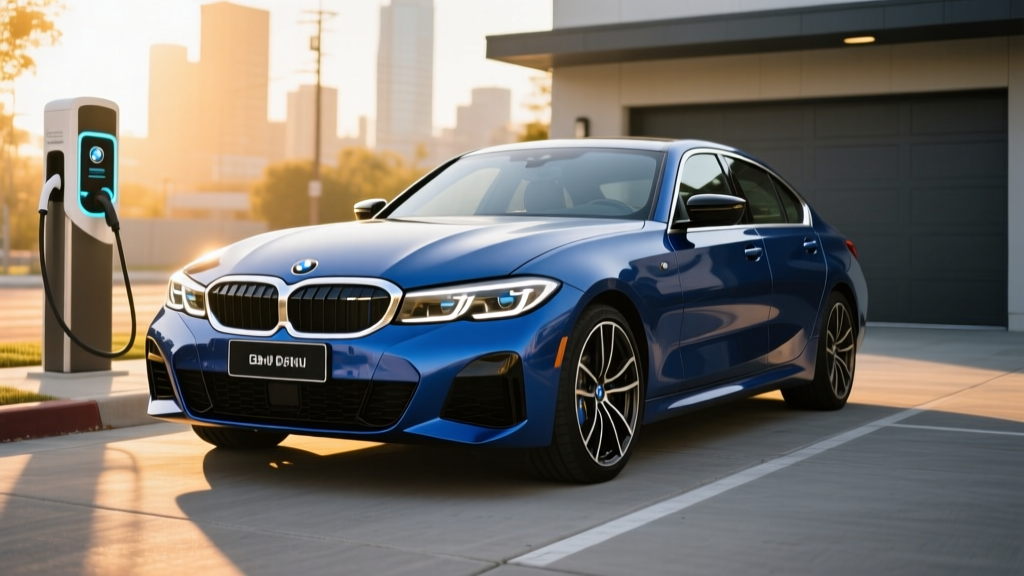
The BMW 330e occupies a specific niche: you want the driving dynamics and build quality of a 3 Series, you have access to home charging, and your daily commute falls under 25 miles round-trip. In that scenario, the 2026 BMW plug in hybrid 330e operates as a quiet, zero-tailpipe-emission EV most weekdays, then transforms into a capable 288-hp sport sedan for weekend road trips — no range anxiety, no charging-desert stress.
But the 330e isn't for everyone. Its 12.0 kWh battery (usable capacity roughly 10.5 kWh) limits electric-only range to an EPA-estimated 22 miles. If your commute exceeds that, you're burning gas like a conventional 330i — and paying a ~350-lb weight penalty for the electrified hardware you're not fully utilizing. Let's break down exactly what this car does, what it costs, and who should actually buy it.
BMW 330e Powertrain: Engine, Motor, and Combined Output
The 2026 330e pairs BMW's well-proven 2.0-liter turbocharged inline-four with an electric motor integrated into the 8-speed automatic transmission housing. Here's the hardware breakdown:
| Component | Specification |
|---|---|
| Gas Engine | 2.0L turbocharged I4, 184 hp / 258 lb-ft |
| Electric Motor | Integrated synchronous, 113 hp / 195 lb-ft |
| Combined System Output | 288 hp / 310 lb-ft (with xDrive: 288 hp / 310 lb-ft) |
| Transmission | 8-speed automatic (ZF) |
| Drivetrain | RWD standard; xDrive AWD available |
| Battery (Gross / Usable) | 12.0 kWh / ~10.5 kWh (NMC chemistry) |
| 0–60 mph (EPA) | 5.6 sec (RWD); 5.5 sec (xDrive) |
| Top Speed | 130 mph (electronically limited) |
The combined output figure requires context. BMW's "XtraBoost" function temporarily unlocks the full 288 hp during hard acceleration (up to 10 seconds at a time). Under normal cruising in hybrid mode, the system blends engine and motor output more conservatively. The electric motor alone can propel the 330e to 84 mph — adequate for suburban speeds but not highway merging without the engine kicking in.
Electric-Only Range and Total Driving Range
Real-World Expectation: 17–20 miles in mixed driving; 14–16 miles in cold weather (below 40°F) or sustained highway use above 65 mph
Total Combined Range: ~370 miles (electric + 10.6-gallon fuel tank)
The 330e's electric range is its most debated specification. Twenty-two EPA miles covers a short commute, school runs, and grocery trips — but only if you charge daily. The battery's usable capacity of roughly 10.5 kWh, combined with the 330e's efficiency of approximately 2.0–2.3 kWh/mile in EV mode, yields that real-world 17–20 mile window in moderate temperatures.
In winter, expect a 20–30% reduction. Cold batteries deliver less energy, and cabin heating draws significant power. The 330e does include a heat pump for climate efficiency, but physics still wins in sub-freezing conditions. If your daily round-trip is 30+ miles, the 330e will spend most of its time in hybrid mode — at which point, you're carrying dead battery weight and might be better served by a conventional 330i or a longer-range PHEV like the Toyota RAV4 Prime (42 miles electric).
Charging: Level 1, Level 2, and the DC Fast-Charging Reality
| Charging Level | Power (kW) | Time (0–100%) | Notes |
|---|---|---|---|
| Level 1 (120V household) | ~1.4 kW | ~7–8 hours | Adequate for overnight top-up |
| Level 2 (240V, 32A) | 3.7 kW (onboard charger max) | ~3 hours | Recommended for daily use |
| DC Fast Charging | Not available | N/A | No CCS or NACS DC port |
The 330e's 3.7 kW onboard charger is a deliberate engineering choice. BMW reasons that PHEV batteries are small enough that Level 2 charging fully replenishes them overnight — and that's largely correct. A full charge from empty takes roughly 3 hours on a 240V Level 2 circuit. However, this also means you cannot take advantage of public DC fast chargers on road trips. When the battery depletes, the gas engine takes over seamlessly, which is the entire PHEV value proposition.
For home charging, a standard 120V outlet (Level 1) will add roughly 5–6 miles of electric range per hour of charging. If you drive 20 miles daily and plug in every night, Level 1 can actually keep up — but Level 2 is strongly recommended for convenience and to avoid running a household outlet for 8 hours nightly. Expect a Level 2 home installation to cost $800–$1,800 depending on your electrical panel's proximity to the parking spot and whether a panel upgrade is needed.
Fuel Economy: EPA Ratings vs. Real-World MPG
| Mode | City | Highway | Combined |
|---|---|---|---|
| Charge-Sustaining (Hybrid) | 25 MPG | 33 MPG | 28 MPG |
| Charge-Depleting (EV+Gas) | 75 MPGe combined | ||
| Conventional 330i (comparison) | 26 MPG | 36 MPG | 30 MPG |
Here's where PHEV math gets nuanced. The 75 MPGe figure applies only when you're blending electric and gas driving with a charged battery. Once the battery depletes to its minimum state of charge (roughly 12–15% buffer retained to protect battery health), the 330e operates as a conventional hybrid — and returns a respectable but not exceptional 28 MPG combined.
For comparison, the gas-only 330i achieves 30 MPG combined. That's right: once the 330e's battery is depleted, the lighter 330i actually gets better fuel economy. This is the PHEV trade-off — you gain zero-emission local driving at the cost of highway fuel efficiency when the battery is empty.
Real-world MPG patterns we've observed:
- Daily commuter with home charging (15-mile round-trip): Effectively infinite MPG on weekdays, as the car runs entirely on electricity. Weekend road trips use gas normally.
- Mixed driver without regular charging: 26–29 MPG, essentially operating as a heavy conventional hybrid.
- Highway-dominant driver: 28–31 MPG in hybrid mode — the turbo four is efficient at steady-state cruise.
According to fueleconomy.gov, the 330e's combined MPGe of 75 ranks it mid-pack among luxury PHEVs. The Volvo S60 Recharge achieves 74 MPGe with 41 miles of range; the BMW X5 xDrive50e achieves 56 MPGe but with 38 miles of range in an SUV form factor.
Pricing, Trims, and Federal Tax Credit Eligibility
The 2026 BMW 330e starts at approximately $46,795 (including destination) for the rear-wheel-drive sedan. Adding xDrive all-wheel drive brings the base price to roughly $48,795. A well-equipped 330e with the Premium Package, M Sport Package, and driver-assistance features typically lands between $54,000 and $58,000.
- Credit Amount: Up to $7,500, but PHEVs must meet battery-capacity thresholds. The 330e's 12.0 kWh battery qualifies for a partial credit based on capacity formulas in §30D.
- MSRP Cap: Sedans must be priced at or below $55,000. A base 330e qualifies; a fully optioned model may exceed this cap.
- Buyer Income Limits: AGI must not exceed $150,000 (single), $225,000 (head of household), or $300,000 (joint filers).
- Critical Minerals & Battery Sourcing: A percentage of battery minerals and components must be sourced from the US or FTA partners. BMW's supply chain partially meets these requirements — the exact credit amount varies by model year and production batch.
- Point-of-Sale Transfer: Eligible buyers can transfer the credit to the dealer at purchase, reducing the out-of-pocket price immediately.
The critical detail: because the 330e is classified as a sedan under §30D, the $55,000 MSRP cap applies strictly. Before adding options, you're under the cap. After packages and standalone options, many 330e builds push above $55,000, potentially disqualifying the credit entirely. Always confirm the vehicle's final MSRP against current IRS guidance before purchasing. A tax professional should verify your personal eligibility, as rules around battery sourcing and income thresholds remain subject to regulatory updates.
Battery Longevity, Warranty, and Replacement Cost
Capacity Retention Threshold: BMW warrants the battery against defects and excessive degradation — typically defined as falling below 70% of original capacity within the warranty period.
Estimated Out-of-Warranty Replacement: $6,000–$9,000 (battery module replacement, not full pack) at a BMW dealer.
BMW's NMC (nickel-manganese-cobalt) battery chemistry in the 330e has proven durable in real-world use. Because PHEV batteries cycle through shallow charge-discharge ranges (the car maintains a ~12–15% buffer at the bottom and rarely charges above ~90–92% to preserve longevity), degradation is slower than in a full BEV that regularly charges to 100%.
Owners reporting on BMW forums and long-term tests suggest 5–8% capacity loss after 3–4 years of daily charging — well within the warranty threshold. The 8-year/80,000-mile warranty aligns with federal requirements for hybrid and EV battery coverage, and BMW's modular battery design means a single degraded cell module can be replaced rather than the entire pack, keeping out-of-warranty costs lower than full-BEV replacements.
For reliability broadly, the G20-generation 3 Series platform (which includes the 330e) has performed well in owner surveys. The electrified powertrain adds complexity — the electric motor, power electronics, and charging system are additional failure points compared to a conventional 330i — but BMW's hybrid systems have been in production since the i8 and X5 PHEV, and failure rates are not a widespread concern. According to IIHS testing, the 3 Series continues to earn strong safety ratings, which applies to the 330e variant as well.
Who Should Buy the BMW 330e — and Who Shouldn't
- Your daily round-trip commute is under 20 miles and you can charge at home nightly
- You want EV-like quiet operation for local driving but take regular road trips exceeding 200 miles
- You value BMW driving dynamics and interior quality above maximum efficiency
- You live in a region with HOV-lane access for PHEVs (varies by state — check local rules)
- Your adjusted build stays under the $55,000 MSRP cap for §30D credit eligibility
- Your commute exceeds 25 miles — you'd deplete the 330e's battery daily and burn gas anyway
- You want the lowest per-mile energy cost (electricity at $0.14/kWh is roughly $0.03/mile vs. $0.12–$0.15/mile for gas)
- You have reliable home charging and access to DC fast chargers for road trips
- You want to eliminate oil changes, spark plugs, and transmission-fluid service entirely
- You cannot charge at home or at work
- Your driving is predominantly highway (the 330i gets better highway MPG without the battery weight)
- You want a lower purchase price (~$5,000–$7,000 less than the 330e at equivalent trims)
- You prioritize trunk space (the 330e's battery reduces cargo volume by ~4 cu ft)
- Genuine electric commuting under 20 miles eliminates daily fuel use
- 288 hp combined output with XtraBoost delivers sport-sedan acceleration
- No range anxiety — gas engine provides 370+ total miles
- BMW build quality, driving dynamics, and tech (iDrive 8.5)
- Quiet EV mode transforms the character of stop-and-go traffic
- 22-mile electric range is among the shortest in the PHEV segment
- No DC fast-charging capability
- Higher weight reduces highway MPG vs. the conventional 330i
- $55,000 MSRP cap for tax credit easily exceeded with options
- Reduced trunk space due to battery placement (~13 cu ft vs. 17 cu ft in 330i)
Frequently Asked Questions
How many MPG does the BMW 330e get?
In charge-sustaining (hybrid) mode with a depleted battery, the 330e returns an EPA-estimated 25 city / 33 highway / 28 combined MPG. When blending electric and gas driving with a full charge, the combined rating is 75 MPGe. Real-world results vary dramatically based on how often you charge and your commute length.
How far can the BMW 330e drive on electric only?
The EPA rates the 330e at 22 miles of electric-only range. In real-world mixed driving at moderate temperatures, expect 17–20 miles. In cold weather (below 40°F) or sustained highway driving above 65 mph, that drops to 14–16 miles. The electric motor can propel the car to 84 mph before the engine must engage.
Does the BMW 330e qualify for a federal tax credit?
The 330e may qualify for a partial §30D federal tax credit, but eligibility depends on the final MSRP (must be ≤$55,000 for sedans), buyer income limits, and battery-sourcing requirements. Many optioned 330e builds exceed the MSRP cap. Always verify with the IRS clean vehicle credit page and a tax professional before purchasing.
Is the BMW 330e reliable, and what does battery replacement cost?
The G20-generation 3 Series platform and BMW's hybrid powertrain have shown solid reliability in owner surveys. The high-voltage battery is covered by an 8-year/80,000-mile warranty against defects and excessive degradation (below ~70% capacity). Out-of-warranty battery module replacement typically costs $6,000–$9,000. Shallow cycling in PHEV use tends to preserve battery health better than full BEVs that charge to 100% regularly.
Should I buy the 330e PHEV or the BMW i4 full electric?
If your commute is under 20 miles and you take road trips regularly, the 330e gives you the best of both worlds — electric local driving and gas-powered long-distance capability. If your commute is longer, you have home charging, and you want the lowest running costs, the BMW i4 eDrive40 (307 miles EPA range) is the stronger choice. The i4 eliminates gas-engine maintenance entirely and offers DC fast charging up to 205 kW.
Can the BMW 330e charge at a public DC fast charger?
No. The 330e only accepts AC charging via its J1772 port — Level 1 (120V) or Level 2 (240V) at a maximum of 3.7 kW. There is no CCS or NACS DC fast-charging port. On road trips, once the battery depletes, the gas engine handles all propulsion, so DC fast charging isn't necessary — it's a fundamental PHEV design choice.