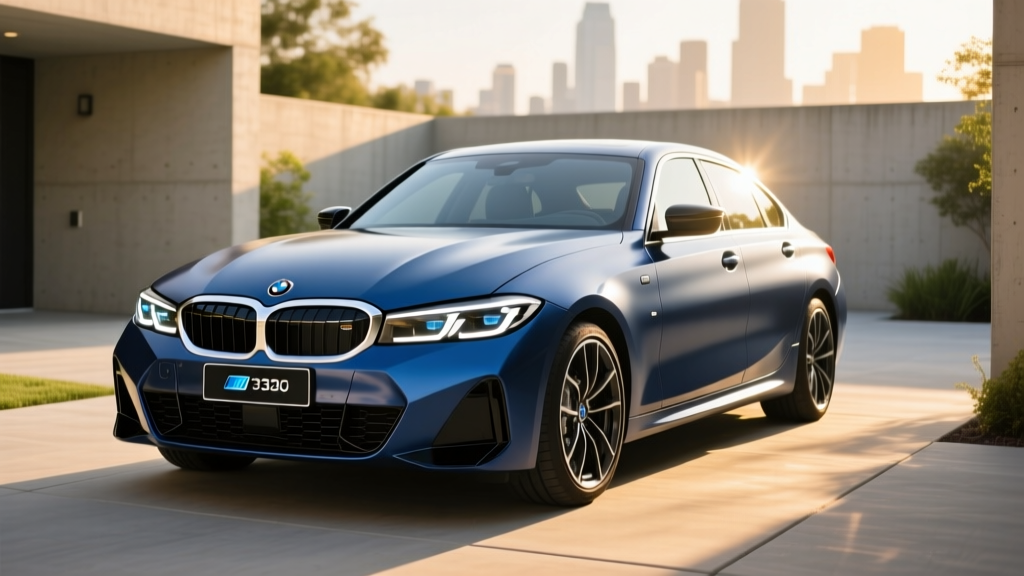
The BMW 330e has long been the sport-sedan buyer's bridge to electrification — a plug-in hybrid (PHEV) that pairs BMW's hallmark inline-four with an electric motor for short zero-emission commutes and unlimited range on gas. For 2026, the 330e continues as the sole BMW 3 Series hybrid option in the U.S., offering a compelling mix of driving dynamics, premium interior, and the flexibility to run on electricity or gasoline without range anxiety.
But with full EVs now exceeding 300 miles of range and federal tax credit rules tightening, does a PHEV like the 330e still make financial and practical sense? This guide breaks down every spec that matters — from real-world electric range and MPG to battery warranty and tax credit eligibility — so you can decide whether the BMW 3 Series hybrid fits your garage.
2026 BMW 330e at a Glance: Key Specs
| Spec | 2026 BMW 330e (RWD) | 2026 BMW 330e xDrive |
|---|---|---|
| Powertrain | 2.0L turbo I-4 + electric motor | 2.0L turbo I-4 + electric motor |
| Combined HP / lb-ft | 292 hp / 310 lb-ft | 292 hp / 310 lb-ft |
| Battery (usable) | 12.0 kWh (NMC lithium-ion) | 12.0 kWh (NMC lithium-ion) |
| EPA Electric Range | 22 miles | 20 miles |
| EPA MPGe (electric + gas) | 75 MPGe | 69 MPGe |
| EPA MPG (gas only) | 28 city / 36 hwy / 31 combined | 26 city / 34 hwy / 29 combined |
| Total Combined Range | ~370 miles | ~350 miles |
| 0–60 mph | 5.6 seconds | 5.7 seconds |
| Level 2 Charge Time (0–100%) | ~3.0 hours (3.7 kW onboard) | ~3.0 hours (3.7 kW onboard) |
| DC Fast Charging | Not available | Not available |
| Base MSRP | $46,895 | $48,895 |
| Battery/Powertrain Warranty | 8 yr / 80,000 mi (hybrid components) | 8 yr / 80,000 mi (hybrid components) |
Sources: EPA Fuel Economy, BMW USA press materials.
HEV vs PHEV: Where the BMW 3 Series Hybrid Fits
BMW does not sell a conventional hybrid (HEV) 3 Series in the U.S. — the 330e is strictly a plug-in hybrid electric vehicle (PHEV). Understanding the distinction matters for your wallet and your daily routine:
Conventional Hybrid (HEV) vs Plug-In Hybrid (PHEV)
| Feature | HEV (e.g., Toyota Camry Hybrid) | PHEV (BMW 330e) |
|---|---|---|
| Plugs in? | No — charges via regen and engine | Yes — plug in to access electric range |
| Electric-only driving | Minimal (under 1 mile at low speed) | 22 miles EPA at highway-capable speeds |
| Battery size | ~1–2 kWh | 12.0 kWh usable |
| Fuel economy advantage | Consistent MPG gains in city driving | Zero gas use on short commutes; good MPG on longer trips |
| Federal tax credit | Generally none | Potentially up to $7,500 (§30D) — see eligibility below |
| Price premium over gas model | ~$1,000–$2,500 | ~$3,000–$5,000 |
The 330e's PHEV architecture means you must plug in regularly to capture its electric-range advantage. Drive it like a conventional hybrid without charging, and you'll see MPG closer to the gas-only figures (28–31 combined) while hauling extra battery weight.
Electric-Only Range and Real-World Driving
The EPA rates the 2026 BMW 330e at 22 miles of electric-only range (20 miles for xDrive). That's enough to cover the average American one-way commute of roughly 16 miles, according to U.S. Census data, with a small buffer.
The 330e defaults to hybrid mode, blending electric and gas power. You can force electric-only mode via the "Electric" driving setting, or use "Battery Control" mode to save charge for later — useful if you're driving to a low-emission zone or want electric power for the final stretch of a trip.
Once the battery depletes, the 2.0-liter turbo four and electric motor continue working together in hybrid mode. The EPA rates the 330e at 75 MPGe when factoring in electric operation. On gasoline alone, you get 31 MPG combined (RWD) — respectable for a 3,900-pound sport sedan.
Fuel Economy: EPA Numbers and Real-World MPG
| Driving Scenario | EPA Rating | Real-World Expectation |
|---|---|---|
| City (gas only) | 28 MPG | 29–32 MPG (regen helps in stop-and-go) |
| Highway (gas only) | 36 MPG | 32–35 MPG at 70–75 mph |
| Combined (gas only) | 31 MPG | 29–33 MPG |
| Combined (with regular charging) | 75 MPGe | Varies widely by commute length and charge frequency |
Hybrids and PHEVs often beat EPA city estimates because regenerative braking recovers energy in stop-and-go traffic. Highway driving is where the 330e's aerodynamic drag and weight work against it — expect a few MPG below the sticker on extended interstate runs.
The critical variable is how often you charge. If your daily round-trip commute is under 22 miles and you charge nightly, you may use gasoline only on weekend road trips. Stretch commutes to 50+ miles without charging, and you're operating primarily as a heavy hybrid sedan.
Powertrain and Performance
The 2026 BMW 330e combines a 2.0-liter turbocharged inline-four (184 hp) with an electric motor integrated into the 8-speed automatic transmission. Total system output is 292 horsepower and 310 lb-ft of torque. The electric motor can deliver up to 113 hp on its own, though sustained electric-only driving uses a reduced output to preserve range.
The result is a 0–60 mph time of 5.6 seconds for the rear-wheel-drive model — only a few tenths behind the gas-only 330i (5.8 seconds for the 330i, though the 330e's instant electric torque makes it feel quicker off the line). The xDrive all-wheel-drive variant adds roughly 0.1 seconds.
The 12.0 kWh (usable) battery uses NMC (nickel-manganese-cobalt) lithium-ion chemistry, housed beneath the rear seat and trunk area. This placement slightly reduces trunk capacity compared to the gas 3 Series — you get approximately 13.2 cubic feet versus 17 cubic feet in the 330i. The fuel tank is also slightly smaller at 10.6 gallons (vs. 15.6 gallons), which is why total combined range hovers around 350–370 miles.
Charging: Level 1, Level 2, and What You Need at Home
The BMW 330e has a 3.7 kW onboard charger and uses a standard J1772 connector for AC charging. There is no DC fast charging capability — this is common for PHEVs with smaller batteries.
| Charging Level | Power | Time (0–100%) | Best For |
|---|---|---|---|
| Level 1 (120V household outlet) | ~1.4 kW | ~8–9 hours | Overnight top-up if no Level 2 available |
| Level 2 (240V, 16A) | 3.7 kW | ~3.0 hours | Daily charging at home or work |
| DC Fast Charging | N/A | N/A | Not supported |
A full Level 2 charge in about three hours means you can easily replenish the battery during a workday or between errands. Most 330e owners install a Level 2 home charger (240V outlet or hardwired unit). Expect a home installation cost of $500–$1,500 depending on electrical panel proximity, assuming your panel has sufficient capacity. A basic Level 2 charging unit (e.g., ChargePoint Home Flex or Emporia Vue) runs $300–$600.
Because the battery is only 12.0 kWh, a Level 1 (120V) outlet can actually serve as a viable daily charging solution if you park for 8+ hours overnight — you'll recover roughly 11–13 kWh in that window, enough for a near-full charge.
Pricing, Tax Credits, and Total Cost
The 2026 BMW 330e starts at $46,895 for rear-wheel drive and $48,895 for xDrive, before destination and options. This represents a roughly $3,000–$4,000 premium over the gas-only 330i.
Federal Tax Credit Eligibility (§30D)
The BMW 330e may qualify for a federal tax credit of up to $7,500 under IRS §30D, but eligibility depends on several factors that change frequently:
- Vehicle MSRP cap: Sedans must be under $55,000 MSRP (the 330e qualifies at base; loaded models may exceed the cap).
- Buyer income limits: Modified AGI must not exceed $150,000 (single), $225,000 (head of household), or $300,000 (joint filers).
- Battery component and critical mineral sourcing: A percentage of battery components must be manufactured or assembled in North America, and critical minerals must meet sourcing thresholds. These thresholds tighten annually. BMW's supply chain positioning for the 330e's battery determines the partial or full credit amount.
- Point-of-sale transfer: As of 2024, eligible buyers can transfer the credit to the dealer at purchase, reducing the purchase price directly rather than waiting for a tax refund.
Always verify current eligibility on IRS.gov or consult a tax professional before relying on credit amounts in your purchase decision.
If the 330e qualifies for the full $7,500 credit, the effective starting price drops to approximately $39,395 — making it highly competitive with the gas 330i while adding electric capability. However, credit eligibility is not guaranteed and depends on your income, the vehicle's battery sourcing compliance in the purchase year, and MSRP after options.
Battery Warranty, Reliability, and Replacement Cost
BMW's PHEV powertrains have proven reasonably reliable in the 330e's current generation (G20 platform, introduced for the 2020 model year). The electric motor and power electronics are sealed units with minimal wear components. The most common maintenance items remain conventional — brakes (which last longer due to regen), tires, and the 2.0L engine's standard service intervals.
If the high-voltage battery requires out-of-warranty replacement, expect a cost in the range of $8,000–$12,000 including parts and labor at a BMW dealer. However, PHEV batteries are smaller and less stressed than full EV batteries, and real-world data suggests most retain adequate capacity well beyond the warranty period when properly maintained. BMW's battery management system includes active thermal management to reduce degradation.
For reliability ratings, check IIHS for crash-test performance. The 3 Series typically earns top marks, though IIHS tests the vehicle structure rather than the powertrain specifically.
Who Should Buy the BMW 330e — and Who Shouldn't
Choose the BMW 330e PHEV If:
- Your daily round-trip commute is under 25 miles and you can charge at home nightly.
- You want a premium sport sedan with electric commuting but need gas flexibility for road trips.
- You're not ready for a full EV due to apartment living, lack of charging access, or frequent long-distance travel.
- You value BMW's driving dynamics and interior quality over maximum electric efficiency.
Choose a Full EV (e.g., BMW i4, Tesla Model 3) Instead If:
- You have reliable home charging and want zero gasoline use.
- Your daily driving exceeds 40+ miles — the 330e's 22-mile electric range will cover less of your commute.
- You want lower long-term maintenance costs (no engine oil, spark plugs, or exhaust system).
- You prioritize maximum federal and state EV incentives.
Choose the Gas-Only 330i Instead If:
- You cannot charge at home or at work.
- You drive primarily highway miles where the PHEV's electric advantage is minimal.
- You want maximum trunk space (17 cu ft vs 13.2 cu ft) and lower curb weight.
Pros
- 22 miles of electric range covers most commutes
- 292 hp with instant electric torque — genuinely quick
- 31 MPG combined on gas alone (competitive with non-hybrid rivals)
- Premium interior, excellent driving dynamics
- No range anxiety — gas engine for long trips
- Level 1 charging viable due to small battery
Cons
- Trunk space reduced to 13.2 cu ft (battery placement)
- No DC fast charging
- 3.7 kW onboard charger is slow by PHEV standards
- Electric range drops significantly in cold weather and at highway speeds
- Premium pricing; tax credit eligibility uncertain
- Maintenance complexity of two powertrains (engine + electric)
Frequently Asked Questions
How many MPG does the BMW 3 Series hybrid get?
The 2026 BMW 330e (RWD) is EPA-rated at 28 city / 36 highway / 31 combined MPG when operating on gasoline alone. When factoring in electric driving, the combined rating is 75 MPGe. Real-world city MPG often exceeds the EPA estimate by 1–3 MPG thanks to regenerative braking, while highway driving typically returns 32–35 MPG at 70+ mph.
How far can the BMW 330e go on electric only?
The EPA rates the 2026 BMW 330e at 22 miles of electric-only range (20 miles for xDrive). Real-world results vary: expect 18–22 miles in mild weather at mixed speeds, 14–16 miles at sustained highway speeds, and 12–15 miles in freezing temperatures. The electric motor can propel the car to speeds up to 84 mph in electric-only mode.
Hybrid vs PHEV vs EV — which fits me?
A conventional hybrid (HEV) never plugs in and offers modest MPG gains — ideal if you can't charge at home. A PHEV like the BMW 330e plugs in for 20+ miles of electric range and switches to gas for longer trips — best for commuters with home charging who also take road trips. A full EV (BEV) runs solely on electricity with 250–350+ miles of range — best if you want zero gasoline use, have home charging, and can plan around public charging for road trips.
Is the BMW 330e reliable, and what does a battery replacement cost?
The G20-generation 330e has shown solid reliability since its 2020 introduction. BMW covers the hybrid battery and components for 8 years / 80,000 miles. Out-of-warranty battery replacement is estimated at $8,000–$12,000, but PHEV batteries are smaller and less stressed than full EV packs, and most are expected to last well beyond the warranty period. The electric motor and power electronics have no routine wear items.
Does the BMW 330e qualify for a federal tax credit?
The 330e may qualify for up to $7,500 under the federal §30D clean vehicle credit, but eligibility depends on your income (caps of $150K single / $300K joint), the vehicle's MSRP (must be under $55,000 for sedans), and battery component/critical mineral sourcing requirements that tighten each year. The credit can be transferred to the dealer at point of sale to reduce your purchase price. Always verify current eligibility at IRS.gov before purchasing.
Do I need to install a Level 2 charger at home for the 330e?
Not necessarily. The 330e's 12.0 kWh battery is small enough that a standard 120V (Level 1) outlet can fully recharge it in about 8–9 hours — sufficient for overnight charging. However, a Level 2 (240V) charger reduces that to roughly 3 hours, which is useful if you want to recharge between drives during the day. Level 2 installation typically costs $500–$1,500 plus the charger unit ($300–$600).
Can the BMW 330e DC fast charge?
No. The 2026 BMW 330e supports only AC charging (Level 1 and Level 2) via a J1772 connector, with a maximum onboard charger rate of 3.7 kW. DC fast charging is not available — this is typical for PHEVs with smaller battery packs where the cost and weight of DC hardware aren't justified.
Editorial note: Specifications, pricing, and tax credit rules reflect the 2026 model year and current IRS guidance as of publication. Always confirm final specs with your BMW dealer and verify tax credit eligibility with a qualified tax professional or at IRS.gov before purchasing.