Quick Verdict: The BMW 3 Series Hybrid for 2026
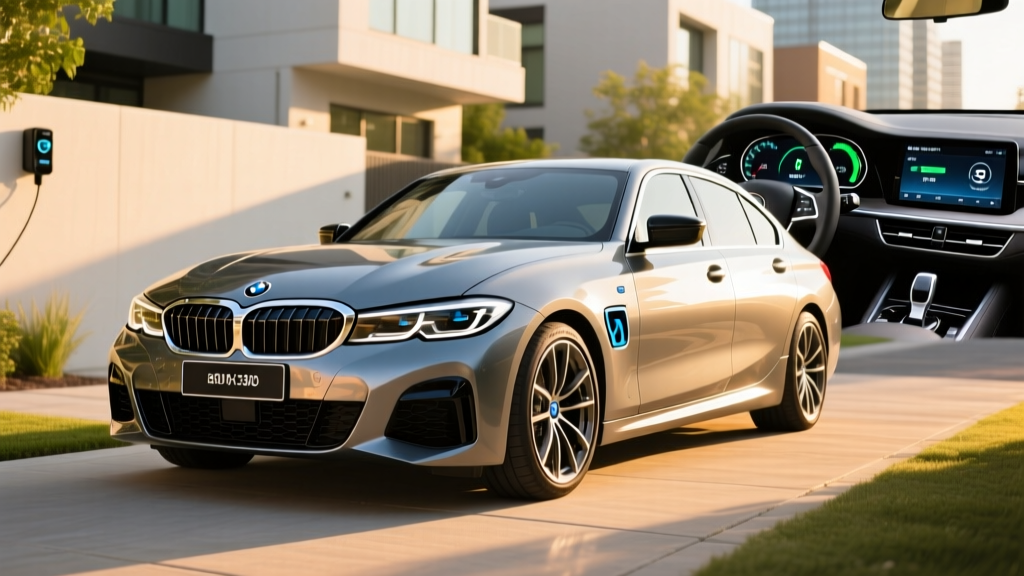
If you want a sport sedan that can run most daily commutes on electricity while keeping a gas engine for road trips, the BMW 330e plug-in hybrid (PHEV) is one of the most compelling options on the market. It pairs BMW's proven 2.0-liter turbocharged four-cylinder with an electric motor integrated into the 8-speed automatic transmission, delivering a combined 288 horsepower and up to 28 miles of electric-only range per the EPA.
The 330e is not a conventional hybrid (HEV) — it's a plug-in hybrid (PHEV), meaning you charge it from a wall outlet or charging station to unlock its electric-only capability. Let it run as a hybrid without plugging in, and you still get a respectable 28 MPG combined, but you'll miss the point of the powertrain. For the right buyer — someone with home charging access and a sub-30-mile commute — the 330e operates like a part-time EV with zero range anxiety.
| Spec | Value |
|---|---|
| Powertrain | 2.0L turbo I4 + electric motor (PHEV) |
| Combined Horsepower | 288 HP |
| Combined Torque | 310 lb-ft |
| Transmission | 8-speed automatic (ZF) |
| Drivetrain | xDrive (AWD) |
| Battery (usable) | 19.5 kWh lithium-ion |
| EPA Electric-Only Range | 28 miles |
| EPA MPGe (electric + gas) | 75 MPGe |
| EPA MPG (gas-only hybrid mode) | 28 combined (24 city / 32 hwy) |
| 0–60 mph | 5.6 seconds |
| Max AC Charge Rate | 3.7 kW (Level 2) |
| DC Fast Charging | Not supported |
| Charge Time 0–100% (Level 2, 3.7 kW) | ~5.5 hours |
| Charge Time 0–100% (Level 1, 120V) | ~18 hours |
| Base MSRP (330e xDrive) | $47,000 |
| Federal Tax Credit (§30D) | Up to $3,750 (see eligibility below) |
| Battery Warranty | 8 years / 80,000 miles |
HEV vs PHEV: Why the 330e Is a Plug-In, Not a Conventional Hybrid
BMW does not sell a conventional hybrid (HEV) version of the 3 Series in the US market — the 330e is exclusively a plug-in hybrid electric vehicle (PHEV). Understanding the distinction matters before you buy:
| Feature | Conventional Hybrid (HEV) | Plug-In Hybrid (PHEV) — BMW 330e |
|---|---|---|
| Plug-in charging | No — charges via regenerative braking and engine | Yes — plug in to charge the larger battery |
| Battery size | ~1–2 kWh | 19.5 kWh usable |
| Electric-only range | 0–1 mile at low speed | 28 miles (EPA) |
| Electric-only speed | ~25 mph max | Up to 84 mph |
| Fuel economy (no plug-in) | Higher MPG vs gas-only | 28 MPG combined (hybrid mode) |
| Tax credit eligible | No | Yes, partial — up to $3,750 under §30D |
If you cannot charge at home or at work, the 330e still functions as a hybrid, but you're paying a premium for a battery you're not utilizing. In that scenario, a conventional gas-powered 330i (which gets 30 MPG combined per the EPA) might make more financial sense.
Fuel Economy: Real-World MPG vs EPA Estimates
The EPA rates the 2026 BMW 330e xDrive at:
| Mode | City | Highway | Combined |
|---|---|---|---|
| Charge-depleting (EV + gas blended) | 75 MPGe | 72 MPGe | 75 MPGe |
| Charge-sustaining (hybrid, battery depleted) | 24 MPG | 32 MPG | 28 MPG |
Real-world note: The 28 MPG combined figure applies when the battery is fully depleted and the car operates purely as a hybrid. In practice, PHEV owners who charge daily and have short commutes may use little to no gasoline for weeks. On a 200-mile highway road trip with no charging, expect closer to 30–32 MPG — the 330e's highway figure exceeds its combined rating because the engine runs efficiently at steady speed.
In city driving with a depleted battery, the 330e's stop-start regenerative braking recovers energy effectively, but the 24 MPG city rating reflects the extra weight of the battery pack (~4,300 lbs curb weight vs ~3,600 lbs for the gas-only 330i). If you charge nightly and drive under 28 miles daily, your effective "MPG" is essentially infinite — you'll burn zero gasoline on most days.
Electric-Only Range and Charging: What to Expect
The 330e's 19.5 kWh usable battery delivers an EPA-rated 28 miles of electric-only driving. Real-world results vary:
- Ideal conditions (55–65°F, flat terrain, moderate speed): 26–30 miles
- Highway driving at 70+ mph: 20–24 miles (aerodynamic drag drains the battery faster)
- Cold weather (below 32°F): 18–22 miles (battery chemistry is less efficient; cabin heating draws power)
The 330e supports Level 2 AC charging at 3.7 kW via a J1772 connector. That means a full 0–100% charge takes approximately 5.5 hours on a 240V home charger — adequate for overnight replenishment but not fast enough for mid-day top-ups on road trips.
DC fast charging is not supported. This is common for PHEVs with smaller batteries — the added cost, weight, and complexity of DC fast-charging hardware isn't justified for a 19.5 kWh pack. If you need rapid public charging, a full BEV is the better choice.
On a standard 120V household outlet (Level 1), expect roughly 18 hours for a full charge — impractical for daily use. A Level 2 home charger is strongly recommended. Installation typically costs $500–$2,000 depending on your electrical panel and distance from the panel to the charging location.
Powertrain and Performance
The 330e's powertrain combines:
- 2.0-liter turbocharged inline-4: 184 HP, 258 lb-ft
- Electric motor (integrated in transmission): 113 HP
- Combined system output: 288 HP, 310 lb-ft
The result is a 0–60 mph time of 5.6 seconds — nearly matching the gas-only M340i in straight-line acceleration while offering the option of silent, zero-tailpipe-emission driving for short trips. The electric motor fills in torque at low RPM, eliminating turbo lag and giving the 330e an immediate, responsive feel in city driving.
Three driving modes manage the powertrain:
- Electric: Pure EV mode, up to 84 mph, for 28 miles
- Hybrid: System blends gas and electric automatically for optimal efficiency
- Sport: Full combined output, sharper throttle response, firmer steering
A Battery Control mode lets you set a target state of charge (e.g., 80%) and the engine will charge the battery while driving — useful for preserving electric range for an upcoming low-emission zone or city driving at your destination.
Pricing, Trims, and Federal Tax Credit Eligibility
The 2026 BMW 330e xDrive starts at $47,000 MSRP (including destination). With popular options — Premium Package, Driving Assistance Professional, Harman Kardon audio — a well-equipped 330e typically lands in the $52,000–$56,000 range.
Federal §30D Tax Credit for the BMW 330e
Under current IRS rules, the 330e may qualify for a partial federal tax credit of up to $3,750. The full $7,500 credit requires meeting both critical-mineral and battery-component sourcing thresholds. As of 2026, many BMW PHEVs meet one threshold but not both, yielding $3,750. Key eligibility requirements:
- MSRP cap: Sedans must be under $55,000 — a base 330e qualifies, but a heavily optioned one may exceed the cap
- Buyer income cap: AGI must not exceed $150,000 (single) / $300,000 (joint)
- Battery sourcing: Critical minerals and component requirements phase in annually — check the IRS eligible vehicle list before purchasing
- Point-of-sale transfer: You can transfer the credit to the dealer at purchase for an immediate price reduction rather than waiting for tax filing
Consult a tax professional to confirm eligibility for your specific situation. State incentives may also apply — check your state's energy office or the DOE Alternative Fuels Data Center for local programs.
Battery Warranty, Reliability, and Replacement Cost
BMW High-Voltage Battery Warranty
BMW covers the 330e's high-voltage battery for 8 years or 80,000 miles, whichever comes first. The warranty guarantees the battery will retain a minimum percentage of its original capacity (typically 70%) during the coverage period. If capacity drops below the threshold due to defect or abnormal degradation, BMW will repair or replace the battery at no cost.
Reliability: BMW's PHEV powertrain has been in production since the F30-generation 330e (2016+), and the current G20-generation system is well-proven. The 8-speed ZF transmission housing the electric motor is one of the most reliable automatics in the industry. Common ownership complaints center on software glitches in the iDrive infotainment system rather than powertrain failures.
Battery replacement cost: Out of warranty, a 330e high-voltage battery replacement runs approximately $8,000–$12,000 including labor. However, PHEV batteries are smaller and less stressed than full BEV packs, and real-world degradation data from earlier-generation 330e models shows modest capacity loss — most owners report 5–10% degradation over 5–7 years of normal use. Because the battery is small, even moderate degradation reduces electric range by only 2–3 miles, not a dealbreaker for daily driving.
Who Should Choose the BMW 330e — and Who Shouldn't
Pros
- 28-mile EV range covers most daily commutes gas-free
- 288 HP with instant electric torque — genuinely quick
- No range anxiety — gas engine for road trips
- BMW driving dynamics preserved (sharp steering, balanced chassis)
- Partial federal tax credit reduces effective price
- xDrive AWD standard — confident in rain and light snow
Cons
- 28-mile EV range is shorter than rivals (Toyota RAV4 Prime: 42 mi)
- No DC fast charging — road-trip charging impractical
- 3.7 kW AC charging is slow for mid-day top-ups
- Heavy (~4,300 lbs) — impacts handling vs gas 330i
- Trunk space reduced by battery pack (13 cu ft vs 17 cu ft in 330i)
- $47,000 base MSRP before options; easy to exceed $55K tax-credit cap
Choose the BMW 330e if:
- Your daily round-trip commute is under 30 miles and you can charge at home
- You want a luxury sport sedan but need a gas engine for frequent road trips
- You're not ready for a full EV but want to reduce fuel consumption and emissions
- You value BMW's driving dynamics and interior quality over maximum EV range
Look elsewhere if:
- You can't charge at home or work — the PHEV premium is wasted without plugging in
- You want 40+ miles of EV range — consider the Toyota RAV4 Prime (42 mi) or a full EV like the BMW i4 (307 mi EPA)
- You need maximum cargo space — the battery intrudes on trunk volume
- Budget is tight — a gas 330i starts ~$5,000 less and gets 30 MPG combined
Frequently Asked Questions
How many MPG does the BMW 330e hybrid get?
The EPA rates the 2026 BMW 330e at 75 MPGe when operating with a charged battery (blending electric and gas). Once the battery is depleted, it returns 28 MPG combined as a conventional hybrid (24 city / 32 highway). Real-world highway driving with a depleted battery often yields 30–32 MPG.
How far can the BMW 330e go on electric only?
The EPA rates the 330e at 28 miles of electric-only range. In real-world conditions, expect 26–30 miles in mild weather at moderate speeds, 20–24 miles at sustained highway speeds, and 18–22 miles in freezing temperatures.
Does the BMW 330e qualify for a federal tax credit?
The 330e may qualify for up to $3,750 under the IRS §30D clean vehicle credit, depending on battery sourcing requirements, buyer income (AGI under $150K single / $300K joint), and MSRP (under $55,000 for sedans). Verify current eligibility on the IRS eligible vehicle list before purchasing.
Is the BMW 330e reliable, and what does battery replacement cost?
The 330e powertrain is well-proven since 2016, with the ZF 8-speed transmission among the most reliable in the industry. The high-voltage battery is warranted for 8 years / 80,000 miles. Out-of-warranty replacement costs approximately $8,000–$12,000, but most owners see only 5–10% degradation over 5–7 years.
Should I buy the BMW 330e PHEV or a full EV like the BMW i4?
Choose the 330e if you need gas-engine flexibility for long road trips and your daily commute is under 30 miles with home charging. Choose the BMW i4 (307 miles EPA, ~$52,000) if you have reliable charging access, drive longer daily distances, and want lower running costs with zero gasoline. The i4 also qualifies for a larger potential tax credit.
Can the BMW 330e charge at DC fast-charging stations?
No. The 330e supports only AC charging at up to 3.7 kW (Level 2). DC fast charging is not available, which is typical for PHEVs with smaller battery packs. A full charge on a 240V Level 2 home charger takes about 5.5 hours.