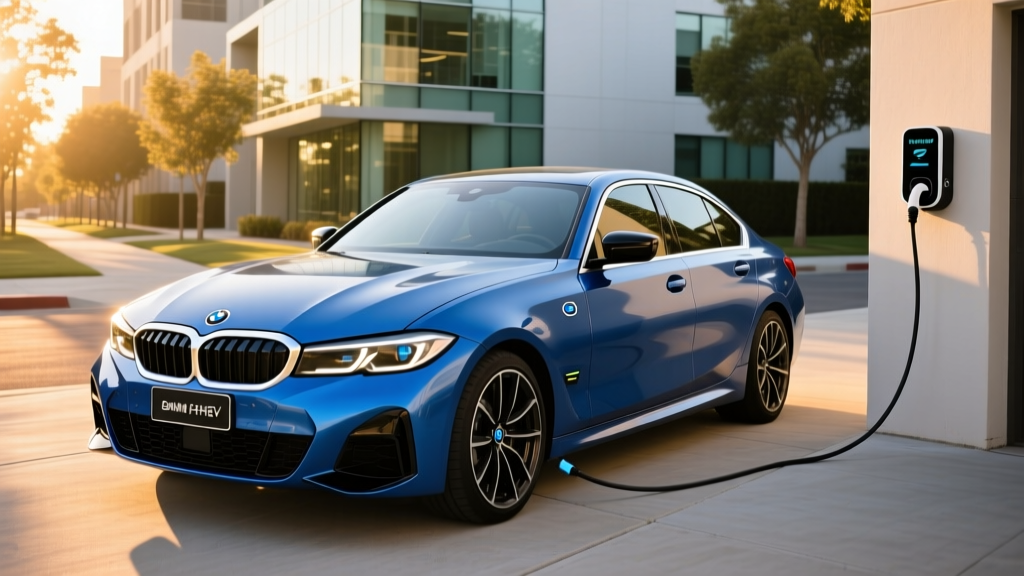
The BMW 3 Series has long been the benchmark compact luxury sport sedan, and the 330e plug-in hybrid variant lets buyers keep that driving engagement while slashing fuel consumption — without fully committing to a battery-electric vehicle. For 2026, the BMW 330e (the current-generation plug-in hybrid in the 3 Series lineup, often searched as the "BMW 3i hybrid") pairs a turbocharged four-cylinder with a more potent electric motor and a larger battery than its predecessor. The result is a sedan that can handle most daily commutes on electricity alone while retaining a gas engine for weekend road trips.
But is the 330e the right electrified BMW for you, or should you look at the fully electric i4 or a conventional hybrid from a rival brand? This guide breaks down every number that matters — from EPA MPG and electric-only range to battery warranty and tax-credit eligibility — so you can make an informed decision.
What Is the BMW 330e? HEV vs. PHEV Explained
Before diving into specs, let's clarify terminology, because confusion here costs buyers money. The BMW 330e is a plug-in hybrid electric vehicle (PHEV), not a conventional hybrid (HEV) like the Toyota Prius. Here's the difference:
| Feature | Conventional Hybrid (HEV) | Plug-in Hybrid (PHEV) | Battery Electric (BEV) |
|---|---|---|---|
| Plugs in to charge? | No — regenerates via braking & engine | Yes — plugs in + regenerates | Yes — plugs in only |
| Electric-only driving? | Brief low-speed assist only | Yes, typically 20–50 miles | Yes, 200–400+ miles |
| Gas engine? | Yes (primary power + charging) | Yes (backup + highway power) | No |
| Tailpipe emissions? | Yes (reduced) | Yes (when engine runs) | None |
| Example | Toyota Camry Hybrid | BMW 330e | BMW i4 |
The BMW 330e can be plugged into a Level 1 (120V) or Level 2 (240V) charger to replenish its battery. You can drive it without ever plugging in — it will function like a conventional hybrid — but you'd be leaving most of its efficiency and cost-saving potential on the table. There is no conventional-hybrid (HEV) version of the current BMW 3 Series; if you want BMW electrification without plugging in, you'd need to look at a mild-hybrid system like the one in the 330i (which provides minimal electric assist and no EV-only range).
Powertrain Specs: Engine, Motor, and Combined Output
The 2026 BMW 330e uses BMW's latest plug-in hybrid architecture, combining a 2.0-liter turbocharged inline-four engine with an electric motor integrated into the transmission housing. Here's the full powertrain breakdown:
| Specification | Value |
|---|---|
| Gas Engine | 2.0L turbocharged inline-4 |
| Engine Output | 184 hp / 221 lb-ft torque |
| Electric Motor | Integrated into 8-speed automatic |
| Motor Output | 113 hp (84 kW) |
| Combined System Output | 292 hp / 310 lb-ft torque |
| Transmission | 8-speed automatic (Steptronic) |
| Drivetrain | RWD (330e) / AWD (330e xDrive) |
| 0–60 mph | 5.6 seconds (RWD) / 5.5 seconds (xDrive) |
| Top Speed (EV mode) | 87 mph |
The combined 292 horsepower is a meaningful jump over the standard 330i's 255 hp, and the instant electric torque fills in the low-RPM gap before the turbo spools. In real-world driving, the 330e feels noticeably quicker off the line than its gas-only sibling — a rarity for hybrids, which often add weight without proportional power gains.
EPA Fuel Economy and Electric-Only Range
Fuel economy is where the 330e makes its strongest case. Here are the official EPA figures for the 2026 model year, sourced from fueleconomy.gov:
| Mode | City | Highway | Combined |
|---|---|---|---|
| Electric + Gas (MPGe) | 75 MPGe combined | ||
| Gas Only (MPG) | 28 mpg | 34 mpg | 30 mpg |
Electric-only range: The EPA rates the 330e at 22 miles of all-electric driving (RWD variant). The xDrive variant drops to approximately 20 miles due to added weight and drivetrain losses. Total combined range (electric + full gas tank) reaches approximately 380–400 miles.
The EPA's 22-mile electric rating is conservative for city driving but optimistic for highway use. In mixed suburban commuting at moderate temperatures (60–75°F), expect 20–23 miles on a full charge. On a 70-mph highway run in cold weather (below 40°F), that can drop to 14–16 miles. The gasoline engine's 30 mpg combined is realistic — in city driving, the regenerative braking and electric assist can push real-world numbers to 32–35 mpg, while sustained highway cruising at 75+ mph may yield 28–30 mpg.
Battery, Charging Speed, and Infrastructure
The 330e's lithium-ion battery pack has a gross capacity of 19.5 kWh (approximately 17.1 kWh usable to preserve battery longevity through buffer zones). The pack uses NMC (nickel-manganese-cobalt) chemistry, which offers higher energy density than LFP but requires careful thermal management.
| Charging Method | Power | 0–100% Time | Where You'll Use It |
|---|---|---|---|
| Level 1 (120V household) | ~1.4 kW | ~12–14 hours | Overnight top-up |
| Level 2 (240V home/work) | Up to 7.4 kW | ~2.5–3 hours | Home garage, workplace |
| DC Fast Charge | Not supported | N/A | N/A |
Critical note: The BMW 330e does not support DC fast charging. This is standard for most PHEVs — the battery is small enough that Level 2 charging replenishes it in a few hours, and the vehicle's onboard charger hardware limits input to 7.4 kW AC. If you need rapid 20-minute top-ups on road trips, that's a full BEV capability, not a PHEV one.
For most PHEV owners, the charging routine is simple: plug in at home overnight using a Level 2 wallbox (a 240V, 32-amp unit like the ChargePoint Home Flex or BMW's own Wallbox), wake up to a full battery every morning, and use the gas engine only when the electric range is depleted. The 7.4 kW onboard charger is adequate for this use case — you'll never need faster charging for a 19.5 kWh battery in a daily routine.
Pricing, Trims, and Federal Tax Credit Eligibility
The 2026 BMW 330e starts at a base MSRP of approximately $46,895 (including destination) for the rear-wheel-drive variant. The xDrive all-wheel-drive version adds roughly $2,000, bringing it to around $48,895. A well-equipped 330e with the Premium Package, Driving Assistance Professional, and larger wheels can reach $55,000–$58,000.
- MSRP cap: Sedans must be priced at or below $55,000 to qualify. A base 330e qualifies; heavily optioned models may exceed this threshold.
- Buyer income limits: Modified AGI must not exceed $150,000 (single), $225,000 (head of household), or $300,000 (joint filers).
- Battery sourcing requirements: A percentage of critical minerals and battery components must be sourced from the US or free-trade-agreement countries. BMW's supply chain has been evolving to meet these thresholds — verify current-year compliance on IRS.gov before purchasing.
- Credit amount: Up to $3,750 or $7,500 depending on whether critical-mineral and battery-component requirements are each met.
- Point-of-sale transfer: Eligible buyers can transfer the credit to the dealer for an immediate price reduction at purchase.
Important: BMW is subject to the manufacturer sales cap that was removed in 2023, so BMW vehicles are eligible. However, PHEVs must have a battery capacity of at least 7 kWh to qualify — the 330e's 19.5 kWh pack clears this bar. Always confirm eligibility with a tax professional and check the latest IRS guidance, as sourcing rules tighten annually.
At the state level, several states offer additional PHEV incentives — California's CVRP program, Colorado's state tax credit, and others — but amounts and eligibility vary by jurisdiction. Check your state energy office or DMV for current programs.
Reliability, Battery Warranty, and Long-Term Costs
Hybrid and PHEV battery longevity is the single most common concern among first-time electrified-vehicle buyers. Here's what you need to know about the 330e specifically:
- High-voltage battery warranty: 8 years / 80,000 miles (whichever comes first), covering defects and capacity loss below 70% of original capacity
- Powertrain warranty: 4 years / 50,000 miles (BMW's standard powertrain coverage)
- Limited vehicle warranty: 4 years / 50,000 miles
The 8-year/80,000-mile battery warranty is federally mandated minimum coverage for PHEV emissions-related components, and BMW complies across all 50 states (in CARB states like California, this extends to 10 years / 150,000 miles for certain emissions-related hybrid components).
Battery replacement cost: If the 330e's battery pack fails out of warranty, a replacement currently costs between $8,000 and $12,000 including parts and labor at a BMW dealership. However, wholesale PHEV battery failures within the first 10–12 years are uncommon. BMW's NMC cells are liquid-cooled and managed within a conservative state-of-charge window (the ~2.4 kWh buffer between gross and usable capacity protects against deep-cycle degradation). Most owners report minimal range loss over the first 5 years.
For reliability context, BMW's overall brand reliability has improved in recent model years, though it still trails Toyota and Honda in long-term dependability surveys (per J.D. Power and Consumer Reports). The hybrid-specific components (motor, inverter, battery) have proven robust across the BMW PHEV lineup — the 330e's predecessors (the F30-generation 330e) showed few systemic battery issues over their production run.
Driving Impressions and Real-World Ownership
The 330e drives like a 3 Series first and a hybrid second. In Electric mode, the car is whisper-quiet and smooth, with the 113-hp motor providing adequate acceleration for city and suburban driving. Transition to Hybrid mode and the gas engine fires up seamlessly — BMW's integration is among the best in the luxury segment, with no jarring handoff between power sources.
In Sport mode with a full battery, the combined 292 hp and XtraBoost function (which temporarily deploys maximum electric power) deliver genuinely engaging acceleration. The 5.6-second 0–60 time is quick enough to merge confidently and pass without drama. The steering, chassis balance, and braking feel are all recognizably BMW — the ~400 pounds of added hybrid weight is noticeable in tight corners but doesn't fundamentally compromise the car's character.
One practical consideration: the battery pack reduces trunk space compared to the gas-only 330i. Cargo volume drops from 17 cubic feet to approximately 13.2 cubic feet — a meaningful reduction if you frequently haul luggage or gear. The rear seats still fold, but the pass-through is narrower.
- 22 miles EV range covers most commutes
- 292 hp combined — quicker than the 330i
- Seamless gas/electric transitions
- Strong real-world city MPG (32–35 mpg)
- Qualifies for partial federal tax credit (verify sourcing)
- Retains BMW 3 Series driving dynamics
- Trunk space reduced to 13.2 cu ft
- No DC fast charging capability
- EV range drops significantly in cold weather
- Options can push price above $55K tax-credit cap
- Higher starting price than non-hybrid 330i
- Insurance premiums ~10–15% higher than 330i
Who Should Buy the BMW 330e vs. a Full EV or Gas Car?
- Your daily commute is under 25 miles round-trip and you can charge at home
- You want electric commuting but take regular road trips exceeding 250 miles
- You live in an apartment or area where public charging infrastructure is unreliable
- You want a luxury sport sedan with lower running costs but aren't ready for full EV ownership
- You want AWD availability (xDrive) with some electric efficiency
- You can install a Level 2 charger at home and your daily driving is under 200 miles
- You want zero tailpipe emissions and minimal maintenance (no oil changes, no gas engine upkeep)
- You want access to DC fast charging for road trips (the i4 supports up to 205 kW)
- You qualify for the full $7,500 federal tax credit on a qualifying BEV
- You cannot charge at home or at work
- Your driving is primarily long-distance highway (where the PHEV's EV range is less useful)
- You want maximum trunk space and lower upfront cost
- You prefer lower vehicle weight and slightly sharper handling
The 330e occupies a specific and practical niche: it's the right car for the luxury-sedan buyer who has home charging access, a moderate commute, and occasional long-distance needs. It's a bridge technology — not as clean or low-maintenance as a full EV, but far more efficient than a gas-only car, with none of the range anxiety that still concerns some buyers in charging-desert regions.
Frequently Asked Questions
How many MPG does the BMW 330e hybrid get?
The EPA rates the 2026 BMW 330e at 28 mpg city / 34 mpg highway / 30 mpg combined when operating as a hybrid (gas engine running). When factoring in electric-only driving, the combined rating is 75 MPGe. In real-world city driving with regular charging, many owners achieve 32–35 mpg on the gas engine alone, thanks to regenerative braking and electric assist at low speeds.
How far can the BMW 330e go on electric only?
The EPA rates the 330e at 22 miles of all-electric range (20 miles for xDrive). In real-world suburban driving at moderate temperatures, expect 20–23 miles. In cold weather or at sustained highway speeds, expect 14–18 miles. This covers the majority of American daily commutes — the Federal Highway Administration reports the average one-way commute is approximately 16 miles.
Does the BMW 330e qualify for a federal tax credit?
The 330e may qualify for a partial or full federal tax credit under IRS §30D, depending on battery-component and critical-mineral sourcing requirements, buyer income limits, and the vehicle's MSRP staying at or below the $55,000 sedan cap. The credit amount ranges from $3,750 to $7,500 depending on which sourcing thresholds are met. Always verify current eligibility on IRS.gov and consult a tax professional before relying on the credit in your purchase decision.
Is the BMW 330e reliable? What does a battery replacement cost?
The 330e's hybrid powertrain has proven reliable, with few systemic battery or motor failures reported. The high-voltage battery is covered by an 8-year/80,000-mile warranty (10 years/150,000 miles in CARB states). Out-of-warranty battery replacement costs approximately $8,000–$12,000, though most PHEV batteries last well beyond the warranty period with proper care. Regular maintenance costs are slightly higher than a gas 330i due to the additional hybrid system components, but lower than a gas car in terms of brake wear (regenerative braking extends pad life significantly).
Can I charge the BMW 330e at a public fast-charging station?
No. The 330e does not support DC fast charging. It can charge at up to 7.4 kW on a Level 2 (240V) AC charger, which fills the 19.5 kWh battery in about 2.5–3 hours. You can use public Level 2 chargers (found at shopping centers, workplaces, and parking garages), but CCS or NACS DC fast chargers are not compatible. This is normal for PHEVs — their smaller batteries don't require fast-charging infrastructure for practical daily use.
Should I buy the 330e or the BMW i4 electric?
If you can charge at home, your daily driving is under 200 miles, and you rarely take trips exceeding 250 miles, the fully electric BMW i4 (EPA range up to 307 miles, DC fast charging up to 205 kW) offers lower running costs, zero tailpipe emissions, and less maintenance. If you regularly drive long distances, lack reliable charging access, or want the flexibility of a gas backup, the 330e is the more practical choice. The i4 eDrive40 starts at approximately $57,000, so the 330e also wins on entry price.