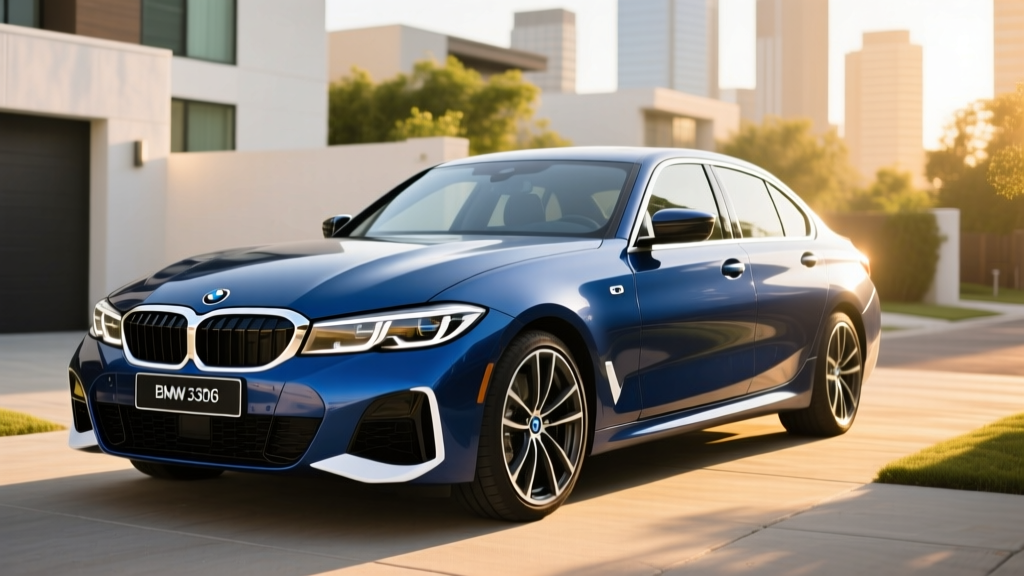
If you've been searching for a 3 Series hybrid, the 2026 BMW 330e is the model to evaluate. It's the only plug-in hybrid (PHEV) variant in BMW's current 3 Series lineup, pairing a turbocharged 2.0-liter four-cylinder engine with an electric motor integrated into the 8-speed automatic transmission. The result is a sport sedan that can commute on electricity alone, deliver genuine luxury performance, and eliminate range anxiety on long road trips — all while qualifying for partial federal tax incentives.
This guide breaks down everything a prospective buyer needs: real-world MPG versus EPA estimates, electric-only range, charging logistics, the §30D tax credit reality for 2026, and whether the 330e makes more sense than a full battery-electric vehicle (BEV) or a conventional hybrid.
HEV vs PHEV: Understanding the 330e's Hybrid Architecture
Before diving into specs, it's critical to distinguish between the two types of hybrid vehicles, because buyers often conflate them:
| Feature | Conventional Hybrid (HEV) | Plug-In Hybrid (PHEV) — 330e |
|---|---|---|
| Plugs in to charge? | No — regenerates via braking/engine | Yes — has a charge port (J1772/Level 2) |
| Electric-only driving? | Very limited (under 1 mi, low speed) | Yes — up to 28 miles EPA at highway speeds |
| Battery size | ~1-2 kWh | 19.5 kWh (usable ~16.3 kWh) |
| Federal tax credit? | No | Potentially up to $3,750 (see details below) |
| Gas engine still present? | Yes | Yes |
The BMW 330e is a PHEV, not a conventional hybrid. It requires plugging in to maximize its electric-only capability. If you never charge it, it functions as a heavy, less-efficient hybrid — you'd be carrying around a 300+ lb battery for no benefit. The 330e rewards owners who charge regularly, ideally at home overnight.
BMW does not currently offer a conventional (non-plug-in) hybrid version of the 3 Series in the US market. If you want a 3 Series with electrification, the 330e PHEV is your option.
2026 BMW 330e Specs at a Glance
| Specification | 2026 BMW 330e (RWD) | 2026 BMW 330e xDrive (AWD) |
|---|---|---|
| Powertrain | 2.0L turbo I4 + electric motor | 2.0L turbo I4 + electric motor |
| Combined horsepower | 288 hp | 288 hp |
| Combined torque | 310 lb-ft | 310 lb-ft |
| Transmission | 8-speed auto (motor integrated) | 8-speed auto (motor integrated) |
| 0-60 mph | 5.6 sec | 5.4 sec |
| Battery (total / usable) | 19.5 kWh / ~16.3 kWh | 19.5 kWh / ~16.3 kWh |
| Battery chemistry | NMC (nickel manganese cobalt) | NMC |
| EPA electric-only range | 28 miles | 24 miles |
| EPA MPGe (combined) | 75 MPGe | 64 MPGe |
| EPA MPG (gas-only combined) | 28 MPG | 27 MPG |
| Total combined range | ~420 miles | ~400 miles |
| Max Level 2 charge rate | 3.7 kW | 3.7 kW |
| DC fast charging? | No | No |
| Charge time (0-100%, Level 2) | ~5 hours | ~5 hours |
| Base MSRP | $47,900 | $49,900 |
MPG Breakdown: EPA Ratings vs Real-World Fuel Economy
The EPA publishes two separate efficiency figures for PHEVs like the 330e: MPGe (when running on electricity) and MPG (when running on gasoline after the battery is depleted). Both matter, depending on how you drive.
| Driving Mode | City | Highway | Combined |
|---|---|---|---|
| Electric (MPGe) — RWD | 80 MPGe | 71 MPGe | 75 MPGe |
| Electric (MPGe) — xDrive | 68 MPGe | 60 MPGe | 64 MPGe |
| Gas-only (MPG) — RWD | 25 MPG | 33 MPG | 28 MPG |
| Gas-only (MPG) — xDrive | 24 MPG | 32 MPG | 27 MPG |
Real-world MPG reality check: According to fueleconomy.gov, owners of the 330e report averaging between 28-34 MPG combined in mixed driving when the battery is depleted — roughly in line with EPA estimates. The gas-only highway figure of 33 MPG (RWD) is achievable in moderate temperatures at 65-70 mph. In cold weather or at sustained speeds above 80 mph, expect 26-29 MPG highway.
For daily commuting under 28 miles round-trip with nightly charging, many 330e owners report using almost no gasoline for weeks at a time. In that scenario, your effective "MPG" is essentially infinite from a gas perspective — your cost per mile is determined by your local electricity rate instead.
Electric-Only Range and Charging Logistics
The 330e's EPA-rated electric range is 28 miles for the RWD model and 24 miles for the xDrive. This covers a meaningful share of American commutes: the US Census Bureau reports the average one-way commute is 26 minutes, translating to roughly 16-20 miles each way.
- EPA sticker: 28 mi (RWD) / 24 mi (xDrive)
- Mild weather, city driving: 26-30 mi (regen braking extends range)
- Highway at 75 mph: 20-23 mi
- Cold weather (below 32°F), cabin heat on: 16-20 mi
BMW's battery buffer reserves approximately 3 kWh to protect long-term battery health, so you'll never actually deplete to true zero.
Charging speed is the 330e's weakest electrified-vehicle trait. The onboard charger maxes out at 3.7 kW on Level 2 (240V). That means a full 0-100% charge takes roughly 5 hours. There is no DC fast charging capability — you will not find a CCS or NACS port on this car. For a PHEV with a small battery, this is acceptable if you charge at home overnight, but it means public fast-charging stations are irrelevant to 330e ownership.
A standard 120V household outlet (Level 1) will add about 4-5 miles of range per hour, meaning a full charge from empty takes roughly 12-14 hours. This works fine for overnight top-ups if your daily electric commute is under 20 miles.
Powertrain Performance: How It Actually Drives
The 330e pairs BMW's B48 2.0-liter turbocharged inline-four (producing 181 hp on its own) with a 111-hp electric motor integrated into the ZF 8-speed automatic transmission housing. Combined system output is 288 hp and 310 lb-ft of torque.
BMW's xDrive all-wheel-drive system is available for $2,000 extra and actually shaves 0.2 seconds off the 0-60 mph time (5.4 sec vs 5.6 sec for RWD), thanks to improved traction off the line.
Three driving modes manage the powertrain:
- Hybrid mode (default): The car intelligently blends electric and gas power based on speed, throttle input, and navigation data (if a route is programmed).
- Electric mode: Forces pure electric driving up to ~87 mph, limited to the battery's state of charge.
- Sport mode: Combines full engine and motor output for maximum acceleration; also increases regenerative braking aggressiveness.
One practical note: the 330e's battery pack reduces trunk capacity to approximately 13.2 cubic feet (down from 17.0 cu ft in the gas-only 330i). The battery sits under the rear seat and intrudes into the cargo area. If you regularly haul luggage for four passengers, this is a genuine trade-off.
Federal Tax Credit: Does the 330e Qualify in 2026?
PHEV tax credit eligibility is one of the most confusing aspects of buying an electrified vehicle. Under IRS §30D rules for 2026, the BMW 330e may qualify for a partial federal tax credit of up to $3,750, but full $7,500 eligibility is unlikely due to critical-mineral and battery-component sourcing requirements that heavily favor North American supply chains.
- Vehicle MSRP cap: Sedans must be under $55,000 (the 330e base at $47,900 qualifies; a heavily optioned build may exceed the cap)
- Buyer income cap: Modified AGI ≤ $150,000 (single) / $300,000 (joint)
- Battery capacity: Must be ≥ 7 kWh (330e's 19.5 kWh qualifies)
- Critical minerals sourcing: Determines whether you receive $3,750 or the full $7,500
- Battery component manufacturing: Must meet North American assembly thresholds
- Point-of-sale transfer: As of 2024+, you can transfer the credit to the dealer for an upfront price reduction instead of waiting for tax filing
Source: IRS.gov — Clean Vehicle Credits. Eligibility is subject to change; confirm with a tax professional before purchase.
BMW's battery supply chain has historically relied on non-North-American sources for some critical minerals and components. Check the latest fueleconomy.gov tax credit listings for the specific 2026 330e VIN eligibility before signing a purchase agreement.
Battery Warranty, Reliability, and Replacement Cost
- Coverage: 8 years / 80,000 miles (whichever comes first)
- Capacity retention threshold: BMW warrants the battery will retain at least 70% of original capacity during the warranty period
- What's covered: Defects, excessive degradation below 70% SoH (State of Health)
- What's not covered: Normal wear within the 70% threshold, damage from accidents or improper charging
On reliability: BMW's B48 turbocharged engine is well-proven across the brand's lineup since 2016, and the ZF 8-speed transmission is widely regarded as one of the most durable automatics in the industry. The electric motor is a simple, sealed unit with minimal failure risk.
For real-world PHEV battery longevity, NMC chemistry in a BMW with active liquid thermal management typically shows 8-12% degradation over 5 years of normal use — well within the warranty threshold. Owners on BMW forums and EV tracking sites report 330e batteries retaining 88-93% capacity after 60,000-80,000 miles.
Out-of-warranty replacement cost: If the high-voltage battery requires replacement after the 8-year/80,000-mile warranty, expect a dealer quote between $8,000 and $12,000 including parts and labor. Third-party hybrid battery rebuild services may offer repairs for $4,000-$6,000, though availability varies by market.
Who Should Choose the 330e vs a Full EV or Gas Car?
- Your daily commute is under 28 miles round-trip and you can charge at home
- You take road trips 4+ times per year and don't want to plan around charging stations
- You want a luxury sport sedan with genuine performance credentials (288 hp, 5.4s 0-60)
- Your building or HOA doesn't allow home charger installation (Level 1 on a standard outlet still adds enough overnight range for short commutes)
- You have reliable home Level 2 charging and your daily driving is under 250 miles
- You want zero gasoline expenses, zero oil changes, and fewer moving parts
- You want access to DC fast charging for road trips (200+ kW capability)
- Local incentives in your state favor full EVs over PHEVs
- You cannot charge at home or at work
- You prioritize maximum trunk space (17.0 vs 13.2 cu ft)
- Your budget is firm under $44,000 and the PHEV premium isn't justified
- 28-mile electric range covers most commutes
- 288 hp with smooth electric torque fill
- No range anxiety — gas engine for road trips
- Qualifies for partial federal tax credit
- Proven powertrain with strong reliability record
- Level 1 charging sufficient for short commutes
- No DC fast charging
- Slow Level 2 charging (3.7 kW max, ~5 hours)
- Reduced trunk space vs gas 330i
- Partial credit only — unlikely to get full $7,500
- Higher base price than 330i (~$3,600 premium)
- Electric range drops significantly in cold weather
Ownership Costs: 5-Year Projection
| Cost Category | BMW 330e (PHEV) | BMW 330i (Gas) | BMW i4 eDrive40 (BEV) |
|---|---|---|---|
| Base MSRP | $47,900 | $44,300 | $52,200 |
| Est. tax credit | -$3,750 | $0 | -$7,500* |
| Fuel/energy (5 yr, 75K mi) | ~$4,800 | ~$9,200 | ~$3,600 |
| Maintenance (5 yr) | ~$3,200 | ~$3,800 | ~$2,100 |
| Insurance (5 yr avg) | ~$11,500 | ~$10,800 | ~$12,200 |
| Estimated depreciation | ~$22,000 | ~$20,500 | ~$24,000 |
| 5-year total cost (est.) | ~$43,650 | ~$47,600 | ~$44,600 |
*i4 credit eligibility depends on sourcing rules and income caps; verify at purchase. Fuel/energy costs assume 60% electric / 40% gas driving for 330e, national avg gas $3.50/gal, electricity $0.16/kWh. Actual costs vary significantly by region, driving pattern, and charging behavior.
The 330e's total cost of ownership lands between the gas 330i and the all-electric i4. The PHEV's advantage is flexibility; the BEV's advantage is lower running costs; the gas car's advantage is lower upfront price. Your optimal choice depends entirely on your charging access and driving patterns.
Frequently Asked Questions
How many MPG does the BMW 330e hybrid get?
The 2026 BMW 330e (RWD) is EPA-rated at 25 city / 33 highway / 28 combined MPG when running on gasoline only. When using its electric range, it achieves 75 MPGe combined. Real-world gas-only driving typically matches or slightly exceeds EPA figures in city traffic, thanks to regenerative braking assisting the engine.
How far can the 330e go on electric power alone?
The EPA rates the RWD 330e at 28 miles of electric-only range; the xDrive AWD version at 24 miles. In real-world conditions, expect 20-23 miles on the highway and 26-30 miles in city driving with regenerative braking. Cold weather (below freezing) reduces electric range to approximately 16-20 miles due to battery chemistry limitations and cabin heating demand.
Does the BMW 330e qualify for a federal tax credit?
The 330e may qualify for a partial §30D federal tax credit of up to $3,750 in 2026, depending on battery sourcing compliance. Full $7,500 credit is unlikely because BMW's battery supply chain does not currently meet all critical-mineral and component-manufacturing thresholds. Buyer income caps ($150K single / $300K joint) and the $55,000 sedan MSRP cap also apply. The credit can be transferred to the dealer at point of sale for an upfront price reduction. Always verify current eligibility on IRS.gov before purchasing.
Is the 330e hybrid reliable and what does battery replacement cost?
The 330e's powertrain combines BMW's proven B48 engine and ZF 8-speed transmission with a well-tested electric motor. The high-voltage battery is covered by an 8-year/80,000-mile warranty with a 70% capacity retention guarantee. Real-world data suggests 8-12% degradation over 5 years. Out-of-warranty battery replacement costs $8,000-$12,000 at a dealer, or $4,000-$6,000 through independent hybrid-battery specialists.
Should I buy the 330e PHEV or the all-electric BMW i4?
Choose the 330e if you need road-trip flexibility without charging stops, have a commute under 28 miles, and can charge at home. Choose the i4 if you want full DC fast-charging capability (up to 205 kW), zero gasoline costs, lower maintenance, and your daily driving stays within the i4's ~300-mile EPA range. The i4 also has a stronger case for the full $7,500 tax credit and significantly more cargo space (the 330e loses trunk volume to its battery).
Can I charge the 330e at a public DC fast charger?
No. The BMW 330e does not have DC fast-charging capability. It charges exclusively via Level 1 (120V, ~1.4 kW) or Level 2 (240V, max 3.7 kW). This is typical for PHEVs with smaller batteries. A full Level 2 charge takes about 5 hours, which is designed for overnight home charging rather than public-station top-ups.