The Bentley Bentayga Hybrid: Ultra-Luxury Meets Plug-In Efficiency
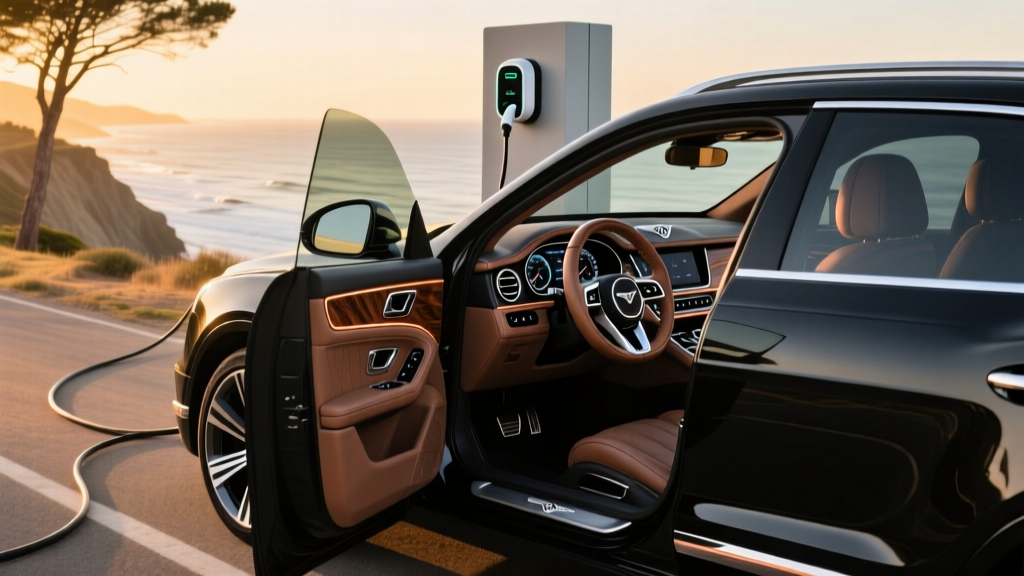
If you are researching the Bentley SUV hybrid, you are almost certainly looking at the Bentayga Hybrid (officially the Bentayga S Hybrid or Mulliner Hybrid depending on trim). It is one of very few plug-in hybrid electric vehicles (PHEVs) in the ultra-luxury SUV segment, competing against the Range Rover Sport PHEV, Porsche Cayenne E-Hybrid, and Lamborghini Urus (which remains conventional). For 2026, Bentley continues to refine the Bentayga Hybrid's powertrain, battery, and luxury appointments — but the question for buyers is whether a PHEV makes sense at this price point, or whether a full EV like the upcoming Bentley EV lineup is a better long-term play.
This guide covers the 2026 Bentayga Hybrid's real-world efficiency, electric-only range, charging logistics, powertrain specs, pricing, tax-credit eligibility, and ownership practicality. We will also clarify exactly what this vehicle can and cannot do compared to a conventional hybrid or a battery-electric SUV.
HEV vs PHEV: What the Bentayga Hybrid Actually Is
Before diving into specs, it is critical to understand the distinction between a conventional hybrid (HEV) and a plug-in hybrid (PHEV), because the Bentayga is firmly a PHEV.
| Feature | Conventional Hybrid (HEV) | Plug-In Hybrid (PHEV) | Bentayga Hybrid |
|---|---|---|---|
| Plug-in charging | No — charges via regenerative braking and engine | Yes — plug in for full battery charge | Yes (PHEV) |
| Electric-only range | 0–2 miles at low speed | 15–50+ miles depending on battery | EPA est. ~31 miles |
| Battery size | 1–2 kWh | 10–30 kWh typical | 18.0 kWh (gross) / ~16.0 kWh usable |
| Federal tax credit | No | Potentially, subject to §30D rules | See tax credit section |
| Gas engine backup | Yes — always available | Yes — seamless transition | Yes — 3.0L V6 |
The Bentayga Hybrid is not a conventional hybrid like a Toyota RAV4 Hybrid. It has a substantial battery pack you plug in to charge, giving meaningful electric-only driving for daily commutes. When the battery depletes, the gasoline engine takes over seamlessly, and the vehicle operates as a hybrid for the remainder of your trip. You never have to worry about being stranded — the gas tank provides full range.
Powertrain and Performance Specs
The 2026 Bentayga Hybrid pairs a turbocharged 3.0-liter V6 engine with an electric motor integrated into the eight-speed automatic transmission. Here is the full powertrain breakdown:
| Specification | Value |
|---|---|
| Engine | 3.0L turbocharged V6 |
| Electric motor | Permanent magnet synchronous, integrated in transmission |
| Combined horsepower | 443 hp (335 kW) |
| Combined torque | 516 lb-ft |
| Transmission | 8-speed automatic (torque converter) |
| Drivetrain | All-wheel drive |
| 0–60 mph | 5.1 seconds |
| Top speed | 158 mph |
| Battery (gross / usable) | 18.0 kWh / ~16.0 kWh |
| Battery chemistry | NMC (nickel-manganese-cobalt) |
| Curb weight | ~5,800 lbs |
| Towing capacity | 5,500 lbs (braked) |
For context, the non-hybrid Bentayga S with its 4.0L twin-turbo V8 produces 542 hp and hits 60 mph in 4.3 seconds. The Hybrid sacrifices some peak performance but delivers a quieter, smoother electric-only driving experience around town — a tradeoff many luxury buyers prefer.
Electric-Only Range, Total Range, and Efficiency
The headline number for any PHEV buyer is electric-only range — how far you can drive without the engine turning on. For the 2026 Bentayga Hybrid, Bentley and EPA data converge on the following:
EPA-estimated electric-only range: 31 miles
Real-world expectation: 24–28 miles in mixed driving; as low as 20 miles in cold weather (below 40°F) or at sustained highway speeds above 70 mph.
Total combined range (electric + gas): approximately 440 miles with a full tank and full battery.
The 31-mile EPA estimate is competitive within the luxury PHEV segment. The Porsche Cayenne E-Hybrid delivers a similar ~30-mile electric range, while the Range Rover Sport P550e pushes closer to 48 miles thanks to a larger battery. For most daily commutes under 25 miles round-trip, the Bentayga Hybrid can operate entirely on electricity — meaning zero tailpipe emissions and zero engine noise during weekday driving.
| Driving Mode | EPA Estimate | Real-World Expectation |
|---|---|---|
| Electric-only (MPGe combined) | 53 MPGe | 45–50 MPGe (highway reduces efficiency) |
| Hybrid mode (MPG combined) | 24 MPG | 22–26 MPG (city favors regen; highway less efficient) |
| City MPG (hybrid mode) | 23 MPG | 24–27 MPG (regenerative braking helps) |
| Highway MPG (hybrid mode) | 25 MPG | 22–24 MPG (aerodynamic drag at 75+ mph) |
One nuance specific to PHEVs: your observed MPG will vary dramatically based on charging habits. If you charge nightly and commute 20 miles, you may use almost no gasoline for weeks. If you never plug in, the Bentayga Hybrid operates as a heavy luxury SUV with a relatively small engine, returning roughly 19–22 MPG — below its EPA estimate because the vehicle is carrying ~5,800 lbs of mass.
Charging: Times, Connectors, and Home Setup
The Bentayga Hybrid supports Level 1 (120V household outlet) and Level 2 (240V) AC charging. Critically, it does not support DC fast charging — this is typical for PHEVs, whose smaller batteries make DC fast charging less practical and less common.
| Charging Level | Power (kW) | Time to Full Charge (0–100%) | Notes |
|---|---|---|---|
| Level 1 (120V household) | ~1.4 kW | ~12–14 hours | Emergency/overnight only |
| Level 2 (240V, 32A) | ~7.2 kW | ~2.5 hours | Recommended for daily use |
| DC Fast Charging | Not supported | N/A | CCS/NACS not available on Bentayga Hybrid |
For daily use, a Level 2 home charger is essentially mandatory. A 240V Level 2 unit at 32 amps will fully replenish the 18.0 kWh battery in roughly 2.5 hours — meaning you can charge during a midday break or simply overnight. Installation of a Level 2 home charger typically costs $800–$2,500 depending on your electrical panel capacity and the distance from the panel to your parking spot. If your home has a 200-amp service panel with available capacity, expect the lower end. A panel upgrade to 200A or 400A can add $2,000–$5,000.
The Bentayga Hybrid uses a J1772 connector for AC charging (the North American standard for non-Tesla Level 2). You will not need an adapter for home or public Level 2 stations. However, if you own a Tesla Wall Connector, you will need a J1772 adapter, as Tesla's connector (NACS) is not natively compatible.
Pricing, Trims, and Tax Credit Eligibility
The 2026 Bentley Bentayga Hybrid starts at a base MSRP that places it firmly in ultra-luxury territory:
| Trim | Base MSRP (est.) | Key Additions |
|---|---|---|
| Bentayga Hybrid (base) | $202,900 | Standard luxury package, 21" wheels, air suspension |
| Bentayga S Hybrid | $218,500 | Sport styling, black brightware, enhanced audio |
| Bentayga Hybrid Mulliner | $247,000+ | Bespoke interior, diamond-quilted leather, 22" wheels |
Options, bespoke paint, and Mulliner personalization can push a well-equipped Bentayga Hybrid well past $280,000.
Does the Bentayga Hybrid Qualify for a Federal Tax Credit?
This is where reality diverges from expectations. Under the current IRS §30D Clean Vehicle Credit rules, the Bentayga Hybrid faces significant barriers to eligibility:
- MSRP cap: SUVs must have an MSRP below $80,000. The Bentayga Hybrid starts at ~$202,900 — far above the cap. It does not qualify for the federal §30D credit.
- Buyer income cap: Even if the MSRP qualified, adjusted gross income must be below $300,000 (joint filers) — a threshold many Bentley buyers exceed, though this is irrelevant given the MSRP disqualification.
- Battery sourcing requirements: Critical minerals and battery components must meet phased-in domestic/free-trade sourcing thresholds. This is a secondary concern given the price disqualification.
Bottom line: No federal tax credit applies to the Bentayga Hybrid. Some states may offer PHEV rebates or HOV lane access (California's Clean Air Vehicle decal, for instance, has its own criteria), but these vary by jurisdiction. Check your state's energy or DMV website for current programs. Do not factor any tax credit into your purchase calculation for this vehicle.
Reliability, Battery Warranty, and Long-Term Ownership
Bentley does not publish detailed reliability ratings through mainstream sources like J.D. Power in the same volume brands do, but the brand's parent company (Volkswagen Group) has extensive PHEV powertrain experience shared across Porsche, Audi, and Bentley. The Bentayga Hybrid's V6 and electric motor combination is derived from the Porsche Cayenne E-Hybrid architecture, which has proven durable in real-world use.
High-voltage battery warranty: 8 years / 100,000 miles (whichever comes first), covering defects and capacity loss below a specified threshold (typically 70% of original capacity).
Powertrain warranty: 3 years / unlimited miles (Bentley's standard limited warranty).
Battery replacement cost (out of warranty): Estimated $12,000–$18,000 for the high-voltage pack, based on comparable VW Group PHEV battery pricing. This is a significant expense but is unlikely to be needed within normal ownership periods given the warranty coverage.
PHEV batteries experience less stress than full EV batteries because they are smaller, cycled less deeply (the vehicle's software maintains a buffer to prevent full discharge), and supplemented by the gasoline engine. Degradation data from similar VW Group PHEV systems suggests capacity loss of approximately 5–10% over 8 years under normal use — well within the warranty threshold.
Maintenance costs are a consideration. The Bentayga Hybrid still has a gasoline engine requiring oil changes, coolant service, and spark plug replacement on the standard schedule. However, regenerative braking reduces brake pad wear significantly, and the electric motor has no service intervals. Expect annual maintenance costs of $1,500–$3,000 at a Bentley dealer, with higher costs for Mulliner-specific trim repairs.
Who Should Buy the Bentayga Hybrid vs. a Full EV or Gas SUV?
The Bentayga Hybrid occupies a specific niche. Here is a decision framework:
Choose the Bentayga Hybrid if:
- You want ultra-luxury SUV refinement with the option of silent, electric-only commuting for trips under 25 miles.
- You have reliable home Level 2 charging and will plug in daily to maximize electric driving.
- You regularly take longer road trips where full EV charging infrastructure is still a concern (the gas engine eliminates range anxiety entirely).
- You value Bentley's craftsmanship, brand cachet, and Mulliner personalization options.
Choose a full EV (like the upcoming Bentley EV or a Mercedes EQS SUV) if:
- You want zero tailpipe emissions in all driving, not just short trips.
- You want to eliminate gasoline entirely and avoid engine maintenance.
- Your daily driving exceeds the 31-mile electric range and you want maximum efficiency.
Choose the conventional Bentayga V8 if:
- You cannot install home charging and will not plug in regularly (a PHEV you never charge is just a heavier, less efficient gas car).
- You prioritize maximum performance (the V8's 542 hp and 4.3-second 0–60 time beat the Hybrid).
- You prefer a simpler powertrain with no high-voltage system to maintain long-term.
Pros
- 31-mile electric-only range covers most daily commutes silently
- Seamless transition between electric and gas power
- Full luxury appointments with no compromise on materials or comfort
- 5,500-lb towing capacity retained from conventional Bentayga
- No range anxiety on road trips — gas engine provides 440+ mile total range
- 8-year/100,000-mile battery warranty
Cons
- Over $200,000 MSRP disqualifies it from all federal tax credits
- No DC fast charging — Level 2 only, ~2.5 hours to full
- Real-world electric range drops to ~20 miles in cold weather
- Heavy curb weight (~5,800 lbs) reduces hybrid-mode efficiency
- Maintenance complexity of both a gasoline engine and high-voltage system
- Insurance premiums are substantial (expect $4,000–$7,000/year)
Frequently Asked Questions
How many MPG does the Bentley Bentayga Hybrid get?
In hybrid mode (battery depleted), the EPA estimates 24 MPG combined (23 city / 25 highway). Real-world results range from 22–27 MPG depending on driving style, terrain, and temperature. City driving benefits from regenerative braking, while sustained highway speeds above 70 mph reduce efficiency due to the vehicle's weight and aerodynamics.
How far can the Bentayga Hybrid go on electric only?
The EPA estimates 31 miles of electric-only range. In real-world conditions, expect 24–28 miles in mild weather with mixed driving, and as low as 20 miles in cold weather or at highway speeds. This is sufficient for most daily commutes if you charge at home nightly.
Hybrid vs PHEV vs EV — which fits my lifestyle?
A conventional hybrid (HEV) never plugs in and offers modest efficiency gains — it suits buyers who cannot charge at home. A PHEV like the Bentayga Hybrid plugs in for 20–31 miles of electric range and then operates as a hybrid — ideal for short daily commutes plus occasional long road trips. A full EV (BEV) offers 250–400+ miles of electric range with zero gasoline — best for buyers with reliable home charging who want to eliminate fuel and engine maintenance entirely.
Is the Bentayga Hybrid reliable, and what does battery replacement cost?
The Bentayga Hybrid uses a proven VW Group PHEV powertrain shared with the Porsche Cayenne E-Hybrid. The high-voltage battery is warrantied for 8 years / 100,000 miles. Out-of-warranty replacement is estimated at $12,000–$18,000, but PHEV batteries typically degrade only 5–10% over 8 years due to smaller cycle depths and built-in charge buffers. Long-term reliability data is favorable for this architecture.
Does the Bentley Bentayga Hybrid qualify for any tax credit?
No. The federal §30D Clean Vehicle Credit has an MSRP cap of $80,000 for SUVs. The Bentayga Hybrid starts at approximately $202,900, far exceeding this limit. It is not eligible for the $7,500 federal credit. Some states may offer separate PHEV incentives or HOV lane access, but these vary by jurisdiction — consult your state's energy office or DMV for current programs.
Can I DC fast charge the Bentayga Hybrid?
No. The Bentayga Hybrid supports only AC charging: Level 1 (120V, ~14 hours to full) and Level 2 (240V, ~2.5 hours to full at 7.2 kW). DC fast charging (CCS or NACS) is not supported. This is standard for PHEVs — their smaller batteries do not warrant the added cost and weight of DC fast-charge hardware.
What is the total cost of ownership over 5 years?
Assuming $202,900 purchase price, 12,000 miles/year, premium gasoline at $4.50/gallon, and electricity at $0.16/kWh, a 5-year ownership estimate includes: fuel (~$8,000–$12,000 depending on electric vs. gas driving ratio), insurance (~$25,000–$35,000), maintenance (~$10,000–$15,000), and depreciation (typically 40–50% for ultra-luxury SUVs, or $80,000–$100,000). Total 5-year cost of ownership is estimated at $130,000–$170,000. The hybrid powertrain saves modestly on fuel compared to the V8, but depreciation and insurance dominate costs at this price point.
Sources: EPA fuel economy data via fueleconomy.gov, Bentley Motors official specifications, IRS §30D Clean Vehicle Credit guidelines.