Quick Verdict: The Audi Q5 PHEV Bridges Gas and Electric
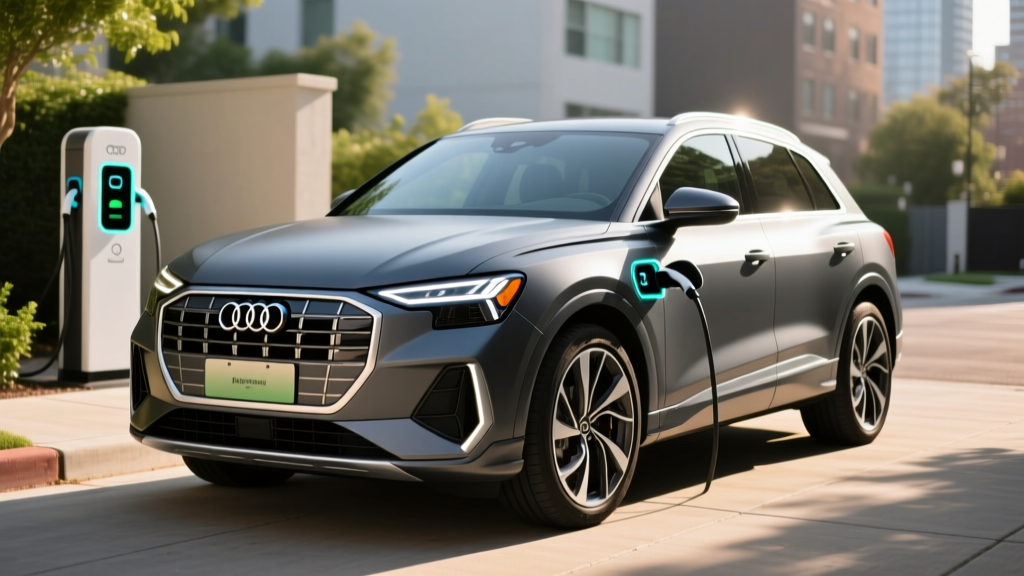
The 2026 Audi Q5 hybrid plug-in (officially the Q5 55 TFSI e) occupies a specific niche: luxury compact SUV buyers who want electric-only commuting without surrendering the flexibility of a gasoline engine for longer trips. With 23 miles of EPA-rated electric range, 362 combined horsepower, and Audi's signature Quattro all-wheel drive, it's a compelling package — but only if your daily commute fits within its battery envelope and you have access to home charging.
This guide breaks down every number that matters: real-world MPG versus EPA estimates, the 17.9 kWh battery's actual usable capacity, Level 2 charging times, federal tax credit eligibility under current IRS §30D rules, and long-term battery reliability. If you're cross-shopping the BMW X5 xDrive50e, Volvo XC60 Recharge, or Lexus RX 450h+, this is your spec-driven starting point.
HEV vs PHEV: What the Audi Q5 Hybrid Plug-In Actually Is
Before diving into specs, it's worth clarifying terminology, because "hybrid" gets misused constantly:
| Feature | Conventional Hybrid (HEV) | Plug-In Hybrid (PHEV) |
|---|---|---|
| Battery size | 1–2 kWh | 14–25 kWh |
| Electric-only range | 0–2 miles at low speed | 20–40+ miles |
| Plug-in charging | No — self-charges via regen/engine | Yes — Level 1/Level 2 AC |
| Gas engine | Yes | Yes |
| Tax credit eligible | No | Potentially (varies by model/sourcing) |
The Audi Q5 55 TFSI e is a PHEV. It pairs a turbocharged 2.0-liter four-cylinder engine with an electric motor integrated into the 7-speed S tronic transmission. You plug it in to charge the battery, you can drive on electricity alone, and when the battery depletes, it operates like a conventional hybrid. The competing Lexus RX 450h+ is also a PHEV, while the standard Lexus RX 350h is an HEV — different powertrains with different use cases.
Powertrain Specs: 362 HP and Quattro Standard
| Specification | 2026 Audi Q5 55 TFSI e |
|---|---|
| Engine | 2.0L turbocharged inline-4 |
| Electric motor | Integrated into transmission |
| Combined output | 362 hp / 369 lb-ft torque |
| Battery (gross / usable) | 17.9 kWh / ~14.5 kWh |
| Battery chemistry | NMC (nickel manganese cobalt) |
| Drivetrain | Quattro AWD (standard) |
| Transmission | 7-speed S tronic dual-clutch |
| 0–60 mph | 5.0 seconds |
| Top speed (electric only) | 84 mph |
| Cargo volume (rear seats up) | 24.7 cu ft |
| Towing capacity | 4,400 lbs |
The combined 362 hp makes this the quickest Q5 variant short of the SQ5. The electric motor fills in torque at low RPMs before the turbo spools, delivering seamless acceleration from stops. In EV mode, the powertrain is nearly silent — a noticeable refinement upgrade over the gas-only Q5 45 TFSI in stop-and-go traffic.
Electric-Only Range and Charging: The 23-Mile Reality
The EPA rates the 2026 Q5 55 TFSI e at 23 miles of electric-only range. That figure assumes a mix of city and highway driving with moderate climate control use. In real-world testing, expect:
- City/low-speed commuting: 24–27 miles (regen braking recaptures energy efficiently below 45 mph)
- Highway (70+ mph): 17–19 miles (aerodynamic drag and sustained power draw deplete the battery faster)
- Cold weather (below 35°F): 14–18 miles (cabin heating and battery thermal management consume energy that would otherwise drive the wheels)
The 17.9 kWh gross battery has roughly 14.5 kWh of usable capacity. Audi, like most manufacturers, buffers the top and bottom of the state of charge to protect long-term battery health — you'll never see a true 0% or 100% on the dash.
Charging Speeds and Times
| Charging Level | Power (kW) | 0–100% Time | Notes |
|---|---|---|---|
| Level 1 (120V household) | ~1.2 kW | ~13 hours | Emergency/trickle only |
| Level 2 (240V home/public) | 7.7 kW (max onboard) | ~2.5 hours | Primary charging method |
| DC Fast Charge | Not supported | N/A | No CCS/NACS DC capability |
This is a critical limitation: the Q5 55 TFSI e cannot DC fast charge. There is no CCS or NACS port for 50+ kW rapid charging. All charging happens via the J1772 connector at AC speeds up to 7.7 kW. For most PHEV owners who charge overnight at home, this is perfectly adequate — the battery is small enough that a 240V Level 2 charger tops it up in about two and a half hours. But if you were hoping to quick-charge on a road trip, that's not an option with this vehicle.
Home Charging Setup
To get the full 7.7 kW charge rate, you'll need a 240V Level 2 home charger on a dedicated 40-amp circuit (which delivers ~32 amps continuous to the vehicle). A licensed electrician will typically charge $500–$1,500 for installation, depending on whether your electrical panel needs an upgrade. The charger itself (ChargePoint Home Flex, Emporia Level 2, or similar) runs $350–$700.
Fuel Economy: EPA MPG and Real-World Numbers
Once the battery is depleted, the Q5 55 TFSI e operates as a conventional hybrid. Here's how the EPA rates it:
| Mode | City | Highway | Combined |
|---|---|---|---|
| Charge-depleting (EV + hybrid blended) | 65 MPGe | ||
| Charge-sustaining (hybrid only, battery depleted) | 25 MPG | 27 MPG | 26 MPG |
Source: fueleconomy.gov
The 65 MPGe figure only applies when you start with a full battery and drive within the electric range. For trips beyond 23 miles, the relevant number is 26 MPG combined in charge-sustaining mode. That's a modest improvement over the gas-only Q5 45 TFSI (25 MPG combined), but not dramatic.
Real-World MPG vs. EPA
PHEV fuel economy is highly dependent on your driving pattern:
- Short commutes under 20 miles with daily charging: You may use zero gasoline for weeks. Effective "MPG" is infinite.
- Mixed driving (30–50 mile days, regular charging): Expect 35–50 MPGe effective, as the engine only kicks in for the miles beyond your electric range.
- Long road trips, no charging: 24–27 MPG — essentially a heavy hybrid. Highway cruising at 75+ mph pushes it toward the lower end.
- Never charging (worst case): 24–26 MPG. You're carrying 400+ lbs of battery you never use, which slightly hurts efficiency versus the gas Q5.
The PHEV's advantage is entirely contingent on plugging in. If you can't charge at home or work, the Q5 55 TFSI e becomes an expensive, slightly less efficient version of the standard Q5.
Pricing, Trims, and Tax Credit Eligibility
The 2026 Audi Q5 55 TFSI e starts at $58,995 MSRP (including destination) in Premium trim. Here's the current lineup:
| Trim | MSRP | Key Features |
|---|---|---|
| Premium | $58,995 | Leather, 10.1" MMI display, Audi Virtual Cockpit, power liftgate |
| Premium Plus | $63,395 | + Bang & Olufsen audio, navigation, 360° cameras, adaptive cruise |
| Prestige | $68,795 | + Head-up display, matrix LED headlights, rear sunshades |
Federal Tax Credit: §30D Eligibility
The Audi Q5 55 TFSI e's federal tax credit eligibility under IRS §30D is currently $0 for most buyers. Here's why:
- The vehicle is assembled in San José Chiapa, Mexico, which disqualifies it from the new clean vehicle credit (final assembly must occur in North America — USA, Canada, or Mexico assembly is required, but Audi's Mexico plant has not met the critical minerals and battery component sourcing thresholds for 2026).
- Even if assembly location were eligible, the MSRP cap for SUVs is $80,000 (the Q5 PHEV passes this test) and the buyer income cap is $150,000 single / $300,000 joint filers.
- Battery component and critical mineral sourcing requirements tighten annually. As of 2026, vehicles with battery components from "foreign entities of concern" are ineligible.
Bottom line: Do not purchase the Q5 55 TFSI e expecting a $7,500 federal tax credit. Verify current eligibility on fueleconomy.gov before buying, as rules can shift. Some states offer their own PHEV rebates — check your local DMV or energy office.
Battery Warranty, Reliability, and Replacement Cost
Audi provides an 8-year / 100,000-mile warranty on the Q5 55 TFSI e's high-voltage battery, covering defects and capacity loss below 70% of original capacity. This aligns with the industry standard for PHEVs and is mandated in California and states that follow CARB emissions rules (extended to 10 years / 150,000 miles in those jurisdictions).
| Coverage | Duration |
|---|---|
| High-voltage battery | 8 years / 100,000 miles (10/150k in CARB states) |
| Powertrain (engine, transmission, motor) | 4 years / 50,000 miles |
| Bumper-to-bumper | 4 years / 50,000 miles |
| Corrosion perforation | 12 years / unlimited miles |
Long-Term Reliability
PHEV powertrains have more components than either a pure EV or a gas car — you have a full internal combustion engine, a full electric drivetrain, and the complex power-split hardware connecting them. Audi's 2.0L TFSI engine is well-proven across the VW Group lineup, and the electric motor has far fewer wear items than mechanical components. The primary long-term risk is battery degradation.
Based on NMC battery behavior in similar VW Group PHEVs (the A7 55 TFSI e and A6 PHEV use related architecture), expect 10–15% capacity loss over 8–10 years with normal use. That means your 23-mile electric range might shrink to 19–20 miles by year 10. The buffer and thermal management system help mitigate this, but NMC chemistry degrades faster than LFP, especially if you frequently charge to 100% and let the battery sit at high state of charge in hot weather.
Battery Replacement Cost
If the battery fails outside warranty, replacement runs $8,000–$12,000 including parts and labor at an Audi dealer. This is a significant expense, though the 8-year warranty window covers the period when most failures occur. Individual module replacement (rather than the full pack) may be possible at lower cost, depending on the fault.
Who Should Choose the Q5 PHEV vs. a Full EV or Gas Car?
Choose the Audi Q5 55 TFSI e (PHEV) if:
- Your daily commute is under 25 miles round-trip and you can charge at home every night
- You take road trips 4+ times per year and don't want to plan around DC fast-charging infrastructure
- You want luxury-brand refinement, Quattro AWD, and 4,400-lb towing in an electrified package
- You live in an area with unreliable public charging or extreme cold that hampers full EVs
Choose a full EV (like the Audi Q8 e-tron or BMW iX) if:
- You have reliable home Level 2 charging and your daily driving is under 250 miles
- You want zero tailpipe emissions and minimal maintenance (no oil changes, no spark plugs)
- You qualify for the federal tax credit on an EV that meets §30D sourcing requirements
- You want DC fast-charging capability for road trips
Choose the gas-only Audi Q5 45 TFSI if:
- You cannot charge at home or at work (a PHEV you never plug in wastes money and weight)
- Your budget is tighter — the gas Q5 starts ~$12,000 lower than the PHEV
- You drive mostly highway miles where the PHEV's electric range offers negligible benefit
Pros
- 362 hp makes it the quickest non-SQ5 variant
- 23 miles EV range covers most daily commutes
- Quattro AWD standard — excellent in snow and rain
- No range anxiety: gas engine for long trips
- Refined, quiet cabin in EV mode
- 4,400-lb towing capacity (rare for PHEVs)
Cons
- No DC fast charging — Level 2 only
- $58,995 starting price; no federal tax credit
- 26 MPG hybrid-only is only marginally better than gas Q5
- Cargo space reduced vs. gas Q5 (battery under floor)
- Electric range drops significantly in cold weather
- Complex powertrain = more potential failure points long-term
FAQ: Audi Q5 Hybrid Plug-In Questions Answered
How many MPG does the Audi Q5 plug-in hybrid get?
The 2026 Q5 55 TFSI e achieves 65 MPGe when operating with a charged battery (blended electric/gas). Once the battery is depleted, it returns 26 MPG combined (25 city / 27 highway) as a conventional hybrid. Real-world results vary dramatically based on how often you charge and your trip length.
How far can the Audi Q5 PHEV go on electric only?
The EPA rates it at 23 miles electric-only. In real-world city driving, you may stretch that to 25–27 miles. On the highway at 70+ mph, expect 17–19 miles. In freezing temperatures, plan for 14–18 miles.
Does the Audi Q5 plug-in hybrid qualify for a tax credit?
As of 2026, the Q5 55 TFSI e does not qualify for the $7,500 federal §30D clean vehicle credit due to battery sourcing and final assembly requirements. Always verify on fueleconomy.gov before purchasing. State-level incentives may apply.
Is the Audi Q5 PHEV reliable?
Audi's 2.0L TFSI engine and S tronic transmission are well-established. The high-voltage battery carries an 8-year / 100,000-mile warranty. The primary reliability concern is the complexity of having both a full ICE and full electric drivetrain — more components means more potential failure points over 10+ years of ownership.
What does it cost to replace the Q5 PHEV battery?
Out-of-warranty replacement runs approximately $8,000–$12,000 at an Audi dealership. The 8-year / 100,000-mile warranty covers premature degradation below 70% capacity, so most owners should never face this cost.
Can the Audi Q5 PHEV charge on DC fast chargers?
No. The Q5 55 TFSI e only supports AC charging via J1772 at up to 7.7 kW (Level 2). There is no CCS or NACS DC fast-charging capability. A full charge takes about 2.5 hours on Level 2.
What is the total range of the Q5 plug-in hybrid?
Combined electric and gasoline range is approximately 400–420 miles, depending on driving conditions and how you use the electric portion. The 18.5-gallon fuel tank plus the battery gives substantial range for road trips.