Hybrid Reliability: What the Data Actually Shows
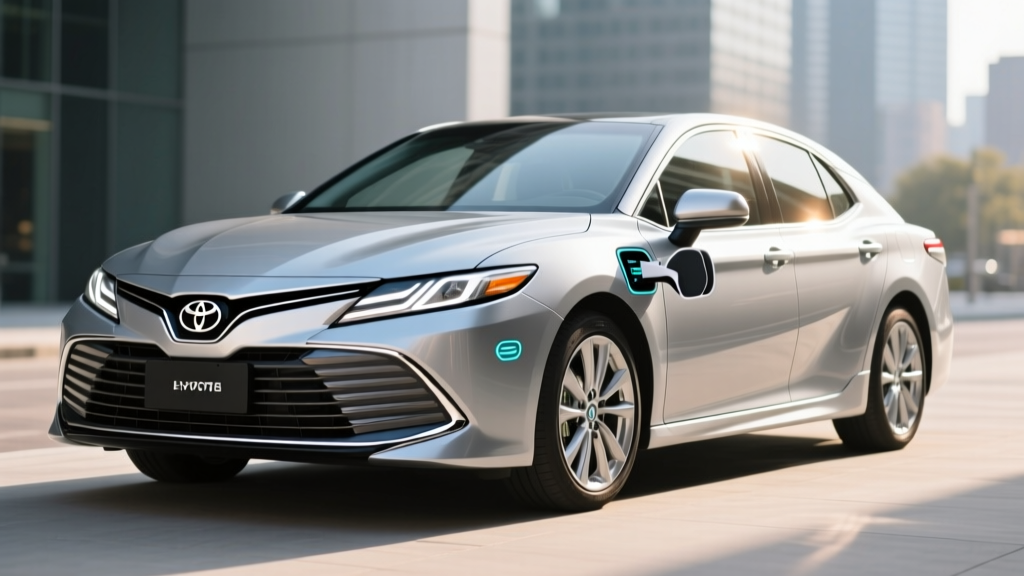
The question "are hybrid cars reliable" surfaces in virtually every buyer forum and search bar — and for good reason. Hybrids carry two powertrains under one hood: an internal combustion engine and an electric motor fed by a high-voltage battery. More complexity should mean more failure points. Yet two decades of fleet data tell the opposite story: modern hybrids consistently rank among the most dependable vehicles on the road.
Consumer Reports' 2025 Annual Auto Reliability Survey placed Toyota and Lexus — both hybrid-heavy lineups — at the top of brand reliability rankings, with models like the Prius and RAV4 Hybrid earning predicted reliability scores well above average. J.D. Power's 2025 U.S. Vehicle Dependability Study similarly showed hybrid powertrains posting fewer problems per 100 vehicles than many conventional gas-only counterparts.
The reason is partly engineering and partly usage patterns. Hybrid systems recapture braking energy, which reduces wear on friction brakes. The electric motor shoulders low-speed load, easing strain on the gasoline engine. And the battery packs themselves — the component buyers worry about most — have proven remarkably durable when properly managed by modern thermal systems.
But reliability isn't a single number. It depends on whether you're looking at a conventional hybrid (HEV) that never plugs in, or a plug-in hybrid (PHEV) with a larger battery and more complex charging hardware. Let's break down both.
HEV vs PHEV: Two Different Reliability Profiles
| Attribute | Conventional Hybrid (HEV) | Plug-In Hybrid (PHEV) |
|---|---|---|
| Battery size | 0.6–1.6 kWh (small buffer) | 13–25+ kWh (usable) |
| Plug-in charging | No — charges via regen & engine | Yes — Level 1 or Level 2 |
| Electric-only driving | Brief low-speed assists only | 20–50+ miles EPA |
| DC fast charging | Not applicable | Rarely; most are Level 2 only |
| Complexity | Lower — smaller battery, simpler thermal mgmt | Higher — onboard charger, larger battery, charge port |
| Tax credit (§30D) | Not eligible | Up to $7,500 (if eligible) |
Conventional hybrids like the Toyota Prius and Honda CR-V Hybrid use relatively small nickel-metal hydride (NiMH) or lithium-ion (Li-ion) batteries — typically under 1.5 kWh. These batteries experience shallow charge cycles: they never fully drain and never fully charge. Shallow cycling is the gentlest possible duty for a battery cell, which is why first-generation Prius packs from the early 2000s are still running at 200,000+ miles in some cases.
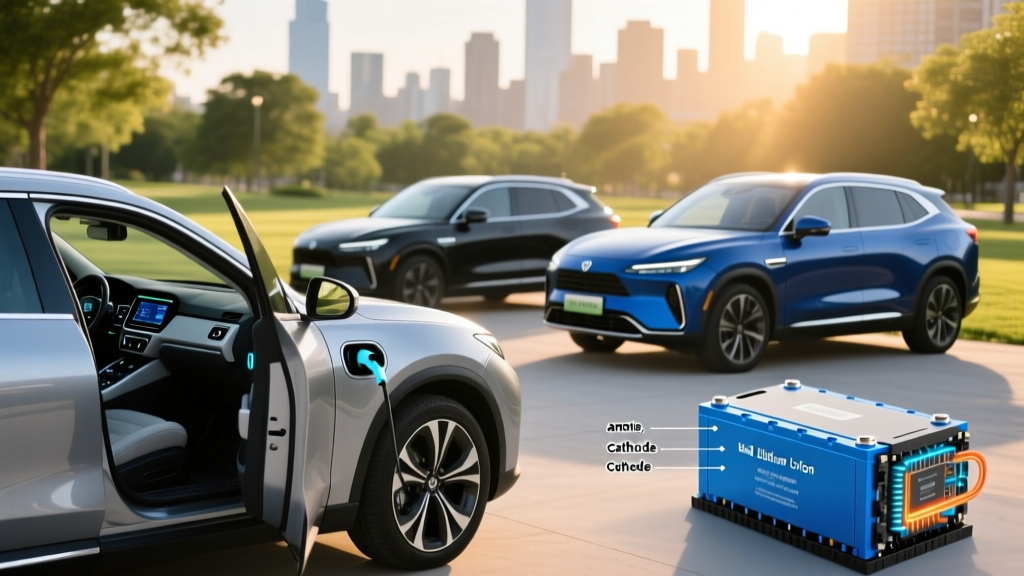
Plug-in hybrids such as the Toyota RAV4 Prime and Jeep Wrangler 4xe carry substantially larger lithium-ion packs (13–25 kWh usable). These batteries undergo deeper daily cycles — a full charge to full discharge over a commute — which accelerates degradation relative to HEV packs. However, PHEV batteries are still smaller than full EV batteries and are buffered by the gasoline engine, so the consequences of degradation are less severe: you lose some electric-only miles, but the car still drives fine on gas.
Battery Lifespan and Warranty: What You're Actually Covered For
Federal Mandate: Hybrid Battery Warranty Minimum
Under U.S. EPA and CARB regulations, all hybrid and PHEV batteries sold in the United States must carry a minimum warranty of 8 years / 100,000 miles (whichever comes first) in most states. In California Air Resources Board (CARB) states — which include California, New York, Massachusetts, and several others — that mandate extends to 10 years / 150,000 miles for PZEV/AT-PZEV certified models.
Most manufacturers exceed these minimums. Toyota covers hybrid batteries for 10 years / 150,000 miles nationwide on all 2020-and-newer models. Hyundai and Kia provide 10 years / 100,000 miles on hybrid and PHEV batteries. Ford covers its PHEV and HEV batteries at 8 years / 100,000 miles.
These warranties typically guarantee that the battery will retain at least 60–70% of its original capacity over the warranty period. If capacity falls below that threshold due to a defect or abnormal degradation, the manufacturer replaces or reconditions the pack at no cost.
Real-World Battery Degradation Data
Independent fleet analyses from sources like Geotab and Consumer Reports suggest that modern hybrid batteries lose roughly 1–2% capacity per year under typical use. For a PHEV with a 35-mile electric range when new, that translates to roughly 31–33 miles of electric range after five years — a negligible difference in daily driving. HEV batteries, given their shallow-cycle duty, show even less measurable degradation in normal ownership windows.
Full battery replacement — the scenario that haunts buyer imaginations — is increasingly rare. When it does occur outside warranty, costs vary widely:
- Toyota Prius HEV: $2,000–$3,500 for a new OEM battery pack (remanufactured options from $1,200–$1,800)
- Toyota RAV4 Prime PHEV: $5,000–$8,000 (larger Li-ion pack)
- Ford Escape PHEV: $4,500–$7,000
- Honda Accord Hybrid: $2,000–$3,500
For context, these costs are comparable to a major engine or transmission repair on a conventional vehicle — and they occur far less frequently. The vast majority of hybrid owners will sell or trade the vehicle before ever facing an out-of-pocket battery replacement.
Top 2026 Hybrids: MPG, Range, and Reliability Ratings
Here's how the most popular 2026 hybrid and PHEV models stack up on efficiency, powertrain output, and pricing. All MPG figures are EPA estimates from fueleconomy.gov.
| Model | Type | EPA MPG (City/Hwy/Combined) | EV Range (PHEV) | Combined HP | Battery (kWh usable) | Base MSRP |
|---|---|---|---|---|---|---|
| Toyota Prius | HEV | 57 / 56 / 57 | — | 196 hp | ~1.0 kWh (Li-ion) | $29,445 |
| Toyota Prius Prime | PHEV | 52 / 48 / 50 (hybrid) · 127 MPGe | 44 mi | 220 hp | ~13.6 kWh | $34,445 |
| Honda CR-V Hybrid | HEV | 43 / 36 / 40 | — | 204 hp | ~1.1 kWh (Li-ion) | $35,395 |
| Toyota RAV4 Prime | PHEV | 40 / 36 / 38 (hybrid) · 94 MPGe | 42 mi | 302 hp | ~18.1 kWh | $44,905 |
| Hyundai Tucson PHEV | PHEV | 38 / 38 / 38 (hybrid) · 80 MPGe | 33 mi | 261 hp | ~13.8 kWh | $39,405 |
| Ford Maverick Hybrid | HEV | 42 / 33 / 37 | — | 191 hp | ~1.1 kWh (Li-ion) | $28,990 |
Real-World MPG: Where Hybrids Surprise You
One of the most consistent findings in owner-reported data is that conventional hybrids often exceed their EPA city estimates in real-world stop-and-go driving. The EPA city cycle includes moderate acceleration and braking, but real urban commuting — with its constant stops — maximizes regenerative braking and electric-motor usage. Prius owners on Fuelly and Edmunds regularly report 58–62 MPG in heavy city traffic, above the 57 MPG sticker.
Highway driving tells a different story. At sustained speeds above 70 mph, the gasoline engine does most of the work, and aerodynamic drag dominates. Expect highway fuel economy to land 2–5 MPG below the EPA highway estimate in most hybrids, especially in cold weather or with roof cargo.
For PHEVs, real-world electric range depends heavily on temperature and driving style. The RAV4 Prime's 42-mile EPA electric rating can stretch to 48+ miles on flat, 55-mph routes in mild weather — or drop to 30–34 miles in freezing temperatures with highway speeds and cabin heat running. PHEV owners who charge daily and commute under 30 miles round-trip can go months without visiting a gas station.
PHEV Charging: Speed, Time, and Infrastructure
Most PHEVs charge exclusively via Level 1 (120V household outlet) or Level 2 (240V home or public charger). DC fast charging is rare in the PHEV segment — the Mitsubishi Outlander PHEV is one of the few models that has historically offered it, and most 2026 PHEVs still max out at Level 2.
| Charging Level | Power (kW) | Time to Full (13–18 kWh battery) | Notes |
|---|---|---|---|
| Level 1 (120V) | ~1.2–1.4 kW | 10–15 hours | Standard household outlet; overnight for small packs |
| Level 2 (240V) | ~3.3–6.6 kW | 2.5–5 hours | Home wall charger or public Level 2 station |
| DC Fast Charge | ~22–50 kW (rare) | ~25–40 min (10–80%) | Very few PHEVs support DC; check model specs |
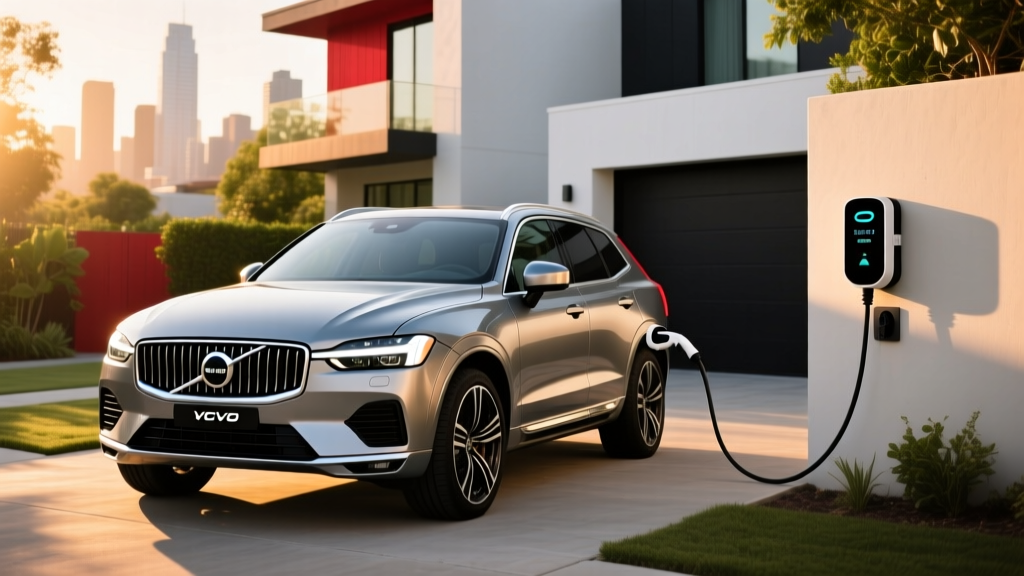
For most PHEV owners, Level 2 home charging is the sweet spot. A 240V outlet (the same type used by a clothes dryer) paired with a Level 2 EVSE ($300–$600 for quality units from ChargePoint or Emporia) will fully recharge most PHEV batteries overnight. Professional installation of a dedicated 240V circuit typically costs $500–$1,500 depending on panel proximity and local permit requirements.
Hybrid vs PHEV vs Full EV: Which Fits Your Life?
Decision Framework: Choose Based on Your Situation
Choose a conventional hybrid (HEV) if:
- You have no access to home or workplace charging
- You want maximum MPG without changing any habits
- Your budget is under $35,000 and you want proven reliability
- You drive a mix of city and highway with no predictable pattern
Choose a plug-in hybrid (PHEV) if:
- You can install a Level 2 charger at home or charge at work
- Your daily commute is under 40 miles round-trip (coverable on electric)
- You take occasional road trips and want gas-engine flexibility
- You want to reduce fuel consumption dramatically without full EV commitment
Choose a full battery-electric vehicle (BEV) if:
- You have reliable home Level 2 charging
- Your daily driving is under 250 miles (within EPA range of most modern EVs)
- You want zero tailpipe emissions and minimal maintenance
- You're ready to plan around DC fast charging for road trips
The reliability comparison between these three categories is nuanced. Full EVs have the fewest moving parts (no engine, no transmission, no exhaust system) and should theoretically be the most reliable. However, early-production EVs from some newer manufacturers have shown software and build-quality issues that drag down reliability scores. Hybrids benefit from decades of refinement — Toyota's Hybrid Synergy Drive is now in its fifth generation — and the gasoline engine is a known, serviceable quantity at any repair shop.
Tax Credits and Incentives for Hybrids and PHEVs
Conventional hybrids (HEVs) do not qualify for the federal §30D Clean Vehicle Credit. This credit is reserved for plug-in vehicles — BEVs and PHEVs — that meet specific battery sourcing, critical mineral, MSRP, and buyer income requirements as defined by the IRS.
For eligible PHEVs in 2026, the credit structure works as follows:
- Maximum credit: Up to $7,500 ($3,750 for critical minerals + $3,750 for battery components)
- MSRP caps: Vans/SUVs/pickups ≤ $80,000; sedans/other ≤ $55,000
- Buyer income caps (MAGI): $300,000 joint / $225,000 head of household / $150,000 individual
- Battery sourcing: Critical minerals and battery components must meet increasing domestic/free-trade-partner thresholds each year
- Point-of-sale transfer: Eligible buyers can transfer the credit to the dealer at purchase, reducing the sale price directly rather than waiting for a tax refund
Among 2026 PHEVs, eligibility varies by model and production sourcing. The Toyota RAV4 Prime (assembled in Japan) has historically not qualified for the full credit due to battery component sourcing rules. The Jeep Wrangler 4xe (assembled in Ohio) has qualified for partial or full credit depending on the model year's sourcing compliance. Always verify current eligibility at fueleconomy.gov before purchasing, as these rules shift with supply-chain changes.
Some states offer additional incentives for PHEVs — California's CVRP program, for example, has offered rebates for qualifying PHEVs (though amounts and eligibility change annually). Check your state energy office for current programs.
Long-Term Ownership Costs: Hybrids vs Gas vs EV
The reliability question ultimately connects to your wallet. A reliable car that costs more to fuel isn't necessarily the better buy. Here's a simplified five-year cost comparison for a driver covering 15,000 miles per year, using national average fuel and electricity prices:
| Cost Category | Toyota Camry (Gas, 32 MPG) | Toyota Prius (HEV, 57 MPG) | Prius Prime (PHEV, 50 MPG + EV) | Tesla Model 3 (BEV, 132 MPGe) |
|---|---|---|---|---|
| Purchase price (base MSRP) | $28,700 | $29,445 | $34,445 | $38,990 |
| Federal tax credit | $0 | $0 | Up to $3,750* | Up to $7,500* |
| Fuel / electricity (5 yr) | $11,720 | $6,580 | $3,800** | $3,400 |
| Maintenance (est.) | $3,200 | $2,400 | $2,600 | $1,500 |
| 5-year total (before credit) | $43,620 | $38,425 | $40,845 | $43,890 |
| 5-year total (after credit) | $43,620 | $38,425 | ~$37,095 | ~$36,390 |
* Tax credit eligibility depends on income, MSRP caps, and battery sourcing. Verify at irs.gov.
** PHEV fuel cost assumes 70% of daily driving on electric (home charging) and 30% on gasoline.
The Prius HEV wins on total cost for buyers who cannot access the federal credit (due to income caps or vehicle sourcing). The PHEV and BEV close the gap or surpass it when the full credit applies — but only if the buyer can charge at home. Without home charging, a PHEV becomes an expensive conventional hybrid.
Hybrid Reliability: Pros and Cons at a Glance
Pros
- Decades of proven battery durability (10–15+ year lifespans common)
- Federally mandated 8–10 year / 100,000–150,000 mi battery warranties
- Reduced brake wear from regenerative braking
- HEVs often exceed EPA city MPG in real-world stop-and-go driving
- No charging infrastructure required for HEVs
- Lower long-term fuel costs vs gas-only vehicles
- Strong resale value (Prius, RAV4 Hybrid consistently rank high)
Cons
- Out-of-warranty battery replacement: $2,000–$8,000 depending on model
- PHEVs require home charging access to realize full value
- Higher initial purchase price than comparable gas-only models
- HEVs do not qualify for the federal §30D tax credit
- Two powertrains mean two sets of potential (though statistically rare) repairs
- PHEV electric range drops 15–30% in freezing temperatures
Frequently Asked Questions
How many MPG does a hybrid car get?
It varies by model, but top 2026 conventional hybrids achieve 40–57 MPG combined (EPA). The Toyota Prius leads at 57 MPG combined. The Ford Maverick Hybrid posts 37 MPG combined. PHEVs add 20–50 miles of electric-only driving on top of their hybrid MPG, effectively achieving 80–127 MPGe when factoring in electric operation.
How far can a PHEV go on electric only?
Current PHEVs offer 20–50 miles of EPA-rated electric-only range. The Toyota Prius Prime achieves 44 miles, the RAV4 Prime delivers 42 miles, and the Hyundai Tucson PHEV provides 33 miles. Real-world range varies with temperature, terrain, and speed — expect 15–30% less electric range in freezing weather or at sustained highway speeds above 65 mph.
Is a hybrid more reliable than a gas car?
Statistically, yes — for models from established manufacturers. Toyota, Honda, and Hyundai hybrids consistently earn above-average reliability scores from Consumer Reports and J.D. Power. The hybrid system adds components but reduces wear on others (brakes, engine). The main risk is out-of-warranty battery replacement, which is expensive but increasingly uncommon given modern battery longevity.
What is the cost to replace a hybrid battery?
New OEM replacement batteries range from roughly $2,000 for a Prius-class HEV to $5,000–$8,000 for a larger PHEV pack. Remanufactured and aftermarket options can reduce costs by 30–50%. Most hybrid owners never face this expense — the battery typically outlasts the vehicle's economic life, especially under the 8–10 year federal warranty mandate.
Do conventional hybrids need to be plugged in?
No. Conventional hybrids (HEVs) charge their batteries entirely through regenerative braking and the gasoline engine. You never plug them in. Only plug-in hybrids (PHEVs) require or benefit from external charging via a wall outlet or charging station.
Does a hybrid qualify for any tax credit?
Conventional hybrids (HEVs) do not qualify for the federal §30D Clean Vehicle Credit. Plug-in hybrids (PHEVs) may qualify for up to $7,500, subject to MSRP caps ($80,000 for SUVs, $55,000 for sedans), buyer income limits, and battery sourcing requirements. Check current eligibility at irs.gov before purchasing, as sourcing rules change annually.
How long do hybrid batteries last?
Most modern hybrid batteries last 10–15 years or 150,000–200,000+ miles under normal use. Toyota's 10-year/150,000-mile warranty reflects the manufacturer's confidence in this lifespan. Degradation is gradual — roughly 1–2% capacity loss per year — and rarely renders the vehicle undrivable. Shallow-cycle HEV batteries tend to outlast deeper-cycle PHEV batteries, though both are engineered for the vehicle's expected service life.