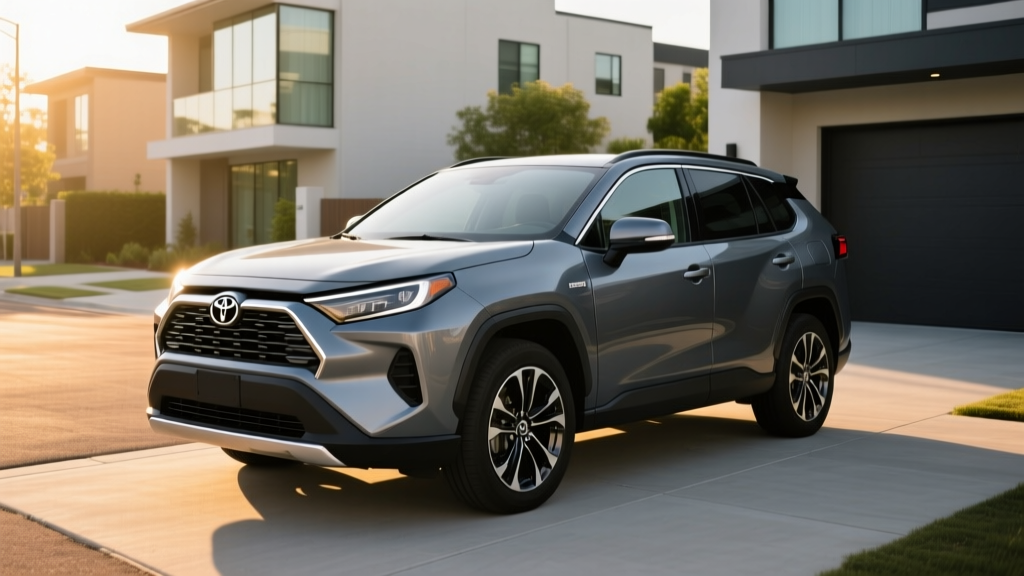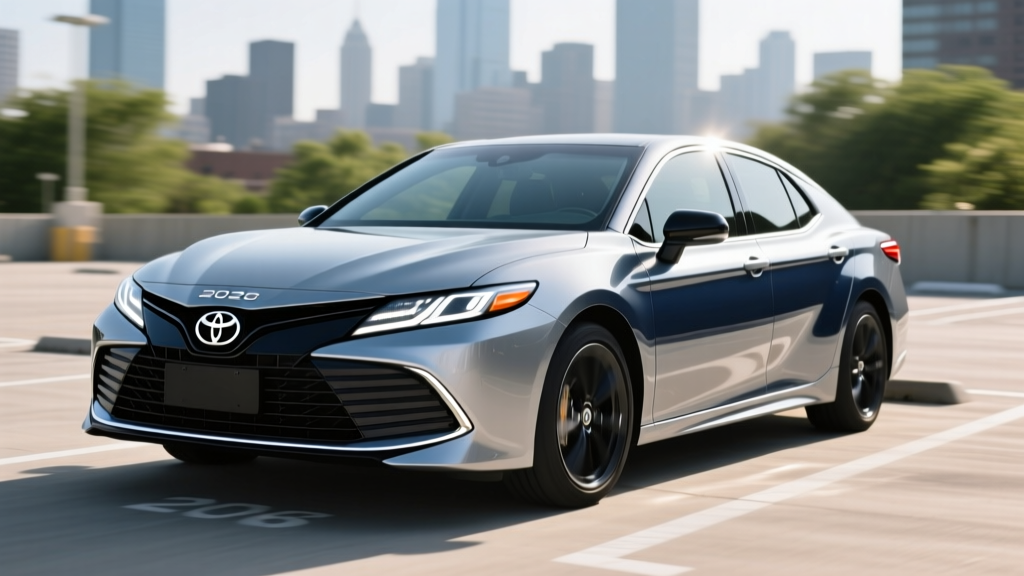
If you've walked into a Toyota dealership lately or browsed the Camry configurator online, you may have noticed something surprising: there's no longer a purely gasoline-only Camry on the lot. So, are all Camrys hybrids? Starting with the redesigned 2025 model year and continuing into 2026, the answer is yes — every Toyota Camry sold in the United States uses Toyota's fifth-generation hybrid powertrain. The traditional 2.5-liter four-cylinder gas-only engine was retired, leaving the hybrid as the sole offering across all trim levels.
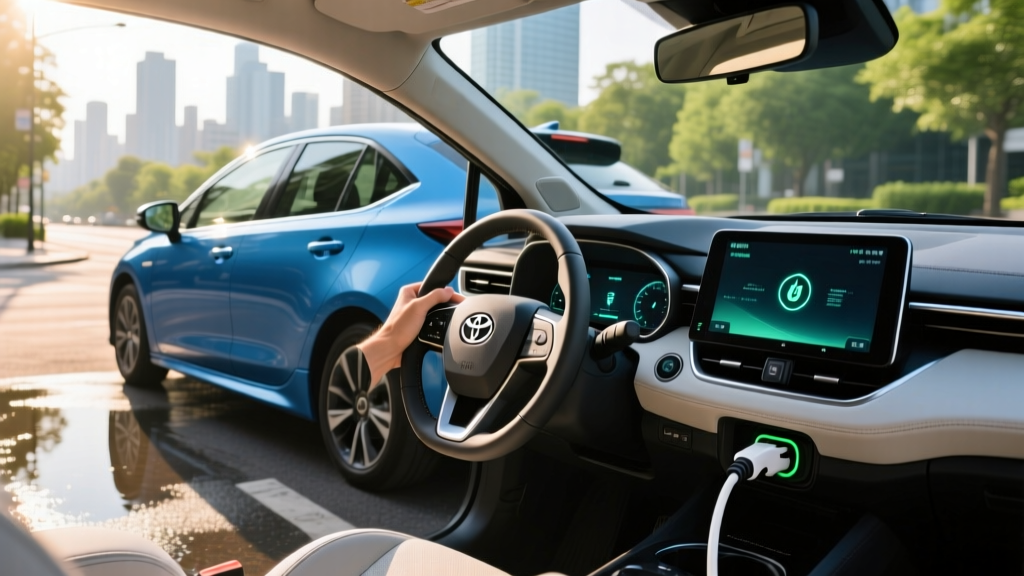
This isn't a plug-in hybrid. You won't find a charging port on the Camry. It's a conventional self-charging hybrid (HEV), meaning it recovers energy through regenerative braking and the gasoline engine to keep its small battery topped up. Below, we break down exactly what this means for fuel economy, performance, ownership costs, and whether the Camry hybrid is the right fit compared to a PHEV or full EV.
Every 2026 Camry Is a Hybrid: What Changed
Prior to the 2025 redesign, Toyota offered the Camry with a conventional 2.5-liter four-cylinder producing 203 horsepower, alongside a hybrid variant. For the current generation, Toyota consolidated the lineup around its hybrid system, citing stronger consumer demand for fuel efficiency and the automaker's broader electrification strategy. The result is a simpler lineup where every Camry LE, SE, XLE, and XSE — whether front-wheel drive or all-wheel drive — pairs a 2.5-liter Dynamic Force engine with electric motors.
This move mirrors what Toyota has done with the Sienna minivan and Venza SUV, both of which are hybrid-only. For buyers, it means better baseline fuel economy across the board but also a slightly higher starting price than the old gas-only base model.
2026 Toyota Camry Hybrid Powertrain Specs
| Specification | FWD Models | AWD Models |
|---|---|---|
| Engine | 2.5L 4-cyl Dynamic Force | 2.5L 4-cyl Dynamic Force |
| Electric Motors | 2 (front) | 3 (2 front + 1 rear) |
| Combined Horsepower | 225 hp | 232 hp |
| Transmission | eCVT | eCVT |
| Hybrid Battery | Lithium-ion (~1.6 kWh) | Lithium-ion (~1.6 kWh) |
| Drivetrain | Front-wheel drive | Electronic AWD (rear motor) |
| 0-60 mph (est.) | ~7.2 sec | ~6.9 sec |
The fifth-generation Toyota Hybrid System (THS) is more compact and efficient than its predecessor. The AWD variant adds a dedicated rear electric motor that engages automatically for traction — there's no mechanical driveshaft connecting the engine to the rear wheels. This electronic AWD system is lighter and introduces minimal efficiency penalty compared to the FWD models.
Fuel Economy: EPA MPG by Trim and Drivetrain
| Trim / Drivetrain | City MPG | Highway MPG | Combined MPG |
|---|---|---|---|
| LE FWD | 53 | 50 | 52 |
| SE FWD | 48 | 47 | 47 |
| XLE FWD | 48 | 47 | 47 |
| XSE FWD | 48 | 47 | 47 |
| LE AWD | 51 | 49 | 50 |
| SE AWD | 46 | 46 | 46 |
| XLE AWD | 46 | 46 | 46 |
| XSE AWD | 44 | 43 | 44 |
Source: EPA Fuel Economy (fueleconomy.gov)
The LE trim achieves its 52 MPG combined figure thanks to lighter-weight 16-inch wheels, lower-rolling-resistance tires, and aerodynamic tuning. Sportier SE, XLE, and XSE trims step up to 18- or 19-inch wheels and additional equipment, trading a few MPG for style and features. The AWD system costs you roughly 2-4 MPG combined depending on trim.
Real-World MPG: What Owners Actually See
Toyota hybrids tend to perform close to — or even exceed — their EPA city ratings because stop-and-go driving maximizes regenerative braking and electric-motor usage. On the highway, however, the gasoline engine does most of the work, and real-world figures may fall 2-4 MPG below the EPA highway sticker, especially at sustained speeds above 70 mph or in cold weather.
Based on owner-reported data and independent testing, expect roughly:
- City driving: 50-55 MPG (LE FWD) — often matches or beats EPA
- Highway driving (65-75 mph): 44-48 MPG (LE FWD)
- Cold weather (below 30°F): Expect a 5-10% reduction as the engine runs more frequently for cabin heat
- Mixed daily commute: 47-52 MPG is typical for LE owners
For context, a Camry LE hybrid averaging 50 MPG combined uses roughly 240 gallons of fuel over 12,000 miles annually. At $3.30/gallon, that's about $792 per year in fuel — compared to roughly $1,200 for a comparable non-hybrid midsize sedan getting 32 MPG combined.
Camry Hybrid vs. Plug-In Hybrid vs. Full EV
A common question is whether the Camry hybrid can be plugged in. It cannot. Here's how Toyota's conventional hybrid compares to a plug-in hybrid like the Toyota Prius Prime or a full battery electric vehicle like the Tesla Model 3:
| Feature | Camry Hybrid (HEV) | Prius Prime (PHEV) | Tesla Model 3 (BEV) |
|---|---|---|---|
| Plugs in? | No — self-charging | Yes — Level 1/2 | Yes — Level 1/2/DC |
| Electric-only range | ~1 mile (low speed) | 44 miles (EPA) | 341 miles (EPA) |
| Total range | ~570 miles | ~440 miles | 341 miles |
| Combined efficiency | 52 MPG | 52 MPG / 127 MPGe | 132 MPGe |
| Home charging needed? | No | Recommended | Required |
| Federal tax credit (§30D) | Not eligible | Up to $3,750* | Up to $7,500* |
| Starting MSRP (2026) | ~$29,990 | ~$33,445 | ~$38,990 |
*Federal tax credit eligibility under IRS §30D depends on buyer income, vehicle MSRP caps, battery sourcing, and point-of-sale transfer rules. See IRS Clean Vehicle Credits for current requirements.
- Choose the Camry Hybrid (HEV) if you want maximum simplicity — no plug, no charging setup, no range anxiety — and drive a mix of city and highway miles.
- Choose a PHEV (like the Prius Prime) if you have home charging access, a commute under 40 miles, and want to drive mostly on electricity with a gas backup for longer trips.
- Choose a full EV if you have reliable home charging, want the lowest per-mile energy cost, and are ready to plan around public DC fast charging for road trips.
Pricing, Trims, and Tax Credit Eligibility
The 2026 Toyota Camry hybrid starts at approximately $29,990 MSRP for the LE FWD, including destination. Here's a trim-level breakdown:
| Trim | Drivetrain | MSRP (est.) |
|---|---|---|
| LE | FWD | $29,990 |
| LE | AWD | $31,390 |
| SE | FWD | $31,490 |
| SE | AWD | $32,890 |
| XLE | FWD | $34,490 |
| XLE | AWD | $35,890 |
| XSE | FWD | $35,490 |
| XSE | AWD | $36,890 |
Does the Camry Hybrid Qualify for a Federal Tax Credit?
No. The conventional Camry hybrid (HEV) does not qualify for the federal §30D Clean Vehicle Credit. That credit is reserved for plug-in vehicles — battery electric vehicles (BEVs) and plug-in hybrids (PHEVs) — that meet battery capacity, critical mineral sourcing, MSRP caps ($55,000 for sedans), and buyer income limits.
Because the Camry hybrid cannot be plugged in and has a battery far smaller than the 7 kWh minimum threshold for §30D, it is ineligible. Some states or local utilities may offer rebates for high-efficiency hybrids, but these vary by jurisdiction. Check your state energy office or utility provider for current programs.
Battery Longevity, Warranty, and Replacement Cost
Toyota covers the Camry's hybrid battery for 10 years or 150,000 miles (whichever comes first) in all 50 states. This applies to all 2020-and-later Toyota hybrids. The broader hybrid system (inverter, control module, electric motors) is covered for 8 years or 100,000 miles.
The Camry's hybrid battery pack is relatively small — approximately 1.6 kWh of lithium-ion cells — and it operates within a narrow state-of-charge window managed by Toyota's battery management system. This shallow cycling significantly reduces degradation compared to a full EV battery that cycles from 10% to 90% daily.
How Long Do Toyota Hybrid Batteries Actually Last?
Toyota's hybrid battery track record is among the best in the industry. Data from Prius fleets and long-term Camry hybrid owners shows:
- Most Toyota hybrid batteries last 150,000-200,000+ miles before significant capacity loss
- Failures within the warranty period are uncommon; the system is mature and well-proven
- The BMS never allows the battery to fully charge or fully discharge, protecting cell longevity
Hybrid Battery Replacement Cost
If the hybrid battery does eventually fail out of warranty, replacement costs typically range from $2,000 to $4,000 for a new OEM pack installed at a dealership. Refurbished or reconditioned packs are available from third-party shops for approximately $1,000-$2,000. Individual cell module replacement is sometimes possible for $200-$500 if only one or two modules have degraded.
For comparison, a full EV battery replacement can cost $10,000-$20,000+. The Camry's small hybrid battery is far less expensive to replace and far less likely to need it within the typical ownership period.
Pros and Cons: The 2026 Camry Hybrid
- Class-leading 52 MPG combined (LE FWD)
- No plug-in required — works like a gas car
- Strong 225-232 hp; adequate acceleration
- Available electronic AWD for snow/rain
- 10-year / 150,000-mile hybrid battery warranty
- Proven reliability; low maintenance costs
- Competitive starting price under $30K
- No federal tax credit (HEV not eligible for §30D)
- No electric-only driving beyond low-speed creep
- Sport trims drop to 44-46 MPG combined
- eCVT drone under hard acceleration
- AWD adds ~$1,400 and reduces MPG slightly
- No DC fast charging or plug-in capability
Who Should Buy the Camry Hybrid?
The 2026 Camry hybrid is the right choice if you want a midsize sedan that delivers exceptional fuel economy without changing your habits. You don't need a garage, a Level 2 charger, or any knowledge of charging networks. You fill up with gas and drive — you just visit the gas station far less often.
Ideal buyers include:
- Commuters with long or unpredictable drives who can't rely on a limited electric-only range
- Apartment dwellers or street parkers who lack home charging access
- Buyers who want EV-like efficiency without EV complexity or charging infrastructure dependence
- Fleet and rideshare operators where low per-mile fuel cost and proven reliability matter
- Cold-climate drivers where EV range loss is a concern (hybrids lose far less efficiency in winter)
Look elsewhere if:
- You want electric-only daily commuting (consider a PHEV like the Prius Prime)
- You want to eliminate gasoline entirely (consider a BEV like the Hyundai Ioniq 6 or Tesla Model 3)
- You want to take advantage of the $7,500 federal tax credit (requires a plug-in vehicle)
Frequently Asked Questions
Are all 2026 Toyota Camrys hybrids?
Yes. Starting with the 2025 model-year redesign, every Toyota Camry sold in the U.S. uses the fifth-generation Toyota Hybrid System. There is no gas-only Camry variant available. All trims — LE, SE, XLE, XSE — in both FWD and AWD are hybrids.
How many MPG does the Camry hybrid get?
The EPA rates the Camry LE FWD hybrid at 53 city / 50 highway / 52 combined MPG. Sport and luxury trims (SE, XLE, XSE) are rated at 44-47 MPG combined depending on drivetrain. Real-world city driving often matches or slightly exceeds EPA figures, while highway driving at 75+ mph may return 2-4 MPG less than the sticker.
Does the Camry hybrid need to be plugged in?
No. The Camry is a conventional hybrid (HEV), not a plug-in hybrid (PHEV). The battery charges through regenerative braking and the gasoline engine. There is no charging port, no plug, and no electric-only driving mode beyond brief low-speed maneuvers.
Is the Camry hybrid reliable and what does battery replacement cost?
Toyota's hybrid system is one of the most proven in the industry, with decades of data from millions of Prius and Camry hybrids on the road. The hybrid battery is covered for 10 years / 150,000 miles. Out-of-warranty replacement costs approximately $2,000-$4,000 for an OEM pack, though most batteries last well beyond 150,000 miles.
Does the Camry hybrid qualify for any tax credit?
The Camry hybrid does not qualify for the federal §30D Clean Vehicle Credit because it is not a plug-in vehicle. The federal credit is reserved for BEVs and PHEVs meeting battery capacity, sourcing, MSRP, and income requirements. Some state or utility rebates may apply — check local programs for details.
How does the Camry hybrid compare to a Prius or Prius Prime?
The Prius (non-Prime) achieves up to 57 MPG combined in a smaller, lighter package starting around $28,000. The Prius Prime PHEV adds 44 miles of electric-only range and may qualify for a partial federal tax credit. The Camry hybrid trades a few MPG for more interior space, a smoother ride, and available AWD — making it the better choice for families and highway-heavy commuters who prioritize comfort over maximum efficiency.