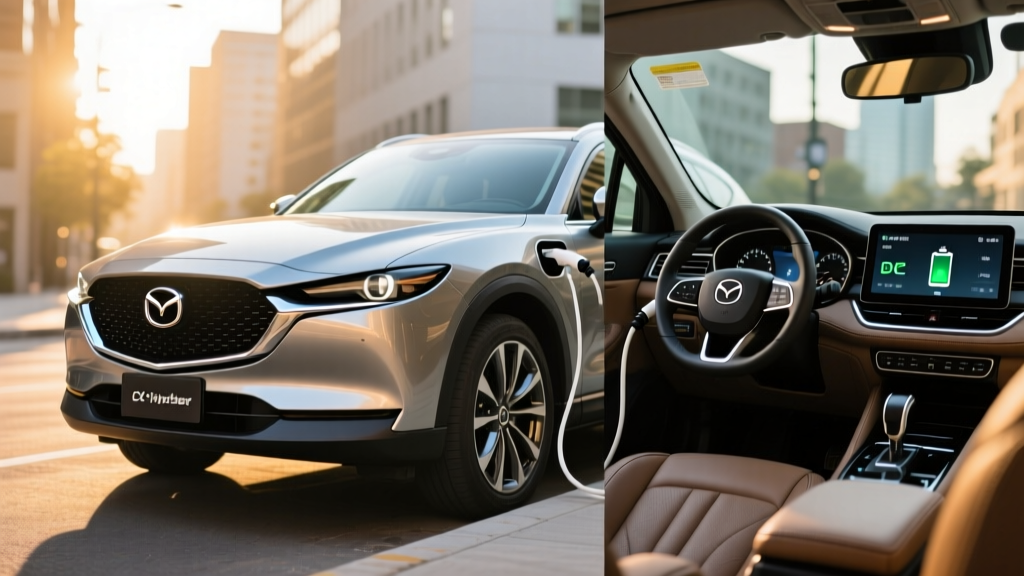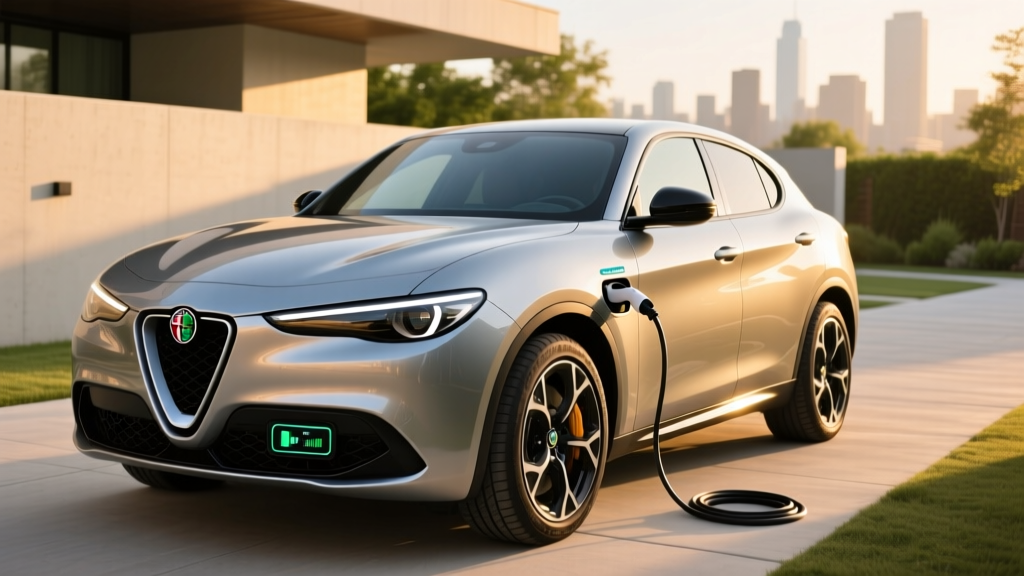
The 2026 Alfa Romeo Tonale plug-in hybrid occupies a specific niche: Italian-styled compact luxury crossover with enough electric-only range to cover most daily commutes, backed by a turbocharged gasoline engine for longer trips. Unlike a conventional hybrid (HEV) that never plugs in, the Tonale PHEV — officially badged the Tonale PHEV Q4 — pairs a 15.5 kWh lithium-ion battery with a 1.3-liter turbocharged inline-four and two electric motors to deliver all-wheel drive and 285 combined horsepower.
This guide breaks down the Tonale's real-world efficiency, electric-only capability, charging logistics, pricing, and whether it earns a spot on your shortlist against full EVs and conventional hybrids.
HEV vs PHEV: Where the Tonale Fits
Conventional Hybrid (HEV): A small battery (typically 1-2 kWh) recharged solely by regenerative braking and the engine. No plug. MPG gains come from engine assist and stop-start. Think Toyota RAV4 Hybrid.
Plug-In Hybrid (PHEV): A larger battery (10-20+ kWh) that charges via a plug and delivers meaningful electric-only miles before the engine engages. The Tonale PHEV Q4 falls squarely here — plug it in overnight, drive ~30 miles on electricity alone, and the gas engine handles everything beyond that.
The Tonale is not offered as a conventional HEV in the United States for the 2026 model year. Alfa Romeo sells a mild-hybrid version in some European markets, but the US lineup centers on the PHEV Q4 and the non-electrified 2.0L turbo AWD variant. This article focuses on the PHEV.
Powertrain and Performance Specs
| Specification | 2026 Alfa Romeo Tonale PHEV Q4 |
|---|---|
| Engine | 1.3L turbocharged inline-4 |
| Engine output | 180 hp / 170 lb-ft |
| Electric motors | Front P2 motor + rear e-axle motor |
| Combined system output | 285 hp / 350 lb-ft |
| Drivetrain | AWD (eAWD — electric rear axle) |
| Transmission | 6-speed automatic |
| Battery capacity | 15.5 kWh (lithium-ion, NMC chemistry) |
| Usable battery capacity | ~11.9 kWh |
| 0-60 mph | 6.0 seconds |
| EPA electric-only range | 30 miles |
| Total combined range | ~370 miles |
| EPA MPGe (charge-sustaining + electric) | 77 MPGe combined |
| EPA MPG (gas only, charge-sustaining) | 29 combined (28 city / 29 highway) |
| Fuel tank | 11.2 gallons |
| Towing capacity | Not rated for towing |
The dual-motor eAWD system gives the Tonale genuine all-weather traction without a mechanical driveshaft connecting the axles. The rear e-axle motor provides instant torque to the rear wheels in electric mode, and the system seamlessly blends gas and electric power under harder acceleration. The 6.0-second 0-60 time makes it one of the quicker entries in the luxury compact PHEV segment.
Electric-Only Range and Real-World Efficiency
The EPA rates the Tonale PHEV Q4 at 30 miles of electric-only range. That figure assumes a mix of city and highway driving at moderate temperatures with climate control active.
Real-world electric range expectations:
- Mild weather, city driving: 28-33 miles (regen braking extends range in stop-and-go traffic)
- Highway at 70 mph: 22-26 miles (aerodynamic drag reduces EV efficiency)
- Cold weather (below 32°F): 18-24 miles (battery chemistry slows, cabin heating draws energy)
Once the battery depletes to its buffer threshold (~15% State of Charge), the 1.3L turbo engine takes over and the Tonale operates as a conventional hybrid, returning the EPA-rated 29 MPG combined.
| Driving Scenario | EPA Rating | Real-World Expectation |
|---|---|---|
| Electric-only (combined) | 77 MPGe | 65-85 MPGe depending on conditions |
| Gas-only combined | 29 MPG | 26-31 MPG |
| Gas-only city | 28 MPG | 27-32 MPG (hybrids favor city) |
| Gas-only highway | 29 MPG | 25-28 MPG (aerodynamic losses at speed) |
According to fueleconomy.gov, the Tonale PHEV Q4's combined MPGe of 77 places it mid-pack among luxury compact PHEVs. For context, the Toyota RAV4 Prime achieves 94 MPGe with a larger battery and more aggressive regen tuning, while the BMW X3 xDrive30e posts around 68 MPGe.
One ownership advantage: PHEVs often exceed their EPA city MPG rating in real-world urban driving because regenerative braking recovers more energy at lower speeds with frequent stops. Highway efficiency, conversely, tends to fall short of the sticker — plan for 25-27 MPG on extended road trips.
Charging: What You Need to Know
The Tonale PHEV Q4 charges via a standard J1772 AC connector. It does not support DC fast charging — a limitation common to most PHEVs in this class due to battery size and cost constraints.
| Charging Method | Power (kW) | 0-100% Time | Notes |
|---|---|---|---|
| Level 1 (120V household outlet) | ~1.4 kW | ~8.5 hours | Adequate for overnight top-up if battery isn't fully depleted |
| Level 2 (240V home charger, 16A) | ~3.7 kW | ~3.5 hours | Onboard charger limited to 3.7 kW max |
| Level 2 (240V public, 32A+) | ~3.7 kW (capped) | ~3.5 hours | Vehicle caps draw at 3.7 kW regardless of station output |
| DC Fast Charge | N/A | N/A | No DC fast-charge capability |
The 3.7 kW onboard charger is the bottleneck. Even if you connect to a 7.2 kW or 11.5 kW Level 2 station, the Tonale will draw a maximum of 3.7 kW. For most owners, this means a full charge takes roughly 3.5 hours on a 240V Level 2 home charger — perfectly adequate for overnight replenishment but slower than PHEVs with 6.6 kW or 7.4 kW onboard chargers (like the RAV4 Prime at 6.6 kW).
Home charging setup: A basic Level 2 home charger (such as a ChargePoint Home Flex or Emporia Vue) on a 240V/20A circuit will fully charge the Tonale overnight. Installation typically runs $500-$1,500 depending on panel proximity and local electrical codes. No panel upgrade is usually needed for a 3.7 kW draw, as most modern 100A+ residential panels can accommodate it.
Pricing, Trims, and Tax Credit Eligibility
For the 2026 model year, the Alfa Romeo Tonale PHEV Q4 is offered in two primary trims:
| Trim | MSRP | Key Features |
|---|---|---|
| TI | ~$47,990 | Leather seats, 10.25" infotainment, wireless CarPlay/Android Auto, 19" wheels, power liftgate |
| Veloce | ~$51,990 | Alcantara/sport leather, 20" wheels, adaptive dampers, sport-tuned steering, Harman Kardon audio |
Destination charges add approximately $1,595. With options and packages, a fully loaded Veloce can approach $55,000.
Federal Tax Credit (§30D) Eligibility
The Tonale PHEV Q4's eligibility for the federal §30D Clean Vehicle Credit depends on several criteria that shift with IRS guidance:
- MSRP cap: SUVs/vans must be under $80,000. The Tonale clears this threshold at all trims.
- Buyer income cap: AGI must not exceed $150,000 (single), $225,000 (head of household), or $300,000 (joint).
- Battery sourcing: Critical minerals and battery components must meet escalating domestic-content thresholds. The Tonale's battery supply chain has historically struggled to meet these requirements — check the latest IRS qualifying vehicle list before purchasing.
- Point-of-sale transfer: If eligible, the credit can be applied at the dealership as an immediate price reduction rather than a tax-year refund.
- Battery capacity: The 15.5 kWh pack exceeds the 7 kWh minimum for PHEVs.
Current status: Alfa Romeo's PHEV models have faced challenges meeting the critical-minerals and battery-component sourcing rules. As of early 2026, the Tonale PHEV Q4 may qualify for a partial credit ($3,750) or no credit at all, depending on the latest IRS supply-chain determinations. Confirm eligibility on fueleconomy.gov or with your dealer before signing.
Battery Warranty, Reliability, and Replacement Costs
High-voltage battery warranty: 8 years / 100,000 miles (whichever comes first), with a capacity retention threshold of 70%. If the battery degrades below 70% of original capacity within the warranty period, Alfa Romeo will repair or replace it at no cost.
Powertrain warranty: 4 years / 50,000 miles
Bumper-to-bumper: 4 years / 50,000 miles
The 8-year/100,000-mile battery warranty is mandated by federal emissions regulations for PHEVs and is standard across the industry. In practice, lithium-ion PHEV batteries degrade slowly — expect approximately 2-3% capacity loss per year under normal use. After 8 years, most PHEV owners see 80-85% of original battery capacity remaining, well above the 70% warranty threshold.
Battery replacement cost: If the high-voltage battery fails out of warranty, replacement currently ranges from $6,000 to $9,000 including parts and labor. This figure is consistent with other compact PHEVs. However, catastrophic out-of-warranty battery failure remains statistically rare — most degradation is gradual, not sudden.
Reliability considerations: Alfa Romeo's brand reliability scores from Consumer Reports and J.D. Power have historically trailed Japanese and Korean competitors. The Tonale, built on a shared Stellantis platform, benefits from proven hybrid components, but the brand's electronics and build-quality reputation warrants attention. Check NHTSA for any open recalls or technical service bulletins before purchasing.
Tonale PHEV vs Full EV vs Conventional Hybrid
Choose the Tonale PHEV if:
- Your daily commute is under 30 miles round-trip and you can charge at home
- You want electric daily driving but need gas flexibility for road trips without route-planning
- You value Italian styling and a premium interior in a compact crossover
- You don't have reliable access to public DC fast charging on long trips
Choose a full EV (e.g., Tesla Model Y, Hyundai Ioniq 5) if:
- You can install a Level 2 home charger and rarely drive more than 250 miles in a single day
- You want to eliminate gasoline entirely and minimize maintenance (no oil changes, fewer moving parts)
- You prioritize lower per-mile fuel cost (electricity at $0.14/kWh ≈ $4.50/gallon equivalent)
Choose a conventional HEV (e.g., Toyota RAV4 Hybrid) if:
- You cannot charge at home (apartment, no garage, street parking only)
- You want hybrid fuel savings without the PHEV price premium
- Your driving pattern is mostly highway, where PHEV electric-range advantages diminish
The Tonale's 30-mile electric range covers the US median daily commute (roughly 16 miles each way per Census data). If you plug in nightly, you may go weeks without the engine starting — which also means the engine oil lasts longer and maintenance intervals stretch. But if you can't charge at home, the PHEV premium over a conventional hybrid is difficult to justify: you'll be carrying 300+ pounds of battery weight without using its electric capability, and the gas-only MPG (29) doesn't beat a purpose-built HEV like the RAV4 Hybrid (39 MPG combined).
Pros and Cons
Pros
- 30-mile EV range covers most daily commutes
- 285 hp with eAWD — genuinely quick for the segment (6.0s 0-60)
- Premium Italian styling and interior materials
- Gas engine eliminates range anxiety on long trips
- Eligible for HOV lane access in many states (check local rules)
- Standard AWD without mechanical drivetrain losses to rear axle
Cons
- 3.7 kW onboard charger is slow vs. competitors (RAV4 Prime: 6.6 kW)
- No DC fast charging
- 29 MPG gas-only trails purpose-built hybrids (RAV4 Hybrid: 39 MPG)
- Federal tax credit eligibility uncertain due to battery sourcing
- Brand reliability reputation lags Japanese/Korean rivals
- Small 11.2-gallon fuel tank limits total range to ~370 miles
- Not rated for towing
Frequently Asked Questions
How many MPG does the Alfa Romeo Tonale hybrid get?
The Tonale PHEV Q4 achieves 77 MPGe combined when operating with a charged battery (electric + gas blended). Once the battery depletes, it operates as a conventional hybrid returning 29 MPG combined (28 city / 29 highway). Real-world gas-only MPG typically falls between 26-31 depending on driving style and conditions.
How far can the Tonale PHEV go on electric only?
The EPA rates it at 30 miles of electric-only range. In real-world conditions, expect 28-33 miles in mild city driving, 22-26 miles at highway speeds, and 18-24 miles in freezing temperatures where battery efficiency drops and cabin heating draws additional power.
Does the Alfa Romeo Tonale qualify for the federal EV tax credit?
Eligibility is uncertain for 2026. The Tonale meets the MSRP cap (under $80,000) and battery-capacity threshold (above 7 kWh), but the critical-minerals and battery-component sourcing requirements under §30D have historically been a barrier for Stellantis PHEVs. Check the latest IRS qualifying list on fueleconomy.gov before purchasing, and consult a tax professional regarding your income eligibility.
Is the Tonale PHEV reliable, and what does battery replacement cost?
The high-voltage battery carries an 8-year/100,000-mile warranty (70% capacity retention). Out-of-warranty replacement runs approximately $6,000-$9,000. Alfa Romeo's overall brand reliability scores trail competitors like Toyota and Hyundai, though the hybrid powertrain components themselves are proven. Check NHTSA for any active recalls on your model year.
Can I charge the Tonale PHEV at a DC fast charger?
No. The Tonale PHEV Q4 does not support DC fast charging. It charges exclusively via AC — at up to 3.7 kW on a Level 2 (240V) connection, taking approximately 3.5 hours from empty to full. A standard 120V outlet delivers about 1.4 kW, requiring roughly 8.5 hours.
Do I have to plug in the Tonale PHEV?
You don't have to, but you should. If you never plug it in, the Tonale operates as a heavy conventional hybrid returning 29 MPG — worse than a purpose-built HEV. The PHEV's value proposition only works if you charge regularly to use the 30-mile electric range. If you can't charge at home or at work, a conventional hybrid like the RAV4 Hybrid is a smarter purchase.
What is the total driving range?
With a full battery and full 11.2-gallon fuel tank, expect approximately 370 miles of total range (30 electric + ~340 on gas). The relatively small fuel tank keeps total range below some competitors — the RAV4 Prime with its 14.5-gallon tank exceeds 600 miles total.