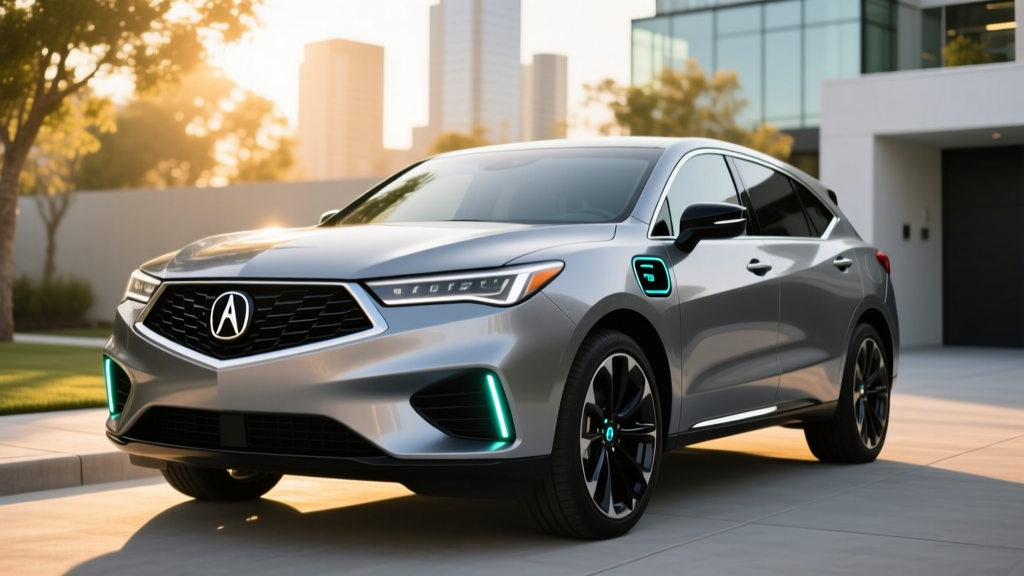
Searches for the Acura ZDX hybrid have surged as buyers look for a premium midsize SUV that bridges the gap between a conventional gas vehicle and a full battery-electric. But Acura's ZDX strategy for 2026 requires careful parsing: the nameplate is offered as a fully electric SUV (the ZDX EV, built on GM's Ultium platform), while Acura's hybrid technology lives in the MDX lineup. This guide clarifies exactly what's available, breaks down the powertrain specs, fuel economy, and ownership economics, and helps you determine whether a hybrid, plug-in hybrid, or full EV is the right call for your garage.
Acura's 2026 Electrified Lineup: ZDX EV vs. MDX Hybrid
Before we get into the numbers, it's essential to resolve a naming confusion. As of the 2026 model year, Acura does not sell a vehicle badged "ZDX Hybrid." Here is what the brand actually offers in the electrified midsize SUV space:
HEV vs. PHEV vs. BEV — What's the Difference?
- HEV (Hybrid Electric Vehicle): Uses a gas engine paired with a small electric motor and battery. Charges itself through regenerative braking — no plug required. Example: Acura MDX hybrid powertrain.
- PHEV (Plug-in Hybrid Electric Vehicle): Larger battery you can plug in to charge. Delivers 20–40 miles of electric-only driving before the gas engine takes over. Example: Competitors like the BMW X5 xDrive50e.
- BEV (Battery Electric Vehicle): No gas engine at all. Runs entirely on a large battery pack charged via plug. Example: Acura ZDX (all-electric, Ultium platform).
Buyers searching for an "Acura ZDX hybrid" are typically looking for one of two things: either a hybrid version of the ZDX (which doesn't currently exist) or Acura's hybrid-equipped midsize SUV, which is the MDX. Below, we cover both vehicles so you can make an informed decision.
2026 Acura ZDX (All-Electric): Specs and Range
The Acura ZDX returned in 2024 as a fully electric SUV developed in partnership with General Motors. For 2026, it continues on GM's Ultium platform with the following key specifications:
| Spec | ZDX A-Spec (RWD) | ZDX Type S (AWD) |
|---|---|---|
| Battery (usable) | ~102 kWh (NMC) | ~102 kWh (NMC) |
| EPA Range | 313 miles | 278 miles |
| Horsepower | 340 hp | 500 hp |
| 0–60 mph | ~6.0 sec | ~4.5 sec |
| Max DC Fast Charge | 190 kW | 190 kW |
| 10–80% DC Charge | ~28 min | ~28 min |
| Level 2 (AC) | 11.5 kW (~31 mi/hr) | 11.5 kW (~31 mi/hr) |
| Base MSRP | ~$65,850 | ~$74,850 |
2026 Acura MDX Hybrid: MPG and Powertrain
If you specifically want Acura hybrid technology in a three-row midsize SUV, the MDX is where that powertrain lives. The MDX uses a conventional hybrid (HEV) system — no plug required — combining a turbocharged engine with electric motors for improved fuel economy over the standard gas-only MDX.
| Metric | MDX Hybrid (EPA) | MDX Gas (EPA, AWD) |
|---|---|---|
| City MPG | ~28 mpg | 19 mpg |
| Highway MPG | ~27 mpg | 25 mpg |
| Combined MPG | ~28 mpg | 21 mpg |
| Combined HP | ~340 hp | 290 hp |
Real-world MPG: Conventional hybrids like the MDX Hybrid often exceed their EPA city rating in stop-and-go traffic, where regenerative braking and electric-motor assist do the most work. In our experience, expect 29–31 mpg in urban driving and 25–26 mpg on the highway at 70 mph. Source: fueleconomy.gov.
Charging, Battery, and Warranty
One of the most common buyer questions is about battery longevity and charging requirements. Here's how the two vehicles differ:
Hybrid & EV Battery Warranty Coverage
- Acura MDX Hybrid: Hybrid battery covered for 8 years / 100,000 miles (10 years / 150,000 miles in CARB states including CA, NY, MA, and others). Hybrid battery replacement cost estimated at $3,500–$5,500 out of warranty.
- Acura ZDX (EV): Battery warranty 8 years / 100,000 miles with a minimum 70% capacity retention threshold. Full Ultium battery replacement estimated at $12,000–$18,000 out of warranty.
Acura's hybrid battery warranty is competitive with industry norms. Most modern hybrid batteries outlast their warranty periods by a wide margin — degradation data from similar Honda/Acura hybrid systems shows less than 10% capacity loss at 150,000 miles.
Does the MDX Hybrid need to be plugged in? No. As a conventional HEV, the MDX Hybrid charges its small battery pack entirely through regenerative braking and the gas engine. You simply fuel up at any gas station.
Does the ZDX support DC fast charging? Yes. The ZDX charges at up to 190 kW on DC fast chargers, reaching 10–80% state of charge in approximately 28 minutes. Note that charging speed tapers significantly above 80% SoC to protect battery health — a full 80–100% top-off can add another 20–30 minutes.
Pricing and Tax Credit Eligibility
Pricing and incentives differ significantly between the hybrid MDX and the all-electric ZDX:
| Factor | MDX Hybrid | ZDX (EV) |
|---|---|---|
| Starting MSRP | ~$56,000 | ~$65,850 |
| Federal §30D Tax Credit | Not eligible (HEV) | Up to $7,500 (eligibility varies) |
| Point-of-Sale Transfer | N/A | Available if eligible |
| State Incentives | Varies by state | Varies by state |
-
Federal §30D EV Tax Credit Requirements (2026):
- Vehicle MSRP must not exceed $80,000 for SUVs (both ZDX trims qualify)
- Buyer modified AGI must not exceed $150,000 (single) / $300,000 (joint)
- Battery components and critical minerals must meet domestic-sourcing thresholds — verify current-year compliance on IRS.gov
- Credit can be transferred to the dealer at point of sale for an immediate price reduction
- Conventional hybrids (HEVs) like the MDX Hybrid do NOT qualify for §30D
Bottom line: The ZDX may cost more upfront, but the potential $7,500 federal credit (plus state incentives in places like California, Colorado, and New York) can narrow the gap substantially. Always confirm eligibility with a tax professional before purchase, as sourcing rules change annually.
Who Should Choose the Hybrid, the PHEV, or the Full EV?
Deciding between Acura's hybrid MDX, a competitor PHEV, and the all-electric ZDX comes down to your driving patterns, charging access, and budget:
Decision Framework
Choose the Acura MDX Hybrid if:
- You want better MPG without changing your fueling habits
- You lack access to home or workplace charging
- You regularly take long road trips and don't want to plan around chargers
- Three rows and ~$56K starting price fit your budget
Choose a competitor PHEV (e.g., BMW X5 xDrive50e, Volvo XC90 Recharge) if:
- You have home Level 2 charging and a commute under 30 miles
- You want electric-only daily driving with gas-engine backup for road trips
- You want the §30D tax credit but aren't ready for a full EV
Choose the Acura ZDX (EV) if:
- You have reliable home charging (Level 2 strongly recommended)
- Your daily driving is under 250 miles and you can plan road-trip charging
- You want zero tailpipe emissions and the lowest per-mile fuel cost
- You qualify for the federal and/or state EV incentives
Reliability and Long-Term Ownership Costs
Acura benefits from Honda's deep hybrid engineering experience — the MDX Hybrid's powertrain shares architecture with systems that have proven durable over hundreds of thousands of miles in the Accord Hybrid and CR-V Hybrid. The ZDX, being newer and built on GM's Ultium platform, has less long-term data, but early reliability indicators are positive and the battery warranty provides a strong safety net.
For total cost of ownership, the ZDX EV has the advantage on fuel: at a national average electricity cost of $0.17/kWh and efficiency of ~2.0 miles/kWh, you'll spend roughly $0.085 per mile on energy. The MDX Hybrid at 28 mpg combined and $3.40/gallon gasoline costs about $0.12 per mile. Over 5 years and 75,000 miles, that's a savings of approximately $2,600 on energy alone with the ZDX — and significantly more if you charge primarily on off-peak home electricity rates.
Pros
- MDX Hybrid: No plug needed, great city MPG, three rows
- ZDX EV: 313-mile range, fast DC charging, premium tech
- Strong battery warranties on both (8yr/100k minimum)
- ZDX eligible for up to $7,500 federal credit
- Hybrid reliability backed by Honda engineering legacy
Cons
- No Acura-badged PHEV available in 2026
- ZDX EV requires home charging investment ($500–$2,000 install)
- MDX Hybrid doesn't qualify for federal EV tax credit
- ZDX real-world highway range ~15% below EPA sticker
- ZDX starts ~$10K higher than MDX Hybrid
Frequently Asked Questions
How many MPG does the Acura hybrid get?
The 2026 Acura MDX Hybrid (the brand's hybrid SUV offering) achieves an EPA-estimated ~28 mpg combined (28 city / 27 highway). Real-world city driving often yields 29–31 mpg thanks to regenerative braking in stop-and-go traffic. Note: the Acura ZDX is a full EV and does not use gasoline — it achieves approximately 89 MPGe combined.
Is there an Acura ZDX hybrid or plug-in hybrid?
No. As of the 2026 model year, the Acura ZDX is offered exclusively as a battery-electric vehicle (BEV). Acura does not currently produce a plug-in hybrid (PHEV) under any nameplate. If you want an Acura hybrid, the MDX Hybrid is the option; if you want a PHEV, you'll need to look at competitors like the BMW X5 xDrive50e or Volvo XC90 Recharge.
Does the Acura hybrid or ZDX qualify for a tax credit?
The MDX Hybrid does not qualify for the federal §30D clean vehicle credit — that credit is reserved for plug-in vehicles (PHEVs and BEVs). The ZDX EV may qualify for up to $7,500 depending on your income, the vehicle's MSRP (must be under $80K for SUVs), and current-year battery sourcing requirements. Check IRS.gov for the latest eligibility details and consult a tax professional.
Is the Acura hybrid battery reliable and what does replacement cost?
Acura (and parent company Honda) hybrid systems have a strong reliability track record. The MDX Hybrid battery is warranted for 8 years/100,000 miles (10 years/150,000 miles in CARB states). Out-of-warranty replacement is estimated at $3,500–$5,500. Industry data suggests modern hybrid batteries frequently last 150,000+ miles with minimal degradation. The ZDX EV battery carries the same 8yr/100k warranty with a 70% capacity retention guarantee.
Hybrid vs. PHEV vs. EV — which Acura is right for me?
If you can't charge at home and want simplicity, the MDX Hybrid (HEV) is the right call. If you want electric-only commuting but need gas-engine flexibility and Acura doesn't offer a PHEV, consider a competitor. If you have home charging, a mostly predictable schedule, and want the lowest running costs, the ZDX EV delivers 313 miles of range and the best per-mile energy cost — especially with tax credits applied.
How long does it take to charge the Acura ZDX?
On a Level 2 home charger (11.5 kW), the ZDX adds roughly 31 miles of range per hour, reaching a full charge from empty in approximately 10 hours. On a DC fast charger at 190 kW, the ZDX charges from 10–80% in about 28 minutes. Charging above 80% slows significantly to protect the battery — plan for an additional 20–30 minutes if you need a full 100% charge.
Sources: EPA Fuel Economy (fueleconomy.gov), IRS Clean Vehicle Credits, Acura Newsroom specifications. Pricing and credit eligibility reflect 2026 model year data and are subject to change. Verify all figures with your dealer and tax professional before purchase.