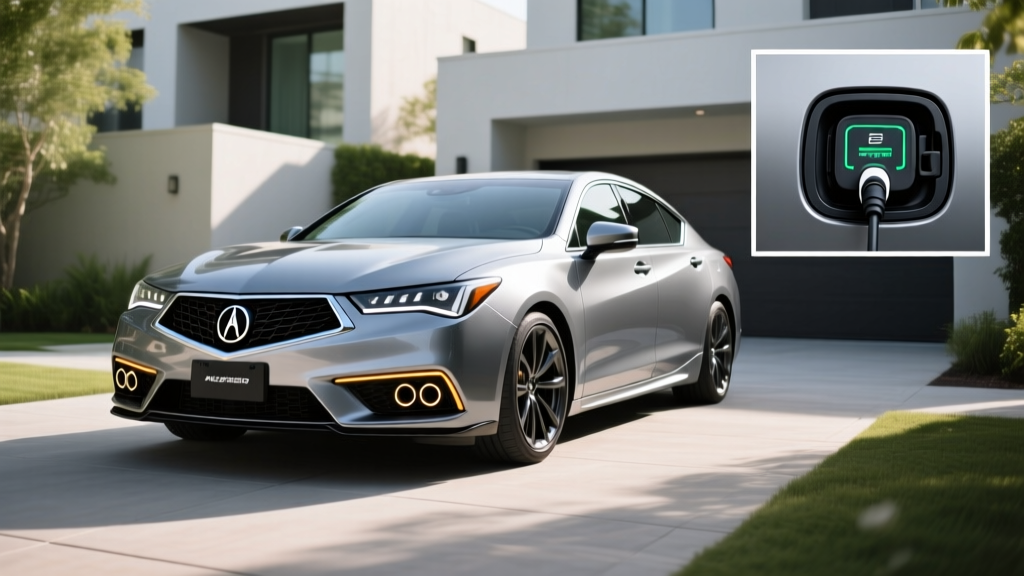
The Acura RLX Sport Hybrid occupies a strange space in the luxury sedan market. It's a flagship that never quite found its audience during its production run, yet its powertrain technology — a 3.5-liter V6 paired with three electric motors and Super Handling All-Wheel Drive (SH-AWD) — remains one of the most sophisticated hybrid setups Honda has ever built. If you're researching the hybrid RLX on the used market in 2026, or comparing it to current hybrid sedans, this guide breaks down exactly what you're getting.
Before we dig in, a critical distinction: the RLX was sold in two forms — a conventional V6 (non-hybrid, FWD) and the RLX Sport Hybrid SH-AWD, which is a conventional hybrid (HEV). It is not a plug-in hybrid. You never plug it in. The battery charges through regenerative braking and engine power. This matters because it affects everything from your daily routine to tax credit eligibility.
HEV vs PHEV: Where the RLX Sport Hybrid Fits
Conventional Hybrid (HEV) — RLX Sport Hybrid
- No plug-in required — charges via regen and engine
- Small battery (~1.3 kWh usable)
- Electric motors assist the gas engine; very limited electric-only driving at low speeds
- No federal EV tax credit (§30D does not apply)
- Fuel economy advantage: 28 MPG combined vs 23 MPG for the non-hybrid V6 RLX
Plug-In Hybrid (PHEV) — e.g., BMW 530e, Chrysler Pacifica PHEV
- Plugs into Level 1 or Level 2 charger
- Larger battery (typically 12–25 kWh)
- 20–40 miles of pure electric range before the engine starts
- May qualify for up to $7,500 federal tax credit (§30D) if MSRP, income, and battery-sourcing rules are met
- Higher upfront cost but lower per-mile cost on short trips
The RLX Sport Hybrid is firmly in the HEV camp. Think of it as a more powerful, more efficient version of the standard RLX — not as a stepping stone to full electric driving.
Fuel Economy: EPA Numbers and Real-World MPG
| Configuration | City | Highway | Combined |
|---|---|---|---|
| RLX Sport Hybrid SH-AWD (HEV) | 28 MPG | 29 MPG | 28 MPG |
| RLX V6 FWD (non-hybrid) | 20 MPG | 29 MPG | 23 MPG |
| RLX Sport Hybrid — real-world estimate (mixed driving) | 26–30 MPG | ||
| RLX Sport Hybrid — real-world estimate (highway-heavy, 75+ mph) | 24–27 MPG | ||
Source: EPA Fuel Economy
Like most conventional hybrids, the RLX Sport Hybrid tends to match or slightly exceed its EPA city rating in stop-and-go traffic, where regenerative braking does the heavy lifting. Highway driving at sustained speeds is where the advantage narrows — the V6 is still doing most of the work, and the AWD system adds mechanical drag. On a 300-mile highway trip at 75 mph, expect closer to 25–27 MPG.
Compared to the non-hybrid RLX, the Sport Hybrid's 5 MPG combined advantage translates to roughly 75 fewer gallons per year at 15,000 miles driven annually — about $250–$300 in fuel savings depending on local gas prices.
Powertrain: 377 HP and Three-Motor SH-AWD
| Specification | Detail |
|---|---|
| Engine | 3.5L V6, direct injection, i-VTEC |
| Engine output | 310 hp @ 6,500 rpm / 272 lb-ft torque |
| Electric motors | 3 total — 1 front-mounted (47 hp), 2 rear-mounted (36 hp each) |
| Combined system output | 377 hp |
| Transmission | 7-speed dual-clutch automatic (DCT) with Sport mode |
| Drivetrain | SH-AWD (torque-vectoring rear axle) |
| 0–60 mph | ~5.2 seconds |
| Battery type | Lithium-ion, ~1.3 kWh usable |
| Curb weight | ~4,380 lbs |
This is where the hybrid RLX earns its "Sport" badge. The twin rear motors don't just add power — they enable true torque vectoring. In aggressive cornering, the system can send up to 100% of available rear-axle torque to the outside rear wheel, effectively rotating the car through turns. It's the same philosophy behind the NSX's hybrid AWD, scaled for a luxury sedan.
The 7-speed dual-clutch transmission is a notable choice. Most hybrids use CVTs or planetary gearsets (like Toyota's e-CVT). Acura's DCT delivers sharper shifts and a more connected feel, though some owners report low-speed hesitation in stop-and-go traffic — a known characteristic of early dual-clutch implementations in hybrid applications.
Battery Warranty, Lifespan, and Replacement Cost
RLX Sport Hybrid Battery Coverage
- Hybrid battery warranty: 8 years / 100,000 miles (10 years / 150,000 miles in CARB states including CA, NY, MA, CT, and others)
- Powertrain warranty: 6 years / 70,000 miles
- Battery chemistry: Lithium-ion (not LFP)
- Expected lifespan: 150,000–200,000+ miles with normal use, based on Honda/Acura hybrid fleet data
Honda's hybrid battery track record is strong. The first-generation Insight and Civic Hybrid batteries showed degradation issues, but the lithium-ion packs used in later vehicles (including the RLX Sport Hybrid) have proven far more durable. The RLX's relatively small battery pack (~1.3 kWh) operates in a narrow state-of-charge window — the car's management system never fully charges or fully depletes it — which dramatically reduces cycle wear.
If the battery does need replacement outside of warranty, expect a cost in the range of $2,000–$4,000 for a refurbished or aftermarket pack, or $4,000–$6,000+ for a new OEM unit from Acura. Independent hybrid-battery specialists often offer reconditioned units at lower cost. Given the RLX's production ended with the 2020 model year, most examples on the used market in 2026 will have significant original warranty remaining only if mileage is low — verify CARB-state eligibility for the extended 10-year coverage.
Pricing and Tax Credit Eligibility
The RLX Sport Hybrid was discontinued after the 2020 model year. New MSRP for the 2020 RLX Sport Hybrid SH-AWD was approximately $58,025 (including destination). In the 2026 used market, expect pricing in these ranges:
| Condition / Mileage | Approximate 2026 Used Price |
|---|---|
| Low mileage (<30k), excellent condition | $32,000–$38,000 |
| Average mileage (40k–70k), good condition | $24,000–$32,000 |
| Higher mileage (80k+), fair condition | $18,000–$24,000 |
Tax credit reality check: The RLX Sport Hybrid does not qualify for the federal §30D clean vehicle tax credit. That credit applies to new plug-in electric vehicles (BEVs and PHEVs) meeting specific battery-sourcing, critical-mineral, MSRP cap ($55,000 for sedans), and buyer income requirements. As a conventional hybrid (HEV) — and as a used, discontinued model — the RLX is ineligible. Check IRS §30D guidelines for current rules on qualifying vehicles.
Some states offer modest incentives for used hybrids or efficient vehicles, but these vary significantly by jurisdiction. Consult your state's energy office or a tax professional for specifics.
Hybrid RLX vs. Full EV vs. Gas Sedan: Which Is Right for You?
Choose the Hybrid RLX If:
- You want AWD luxury sedan performance without plugging in
- You drive a mix of city and highway and want ~28 MPG without behavior changes
- You value the SH-AWD torque-vectoring system for all-weather confidence
- You want a V6's power (377 hp) without the V6 fuel penalty
- You lack access to home or workplace charging
Consider a Full EV or PHEV Instead If:
- You have home Level 2 charging and a short commute (a PHEV like the BMW 530e or a BEV like the BMW i5 eliminates most gas use)
- You want federal tax credit eligibility (up to $7,500 on qualifying new BEVs/PHEVs)
- You prioritize lowest per-mile energy cost (electricity at ~$0.04–$0.06/mile vs. gas at ~$0.12–$0.16/mile)
- You want the latest ADAS, infotainment, and over-the-air updates (the RLX's tech is 2020-era)
The RLX Sport Hybrid makes the most sense for buyers who want a depreciated luxury flagship with a unique powertrain, strong reliability pedigree, and no charging logistics. It's a used-market value play, not a technology-leader play in 2026.
Reliability and Ownership Considerations
Acura's reliability reputation is anchored in Honda's engineering conservatism, and the RLX Sport Hybrid benefits from that. The 3.5L V6 (J35 series) is one of the most proven engines in Honda's history. The hybrid system adds complexity, but Honda's IMA and later Sport Hybrid systems have demonstrated solid longevity in fleet data.
Key ownership notes for the hybrid RLX:
- DCT maintenance: The 7-speed dual-clutch transmission should have fluid serviced per Acura's maintenance schedule. Neglected DCT fluid can lead to shudder or premature wear.
- SH-AWD rear differential: The twin rear motor/differential unit is unique to this platform. Ensure any pre-purchase inspection includes a check of the rear drive unit fluid and operation.
- Parts availability: As a low-volume, discontinued model, some body panels and hybrid-specific components may require longer sourcing times. Mechanical parts shared with other Honda/Acura V6 models remain readily available.
- Insurance: Expect premiums in line with other V6 AWD luxury sedans. The RLX's low theft rate and modest repair frequency work in your favor.
Frequently Asked Questions
How many MPG does the Acura RLX Sport Hybrid get?
The EPA rates the RLX Sport Hybrid SH-AWD at 28 city / 29 highway / 28 combined MPG. Real-world results typically range from 26–30 MPG depending on driving style and conditions. Highway-heavy driving at speeds above 75 mph may drop to 24–27 MPG.
Is the RLX Sport Hybrid a plug-in hybrid?
No. The RLX Sport Hybrid is a conventional hybrid (HEV). It has a small lithium-ion battery that charges through regenerative braking and the gas engine. There is no plug, no charging port, and no meaningful electric-only range. You fuel it like any other car.
Does the Acura RLX Hybrid qualify for any tax credit?
No. The federal §30D clean vehicle tax credit applies only to new plug-in electric vehicles (BEVs and PHEVs) that meet battery-sourcing, MSRP, and income requirements. The RLX Sport Hybrid is a conventional hybrid and was discontinued after 2020, making it ineligible for federal EV credits. State incentives vary — check your local regulations.
How long will the RLX hybrid battery last, and what does replacement cost?
Honda/Acura hybrid lithium-ion batteries typically last 150,000–200,000+ miles under normal use. The RLX Sport Hybrid battery is covered by an 8-year/100,000-mile warranty (10 years/150,000 miles in CARB states). Out-of-warranty replacement costs range from approximately $2,000–$4,000 (refurbished) to $4,000–$6,000+ (new OEM).
Should I buy the hybrid RLX or a newer hybrid sedan?
The RLX Sport Hybrid offers 377 hp, SH-AWD, and a compelling luxury experience at a steep discount from its original MSRP. However, its infotainment and driver-assistance technology are dated compared to 2025–2026 competitors. If you prioritize value and driving dynamics, the RLX is strong. If you want current tech, better fuel economy, or plug-in capability, consider newer options like the Toyota Crown Hybrid, BMW 530e PHEV, or Genesis Electrified G80.
Is the RLX Sport Hybrid reliable?
Yes. The RLX Sport Hybrid uses a proven J35 V6 engine and Honda's Sport Hybrid system, both of which have demonstrated strong reliability. The main risk factors are DCT maintenance neglect and the low-volume platform's parts availability for body and hybrid-specific components. A thorough pre-purchase inspection is recommended for any used example.