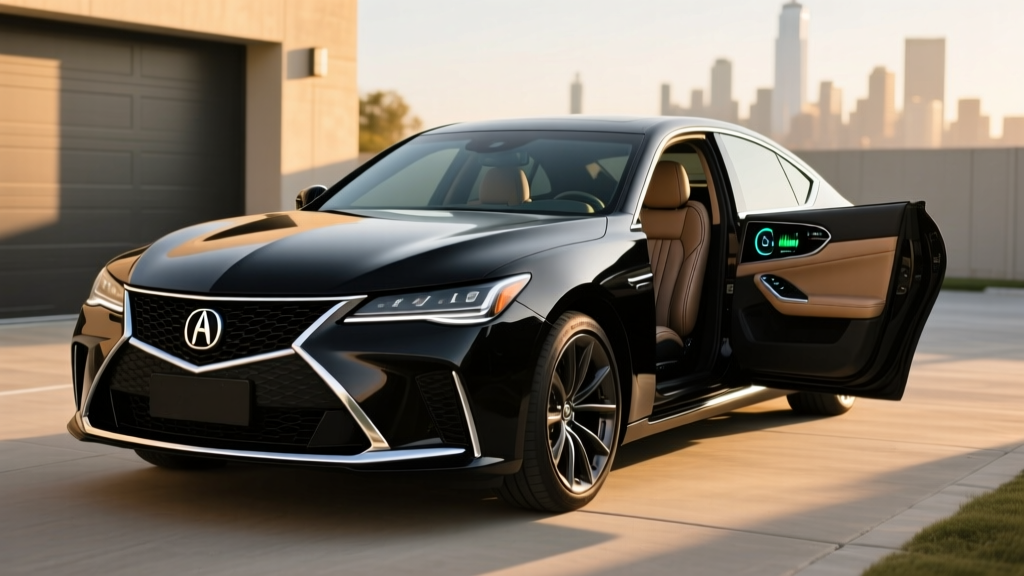
The Acura RLX Sport Hybrid occupies a strange corner of the luxury sedan market: a 377-horsepower, three-motor V6 hybrid that was discontinued after the 2020 model year yet continues to draw roughly 1,900 monthly searches from buyers hunting for a reliable, high-performance electrified sedan on the used market. If you are evaluating an Acura RLX Sport Hybrid in 2026, you are almost certainly looking at a pre-owned example — and that changes the buying calculus significantly compared to shopping for a new electrified vehicle.
This guide covers every number that matters: real-world MPG versus the EPA sticker, the Sport Hybrid SH-AWD powertrain breakdown, battery longevity and replacement cost, and how this car stacks up against a modern PHEV or full EV for your next purchase.
What the Acura RLX Sport Hybrid Actually Is (HEV, Not PHEV)
Before we get into specs, let's eliminate the most common confusion. The Acura RLX Sport Hybrid is a conventional hybrid electric vehicle (HEV). It cannot be plugged in. It has no electric-only driving range. It recovers energy through regenerative braking and its gasoline engine, storing that energy in a small lithium-ion battery pack that powers three electric motors integrated into the drivetrain.
HEV vs PHEV: Which Is the RLX?
| Feature | Conventional Hybrid (HEV) | Plug-In Hybrid (PHEV) |
|---|---|---|
| Plugs in to charge? | No | Yes |
| Electric-only range | None (motor assists engine) | Typically 20–50 miles |
| Battery size | Small (~1–2 kWh) | Larger (~10–25 kWh) |
| Federal tax credit (§30D) | No | Up to $7,500 (if eligible) |
| Acura RLX Sport Hybrid | ✓ This car | — |
The RLX Sport Hybrid uses its electric motors for performance and all-wheel-drive torque vectoring, not for standalone electric driving.
If you want plug-in capability from Honda's luxury division, you would need to look at a different model entirely — the RLX was never offered as a PHEV in the United States.
Powertrain: 377 HP and 3-Motor SH-AWD
The RLX Sport Hybrid's powertrain is genuinely one of the most sophisticated hybrid systems Honda has ever built. Here is the complete breakdown:
| Specification | Detail |
|---|---|
| Engine | 3.5L V6 i-VTEC direct injection |
| Engine output | 310 HP @ 6,500 RPM / 272 lb-ft torque |
| Front electric motor | 47 HP (35 kW), integrated with 7-speed DCT |
| Rear electric motors (twin) | 36 HP (27 kW) each — one per rear wheel |
| Combined system output | 377 HP |
| Transmission | 7-speed dual-clutch automatic (DCT) |
| Drivetrain | Sport Hybrid SH-AWD (torque-vectoring AWD) |
| Hybrid battery | Lithium-ion, ~1.3 kWh (estimated) |
| 0–60 mph | ~4.9 seconds |
| Curb weight | ~4,380 lbs |
The twin rear motors are the engineering highlight. They can independently apply positive or negative torque to each rear wheel, which means the car can literally push the outside rear wheel harder through a corner while regenerating on the inside wheel. This is torque vectoring done through electric motors rather than a mechanical limited-slip differential, and it gives the RLX Sport Hybrid handling composure that belies its 4,380-pound curb weight.
EPA Fuel Economy and Real-World MPG
For a 377-horsepower luxury sedan, the fuel economy numbers are genuinely impressive — though context matters.
| Driving Cycle | EPA Rating | Real-World Expectation |
|---|---|---|
| City | 28 MPG | 27–30 MPG |
| Highway | 29 MPG | 26–28 MPG |
| Combined | 28 MPG | 26–29 MPG |
Per fueleconomy.gov, the RLX Sport Hybrid achieves 28/29/28 MPG city/highway/combined. That is remarkable for a car with this much power and all-wheel drive. For comparison, the contemporaneous BMW 540i xDrive (non-hybrid) was rated at 23/31/26 MPG.
Real-world caveat: Hybrids tend to meet or slightly exceed their EPA city rating because stop-and-go driving maximizes regenerative braking. Highway driving is where you may see a slight dip — at sustained 75–80 mph speeds, the electric motors contribute less and the V6 does more of the work. Expect 26–28 MPG on long highway trips and 28–30 MPG in mixed suburban commuting. Cold weather will reduce efficiency by roughly 5–10% due to increased engine load for cabin heating and reduced battery efficiency.
With a 17.2-gallon fuel tank, total range is approximately 480 miles on a full tank under combined driving conditions.
Battery Longevity, Warranty, and Replacement Cost
This is the number-one concern for anyone buying a used hybrid, and it deserves detailed attention.
Hybrid Battery Warranty & Lifespan
- Original warranty: 8 years / 80,000 miles (10 years / 150,000 miles in CARB states including CA, NY, MA, and others)
- Real-world lifespan: Honda/Acura hybrid batteries commonly last 150,000–200,000+ miles with normal use
- Replacement cost (2026 estimate): $2,500–$4,500 for a refurbished or aftermarket pack; $5,000–$7,000+ for a new OEM pack from Acura
- Warranty status in 2026: Most 2014–2020 RLX Sport Hybrids are now outside the original 8-year battery warranty window
The RLX Sport Hybrid uses a relatively small lithium-ion pack (approximately 1.3 kWh). Because the battery is small and the system never deeply cycles it (Honda's hybrid management keeps the state of charge in a narrow band to maximize longevity), degradation is typically slow. The three-motor SH-AWD system is more of a longevity concern than the battery itself — the twin rear motors and the 7-speed DCT are complex components, and DCT clutch wear can become noticeable above 100,000 miles.
If you are shopping for a used RLX Sport Hybrid in 2026, request a pre-purchase inspection that specifically includes hybrid system diagnostics. A dealer or qualified independent shop can pull the battery's state-of-health (SoH) data and check for any stored hybrid system fault codes. This is a $150–$250 investment that can save you thousands.
Pricing in 2026: Used Market and Tax Credit Reality
Since the Acura RLX was discontinued after the 2020 model year, there is no new-vehicle MSRP to discuss. Here is where the used market sits in early 2026:
| Model Year | Mileage Range | Typical Price (2026) |
|---|---|---|
| 2014–2016 (early Sport Hybrid) | 80,000–130,000 mi | $16,000–$22,000 |
| 2017–2018 (refresh) | 60,000–100,000 mi | $21,000–$28,000 |
| 2019–2020 (final years) | 30,000–70,000 mi | $27,000–$35,000 |
Federal Tax Credit Eligibility
The RLX Sport Hybrid does not qualify for the federal §30D new clean vehicle credit — it is a conventional HEV, not a PHEV or BEV, and it is no longer sold new.
However, if you purchase a used RLX Sport Hybrid from a dealer for $25,000 or less, you may qualify for the Used Clean Vehicle Credit (§25E), which provides up to $4,000 (30% of the sale price, capped at $4,000). Key requirements per IRS guidelines:
- Vehicle must be purchased from a licensed dealer (private-party sales do not qualify)
- Sale price must be $25,000 or less
- Buyer adjusted gross income: ≤$75,000 single / $112,500 head of household / $150,000 joint
- Vehicle must be at least 2 model years old (all RLX examples qualify)
- Credit is non-refundable — you must have tax liability to use it
- Each vehicle can only receive the used credit once every 3 years
Practical reality: Finding a 2019–2020 RLX Sport Hybrid under $25,000 is difficult in the current market. Your best shot at the used credit is a higher-mileage 2014–2017 example from a participating dealer. Consult a tax professional to confirm eligibility for your specific situation.
RLX Sport Hybrid vs. Modern Alternatives: Which Fits You?
If you are cross-shopping the used RLX Sport Hybrid against new electrified vehicles, here is the decision framework:
Choose the Acura RLX Sport Hybrid if:
- You want a 377-HP luxury sedan for under $30,000
- You cannot charge at home (no garage, apartment living, no outlet access)
- You value Honda/Acura reliability and want a proven V6 hybrid powertrain
- Your daily commute is moderate (20–50 miles) and you take regular road trips
- You want torque-vectoring AWD for spirited driving in rain or snow
Choose a Modern PHEV (e.g., Toyota Crown, BMW 550e) if:
- You can install a Level 2 home charger and want 30–40 miles of electric-only commuting
- You want current-year warranty coverage and the latest ADAS technology
- You want to qualify for the §30D federal tax credit (up to $7,500 on eligible new PHEVs)
- Fuel cost minimization is your top priority
Choose a Full EV (e.g., Tesla Model S, Lucid Air, BMW i5) if:
- You have reliable home charging access
- You want the lowest per-mile fuel cost and minimal maintenance
- You are ready to plan around DC fast charging on road trips
- You want a new vehicle with full warranty and the latest technology
The RLX Sport Hybrid's strongest argument in 2026 is value: there are very few ways to get 377 horsepower, genuine all-wheel drive, 28 MPG combined, and Acura's build quality for under $30,000. Its weakest argument is technology — a 2014–2020 infotainment system, older ADAS suite (AcuraWatch is functional but dated compared to 2026 systems), and no plug-in capability.
Pros and Cons at a Glance
Pros
- 377 HP with 28 MPG combined — exceptional power-to-efficiency ratio
- Sport Hybrid SH-AWD provides genuine performance handling, not just traction
- Honda/Acura reliability reputation; V6 hybrid system is well-proven
- Spacious cabin with premium materials (leather, ELS audio, ventilated seats)
- Strong value on the used market vs. comparable German sedans
- No plug-in required — works with any lifestyle or housing situation
Cons
- Discontinued after 2020 — no new examples, aging tech platform
- 7-speed DCT can be jerky at low speeds and is costly to replace
- Infotainment is dated (dual-screen setup, no wireless CarPlay on earlier years)
- Most examples are outside original hybrid battery warranty
- No electric-only driving; cannot access HOV lane perks or §30D new-vehicle credit
- Rear visibility is compromised by the trunk-mounted battery/motor hardware
- Limited dealer inventory — finding a clean example requires patience
Ownership Costs: 5-Year Projection
Assuming a 2018 RLX Sport Hybrid purchased for $25,000 with 70,000 miles, driven 12,000 miles/year at $3.40/gallon average fuel cost:
| Category | 5-Year Estimate |
|---|---|
| Fuel (60,000 mi @ 28 MPG) | $7,286 |
| Insurance (avg. luxury sedan) | $9,000–$12,000 |
| Maintenance (tires, brakes, fluids, DCT service) | $3,500–$5,500 |
| Depreciation (est. resale at 130K mi) | $8,000–$11,000 |
| Total estimated 5-year cost | $27,786–$35,786 |
For comparison, a new 2026 BMW 530i xDrive (non-hybrid, ~270 HP, 27 MPG combined) with an MSRP around $62,000 will cost roughly $45,000–$55,000 over five years including depreciation. The used RLX Sport Hybrid wins on total cost by a wide margin, though you accept higher maintenance risk and older technology in exchange.
Frequently Asked Questions
How many MPG does the Acura RLX Sport Hybrid get?
The EPA rates the RLX Sport Hybrid at 28 MPG city, 29 MPG highway, and 28 MPG combined. In real-world driving, owners typically report 26–30 MPG depending on driving style and conditions. City driving often matches or slightly exceeds the EPA rating thanks to regenerative braking, while sustained highway speeds above 75 mph may yield 26–28 MPG.
Can the RLX Sport Hybrid drive on electric power only?
No. The RLX Sport Hybrid is a conventional HEV, not a plug-in hybrid. Its electric motors assist the V6 engine and provide torque-vectoring all-wheel drive, but the car cannot drive on electric power alone for any meaningful distance. The battery is too small (~1.3 kWh) and is recharged exclusively through regenerative braking and the gasoline engine.
Is the Acura RLX Sport Hybrid reliable?
The V6 engine and hybrid system are based on Honda's well-proven hybrid architecture and are generally reliable. The main risk areas on higher-mileage examples are the 7-speed dual-clutch transmission (which can develop shudder or clutch wear above 100,000 miles) and the twin rear electric motors. The hybrid battery itself tends to last 150,000–200,000+ miles. A pre-purchase hybrid system inspection is strongly recommended for any used example.
What does it cost to replace the RLX Sport Hybrid battery?
As of 2026, expect to pay $2,500–$4,500 for a refurbished or aftermarket hybrid battery pack, or $5,000–$7,000+ for a new OEM pack through an Acura dealer. Given that the battery typically lasts well beyond 150,000 miles, many owners will never need a replacement. The original 8-year/80,000-mile hybrid battery warranty has expired on most examples by 2026.
Does the Acura RLX Sport Hybrid qualify for any tax credit?
It does not qualify for the §30D new clean vehicle credit (it is an HEV, not a PHEV or BEV, and is no longer sold new). However, if you find a used RLX Sport Hybrid priced at $25,000 or less from a licensed dealer, you may qualify for the §25E Used Clean Vehicle Credit — up to $4,000, subject to income limits. Check current rules at IRS.gov and consult a tax professional.
How does the RLX Sport Hybrid compare to the non-hybrid RLX?
The standard RLX used a 3.5L V6 with front-wheel drive and a conventional 10-speed automatic, rated at 310 HP and 24 MPG combined. The Sport Hybrid adds 67 net horsepower, all-wheel drive with torque vectoring, and a 4 MPG improvement in combined driving (28 vs. 24). The Sport Hybrid is the more engaging and more efficient choice, though it adds roughly 200 pounds of weight and mechanical complexity.
Should I buy an RLX Sport Hybrid or a modern hybrid sedan?
If your budget is under $30,000 and you want a luxury V6 sedan with strong performance and hybrid efficiency, the used RLX Sport Hybrid is difficult to beat on value. If you want plug-in capability, the latest safety tech, new-car warranty coverage, and eligibility for federal tax credits, look at a new PHEV like the Toyota Crown, Lexus ES 300h (HEV), or BMW 550e xDrive (PHEV). The right answer depends on your budget, charging access, and how much you value modern technology versus depreciation-smart used-car value.
Sources: EPA fuel economy data via fueleconomy.gov; IRS tax credit guidelines via irs.gov. Used-market pricing reflects aggregated listing data as of early 2026 and varies by region, condition, and mileage. Always verify specific vehicle history and consult a tax professional for credit eligibility.