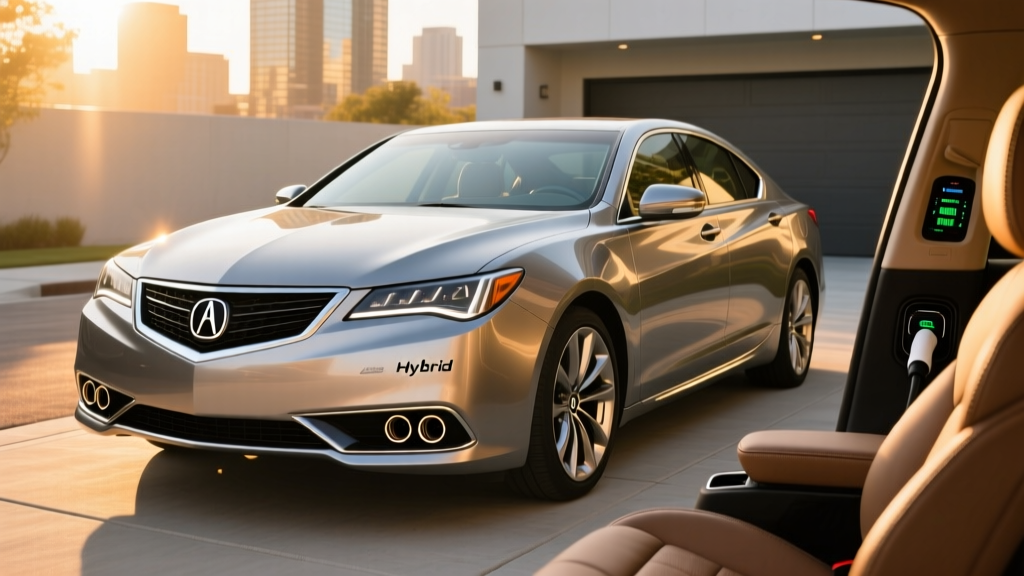
The Acura RLX Hybrid — officially the RLX Sport Hybrid SH-AWD — was Acura's flagship electrified sedan, blending a 3.5-liter V6 with three electric motors to produce 377 horsepower and all-wheel drive. Produced from 2014 through the 2020 model year (with the RLX line discontinued after 2020), this conventional hybrid (HEV) remains a compelling option on the used market for buyers who want luxury, performance, and better fuel economy without plugging in. Here's a data-driven look at what the RLX Hybrid actually delivers in 2026.
RLX Hybrid MPG: EPA Estimates and Real-World Fuel Economy
The Acura RLX Sport Hybrid SH-AWD carries EPA ratings of 28 MPG city, 29 MPG highway, and 28 MPG combined, according to fueleconomy.gov. For a 377-hp luxury sedan with all-wheel drive, those figures were genuinely competitive at launch and remain respectable today.
| Metric | EPA Rating |
|---|---|
| City MPG | 28 |
| Highway MPG | 29 |
| Combined MPG | 28 |
| Annual Fuel Cost (est.) | ~$2,650 |
In real-world driving, the RLX Hybrid's three-motor system excels in stop-and-go city traffic, where regenerative braking and electric-only low-speed operation can push observed economy to 29–31 MPG. Highway cruising at 75+ MPH tends to drop to 25–27 MPG — the added weight of the hybrid system (curb weight exceeds 4,300 lbs) works against it at sustained high speeds. Cold weather typically reduces observed MPG by 2–3 MPG due to reduced battery efficiency and increased engine load for cabin heat.
HEV vs PHEV vs EV: Where the RLX Hybrid Fits
The RLX is a conventional hybrid (HEV), not a plug-in hybrid (PHEV). This is a critical distinction many shoppers confuse:
Conventional Hybrid (HEV) — RLX Sport Hybrid
- No plug required. The battery recharges via regenerative braking and the gasoline engine.
- No electric-only range to speak of. The small hybrid battery assists the engine but cannot propel the car on electricity alone for meaningful distances.
- No federal tax credit. The §30D federal EV credit applies only to plug-in vehicles (BEVs and PHEVs with ≥7 kWh batteries).
- Lower complexity. No home charging installation needed; fuel up at any gas station.
Plug-in Hybrid (PHEV)
- Requires plugging in to access electric-only range (typically 20–45 miles).
- Larger battery (typically 10–25 kWh); may qualify for federal tax credits.
- More complex; benefits most from home Level 2 charging access.
Battery Electric Vehicle (BEV)
- Zero gasoline; 200–400+ miles of EPA range.
- Requires reliable charging access (home or public).
- Eligible for up to $7,500 federal tax credit (subject to MSRP, income, and sourcing rules per IRS §30D).
Bottom line: The RLX Hybrid is ideal if you want improved fuel economy and performance without changing your refueling habits. You never plug it in — just drive and let the hybrid system do its work.
Powertrain Deep Dive: 377 HP and Three-Motor SH-AWD
| Spec | Value |
|---|---|
| Engine | 3.5L V6 (i-VTEC direct injection) |
| Engine Output | 310 hp / 272 lb-ft |
| Front Electric Motor | 47 hp (integrated into 7-speed DCT) |
| Rear Electric Motors (twin) | 36 hp each (one per rear wheel) |
| Combined System Output | 377 hp |
| Transmission | 7-speed dual-clutch automatic |
| Drivetrain | Sport Hybrid SH-AWD (torque-vectoring rear axle) |
| 0–60 MPH | ~5.1 seconds |
| Hybrid Battery | ~1.3 kWh lithium-ion (not plug-in) |
Acura's Sport Hybrid SH-AWD (Super Handling All-Wheel Drive) is one of the most sophisticated hybrid drivetrains of its era. The twin rear motors don't just add power — they torque-vector independently, sending more torque to the outside rear wheel in corners to actively rotate the car. This gives the RLX Hybrid genuinely sporty handling that belies its 4,300+ lb curb weight.
The 7-speed dual-clutch transmission is a differentiator from the CVTs found in most hybrids (Toyota, Honda's non-performance models). Shifts are crisp and direct, though early-model-year (2014–2015) units had some reported jerkiness at low speeds that Acura addressed with software updates in later years.
Battery Warranty, Lifespan, and Replacement Cost
Acura RLX Hybrid Battery Warranty
- Original coverage: 8 years / 100,000 miles (10 years / 150,000 miles in CARB states including CA, NY, MA, and others)
- Capacity threshold: Warranty covers defects and significant capacity loss; exact threshold varies but generally below 60–70% state of health
- Replacement cost (out of warranty): $3,000–$5,000 for the hybrid battery pack (dealer); $1,500–$2,500 from independent hybrid specialists
For used buyers in 2026, the original 8-year/100,000-mile warranty has expired on most RLX Hybrid examples (the newest are 2020 models, now 6 years old). However, Honda/Acura hybrid batteries have a strong longevity track record. Real-world data from similar Honda/Acura hybrid systems (the RLX shares architecture with the NSX and Accord Hybrid) shows most packs retain 85–90%+ capacity at 100,000 miles.
Key reliability considerations for used RLX Hybrids:
- Battery health check: Have a dealer or hybrid specialist run a state-of-health (SoH) diagnostic before purchase. This takes ~30 minutes and costs $100–$150.
- 12V auxiliary battery: Like all hybrids, the RLX has a separate 12V battery for electronics. These typically need replacement every 4–5 years (~$200–$300).
- Hybrid system cooling: Keep the rear-mounted hybrid battery cooling fan and vents clean; blocked airflow accelerates degradation.
- 7-speed DCT: Verify smooth low-speed engagement on a test drive; shuddering may indicate clutch wear or outdated software.
Independent hybrid repair shops have become increasingly capable of replacing individual cells or modules rather than the entire pack, keeping long-term ownership costs reasonable.
Pricing in 2026: Used Market Value
Since the Acura RLX was discontinued after the 2020 model year, there is no new MSRP. Used-market pricing as of early 2026:
| Model Year | Mileage Range | Typical Price |
|---|---|---|
| 2014–2015 | 80,000–120,000 mi | $14,000–$18,000 |
| 2016–2017 | 60,000–90,000 mi | $18,000–$23,000 |
| 2018–2020 (facelift) | 30,000–65,000 mi | $24,000–$32,000 |
The 2018+ facelift models (distinguished by the diamond pentagon grille and updated infotainment with Apple CarPlay/Android Auto) command a premium and are generally the better buy for long-term ownership.
Tax Credit Eligibility
The RLX Hybrid does not qualify for the federal §30D clean vehicle tax credit. That credit requires a plug-in vehicle with a battery capacity of at least 7 kWh. The RLX's ~1.3 kWh hybrid battery falls far below this threshold, and as a conventional HEV, it cannot be plugged in. No state-level hybrid-specific incentives remain active for conventional hybrids in most jurisdictions as of 2026, though check your state's energy office for any local programs.
RLX Hybrid vs Alternatives: What Should You Actually Buy?
Pros
- 377 hp with genuine sport handling via torque-vectoring SH-AWD
- 28 MPG combined is strong for a V6 AWD luxury sedan
- No plug-in required — zero lifestyle change from a gas car
- Honda/Acura reliability pedigree; strong hybrid system durability
- Spacious cabin with premium materials (especially 2018+ models)
- Depreciated pricing offers luxury value at $20K–$30K
Cons
- Discontinued — no new models available; limited dealer support for some parts
- Infotainment feels dated even on facelift models (dual-screen setup)
- Rear-seat space is good but not class-leading vs long-wheelbase rivals
- No federal tax credit eligibility
- Hybrid battery replacement cost ($3K–$5K) as vehicles age
- Fuel economy advantage has narrowed vs newer turbo-4 hybrids
Choose the RLX Hybrid if:
- You want a fast, well-equipped luxury sedan with AWD and don't want to plug in.
- You drive a mix of city and highway and value the torque-vectoring handling.
- You're comfortable buying used and budgeting for potential hybrid battery service in 3–5 years.
Consider a PHEV or BEV instead if:
- You have home charging access and want to maximize electric driving (a BMW 330e or Toyota RAV4 Prime PHEV offers 20–42 miles electric-only).
- You want to qualify for the federal tax credit (up to $7,500 on eligible new BEVs/PHEVs per current IRS rules).
- You prefer a new vehicle with full warranty coverage.
Frequently Asked Questions
How many MPG does the Acura RLX Hybrid get?
The EPA rates the RLX Sport Hybrid SH-AWD at 28 city / 29 highway / 28 combined. Real-world city driving often yields 29–31 MPG thanks to regenerative braking; highway driving at 75+ MPH typically returns 25–27 MPG.
Does the RLX Hybrid need to be plugged in?
No. The RLX is a conventional hybrid (HEV), not a plug-in. The hybrid battery charges through regenerative braking and the gasoline engine. You fuel it exclusively at gas stations — no charging cable, no home charger installation required.
Is the Acura RLX Hybrid reliable?
Yes, generally. The RLX's hybrid powertrain shares architecture with the Acura NSX and Honda Accord Hybrid, both of which have strong longevity records. The 3.5L V6 is a proven Honda engine. Main concerns on higher-mileage examples are the 7-speed dual-clutch transmission (test for smooth low-speed engagement) and eventual hybrid battery degradation (budget $3K–$5K for replacement if needed after 120K+ miles).
What is the hybrid battery replacement cost?
A dealer replacement runs $3,000–$5,000. Independent hybrid specialists can often replace individual modules or refurbish the pack for $1,500–$2,500. Most Honda/Acura hybrid batteries last 150,000+ miles with proper cooling maintenance.
Does the RLX Hybrid qualify for any tax credit?
No. The federal §30D clean vehicle credit requires a plug-in vehicle (BEV or PHEV) with at least 7 kWh of battery capacity. The RLX's ~1.3 kWh battery and HEV architecture make it ineligible. Check your state's energy office for any local hybrid incentives, though most have shifted to plug-in vehicles.
Hybrid vs PHEV vs EV — which is right for me?
Choose a conventional hybrid (HEV) like the RLX if you want better MPG with zero lifestyle change — no plugs, no range planning. Choose a PHEV if you have home charging and want 20–45 miles of electric commuting with a gas engine for longer trips. Choose a BEV if you have reliable charging access, want zero tailpipe emissions, and are ready to go fully electric with 250–400+ miles of range.
Sources: fueleconomy.gov, IRS §30D Clean Vehicle Credits, Acura press archives.