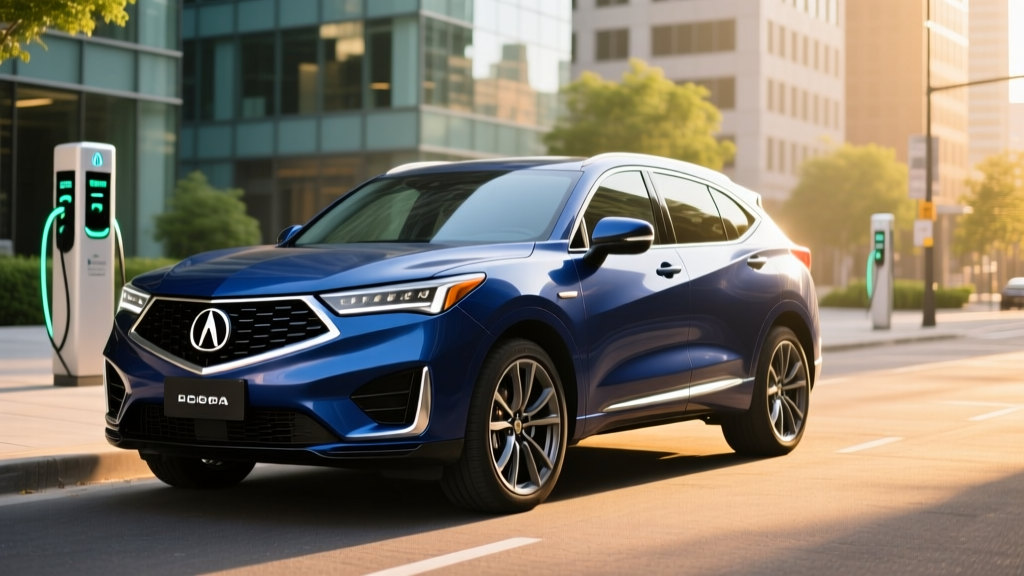
If you've been searching for a hybrid RDX, you're not alone. The Acura RDX has long been one of the best-selling compact luxury SUVs in the U.S., and buyers increasingly want electrified efficiency without giving up the turbocharged performance and premium interior they expect. For 2026, Acura continues to offer the RDX with its proven turbocharged powertrain, but the hybrid conversation around this model is more nuanced than a simple spec sheet suggests.
This guide breaks down exactly what's available, what the real-world fuel economy looks like, whether any tax credits apply, and how the RDX stacks up against plug-in hybrid and full-electric alternatives in the luxury compact SUV segment.
Is There a Hybrid Acura RDX for 2026?
As of the 2026 model year, Acura does not offer a dedicated hybrid or plug-in hybrid variant of the RDX in the United States. The RDX lineup is powered exclusively by a 2.0-liter turbocharged inline-four engine paired with a 10-speed automatic transmission and Acura's SH-AWD (Super Handling All-Wheel Drive) system.
This is a critical distinction for shoppers who may have seen hybrid badges on the Acura MDX (which does offer a hybrid-type system in some markets) or who confuse the RDX with competitors like the Lexus NX 350h or BMW X3 xDrive30e. The RDX remains a conventional gasoline vehicle — no electric motor assist, no regenerative braking system, and no battery pack beyond the standard 12V auxiliary unit.
HEV vs. PHEV vs. Gasoline — Quick Refresher
Conventional Hybrid (HEV): Uses a small battery and electric motor to assist the gas engine. Charges itself through regenerative braking — you never plug it in. Example: Lexus NX 350h.
Plug-in Hybrid (PHEV): Larger battery (typically 12–25 kWh) that you plug in to charge. Offers 20–40 miles of electric-only driving before the gas engine kicks in. Example: BMW X3 xDrive30e.
Gasoline (ICE): Traditional internal combustion engine with no electric motor assist. This is the current Acura RDX.
2026 Acura RDX Fuel Economy: EPA Numbers and Real-World MPG
Since the RDX is not a hybrid, its fuel economy reflects a conventional turbocharged luxury SUV. Here are the official EPA estimates for the 2026 model year:
| Drivetrain | City MPG | Highway MPG | Combined MPG |
|---|---|---|---|
| FWD | 22 | 28 | 24 |
| SH-AWD | 21 | 27 | 23 |
Source: EPA Fuel Economy
Real-World MPG: What Owners Actually Report
Conventional hybrids typically exceed their EPA city estimates because regenerative braking recaptures energy in stop-and-go traffic. The RDX, lacking that system, tends to perform close to or slightly below its EPA ratings in real-world driving.
Owner reports and independent testing suggest:
- City driving: 19–22 MPG (SH-AWD), with heavy traffic pushing figures toward the low end
- Highway cruising: 26–29 MPG at 65–70 mph on flat terrain
- Mixed daily commute: 22–25 MPG for most SH-AWD owners
- Cold weather penalty: Expect a 2–4 MPG drop in winter months due to denser air, winter fuel blends, and increased engine load from heating
For comparison, a hybrid competitor like the Lexus NX 350h achieves an EPA-estimated 41 MPG combined — nearly double the RDX. That's the fundamental gap a hybrid powertrain closes.
Powertrain Specs: What Powers the 2026 RDX
| Specification | 2026 Acura RDX |
|---|---|
| Engine | 2.0L turbocharged inline-4 |
| Horsepower | 272 hp @ 6,500 rpm |
| Torque | 280 lb-ft @ 1,600–4,500 rpm |
| Transmission | 10-speed automatic |
| Drivetrain | FWD or SH-AWD |
| 0–60 mph | ~6.2 seconds (SH-AWD) |
| Towing Capacity | 1,500 lbs |
| Fuel Tank | 17.2 gallons |
| Total Range (SH-AWD) | ~396 miles |
The 2.0T is a strong, responsive engine — 272 horsepower delivers confident highway merging and passing. But without electric motor assist, there's no low-speed efficiency gain, no idle-off capability, and no regenerative braking to recapture energy.
Hybrid RDX vs. the Competition: What You're Giving Up
The absence of a hybrid RDX becomes most apparent when you compare fuel costs against segment rivals that do offer electrified powertrains:
| Vehicle | Type | EPA Combined | Est. Annual Fuel Cost* |
|---|---|---|---|
| Acura RDX SH-AWD | Gas | 23 MPG | ~$2,550 |
| Lexus NX 350h AWD | HEV | 39 MPG | ~$1,500 |
| BMW X3 xDrive30e | PHEV | 60 MPGe / 28 MPG | ~$1,100–$1,800 |
| Tesla Model Y LR AWD | BEV | 122 MPGe | ~$600–$900 |
*Based on 15,000 miles/year, $3.50/gallon premium fuel, and $0.14/kWh electricity. Actual costs vary by region and driving habits. Source: fueleconomy.gov
Over a typical 5-year ownership period, the fuel cost gap between the RDX and a hybrid rival like the NX 350h can exceed $5,000 — before factoring in any tax incentives the electrified alternatives may qualify for.
Pricing and Tax Credit Eligibility
The 2026 Acura RDX starts at approximately $44,350 (including destination) for the base FWD trim and climbs to roughly $55,000+ for the fully loaded Advance Package with SH-AWD.
| Trim | Drivetrain | MSRP (est.) |
|---|---|---|
| Base | FWD | $44,350 |
| Base | SH-AWD | $46,350 |
| Technology Package | SH-AWD | $49,350 |
| A-Spec | SH-AWD | $51,350 |
| Advance Package | SH-AWD | $55,350 |
Does the RDX Qualify for Any Federal Tax Credit?
No. The federal §30D Clean Vehicle Credit, as defined by the IRS, applies exclusively to plug-in electric vehicles — battery-electric vehicles (BEVs) and plug-in hybrids (PHEVs) with a minimum battery capacity of 7 kWh. Because the RDX is a conventional gasoline vehicle with no plug-in capability, it does not qualify for any federal EV or PHEV tax credit.
This means competitors like the BMW X3 xDrive30e (PHEV) may be eligible for up to $7,500 in federal tax credits — subject to MSRP caps ($80,000 for SUVs), buyer income limits ($300,000 joint / $150,000 single), and battery component/critical mineral sourcing requirements. Always verify current eligibility on IRS.gov or consult a tax professional before purchasing.
Reliability, Warranty, and Long-Term Ownership Costs
One advantage the gasoline RDX holds over hybrid and PHEV rivals is simplicity. There's no high-voltage battery to degrade, no electric motor to service, and no complex power-split device to maintain.
2026 RDX Warranty Coverage
- Limited Vehicle Warranty: 4 years / 50,000 miles
- Powertrain Warranty: 6 years / 70,000 miles
- Corrosion Warranty: 5 years / unlimited miles
- Hybrid Battery Warranty: N/A — no hybrid battery present
For comparison, hybrid competitors typically cover their high-voltage batteries for 8 years / 100,000 miles (10 years / 150,000 miles in CARB states like California, New York, and Massachusetts).
What Would a Hybrid Battery Replacement Cost?
Since the RDX has no hybrid system, this isn't a concern for current buyers. But if you're cross-shopping hybrid alternatives, it's worth knowing: hybrid battery replacement for vehicles like the Lexus NX 350h typically runs $2,000–$4,000 out of warranty. Modern hybrid batteries (mostly nickel-metal hydride or small lithium-ion packs) have proven extremely durable, with many lasting 150,000–200,000+ miles before significant degradation.
Hybrid vs. PHEV vs. EV: Which Luxury Compact SUV Fits You?
If you came here looking for a hybrid RDX, you're clearly interested in better fuel economy. Here's a practical decision framework to help you choose the right electrified path — whether you stay with the RDX or cross-shop:
Choose the Gasoline RDX If:
- You drive mostly highway miles (where hybrid advantages shrink)
- You want the lowest upfront purchase price in the segment
- You don't have access to home or workplace charging
- You value Acura's SH-AWD dynamics and interior over fuel savings
Choose a Hybrid (HEV) Like the Lexus NX 350h If:
- You do a lot of city or stop-and-go driving (where hybrids shine)
- You want 35–41 MPG without changing any habits — no plugging in
- You plan to keep the vehicle 8+ years and want proven hybrid reliability
Choose a PHEV Like the BMW X3 xDrive30e If:
- You have a short commute (under 30 miles) and can charge at home
- You want electric-only daily driving but gas flexibility for road trips
- You may qualify for the §30D federal tax credit (up to $7,500)
Choose a Full EV Like the Tesla Model Y or Genesis GV60 If:
- You have reliable home Level 2 charging
- You want the lowest per-mile fuel cost (~$0.04–$0.06/mile vs. ~$0.17/mile for the RDX)
- You qualify for federal and state EV incentives
- You're comfortable with 300+ miles of EPA range and DC fast charging for road trips
Will Acura Ever Build a Hybrid RDX?
Acura's parent company, Honda, has committed to electrifying its full lineup by 2040, and the brand has introduced hybrid systems on the Accord, CR-V, and MDX. A hybrid RDX is plausible for a future generation, particularly as Honda rolls out its next-generation two-motor hybrid system across more models.
However, Acura has not announced a hybrid RDX for the 2026 or 2027 model year. If a hybrid variant arrives, expect it to follow the CR-V Hybrid formula: a 2.0-liter Atkinson-cycle engine paired with two electric motors, producing roughly 204 combined horsepower and achieving an estimated 37–40 MPG combined. A PHEV variant is less likely for the RDX given Acura's current product strategy, but not impossible.
For now, buyers who want an electrified Acura SUV must look to the MDX (which has been available with hybrid-type powertrains in prior generations) or wait for future announcements.
Pros and Cons: The 2026 Acura RDX as a Non-Hybrid
✓ Pros
- Strong 272 hp turbo engine with responsive 10-speed automatic
- SH-AWD provides excellent all-weather traction and cornering dynamics
- Premium interior with intuitive infotainment (12.3" touchscreen on upper trims)
- Lower upfront cost than hybrid/PHEV/EV rivals
- No high-voltage battery degradation concerns
- Strong IIHS safety ratings
✗ Cons
- No hybrid or PHEV option available
- 23 MPG combined trails hybrid rivals by 16–18 MPG
- No federal tax credit eligibility
- Higher annual fuel costs (~$1,000+ more per year vs. hybrid)
- Requires premium fuel (91 octane recommended)
- Towing limited to 1,500 lbs (some rivals tow 3,500+)
Frequently Asked Questions
How many MPG does the 2026 Acura RDX get?
The 2026 RDX with SH-AWD is EPA-rated at 21 city / 27 highway / 23 combined MPG. The FWD model rates slightly higher at 22/28/24. Real-world mixed driving typically yields 22–25 MPG for SH-AWD models. This is a conventional gasoline powertrain — not a hybrid.
Is the Acura RDX available as a hybrid or plug-in hybrid?
No. As of 2026, Acura does not offer a hybrid (HEV) or plug-in hybrid (PHEV) version of the RDX. The entire lineup uses a 2.0L turbocharged gasoline engine. Competitors like the Lexus NX 350h (hybrid) and BMW X3 xDrive30e (PHEV) offer electrified alternatives in the same segment.
Does the Acura RDX qualify for any federal tax credit?
No. The federal §30D Clean Vehicle Credit applies only to plug-in electric vehicles (BEVs and PHEVs). The gasoline-only RDX does not qualify. Always verify current rules on IRS.gov.
Is the RDX reliable without a hybrid system?
The RDX's 2.0T engine and 10-speed automatic are well-established components with a solid reliability track record. The absence of a hybrid system means fewer complex components to maintain. Acura covers the powertrain for 6 years / 70,000 miles. Long-term, there's no high-voltage battery to worry about replacing.
What hybrid SUV should I consider instead of the RDX?
The Lexus NX 350h (39 MPG combined, ~$43,000 starting) is the closest hybrid rival in the luxury compact segment. The BMW X3 xDrive30e is a PHEV option with ~30 miles of electric-only range. If you prefer to stay within the Honda/Acura family, the Honda CR-V Hybrid (40 MPG combined, ~$37,000) offers similar cargo space at a lower price point, though without the luxury badge.
How much would I save in fuel costs with a hybrid vs. the RDX?
At 15,000 miles per year and $3.50/gallon premium fuel, the RDX SH-AWD costs roughly $2,550 annually in fuel. A hybrid like the NX 350h at 39 MPG costs about $1,500 — saving approximately $1,050 per year or $5,250 over five years. A PHEV with regular home charging can save even more.
Sources: EPA Fuel Economy (fueleconomy.gov), IRS Clean Vehicle Credits, Acura Official