Does a 2025 Acura RDX Hybrid Exist?
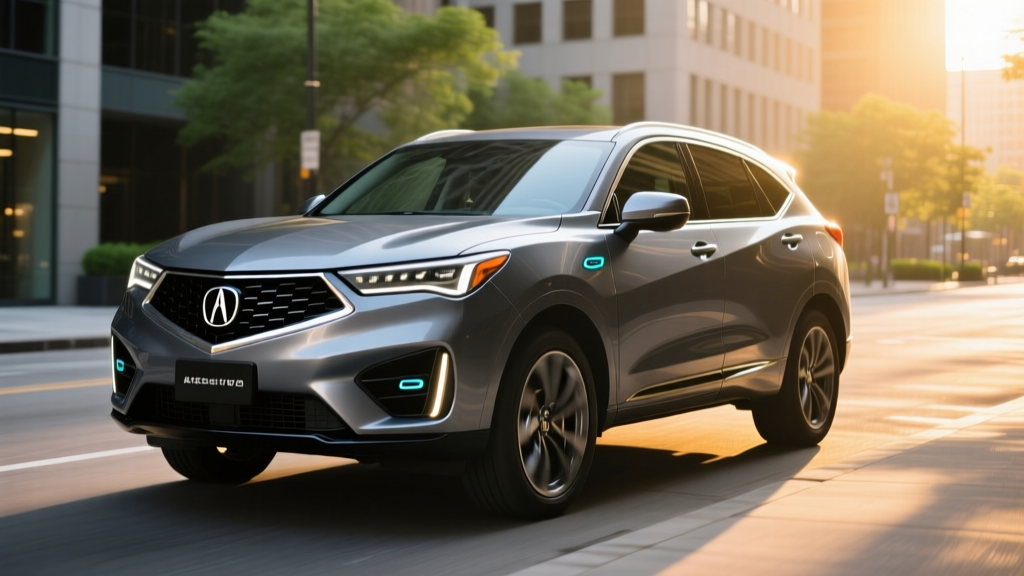
As of 2025, Acura does not offer a hybrid or plug-in hybrid (PHEV) variant of the RDX. The compact luxury SUV continues exclusively with a 2.0-liter turbocharged four-cylinder engine producing 272 horsepower, paired with a 10-speed automatic transmission and available Super Handling All-Wheel Drive (SH-AWD). If you've been searching for an "Acura RDX hybrid 2025" model, you won't find one on dealer lots—yet.
However, Honda's aggressive hybrid rollout (the Accord, CR-V, and Civic all now offer hybrid trims) and industry pressure from BMW's X3 xDrive30e PHEV and the Lexus NX 450h+ have fueled persistent speculation about an electrified RDX. This guide breaks down what we know from Acura's current lineup, Honda's hybrid powertrains, and what a hybrid RDX would realistically deliver in MPG, range, pricing, and tax-credit eligibility.
Current 2025 Acura RDX Fuel Economy (Non-Hybrid Baseline)
Before projecting hybrid numbers, let's establish the gasoline-only RDX's EPA fuel economy as the baseline any hybrid variant would need to beat.
| Drivetrain | City MPG | Highway MPG | Combined MPG |
|---|---|---|---|
| FWD | 22 | 28 | 24 |
| SH-AWD | 21 | 27 | 23 |
Source: fueleconomy.gov
At 23 MPG combined with SH-AWD (the most popular configuration), the RDX trails key rivals: the Lexus NX 350h hybrid achieves 39 MPG combined, and the BMW X3 xDrive30e PHEV returns 26 MPG combined once its electric range is depleted. A hybrid RDX would need to close that gap significantly to compete.
HEV vs. PHEV: What a Hybrid RDX Could Be
If Acura electrifies the RDX, it will arrive as either a conventional hybrid (HEV) or a plug-in hybrid (PHEV). The distinction matters enormously for your daily driving, fuel costs, and tax-credit eligibility.
Conventional Hybrid (HEV)
An HEV uses a small battery (typically 1–2 kWh) and electric motor to assist the gas engine. It recovers energy through regenerative braking and never needs to be plugged in. Think of the Toyota RAV4 Hybrid or Honda CR-V Hybrid: you simply fill up with gas and drive, but the electric assist improves city MPG substantially.
Plug-In Hybrid (PHEV)
A PHEV carries a larger battery (typically 15–20 kWh) that can be charged from a wall outlet or public charger. It delivers 20–40 miles of pure electric driving before the gas engine takes over. The Lexus NX 450h+ and BMW X3 xDrive30e follow this formula. You plug in nightly at home and handle most commutes on electricity alone, with the gas engine available for longer trips.
| Attribute | Conventional Hybrid (HEV) | Plug-In Hybrid (PHEV) |
|---|---|---|
| Battery Size | ~1–2 kWh | ~15–20 kWh |
| Electric-Only Range | None (motor assists engine) | 25–40 miles (estimated) |
| Needs Plugging In? | No | Yes (for EV range benefit) |
| Level 1 Charge Time (120V) | N/A | ~8–12 hours |
| Level 2 Charge Time (240V) | N/A | ~2.5–4 hours |
| DC Fast Charging | N/A | Unlikely (most PHEVs lack DC) |
| Federal Tax Credit (§30D) | Not eligible | Potentially up to $7,500* |
| Estimated Combined MPG | 32–38 MPG | 26–30 MPG (after EV range) |
| Estimated Combined MPGe | N/A | 55–70 MPGe |
*§30D credit eligibility depends on battery sourcing, critical-mineral requirements, buyer income caps, and MSRP limits. See IRS guidance for current-year rules.
Projected MPG and Powertrain: What Honda's Hybrid Tech Suggests
Acura's parent company, Honda, currently deploys its two-motor hybrid system in the CR-V Hybrid, Accord Hybrid, and Civic Hybrid. The CR-V Hybrid—closest in platform to the RDX—pairs a 2.0-liter Atkinson-cycle engine with two electric motors for a combined 204 horsepower and an EPA rating of 40 MPG city / 34 highway / 37 combined (AWD).
If Acura adapted this system for the RDX (which is heavier and more performance-oriented), here's what we'd project:
| Specification | RDX Gas (Current) | RDX HEV (Projected) | RDX PHEV (Projected) |
|---|---|---|---|
| Powertrain | 2.0L Turbo I4 | 2.0L + 2-Motor Hybrid | 2.0L + 2-Motor PHEV |
| Combined Horsepower | 272 hp | ~250–290 hp | ~290–320 hp |
| Battery Capacity | N/A | ~1.5 kWh | ~17–20 kWh |
| EV-Only Range | N/A | N/A | ~28–35 miles |
| Total Combined Range | ~380 miles | ~450–500 miles | ~400–450 miles |
| EPA Combined MPG/MPGe | 23 MPG (AWD) | ~33–36 MPG | ~60–65 MPGe |
| 0–60 mph | 6.4 sec | ~6.5–7.0 sec | ~5.5–6.2 sec |
| Estimated Base MSRP | $44,350 | ~$47,000–$49,000 | ~$54,000–$58,000 |
These figures are projections based on Honda's existing hybrid architecture and competitive positioning. Actual specs will depend on Acura's tuning priorities (performance vs. efficiency) and final battery-pack sizing.
Real-World MPG: What to Actually Expect
Hybrids consistently outperform their EPA ratings in city driving because regenerative braking recovers energy that gas cars waste as heat. The CR-V Hybrid, for example, is rated at 40 MPG city but owners regularly report 42–44 MPG in stop-and-go traffic. Highway driving tells the opposite story: aerodynamic drag dominates, and the hybrid advantage narrows. Expect CR-V Hybrid highway figures closer to 32–33 MPG at 75 mph.
For a hybrid RDX, apply similar logic:
HEV Real-World Expectation: If the EPA rates it at 35 MPG combined, expect 37–39 MPG in city-heavy commuting and 30–32 MPG on sustained highway road trips. Cold weather (below 30°F) typically reduces hybrid efficiency by 10–15% as the engine runs more frequently for cabin heat.
PHEV Real-World Expectation: Electric-only range of ~30 miles on a full charge in mild weather, dropping to ~22–25 miles in winter (battery chemistry loses efficiency in cold, and cabin heating draws significant power). Once the battery depletes, expect 27–30 MPG on gas alone—better than the current gas RDX but less than the HEV variant due to the PHEV's heavier battery pack.
Tax Credits and Incentives: Would a Hybrid RDX Qualify?
Under current IRS §30D rules, conventional hybrids (HEVs) do not qualify for the federal clean vehicle tax credit. Only battery-electric vehicles (BEVs) and plug-in hybrids (PHEVs) with sufficient battery capacity are eligible—and even then, qualification is far from guaranteed.
If Acura released an RDX PHEV, here's the eligibility checklist it would need to clear:
- MSRP Cap: SUVs must have a base MSRP at or below $80,000 (likely satisfied)
- Buyer Income Cap: Adjusted gross income ≤ $150,000 (single) / $300,000 (joint)
- Battery Sourcing: Critical minerals and battery components must meet phased-in domestic/free-trade-agreement sourcing thresholds that tighten annually
- Final Assembly: Vehicle must be assembled in North America
- Point-of-Sale Transfer: Buyers can transfer the credit to the dealer for an upfront price reduction (effective 2024)
Source: IRS Clean Vehicle Tax Credits
The battery-sourcing requirements have disqualified many PHEVs and EVs since 2023, and the rules tighten further each year. An RDX PHEV assembled in Ohio (where Acura builds several models) might qualify for the full $7,500—or only $3,750 if it meets one of two sourcing thresholds—or nothing at all if battery components come from a "foreign entity of concern." Always verify current eligibility on the IRS website or with a tax professional before purchasing.
Battery Warranty, Reliability, and Replacement Cost
Hybrid battery longevity is the top concern for buyers new to electrified powertrains. Here's what the data shows:
Warranty: Federal law mandates that hybrid and EV battery packs carry a minimum warranty of 8 years / 100,000 miles. In California Air Resources Board (CARB) states, that extends to 10 years / 150,000 miles. Honda currently provides an 8-year/100,000-mile hybrid battery warranty on the CR-V Hybrid and Accord Hybrid. Acura would almost certainly match or exceed this on an RDX hybrid.
Real-World Degradation: Toyota and Honda hybrid batteries have proven remarkably durable. Data from fleet operators and owner surveys show most hybrid battery packs retaining 85–90% of original capacity after 150,000 miles. Complete failures before 200,000 miles are uncommon with modern nickel-metal-hydride (NiMH) and lithium-ion packs.
Replacement Cost: If a hybrid battery does fail out of warranty, replacement costs for a conventional hybrid (HEV) battery typically range from $2,000–$4,000 including labor. A PHEV battery, being significantly larger, would cost $5,000–$9,000 to replace. Refurbished and aftermarket options can reduce this by 30–50%.
For context, a conventional gas RDX's transmission replacement runs $4,000–$7,000 out of warranty. Hybrid batteries are not the financial time bomb some buyers fear—they're one of the most warrantied and longest-lasting components in modern vehicles.
Competitor Comparison: What the RDX Hybrid Would Face
The luxury compact SUV segment already has established hybrid and PHEV players. Any RDX hybrid would need to compete against these benchmarks:
| Model | Type | Combined MPG/MPGe | EV Range | HP | Starting MSRP |
|---|---|---|---|---|---|
| Lexus NX 350h | HEV | 39 MPG | N/A | 244 hp | $43,515 |
| Lexus NX 450h+ | PHEV | 84 MPGe / 37 MPG | 37 mi | 304 hp | $59,905 |
| BMW X3 xDrive30e | PHEV | 60 MPGe / 26 MPG | 35 mi | 288 hp | $53,995 |
| Volvo XC60 Recharge | PHEV | 63 MPGe / 27 MPG | 35 mi | 455 hp | $58,950 |
| Mercedes GLC 350e | PHEV | 66 MPGe / 26 MPG | 34 mi | 315 hp | $59,900 |
Source: fueleconomy.gov, manufacturer press sites
The RDX's traditional advantage has been value: its $44,350 starting price undercuts most rivals by $5,000–$10,000. A hybrid variant priced around $47,000–$49,000 (HEV) or $54,000–$58,000 (PHEV) would still slot in competitively, especially against the Lexus NX 450h+ and BMW X3 PHEV.
Hybrid vs. PHEV vs. Full EV: Which Should You Choose?
If Acura eventually offers an electrified RDX, here's a decision framework based on your driving habits and home setup:
Choose the HEV (conventional hybrid) if:
- You don't have reliable access to home or workplace charging
- You want better MPG without changing any habits—just fill up and drive
- Your budget is tighter and you don't want to pay the PHEV premium
- You drive mostly in the city where regenerative braking maximizes efficiency
Choose the PHEV (plug-in hybrid) if:
- You can install a Level 2 charger at home (or have reliable workplace charging)
- Your daily commute is under 30 miles round-trip (you'd rarely use gas)
- You want EV-like daily driving with gas-engine freedom for road trips
- You qualify for the §30D tax credit, offsetting the higher purchase price
Choose a full EV (like the Acura ZDX) if:
- You have home charging and your daily driving is under 250 miles
- You want to eliminate gasoline entirely and minimize maintenance
- You're eligible for the full $7,500 federal credit plus any state incentives
- You're comfortable planning road trips around DC fast-charging stops
Frequently Asked Questions
How many MPG does the Acura RDX hybrid get?
The 2025 Acura RDX is not available as a hybrid. The gas-only RDX with SH-AWD achieves 21 city / 27 highway / 23 combined MPG. A projected HEV variant could deliver 33–36 MPG combined, while a PHEV could achieve 60–65 MPGe with ~30 miles of electric-only driving.
Is there a plug-in hybrid Acura RDX?
Not as of the 2025 model year. Acura's only electrified model is the ZDX, a fully electric SUV. The RDX remains gas-only. If a PHEV RDX arrives, it would likely offer 25–35 miles of electric-only range based on Honda's current PHEV architecture.
Does a hybrid Acura RDX qualify for any tax credit?
A conventional hybrid (HEV) would not qualify for the federal §30D clean vehicle credit. A plug-in hybrid (PHEV) variant could qualify for up to $7,500, but only if it meets current battery-sourcing, MSRP, buyer-income, and North American assembly requirements. Always verify on IRS.gov before purchasing.
Are hybrid batteries reliable and expensive to replace?
Modern hybrid batteries are among the most durable components in a vehicle. Honda warranties its hybrid batteries for 8 years/100,000 miles (10 years/150,000 miles in CARB states). Real-world data shows most hybrid packs lasting 200,000+ miles. Out-of-warranty HEV battery replacement typically costs $2,000–$4,000; a PHEV battery would cost $5,000–$9,000.
What is the best hybrid luxury compact SUV in 2025?
For pure efficiency, the Lexus NX 350h leads at 39 MPG combined starting at $43,515. For plug-in capability, the Lexus NX 450h+ offers 37 miles of EV range with 304 hp. The BMW X3 xDrive30e and Volvo XC60 Recharge are strong PHEV alternatives. An RDX hybrid, if it arrives, would compete on value and Acura's SH-AWD performance reputation.