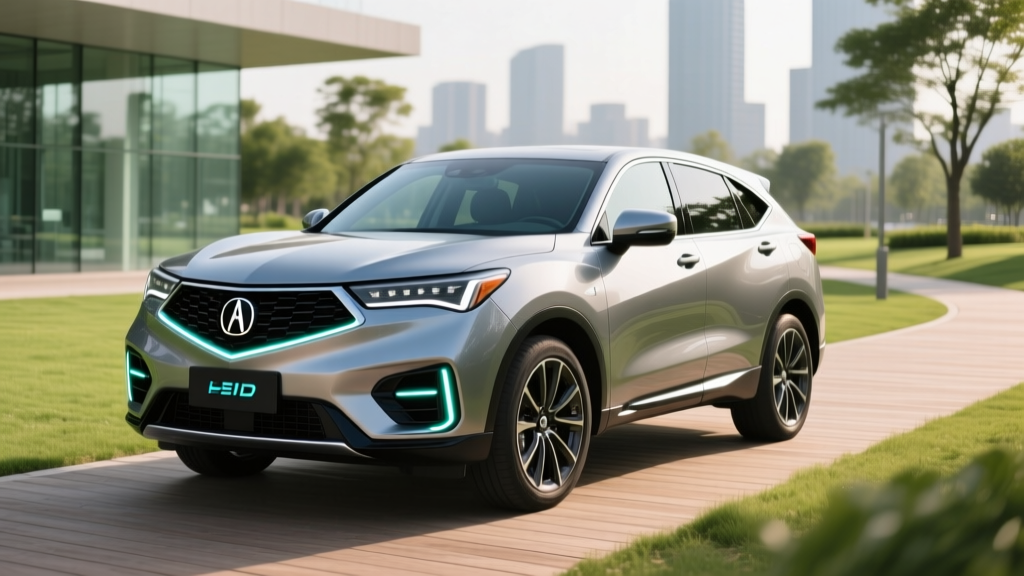
The compact luxury SUV segment has been slow to electrify, and the 2026 Acura RDX remains one of the most searched nameplates among buyers hoping for a hybrid option. If you've been searching for an Acura RDX 2026 hybrid, here's the unvarnished truth: as of the current model year, Acura has not released a hybrid or plug-in hybrid version of the RDX. The 2026 RDX continues with a turbocharged 2.0-liter four-cylinder engine paired with a 10-speed automatic transmission and available SH-AWD.
But the conversation around an electrified RDX isn't over. Acura's parent company Honda has committed to broader electrification, and competitors like the BMW X3 xDrive30e (PHEV), Volvo XC60 Recharge (PHEV), and Lexus NX 450h+ (PHEV) are putting pressure on the segment. This guide covers exactly what the 2026 RDX offers today, what an eventual hybrid or PHEV variant would need to deliver, and which electrified alternatives make sense right now if you're set on a luxury compact crossover with hybrid efficiency.
2026 Acura RDX: Current Powertrain and EPA Fuel Economy
Before speculating about a hybrid, let's establish the baseline. The 2026 Acura RDX is powered by a 2.0-liter turbocharged inline-four producing 272 horsepower and 280 lb-ft of torque, mated to a 10-speed automatic transmission. Super Handling All-Wheel Drive (SH-AWD) is available across all trims.
| Specification | 2026 Acura RDX (Gas) |
|---|---|
| Engine | 2.0L Turbocharged I-4 |
| Horsepower | 272 hp |
| Torque | 280 lb-ft |
| Transmission | 10-Speed Automatic |
| Drivetrain | FWD / SH-AWD |
| EPA MPG (FWD) | 22 city / 28 hwy / 24 combined |
| EPA MPG (SH-AWD) | 21 city / 27 hwy / 23 combined |
| Fuel Tank | 17.1 gallons |
| Total Range (SH-AWD) | ~393 miles |
| 0–60 mph | ~6.4 seconds |
| Starting MSRP | ~$44,350 |
These figures place the RDX squarely in the middle of the gas-powered luxury compact SUV pack. For comparison, the gas-only BMW X3 xDrive30i returns 23 city / 29 hwy / 25 combined, while the Mercedes-Benz GLC 300 4MATIC achieves 23 city / 30 hwy / 26 combined. The RDX trails slightly, largely due to its torque-converter automatic rather than the more efficient 8- and 9-speed units or CVTs competitors use.
HEV vs. PHEV: What an Electrified RDX Could Look Like
If Acura does introduce an electrified RDX, it would likely follow one of two paths. Understanding the difference between a conventional hybrid (HEV) and a plug-in hybrid (PHEV) is essential for setting expectations and planning your ownership.
Conventional Hybrid (HEV)
How it works: A small battery (typically 1–2 kWh) and electric motor assist the gas engine. The battery recharges through regenerative braking and the engine — you never plug it in. Think Toyota RAV4 Hybrid or Lexus NX 350h.
Expected benefit: 30–40% improvement in fuel economy over the gas model. No change in refueling behavior.
Trade-off: No electric-only driving. No eligibility for the federal §30D tax credit (which applies only to plug-in vehicles).
Plug-In Hybrid (PHEV)
How it works: A larger battery (typically 15–20 kWh usable) and more powerful electric motor allow 25–40 miles of electric-only driving before the gas engine engages. You plug in to recharge (Level 1 or Level 2). Think Lexus NX 450h+ or Volvo XC60 Recharge.
Expected benefit: Electric-only commuting for most daily trips, 30+ miles of zero-gas driving, combined MPGe ratings of 70–90, and potential eligibility for the federal §30D tax credit (up to $7,500 depending on battery sourcing, MSRP caps, and buyer income limits).
Trade-off: Higher purchase price, heavier vehicle, requires home charging access to realize full value.
Acura's existing hybrid technology — the two-motor system found in the Accord Hybrid and CR-V Hybrid — could theoretically be adapted for the RDX. That system pairs a 2.0-liter Atkinson-cycle engine with two electric motors and an e-CVT, delivering combined outputs around 204–212 hp in current applications. For a luxury application, Acura might boost output with SH-AWD's rear torque-vectoring motor, potentially reaching 250+ combined horsepower.
Competitor MPG Comparison: What the RDX Hybrid Would Need to Beat
The strongest signal for what a hybrid RDX might achieve comes from the luxury compact SUVs that already offer electrified powertrains. Here's how the segment's current hybrid and PHEV options stack up:
| Model | Type | EPA City | EPA Hwy | EPA Combined | EV Range (PHEV) | Combined HP | Starting MSRP |
|---|---|---|---|---|---|---|---|
| Lexus NX 350h | HEV | 41 | 37 | 39 MPG | N/A | 240 hp | ~$43,500 |
| Lexus NX 450h+ | PHEV | 94 MPGe | 84 MPGe | 89 MPGe | 37 mi | 304 hp | ~$60,500 |
| Volvo XC60 Recharge | PHEV | 63 MPGe | 58 MPGe | 60 MPGe | 35 mi | 455 hp | ~$58,950 |
| BMW X3 xDrive30e | PHEV | TBD | TBD | ~65 MPGe (est.) | ~35 mi (est.) | 292 hp | ~$52,000 |
| 2026 Acura RDX | Gas | 21 | 27 | 23 MPG | N/A | 272 hp | ~$44,350 |
The Lexus NX 350h is the efficiency benchmark, returning 39 MPG combined — a 70% improvement over the gas RDX. The NX 450h+ PHEV offers 37 miles of electric-only range, enough for most daily commutes without burning a drop of gasoline. If Acura enters this space, they would need to deliver at least 34–38 MPG (HEV) or 30+ miles of EV range (PHEV) to be competitive.
Tax Credit Eligibility: Would an RDX Hybrid or PHEV Qualify?
This is where the HEV vs. PHEV distinction has direct financial consequences.
- Battery capacity of at least 7 kWh
- MSRP cap: $80,000 for SUVs, $55,000 for sedans
- Buyer income limits: $300,000 (joint), $225,000 (head of household), $150,000 (single)
- Critical minerals and battery component sourcing requirements (phased thresholds that tighten annually)
- North American final assembly
Point-of-sale transfer is available for the §30D credit as of 2024, meaning eligible buyers can apply the credit as a down payment reduction at the dealer rather than waiting to claim it on their tax return. Consult a tax professional to confirm your personal eligibility.
Battery Warranty and Longevity: What Hybrid Buyers Need to Know
One of the most common concerns among first-time hybrid buyers is battery lifespan and replacement cost. This concern applies equally to a hypothetical RDX Hybrid or any competitor in the segment.
Hybrid battery packs — whether in HEVs or PHEVs — are fundamentally different from the 12V lead-acilll auxiliary batteries in conventional cars. They use lithium-ion or nickel-metal hydride chemistry and are engineered for hundreds of thousands of charge-discharge cycles with minimal degradation.
| Warranty Element | Typical Coverage (Industry Standard) |
|---|---|
| Hybrid Battery Warranty | 8 years / 100,000 miles (10 yr / 150,000 mi in CARB states) |
| Capacity Retention Threshold | Typically 60–70% of original capacity before warranty claim |
| Hybrid System Components | 8 years / 100,000 miles (inverter, motor, control unit) |
| Powertrain Warranty | 6 years / 70,000 miles (varies by brand) |
| Replacement Cost (Out of Warranty) | $2,000–$5,000 (HEV) / $5,000–$9,000 (PHEV) |
In practice, hybrid batteries from Toyota, Honda, and Lexus have proven exceptionally durable. Real-world data from fleet operators and long-term owners shows most hybrid batteries retain 85–90% of original capacity at 150,000 miles. Failures before 200,000 miles are uncommon. Honda's hybrid systems, which Acura would likely share, carry an 8-year/100,000-mile hybrid battery warranty nationwide, extended to 10 years/150,000 miles in states that follow California Air Resources Board (CARB) emissions standards.
For a PHEV variant, the larger battery would carry higher replacement costs ($5,000–$9,000 out of warranty), but the same warranty coverage would apply. PHEV batteries also tend to degrade slightly faster than HEV batteries because they cycle through deeper discharge ranges during electric-only driving — though modern thermal management systems have largely mitigated this.
Should You Wait for an RDX Hybrid, Buy a Competitor, or Go Full EV?
This is the decision framework every buyer in this segment faces. Here's how to think about it based on your driving patterns, charging access, and budget.
Choose a Hybrid Competitor (HEV) Like the Lexus NX 350h If:
- You want 35+ MPG without changing your refueling habits
- You don't have reliable home or workplace charging access
- Your budget is under $50,000 and you want luxury features
- You drive 15,000+ miles per year and want maximum fuel savings
- You plan to keep the vehicle 8+ years (proven hybrid reliability)
Choose a PHEV Competitor Like the NX 450h+ or XC60 Recharge If:
- You have Level 2 home charging and a commute under 35 miles
- You want electric-only daily driving but gas flexibility for road trips
- You qualify for the §30D federal tax credit (income and sourcing requirements met)
- You want the performance boost that dual powertrains provide
- You're comfortable with a $55,000–$65,000 purchase price
Choose a Full EV Like the Tesla Model Y, BMW iX3, or Genesis GV70 Electrified If:
- You have reliable home Level 2 charging and access to DC fast charging
- Your daily driving is under 250 miles and you road-trip infrequently
- You want the lowest per-mile fuel cost (electricity at ~$0.04–$0.06/mile vs. gas at ~$0.12–$0.18/mile)
- You want maximum §30D tax credit eligibility (up to $7,500)
- You're ready to accept charging-curve taper and cold-weather range loss (15–30% in freezing temps)
Stick With the Gas RDX If:
- You love the RDX's driving dynamics, SH-AWD, and interior specifically
- You drive under 10,000 miles per year (fuel savings from a hybrid wouldn't offset the price premium)
- You tow regularly (hybrid systems add weight and can reduce towing capacity)
- No hybrid competitor matches the feature set you want at your price point
The Bottom Line: Where the 2026 Acura RDX Hybrid Stands
As of the 2026 model year, the Acura RDX Hybrid does not exist. Acura has not announced a hybrid or PHEV variant, and the current RDX remains a gas-only offering. For buyers specifically searching for an electrified RDX, the options are to wait (with no confirmed timeline), choose a hybrid or PHEV competitor in the luxury compact SUV segment, or consider a full EV if your charging situation supports it.
2026 Acura RDX (Gas) — Pros
- Strong 272 hp turbo engine with smooth 10-speed
- SH-AWD provides excellent torque-vectoring grip
- Premium interior with 10.2-inch infotainment and Google built-in
- Competitive starting MSRP of ~$44,350
- Strong reliability track record for Honda/Acura turbo powertrains
2026 Acura RDX (Gas) — Cons
- 23 MPG combined (SH-AWD) trails hybrid competitors by 40–70%
- No hybrid or PHEV option available
- No federal tax credit eligibility
- Higher annual fuel cost vs. HEV/PHEV rivals (~$2,400/yr at 15k miles)
- Falling behind segment electrification trend set by Lexus, Volvo, BMW
If Acura introduces an RDX Hybrid or PHEV in a future model year, expect it to leverage Honda's proven two-motor hybrid architecture with potential SH-AWD integration. A conventional hybrid could deliver 34–38 MPG combined, while a PHEV could offer 30–37 miles of electric-only range. Until then, the Lexus NX 350h (HEV) and NX 450h+ (PHEV) remain the strongest electrified alternatives in this segment.
Frequently Asked Questions
Does the 2026 Acura RDX come in a hybrid version?
No. As of the 2026 model year, Acura has not released a hybrid (HEV) or plug-in hybrid (PHEV) variant of the RDX. The RDX is available only with a 2.0L turbocharged gas engine. Acura has not announced a hybrid RDX for any upcoming model year.
How many MPG does the 2026 Acura RDX get?
The 2026 Acura RDX with FWD achieves an EPA-estimated 22 city / 28 highway / 24 combined MPG. With SH-AWD, those figures drop to 21 city / 27 highway / 23 combined. Real-world mixed driving with SH-AWD typically yields 22–24 MPG combined, with highway-dominant trips reaching 25–26 MPG and city-heavy driving falling to 19–20 MPG.
Would an Acura RDX hybrid qualify for a tax credit?
A conventional hybrid (HEV) RDX would not qualify for any federal tax credit. A plug-in hybrid (PHEV) version could potentially qualify for the §30D federal clean vehicle credit of up to $7,500, but only if it meets battery sourcing requirements, MSRP caps ($80,000 for SUVs), buyer income limits, and North American assembly rules. Since no RDX PHEV exists, this remains speculative.
What is the best hybrid alternative to the Acura RDX?
The Lexus NX 350h is the strongest conventional hybrid alternative, delivering 39 MPG combined and 240 hp with AWD starting around $43,500. For a plug-in hybrid, the Lexus NX 450h+ offers 37 miles of electric-only range, 304 hp, and 89 MPGe, though it starts near $60,500. The Volvo XC60 Recharge PHEV offers 35 miles of EV range and 455 hp for those prioritizing performance.
Are hybrid batteries reliable and expensive to replace?
Hybrid batteries from major manufacturers (Honda, Toyota, Lexus) are highly reliable, typically lasting 200,000+ miles with 85–90% capacity retention. They are covered by warranties of 8 years/100,000 miles (10 years/150,000 miles in CARB states). Out-of-warranty replacement costs range from $2,000–$5,000 for a conventional hybrid battery and $5,000–$9,000 for a PHEV battery. In practice, most hybrid owners never need a battery replacement during their ownership.
Should I buy a hybrid, PHEV, or full EV for a luxury compact SUV?
Choose a conventional hybrid (HEV) if you want better MPG without plugging in and lack home charging. Choose a PHEV if you have Level 2 home charging, a commute under 35 miles, and want electric-only daily driving with gas flexibility for longer trips. Choose a full EV if you have reliable charging access, drive under 250 miles daily, and want the lowest per-mile operating cost and maximum tax credit eligibility. Your charging access is the single most important factor in this decision.