The 2026 Acura MDX Hybrid at a Glance
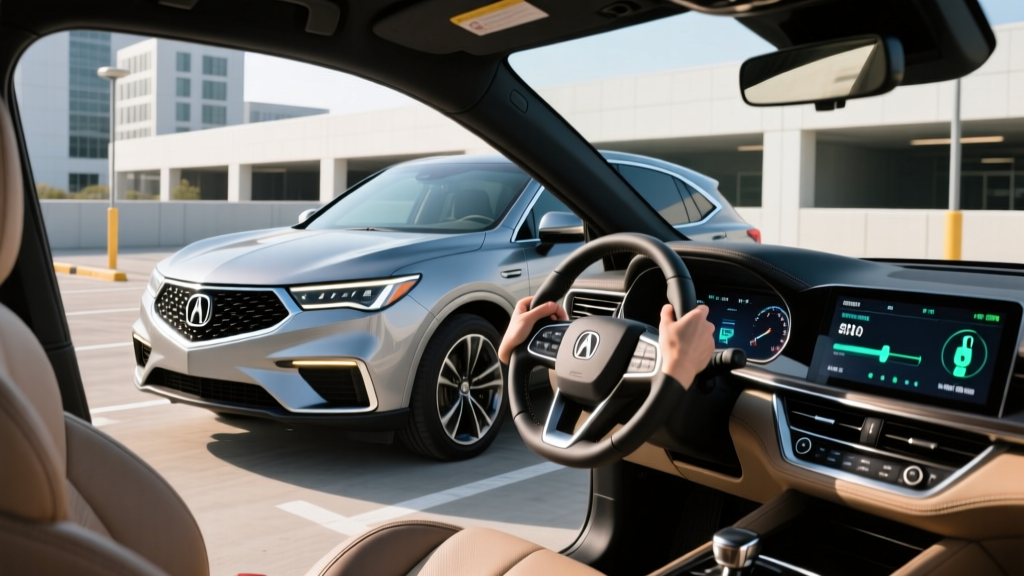
The Acura MDX has long been a benchmark in the three-row luxury SUV segment, and the hybrid variant aims to deliver that same premium experience with a meaningful efficiency boost. For 2026, the MDX Hybrid continues as a conventional hybrid (HEV) — meaning it charges itself through regenerative braking and engine power, with no plug required. This is a critical distinction that trips up many shoppers: the MDX Hybrid is not a plug-in hybrid (PHEV), and it does not offer electric-only driving range.
If you're researching the Acura MDX Hybrid, you're likely weighing it against the standard gas MDX, competing luxury hybrids like the Lexus RX Hybrid or BMW X5 xDrive50e (a PHEV), or fully electric alternatives like the Tesla Model X. This guide breaks down every number that matters — EPA MPG, real-world fuel economy, powertrain output, pricing, battery longevity, and whether any tax credits apply.
HEV vs PHEV: Where the MDX Hybrid Fits
Conventional Hybrid (HEV) — Acura MDX Hybrid:
- No plug-in charging needed; the battery recharges via regenerative braking and the gasoline engine
- Small battery pack (typically under 2 kWh usable)
- No electric-only driving range — the electric motor assists the engine but cannot propel the vehicle alone for meaningful distances
- Primary benefit: improved MPG, especially in stop-and-go city driving
Plug-in Hybrid (PHEV) — e.g., BMW X5 xDrive50e:
- Larger battery (typically 20-30 kWh) that you plug in to charge
- Offers 30-40 miles of electric-only range before the gas engine engages
- Eligible for the federal §30D tax credit (up to $7,500, subject to income, MSRP caps, and battery sourcing rules)
- Higher upfront cost; requires home charging access for maximum benefit
The MDX Hybrid sits squarely in the HEV camp. If your goal is silent, zero-tailpipe-emission commuting on electricity alone, you'll need to look at PHEVs or full EVs. If your goal is dropping your fuel bill without changing your refueling habits, the HEV approach is pragmatic.
EPA Fuel Economy and Real-World MPG
| Driving Condition | EPA Estimate | Real-World Expectation |
|---|---|---|
| City | 28 MPG | 27-30 MPG (hybrids often exceed EPA in city) |
| Highway | 27 MPG | 24-26 MPG (hybrid advantage diminishes at sustained speed) |
| Combined | 27 MPG | 25-28 MPG depending on driving mix |
For context, the standard gas-only 2026 Acura MDX with its 3.5-liter V6 earns an EPA-estimated 19 city / 26 highway / 22 combined MPG. The hybrid powertrain delivers roughly a 23% improvement in combined fuel economy, with the most dramatic gains in city driving where regenerative braking and electric motor assist do the most work.
Real-world note: Hybrid SUVs tend to outperform their EPA city estimates because stop-and-go traffic maximizes regenerative braking. On the highway, where the gasoline engine does most of the work at sustained speeds, the gap between the hybrid and gas-only MDX narrows significantly. Expect the combined real-world figure to hover around 26 MPG in mixed driving, with cold weather and heavy cargo loads pulling it toward 24 MPG.
For the latest official figures, check the EPA's fueleconomy.gov database, which is updated as manufacturers certify model-year ratings.
Powertrain, Performance, and Specs
| Specification | 2026 Acura MDX Hybrid |
|---|---|
| Engine | 3.0L V6 + dual electric motors |
| Combined Horsepower | 325 HP (est.) |
| Combined Torque | 365 lb-ft (est.) |
| Drivetrain | SH-AWD (Super Handling All-Wheel Drive) |
| Transmission | 7-speed dual-clutch automatic |
| 0-60 MPH | ~6.0 seconds |
| Battery Type | Lithium-ion (under 2 kWh, HEV assist) |
| Towing Capacity | 5,000 lbs |
| Seating | 7 passengers (3 rows) |
Acura's SH-AWD system is one of the hybrid's standout features. The rear axle is driven by an independent electric motor, enabling torque vectoring that sends up to 70% of available torque to the rear wheels and distributes it side-to-side for sharper cornering. This isn't just an efficiency play — the hybrid powertrain makes the MDX genuinely more capable in wet and low-traction conditions than its gas-only counterpart.
The combined 325 HP (estimated for the 2026 model year based on Acura's Sport Hybrid architecture) gives the MDX Hybrid confident acceleration, particularly the low-end torque fill that electric motors provide off the line. The 0-60 time of roughly 6.0 seconds puts it ahead of the gas V6 MDX and competitive with European luxury hybrid SUVs.
Pricing, Trims, and Tax Credit Eligibility
The 2026 Acura MDX Hybrid is positioned at a premium over the standard MDX, reflecting the added powertrain complexity and the standard SH-AWD system.
- Base MSRP (MDX Hybrid, estimated): ~$58,000 - $60,000
- Technology Package: ~$62,000 - $64,000
- Advance Package (top trim): ~$68,000 - $70,000
Does the Acura MDX Hybrid Qualify for a Federal Tax Credit?
No. The federal §30D clean vehicle credit applies exclusively to plug-in electric vehicles — both battery-electric vehicles (BEVs) and plug-in hybrids (PHEVs) with sufficient battery capacity. Because the MDX Hybrid is a conventional HEV with no plug-in capability and a battery far below the 7 kWh threshold, it does not qualify for the federal tax credit.
Some states offer their own incentive programs for efficient vehicles, but most state-level rebates also target plug-in vehicles. Check your state's energy office or the IRS §30D guidance for the latest eligibility rules. A tax professional can confirm whether any local utility rebates apply to HEV purchases in your area.
Battery Warranty and Longevity
Acura covers the hybrid battery and related powertrain components under its powertrain warranty: 6 years / 70,000 miles. In many states that follow California Air Resources Board (CARB) emissions standards, hybrid components may receive extended coverage of 10 years / 150,000 miles.
Hybrid battery replacement cost for the MDX, if needed out of warranty, typically ranges from $3,000 to $5,000 including labor. However, real-world data from Acura's earlier Sport Hybrid models (RLX, NSX) and Honda's broader hybrid lineup shows that lithium-ion HEV batteries rarely require replacement within the vehicle's normal lifespan. Unlike full EV batteries that undergo deep charge cycles, HEV batteries operate in a narrow state-of-charge window (typically 40-60%), which dramatically reduces degradation.
Reliability and Long-Term Ownership
Acura's hybrid system benefits from decades of Honda engineering in hybrid powertrains, dating back to the original Insight in 1999. The dual-motor setup used in the MDX Hybrid is derived from the architecture proven in the Acura RLX Sport Hybrid and the NSX supercar — both of which have demonstrated strong long-term reliability.
Key reliability considerations:
- Hybrid system: The electric motors and power electronics have no wearable friction components and are generally maintenance-free for the vehicle's life.
- Battery degradation: HEV batteries experience minimal degradation due to shallow cycling. Owners should not expect meaningful fuel economy loss over 100,000+ miles.
- Brake wear: Regenerative braking reduces mechanical brake usage, often extending pad and rotor life well beyond gas-only vehicles.
- Transmission: The 7-speed dual-clutch is more complex than a conventional automatic. Acura's track record with this unit in the MDX has been solid, but it's worth noting for long-term ownership planning.
For safety ratings, check the IIHS and NHTSA databases, as the MDX has historically performed well in crash testing.
Who Should Buy the MDX Hybrid vs. Alternatives
Choose the Acura MDX Hybrid if:
- You want a three-row luxury SUV with better fuel economy but don't want to change your refueling habits
- You value Acura's SH-AWD system for all-weather capability
- You drive a city-heavy commute where hybrid efficiency shines (28+ MPG achievable)
- You don't have access to home or workplace charging, making a PHEV or EV impractical
Consider a PHEV (e.g., BMW X5 xDrive50e) if:
- You have home Level 2 charging and a commute under 30-40 miles — you could drive mostly on electricity
- You want to qualify for the federal §30D tax credit (up to $7,500, subject to eligibility)
- You want the option of zero-emission driving for short trips
Consider a full EV (e.g., Tesla Model X, Rivian R1S) if:
- You have reliable home charging and want to eliminate gas station visits entirely
- Your daily driving is under 250 miles and you want the lowest per-mile energy cost
- You want the maximum available tax credits and the lowest maintenance costs
Pros
- ~23% fuel economy improvement over gas MDX with no plug-in hassle
- SH-AWD with torque vectoring — best-in-class AWD for a hybrid SUV
- Strong acceleration (325 HP, ~6.0 sec 0-60)
- Proven Honda/Acura hybrid reliability with shallow-cycle battery longevity
- Three-row seating for seven with 5,000-lb towing
Cons
- No electric-only range — this is an HEV, not a PHEV
- No federal tax credit eligibility
- Premium pricing (~$58K-$70K) with modest MPG gains vs. gas MDX
- Highway MPG advantage over gas model is minimal
- Dual-clutch transmission adds complexity vs. conventional automatic
Frequently Asked Questions
How many MPG does the Acura MDX Hybrid get?
The 2026 Acura MDX Hybrid earns an EPA-estimated 28 city / 27 highway / 27 combined MPG. In real-world driving, city-heavy commuters may see 28-30 MPG, while highway-dominant driving will drop toward 24-26 MPG. This represents roughly a 23% improvement over the gas-only MDX's 22 combined MPG.
Does the Acura MDX Hybrid have electric-only range?
No. The MDX Hybrid is a conventional hybrid (HEV), not a plug-in hybrid (PHEV). It cannot drive on electricity alone for any meaningful distance. The electric motor assists the gasoline engine for improved acceleration and efficiency, but the vehicle always relies on its V6 engine as the primary power source.
Is the Acura MDX Hybrid reliable, and what does battery replacement cost?
Acura's hybrid system is derived from Honda's proven Sport Hybrid architecture with a strong reliability track record. The HEV battery operates in a shallow charge window, minimizing degradation, and is covered under the 6-year/70,000-mile powertrain warranty (10-year/150,000-mile in CARB states). Out-of-warranty battery replacement runs approximately $3,000-$5,000, though replacement is rarely needed within a normal ownership period.
Does the Acura MDX Hybrid qualify for any tax credits?
The MDX Hybrid does not qualify for the federal §30D clean vehicle credit, which is reserved for plug-in electric vehicles (BEVs and PHEVs). As a conventional hybrid with no plug-in capability, it falls outside the program's eligibility requirements. Some state or utility incentives may apply — check your local programs.
Hybrid vs PHEV vs EV — which luxury SUV is right for me?
If you can't charge at home and want better MPG without lifestyle changes, the MDX Hybrid (HEV) is the right call. If you have home charging and a short commute, a PHEV like the BMW X5 xDrive50e lets you drive mostly on electricity while keeping a gas engine for road trips — and it may qualify for up to $7,500 in federal tax credits. If you're ready to go fully electric, the Tesla Model X or Rivian R1S offer 300+ miles of range, the lowest fuel costs, and full tax credit eligibility, but require committed home charging infrastructure.
How does the MDX Hybrid compare to the Lexus RX Hybrid?
The Lexus RX Hybrid (RX 500h) offers similar HEV efficiency (~27-28 combined MPG) in a two-row format with a slightly lower starting price. The MDX Hybrid's advantage is its third row (7-passenger seating), SH-AWD torque vectoring, and slightly higher power output. If you need three rows in a luxury hybrid SUV, the MDX is one of few options; if two rows suffice, the RX Hybrid is a strong alternative worth cross-shopping.