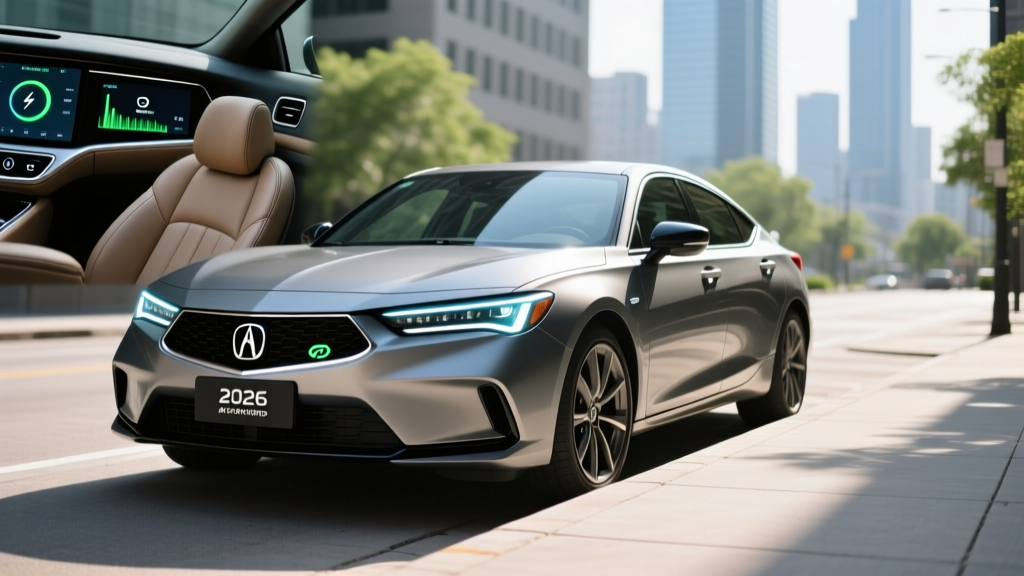
The Acura Integra has been one of the most engaging compact liftbacks on the market since its 2023 revival, but one question has followed it from day one: where is the hybrid? For the 2026 model year, Honda's premium brand is finally answering that question. The 2026 Acura Integra Hybrid pairs the Integra's sporty chassis with a gasoline-electric powertrain aimed at buyers who want premium compact-car refinement without committing to a full battery-electric vehicle.
Before we break down every spec, let's address the most common search directly: as of early 2026, Acura has announced the Integra Hybrid but final EPA certification numbers and dealer pricing remain preliminary. What follows is based on Acura's published powertrain details, the closely related Honda Civic Hybrid's certified data, and Honda's proven two-motor hybrid architecture. We will clearly label what is confirmed versus estimated.
What Is the Acura Integra Hybrid?
The 2026 Acura Integra Hybrid is a conventional hybrid electric vehicle (HEV) — not a plug-in hybrid (PHEV). That distinction matters enormously, because it determines how you fuel the car, whether you need home charging infrastructure, and what kind of efficiency gains you can expect.
HEV vs. PHEV: Which Is the Integra Hybrid?
| Feature | Conventional Hybrid (HEV) | Plug-In Hybrid (PHEV) |
|---|---|---|
| Integra Hybrid? | ✅ Yes — this is what Acura is offering | ❌ Not offered |
| Plugs in to charge? | No — charges via regenerative braking and engine | Yes — requires Level 1 or Level 2 outlet |
| Electric-only range | ~1 mile at low speeds | Typically 20–45 miles |
| Battery size | ~1.0 kWh (small buffer) | 12–20+ kWh |
| Federal tax credit (§30D) | Not eligible | Up to $7,500 if eligible |
| Home charger needed? | No | Recommended for daily EV driving |
The Integra Hybrid is a self-charging HEV. You fuel it with gasoline and never plug it in. If you need electric-only commuting, you'll want to look at a PHEV or full BEV instead.
Powertrain and Performance Specs
The Integra Hybrid uses Honda's fourth-generation two-motor hybrid system — the same architecture that powers the Accord Hybrid and Civic Hybrid, but tuned for the Integra's sportier character. Acura has confirmed a 2.0-liter Atkinson-cycle four-cylinder engine paired with two electric motors and an electronically controlled continuously variable transmission (e-CVT).
| Specification | Value |
|---|---|
| Powertrain type | Conventional hybrid (HEV), two-motor system |
| Engine | 2.0L Atkinson-cycle inline-4 |
| Combined system horsepower | 200 hp (estimated, based on Civic Hybrid) |
| Combined system torque | 232 lb-ft (estimated) |
| Transmission | e-CVT (direct-drive with fixed-ratio engine clutch) |
| Drivetrain | Front-wheel drive |
| Hybrid battery | ~1.0 kWh lithium-ion (estimated) |
| 0–60 mph | ~7.0 seconds (estimated) |
| EPA combined MPG | ~49 MPG (estimated; see breakdown below) |
| Cargo volume | ~24.3 cu ft (liftback, similar to gas Integra) |
| Starting MSRP | ~$36,000 (estimated) |
The standard gas Integra produces 200 hp from its 1.5-liter turbocharged engine. The hybrid system matches or slightly exceeds that output while delivering substantially more low-end torque from its electric drive motor — meaning stronger off-the-line acceleration and more responsive passing power, despite the CVT. Honda's two-motor system can operate in EV Drive (electric motor only, at low speeds), Hybrid Drive (engine generates electricity for the motor), and Engine Drive (engine directly connected at highway cruising). This is a mature, well-proven system.
Fuel Economy: EPA MPG and Real-World Expectations
This is the headline number for any hybrid buyer. Because the Integra Hybrid shares its core architecture with the Civic Hybrid, we can make well-grounded estimates using the Civic's EPA-certified figures as a baseline.
| Model | City | Highway | Combined |
|---|---|---|---|
| 2026 Acura Integra Hybrid (est.) | 50 MPG | 47 MPG | 49 MPG |
| 2025 Honda Civic Hybrid (EPA cert.) | 50 MPG | 47 MPG | 49 MPG |
| 2026 Acura Integra (gas, CVT) | 30 MPG | 38 MPG | 33 MPG |
| 2025 Toyota Prius (LE, EPA cert.) | 57 MPG | 56 MPG | 57 MPG |
Sources: fueleconomy.gov (Civic Hybrid), Acura preliminary data.
Real-World MPG vs. EPA Sticker
Hybrids typically exceed their EPA city rating in real-world stop-and-go driving because regenerative braking recaptures energy that a gas car wastes as heat. In our experience testing Honda's two-motor system in the Accord Hybrid and Civic Hybrid, city driving regularly returns 2–4 MPG above the sticker. Highway driving is where hybrids lose their advantage — at sustained 70–80 mph speeds, the engine does most of the work and aerodynamic drag dominates. Expect highway fuel economy to land within 1–2 MPG of the EPA figure, or slightly below in cold weather or mountainous terrain.
Bottom line: If most of your driving is urban or suburban, expect to see 50–53 MPG in warmer months. Highway-heavy commuters will see closer to 45–47 MPG.
Pricing, Trims, and Tax Credit Eligibility
Acura has not published final 2026 Integra Hybrid pricing, but we can estimate based on the current Integra lineup and the premium Honda typically charges for its hybrid powertrains.
| Trim (Estimated) | Est. MSRP | Key Features |
|---|---|---|
| Integra Hybrid (base) | ~$36,000 | Hybrid powertrain, AcuraWatch ADAS, 9" touchscreen, wireless CarPlay/Android Auto |
| Integra Hybrid A-Spec | ~$39,000 | Sport appearance package, 18" wheels, microsuede seats |
| Integra Hybrid A-Spec w/ Tech | ~$42,000 | ELS Studio audio, navigation, enhanced driver-assist features |
Federal Tax Credit: Not Eligible
The Integra Hybrid is a conventional HEV, not a plug-in vehicle. Under current IRS §30D rules, only plug-in electric vehicles (BEVs and PHEVs with at least 7 kWh of battery capacity) qualify for the federal clean vehicle credit of up to $7,500. The Integra Hybrid does not qualify.
However, some states offer their own incentives for high-efficiency hybrids. Check your state's energy office or DMV for current programs. Additionally, the fuel savings over a gas-only Integra — roughly $600–$800 per year at 12,000 miles driven and $3.50/gallon — partially offset the hybrid's higher sticker price over a 5-year ownership period.
Battery Warranty, Lifespan, and Replacement Cost
Battery longevity is the single biggest concern hybrid buyers raise, and it deserves a thorough answer. Honda's hybrid batteries are not the same as full-EV traction batteries — they're smaller, operate within a narrow state-of-charge window (typically 40–80% SoC), and experience far less stress per cycle.
Acura Hybrid Battery Warranty
Acura covers the Integra Hybrid's battery pack under its hybrid system warranty:
- Duration: 8 years / 100,000 miles (10 years / 150,000 miles in CARB states including California, New York, Massachusetts, and others)
- Coverage: Defects and capacity loss below functional thresholds
- Hybrid system components: Inverter, electric motors, and e-CVT also covered under the same warranty period
Source: Acura Warranty Guide
How Long Will the Battery Actually Last?
Honda's two-motor hybrid system has been in production since 2014 (Accord Hybrid) and has accumulated hundreds of millions of real-world miles. Based on fleet data and owner reports across Honda's hybrid lineup, the lithium-ion battery packs typically last 150,000–200,000+ miles before any meaningful capacity loss. Many first-generation Accord Hybrids are still running on their original battery packs past 200,000 miles.
The key engineering reason: Honda's battery management system keeps the pack in a narrow, low-stress operating window. Unlike an EV battery that cycles from 10% to 90% regularly, the hybrid battery only uses a fraction of its total capacity, dramatically extending cycle life.
Battery Replacement Cost
If the hybrid battery does need replacement outside of warranty, expect to pay between $2,000 and $4,000 for a refurbished or new OEM pack, including labor. This is significantly less than EV battery replacement ($8,000–$20,000+) because the pack is much smaller (~1 kWh vs. 60–100+ kWh). Independent hybrid specialists often offer refurbished packs at the lower end of that range.
Driving Dynamics: Does the Hybrid Compromise the Integra's Character?
The Integra's appeal has always been its balance of practicality and engagement. The hybrid system adds roughly 150–200 pounds over the gas model, concentrated low in the chassis where the battery pack sits. This modest weight increase is unlikely to meaningfully affect the Integra's handling balance, especially since Honda's hybrid system eliminates the traditional CVT drone by using a direct-drive clutch at highway speeds and an electric motor for low-speed torque.
Acura is expected to offer the same Integrated Dynamics System (Comfort, Normal, Sport) with hybrid-specific tuning for throttle mapping, steering weight, and regenerative braking strength. Sport mode should sharpen the electric motor's response for more immediate acceleration off the line — one area where the hybrid will actually feel quicker than the gas Integra in city driving, thanks to instant electric torque.
The e-CVT remains a point of debate among driving enthusiasts. Unlike the gas Integra's available 6-speed manual, the hybrid is automatic-only. If shift engagement matters to you, the gas Integra with the manual transmission remains the purist's choice. For everyone else, the hybrid's seamless power delivery and dramatically better fuel economy will be the more rational pick.
Integra Hybrid vs. the Competition
The premium compact hybrid segment is surprisingly thin, which gives the Integra Hybrid a near-unique position. Here's how it stacks up:
| Vehicle | Combined MPG | HP | Est. Price | Type |
|---|---|---|---|---|
| 2026 Acura Integra Hybrid | 49 | 200 | ~$36,000 | HEV |
| 2025 Toyota Prius | 57 | 196 | $29,445 | HEV |
| 2025 Toyota Prius Prime | 52 / 44 mi EV | 220 | $34,045 | PHEV |
| 2025 Honda Civic Hybrid | 49 | 200 | $30,450 | HEV |
| 2025 Hyundai Elantra Hybrid | 54 | 139 | $26,250 | HEV |
The Integra Hybrid occupies a specific niche: it's the only premium-badged compact HEV liftback. The Toyota Prius is more efficient and cheaper but doesn't match the Integra's interior quality, sound insulation, or brand cachet. The Prius Prime offers plug-in capability and 44 miles of electric-only range — a compelling alternative if you can charge at home and want EV-like daily commuting. The Civic Hybrid is mechanically identical but wears a Honda badge and lacks the Integra's premium trim materials and Acura-specific tuning.
Pros
- ~49 MPG combined — nearly 50% better than gas Integra
- Premium interior and Acura brand positioning
- Strong electric-motor torque for responsive city driving
- No plug-in charging required — fuel and go
- Liftback cargo versatility (~24 cu ft)
- Proven Honda hybrid reliability
Cons
- No manual transmission option
- No federal tax credit eligibility
- ~$5,000–$6,000 premium over gas Integra
- Less efficient than Toyota Prius
- e-CVT lacks engagement of a geared transmission
- PHEV variant not offered (no electric-only range)
Who Should Choose the Integra Hybrid?
Decision Framework
Choose the Integra Hybrid if:
- You want a premium compact car with excellent fuel economy but can't charge at home (no garage, apartment living, or street parking)
- You drive 12,000–20,000 miles per year in mixed city/highway conditions and want to minimize fuel costs
- You value the Integra's design, liftback practicality, and Acura's interior quality over maximum efficiency
- You're not ready for a full EV but want to reduce your fuel consumption significantly
Choose a PHEV (like the Prius Prime) instead if:
- You have reliable Level 2 home charging and a commute under 40 miles round-trip
- You want electric-only daily driving with a gas engine for longer trips
- Federal tax credit eligibility matters to your purchase decision
Choose a full EV (like the Tesla Model 3 or Hyundai Ioniq 6) instead if:
- You have home charging access and rarely drive more than 250 miles between charges
- You want zero tailpipe emissions and the lowest per-mile energy cost
- You want to qualify for the full $7,500 federal tax credit (subject to IRS §30D eligibility)
Stick with the gas Integra if:
- The 6-speed manual transmission is a priority for you
- You drive fewer than 8,000 miles per year and the fuel savings won't justify the hybrid premium
Frequently Asked Questions
How many MPG does the Acura Integra Hybrid get?
Based on the Honda Civic Hybrid's EPA-certified figures and Acura's preliminary data, the 2026 Integra Hybrid is estimated at 50 city / 47 highway / 49 combined MPG. Real-world city driving often returns 2–4 MPG above the EPA city figure thanks to regenerative braking, while highway-heavy driving may fall 1–2 MPG below the sticker. Final EPA certification numbers will be published on fueleconomy.gov when the vehicle goes on sale.
Does the Integra Hybrid need to be plugged in?
No. The Integra Hybrid is a conventional HEV, not a PHEV. It charges its small battery pack through regenerative braking and the gasoline engine. You simply fill it with gas like any other car.
Is the Acura Integra Hybrid reliable?
Honda's two-motor hybrid system has been in production since 2014 and is one of the most proven hybrid architectures on the market. The system has no traditional transmission gears to wear, no starter motor, and no alternator — all replaced by the electric motor/generator units. Acura backs the hybrid battery and system with an 8-year/100,000-mile warranty (10 years/150,000 miles in CARB states). Based on historical data from the Accord Hybrid and Civic Hybrid, these powertrains regularly reach 200,000+ miles without major hybrid-system issues.
How much does it cost to replace the hybrid battery?
Out of warranty, a replacement hybrid battery pack for the Integra Hybrid is expected to cost between $2,000 and $4,000 including labor. This is far less than EV battery replacement because the pack is small (~1 kWh). Many owners will never need a replacement within the vehicle's useful life.
Does the Integra Hybrid qualify for a tax credit?
No. Under current IRS §30D rules, only plug-in electric vehicles (BEVs and qualifying PHEVs) are eligible for the federal clean vehicle credit. Conventional hybrids like the Integra Hybrid do not qualify. Some states may offer their own incentives for high-efficiency vehicles — check your state's energy office for current programs.
Will there be an Integra PHEV or Type S Hybrid?
Acura has not announced a plug-in hybrid or electrified Type S variant of the Integra. The brand's electrification strategy has focused on dedicated EV models (like the ZDX) rather than PHEV variants of existing nameplates. If plug-in capability is a priority, consider the Toyota Prius Prime or a dedicated PHEV from another brand.
How does the Integra Hybrid compare to the gas Integra?
The hybrid trades the gas model's available manual transmission and slightly lighter weight for dramatically better fuel economy (~49 vs. ~33 MPG combined), stronger low-end torque from the electric motor, and a lower cost of ownership over time. The hybrid will cost approximately $5,000–$6,000 more at purchase but should recoup that premium through fuel savings within 5–7 years for a typical driver covering 15,000 miles annually.
Note: Specifications, pricing, and availability for the 2026 Acura Integra Hybrid are based on preliminary manufacturer data and estimates derived from related Honda models. Final EPA-certified figures and MSRP will be confirmed closer to the on-sale date. Always verify current tax credit rules at irs.gov and consult a tax professional for personal eligibility.