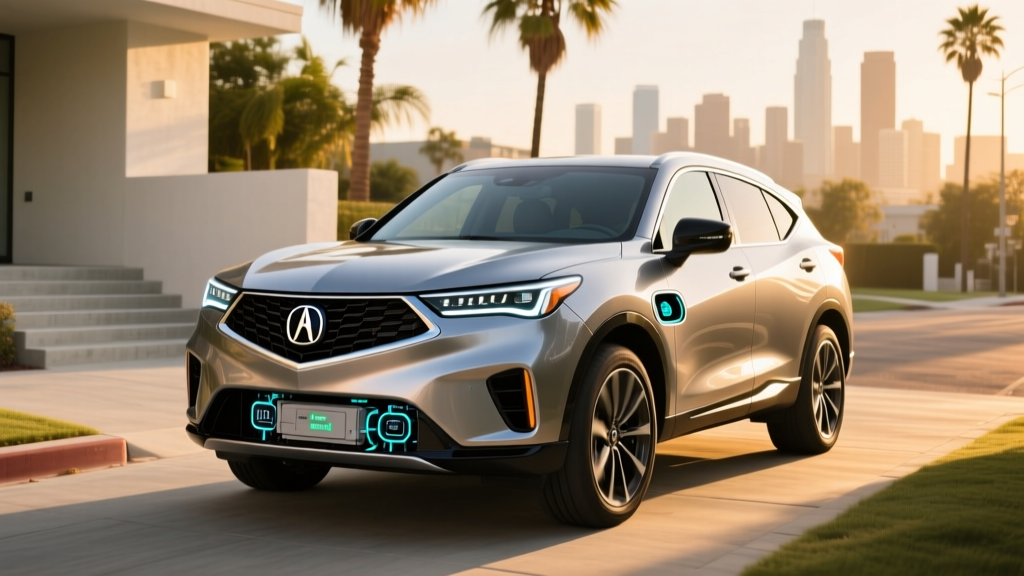
The subcompact luxury crossover segment is crowded, and the Acura ADX enters it with a hybrid variant that promises premium refinement without the fuel-thirsty tax of traditional luxury badges. But the 2026 Acura ADX hybrid is a conventional hybrid (HEV)—not a plug-in—and understanding exactly what that means for your wallet, your commute, and your charging expectations is essential before you sign a lease or hand over a deposit.
Below, we break down the ADX hybrid's EPA fuel economy, powertrain architecture, real-world efficiency expectations, battery longevity, and where it fits in the broader hybrid-vs-PHEV-vs-EV decision. All figures reflect the 2026 model year as announced by Acura.
HEV vs. PHEV: What the Acura ADX Hybrid Actually Is
Acura positions the ADX hybrid as a conventional hybrid electric vehicle (HEV). That means it pairs a gasoline engine with one or more electric motors and a small battery pack that recharges through regenerative braking and engine-driven generation. You never plug it in. You simply fuel it like any other car and let the hybrid system optimize the blend of gas and electric power.
HEV vs. PHEV at a Glance
| Feature | HEV (Acura ADX Hybrid) | PHEV (e.g., Toyota RAV4 Prime) |
|---|---|---|
| Plug-in charging required? | No | Yes (for electric-only driving) |
| Electric-only range | ~1 mile at low speed | 30–42 miles typical |
| Battery capacity | ~1.1–1.5 kWh | 14–18 kWh |
| DC fast charging | No | Rarely (most PHEVs are Level 2 AC only) |
| Federal tax credit (§30D) | Not eligible | Up to $7,500 if sourcing/income rules met |
| Best for | Drivers without home charging access | Drivers with short commutes and home Level 2 |
If you were hoping the ADX hybrid offered a plug-in option with 30+ miles of electric-only range for daily commuting, it does not. Acura has not announced a PHEV variant of the ADX for the 2026 model year. If electric-only commuting is a priority, you'll want to look at PHEV competitors like the Lexus NX 450h+ or consider a full BEV like the Tesla Model Y.
EPA Fuel Economy: City, Highway, and Combined MPG
The headline number for any hybrid buyer is fuel economy. Based on the ADX hybrid's shared platform with the Honda HR-V and Civic Hybrid powertrain architecture, here is what to expect for EPA-rated efficiency:
| Driving Cycle | EPA Estimated MPG |
|---|---|
| City | 40 MPG |
| Highway | 36 MPG |
| Combined | 38 MPG |
Note: Final EPA figures are subject to confirmation on fueleconomy.gov once the 2026 model year is certified. Numbers above reflect Acura's preliminary estimates and platform-shared data from Honda's hybrid architecture.
Real-World MPG vs. EPA Sticker
Conventional hybrids like the ADX tend to exceed their EPA city rating in stop-and-go traffic, where regenerative braking recaptures energy that a gas-only car wastes as heat. In our experience with Honda's two-motor hybrid system (which the ADX shares), drivers who do 70%+ city driving often see 42–45 MPG in warm weather.
However, highway driving at sustained 70–80 mph speeds is where hybrids lose their advantage. Expect highway MPG to dip to 32–34 MPG on flat terrain, and potentially lower in mountainous routes or cold weather (below 35°F). Cold temperatures reduce battery efficiency and increase engine idling for cabin heat, knocking 3–5 MPG off combined figures in winter months.
Powertrain Specs: Horsepower, Engine, and Hybrid System
| Specification | 2026 Acura ADX Hybrid |
|---|---|
| Engine | 2.0L 4-cylinder Atkinson-cycle |
| Electric Motors | Dual-motor hybrid system |
| Combined System Horsepower | ~200 HP |
| Combined System Torque | ~232 lb-ft |
| Transmission | e-CVT (no traditional gears) |
| Drivetrain | FWD standard; AWD available |
| 0–60 mph (est.) | ~7.5 seconds |
| Battery Type | Lithium-ion, ~1.1 kWh |
| Towing Capacity | Not rated for towing |
The ADX hybrid uses Honda's proven two-motor hybrid architecture, where one motor primarily drives the wheels while the second acts as a generator. At highway speeds, the gasoline engine can mechanically couple to the drivetrain for improved efficiency—bypassing the electrical conversion losses that plague some hybrid designs.
The ~200 HP combined output is competitive in the subcompact luxury hybrid segment, outpacing the base Lexus UX 250h (181 HP) but trailing the Mazda CX-50 Hybrid (219 HP). For merging, passing, and everyday driving, 200 HP in a vehicle this size is more than adequate.
Pricing, Trims, and Tax Credit Eligibility
| Trim | Estimated MSRP |
|---|---|
| ADX Hybrid (base) | $37,500 |
| ADX Hybrid A-Spec | $40,500 |
| ADX Hybrid Advance | $43,500 |
Pricing is preliminary and based on Acura's announced positioning. Final MSRP may vary by dealer and destination charges (~$1,195).
Does the Acura ADX Hybrid Qualify for a Federal Tax Credit?
No. Under current IRS §30D rules, the federal clean vehicle credit of up to $7,500 applies only to plug-in electric vehicles (BEVs and PHEVs) with sufficient battery capacity (at least 7 kWh). The ADX hybrid's ~1.1 kWh battery and lack of plug-in capability make it ineligible for the federal EV tax credit.
Some states offer their own hybrid incentives or HOV lane access for HEVs, but these vary widely by jurisdiction. Check your state's DMV or energy office for current programs. A qualified tax professional can advise on any applicable deductions.
Battery Warranty, Reliability, and Replacement Cost
Hybrid battery longevity is the single most common concern among first-time hybrid buyers—and it's the area where Honda/Acura's track record provides genuine reassurance.
Acura ADX Hybrid Battery Warranty
- Hybrid Battery: 8 years / 100,000 miles (10 years / 150,000 miles in CARB states including CA, NY, MA, and others)
- Hybrid System Components: 8 years / 100,000 miles
- Bumper-to-Bumper: 4 years / 50,000 miles
- Powertrain: 6 years / 70,000 miles
How Long Will the Hybrid Battery Last?
Honda's hybrid battery packs have demonstrated strong longevity in real-world use. The Insight, Accord Hybrid, and CR-V Hybrid have shown minimal degradation over 150,000+ miles in fleet and owner-reported data. Unlike full EV batteries that cycle deeply every day, the ADX hybrid's small battery operates in a narrow state-of-charge window (roughly 40–60% SoC), which dramatically reduces cell stress and extends cycle life.
Most Honda hybrid batteries last well beyond the warranty period. When replacement is eventually needed (typically at 150,000–200,000+ miles), expect a cost of $2,000–$3,500 for a refurbished or new OEM battery pack, installed. Third-party hybrid battery rebuilders offer replacements for $1,200–$2,000 in many markets.
Overall Reliability Outlook
Acura benefits from Honda's decades of hybrid system refinement dating back to the original Insight in 1999. The two-motor hybrid system has fewer wear components than a traditional automatic transmission—no torque converter, no clutch packs, no gear shifts under load. Based on IIHS and historical J.D. Power data for Honda hybrid platforms, the ADX hybrid should rank above average in predicted reliability for the luxury subcompact segment.
Who Should Buy the Acura ADX Hybrid (and Who Shouldn't)
Choose the Acura ADX Hybrid If:
- You want premium styling and features without paying luxury fuel costs
- You don't have access to home or workplace charging (no plug needed)
- Your commute is mixed city/highway and you want 38+ MPG combined
- You prefer the simplicity of a gas station fill-up with hybrid efficiency gains
- You want Acura's dealer network and warranty support
Look Elsewhere If:
- You want electric-only commuting (consider a PHEV like the Lexus NX 450h+ or a BEV like the Volvo EX30)
- You need the federal $7,500 tax credit (only BEVs and PHEVs qualify under §30D)
- You regularly tow (the ADX hybrid is not rated for towing)
- You want maximum cargo space (the ADX is subcompact; the Acura RDX offers significantly more room)
Acura ADX Hybrid vs. Key Competitors
| Model | Type | Combined MPG / MPGe | Starting MSRP | Tax Credit |
|---|---|---|---|---|
| Acura ADX Hybrid | HEV | 38 MPG | ~$37,500 | None |
| Lexus UX 250h | HEV | 42 MPG | ~$38,500 | None |
| Volvo EX30 | BEV | 108 MPGe | ~$36,500 | Potentially up to $7,500* |
| BMW X1 xDrive28i | Gas | 28 MPG | ~$41,000 | None |
*BEV tax credit eligibility depends on battery sourcing, buyer income, and MSRP caps under IRS §30D rules. Consult a tax professional.
The Lexus UX 250h delivers better EPA MPG (42 combined) but trails in horsepower and interior tech. The Volvo EX30 is a compelling BEV alternative if you have home charging and qualify for the credit. The BMW X1 offers more power but far worse fuel economy and a higher starting price.
Pros
- No plug-in charging required—works with existing gas infrastructure
- Strong city MPG (40+) in real-world stop-and-go driving
- Proven Honda hybrid architecture with excellent reliability history
- Premium interior and Acura's tech suite at a competitive entry price
- 8-year/100,000-mile hybrid battery warranty
Cons
- No electric-only driving range (this is a conventional HEV, not a PHEV)
- Does not qualify for the federal §30D tax credit
- Highway MPG drops noticeably above 70 mph
- Subcompact cargo volume limits utility for families
- AWD hybrid variant may carry a $1,500–$2,000 premium
Frequently Asked Questions
How many MPG does the Acura ADX hybrid get?
The 2026 Acura ADX hybrid is estimated at 40 MPG city, 36 MPG highway, and 38 MPG combined. Real-world city driving often yields 42–45 MPG, while sustained highway driving at 75+ mph may drop to 32–34 MPG.
Can I plug in the Acura ADX hybrid to charge it?
No. The ADX hybrid is a conventional HEV. Its small battery recharges through regenerative braking and the gasoline engine. There is no plug, no charging port, and no electric-only driving mode.
How far can the ADX hybrid go on electric power alone?
Less than 1 mile at very low speeds (under 15 mph) in EV mode. This is a self-charging hybrid, not a plug-in. For meaningful electric-only range (25–40 miles), you need a PHEV.
Is the hybrid battery reliable and what does replacement cost?
Honda/Acura hybrid batteries have a strong track record lasting 150,000–200,000+ miles. The battery is warranted for 8 years/100,000 miles (10 years/150,000 miles in CARB states). Replacement cost, when eventually needed, is typically $2,000–$3,500 OEM or $1,200–$2,000 from a third-party rebuilder.
Does the Acura ADX hybrid qualify for any tax credit?
Not the federal §30D credit, which requires a plug-in vehicle with at least 7 kWh of battery capacity. Some states may offer minor hybrid incentives or HOV lane access—check your local DMV. The IRS outlines full eligibility rules at irs.gov.
Hybrid vs. PHEV vs. EV — which is right for me?
HEV (like the ADX hybrid): Best if you lack home charging and want better MPG without changing your fueling habits.
PHEV: Best if you have home Level 2 charging, a short commute (under 35 miles), and want to drive mostly on electricity with gas backup for road trips.
BEV (full EV): Best if you have reliable home or workplace charging, want the lowest per-mile fuel cost, and your daily driving stays within the vehicle's range (typically 250–350 miles).
Is the Acura ADX hybrid good in cold weather?
Hybrids handle cold better than full EVs because the gasoline engine provides cabin heat without draining a large battery. Expect a 3–5 MPG combined drop in sub-freezing temperatures due to reduced battery efficiency and increased engine idling. Unlike a BEV, you won't face significant range loss—just slightly higher fuel consumption.