Quick Verdict: The Midsize Sedan That Makes Hybrids Make Sense
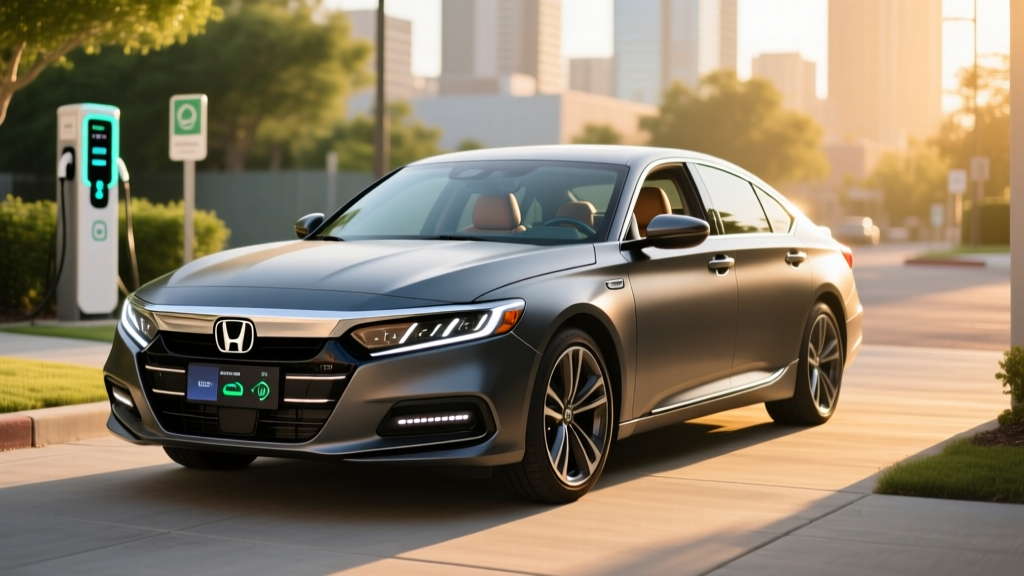
The 2026 Honda Accord EX-L Hybrid occupies a specific and increasingly rare niche: a midsize sedan that delivers exceptional fuel economy without asking you to change how you drive, charge, or plan road trips. With an EPA-estimated 48 MPG combined, a proven two-motor hybrid system, and Honda's reputation for long-term durability, the Accord EX-L Hybrid remains a benchmark for buyers who want electrified efficiency without the infrastructure dependence of a full battery-electric vehicle.
The EX-L sits in the upper half of the Accord Hybrid lineup, adding leather-trimmed seats, a heated steering wheel, wireless phone charging, and Honda's upgraded 12.3-inch infotainment display with wireless Apple CarPlay and Android Auto. It shares the same powertrain as every other Accord Hybrid trim — a 2.0-liter Atkinson-cycle four-cylinder paired with two electric motors — meaning the efficiency and performance story is consistent across the range.
| Specification | 2026 Accord EX-L Hybrid |
|---|---|
| Powertrain | 2.0L Atkinson I-4 + two-motor hybrid system |
| Combined Horsepower | 204 hp |
| Combined Torque | 247 lb-ft (electric motor) |
| Transmission | e-CVT (no traditional gears) |
| EPA MPG (City / Hwy / Combined) | 51 / 44 / 48 |
| Fuel Tank | 12.8 gallons |
| Total Range | ~614 miles |
| 0–60 mph | ~7.0 seconds |
| Drivetrain | Front-wheel drive |
| Battery Type | Lithium-ion (traction) |
| MSRP (EX-L Hybrid) | $37,390 (est.) |
| Federal Tax Credit | Not eligible (§30D requires plug-in) |
| Hybrid Battery Warranty | 8 years / 100,000 miles (10 yr/150k in CARB states) |
HEV vs. PHEV: Why the Accord Hybrid Doesn't Plug In
Before evaluating the Accord, it is essential to understand what it is — and what it is not. The 2026 Accord Hybrid is a conventional hybrid electric vehicle (HEV). It generates all its electricity internally through regenerative braking and its gasoline engine. There is no plug, no charging port, and no electric-only driving range to manage.
A plug-in hybrid electric vehicle (PHEV), by contrast, carries a larger battery (typically 12–25 kWh) that can be charged from a wall outlet or public charger, delivering 25–50 miles of electric-only driving before the gas engine takes over. PHEVs like the Toyota RAV4 Prime or Hyundai Tucson PHEV qualify for partial or full federal tax credits under IRS §30D rules, while conventional HEVs like the Accord Hybrid do not.
Choose the Accord HEV if: you lack access to home or workplace charging, want zero behavior change from a gas car, and prioritize low running costs and simplicity.
Consider a PHEV instead if: you can charge at home overnight and want electric-only commuting for short trips while retaining gas-engine range flexibility.
Fuel Economy: EPA Numbers and Real-World MPG
The EPA rates the 2026 Accord Hybrid at 51 MPG city, 44 MPG highway, and 48 MPG combined for the EX-L trim. These figures are among the highest in the midsize sedan segment and are a direct result of Honda's two-motor hybrid architecture, which operates primarily as a series hybrid at low and moderate speeds — meaning the gasoline engine generates electricity while the drive motor propels the car. Only at sustained highway speeds does the engine mechanically connect to the wheels via a lock-up clutch.
| Driving Condition | EPA Estimate | Real-World Expectation |
|---|---|---|
| City | 51 MPG | 50–55 MPG (hybrids often exceed EPA in stop-and-go) |
| Highway (70 mph) | 44 MPG | 40–44 MPG (aero drag and engine-direct drive reduce advantage) |
| Combined | 48 MPG | 45–50 MPG (depends on city/highway mix) |
| Cold Weather (below 32°F) | — | 38–43 MPG (engine runs more for cabin heat) |
Real-world note: Honda's hybrid system is one of the few that regularly matches or slightly exceeds its EPA city rating in actual driving. Regenerative braking recaptures energy aggressively in traffic, and the engine shuts off frequently at stops. Highway efficiency is more aligned with the sticker — and in sub-freezing temperatures, expect a 10–15% MPG reduction as the engine runs more often to provide cabin heating. A direct comparison on fueleconomy.gov confirms these class-leading figures against competitors.
Powertrain Deep Dive: Two Motors, No Traditional Transmission
The Accord Hybrid uses Honda's fourth-generation two-motor hybrid system. Here is how the components work together:
- 2.0-liter Atkinson-cycle I-4 engine: Produces approximately 146 hp and 134 lb-ft of torque on its own. The Atkinson cycle sacrifices low-RPM torque for superior thermal efficiency — ideal for a hybrid where electric motors compensate for the engine's torque gap.
- Propulsion motor: The primary drive motor delivers 181 hp and 247 lb-ft of torque to the front wheels. This is the motor you feel during acceleration from a stop and through most city driving.
- Generator motor: Works with the engine to produce electricity, which either feeds the propulsion motor directly or charges the lithium-ion traction battery.
- e-CVT: Not a belt-and-pulley CVT. Honda's system uses a fixed gear ratio with a lock-up clutch for high-speed cruising. The result is smooth, linear acceleration without the rubber-band effect that plagues older CVT designs.
Combined system output is 204 horsepower. The 0–60 mph time of approximately 7.0 seconds is respectable for a 3,400-pound sedan and means highway merging is confident. The electric motor's instant torque (available from 0 RPM) makes the Accord Hybrid feel quicker off the line than its peak horsepower figure suggests.
Interior, Tech, and the EX-L Trim Advantage
The EX-L Hybrid distinguishes itself from the Sport Hybrid and Sport-L Hybrid trims with a more comfort-oriented cabin. Key EX-L features include:
- Leather-trimmed seats with heated front seats and heated steering wheel
- 10-way power driver's seat with 2-position memory
- 12.3-inch touchscreen with wireless Apple CarPlay and Android Auto
- Wireless phone charging pad
- 8-speaker audio system
- Honda Sensing suite: adaptive cruise control, lane-keeping assist, collision mitigation braking, traffic sign recognition
- Blind-spot information system with rear cross-traffic monitor
The Accord's cabin materials and assembly quality remain a segment high point. Rear-seat legroom (40.8 inches) is generous enough for full-size adults on long trips, and the trunk offers 16.7 cubic feet of cargo volume — unaffected by the hybrid battery, which is packaged under the rear seats.
Battery Longevity, Warranty, and Replacement Costs
Hybrid Battery Warranty: Honda covers the Accord Hybrid's lithium-ion traction battery for 8 years or 100,000 miles (whichever comes first) in most states. In California Air Resources Board (CARB) states — which include California, New York, Massachusetts, Colorado, and several others — the warranty extends to 10 years or 150,000 miles.
Real-world degradation: Unlike full EVs with large 60–100 kWh batteries, the Accord Hybrid's traction battery is small (approximately 1.0 kWh usable). It cycles frequently but shallowly. Honda's hybrid batteries have demonstrated strong longevity in fleet and owner data, with many Accord and Insight Hybrids surpassing 150,000–200,000 miles on the original battery pack. The battery management system keeps the pack within a narrow state-of-charge window (roughly 40–80%), which is the optimal range for lithium-ion longevity.
Replacement cost: If the hybrid battery does require replacement outside of warranty, expect to pay between $2,000 and $4,000 for a new OEM pack installed at a Honda dealer. Refurbished or aftermarket packs can reduce this to $1,000–$2,000. This is substantially less than full EV battery replacements, which can exceed $10,000–$20,000.
The 12-volt auxiliary battery (which powers electronics, lights, and the computer that boots the hybrid system) is a separate maintenance item. Expect to replace it every 4–6 years at a cost of $150–$300 — identical to any conventional vehicle.
Pricing, Tax Credits, and Total Cost of Ownership
The 2026 Honda Accord EX-L Hybrid carries an estimated MSRP of $37,390 including destination charges. This positions it roughly $1,500–$2,000 above the Accord Sport Hybrid and about $4,000 above the base Accord Hybrid LX.
Federal tax credit: The Accord Hybrid is a conventional HEV and does not qualify for the IRS §30D Clean Vehicle Credit. That credit — up to $7,500 — is reserved for plug-in electric vehicles (BEVs and PHEVs) that meet battery sourcing, critical mineral, MSRP, and buyer income requirements. See the IRS §30D guidance for current eligibility rules.
State incentives: A handful of states offer modest rebates or HOV lane access for conventional hybrids, but these are increasingly rare as incentive programs shift toward plug-in vehicles. Check your state's energy or DMV website for current programs.
5-year ownership cost snapshot:
| Cost Category | Accord EX-L Hybrid (5 yr) | Gas Accord EX-L (5 yr, est.) |
|---|---|---|
| Fuel (15,000 mi/yr, $3.40/gal) | ~$5,310 | ~$8,500 |
| Insurance (avg.) | ~$7,500 | ~$7,200 |
| Maintenance | ~$2,800 | ~$3,200 |
| Depreciation (est.) | ~$14,000 | ~$15,500 |
| Total (approx.) | ~$29,610 | ~$34,400 |
Over five years, the Accord Hybrid's fuel savings alone offset its higher purchase price. Lower brake wear (thanks to regenerative braking) and strong resale values further improve the equation. According to IIHS safety ratings, the Accord continues to earn top marks, which supports insurance costs and long-term value.
Pros
- Class-leading 48 MPG combined; often exceeds EPA city rating
- Smooth, linear acceleration with instant electric torque
- No charging infrastructure required — fill up at any gas station
- Spacious rear seat and full-size trunk (no battery intrusion)
- Proven hybrid system with strong long-term reliability data
- Comprehensive Honda Sensing safety suite standard
Cons
- No federal tax credit eligibility (HEV, not PHEV)
- Highway MPG advantage narrows vs. efficient gas sedans
- FWD only — no AWD option for snow-belt buyers
- Engine drone under hard acceleration (e-CVT characteristic)
- Higher MSRP than gas-only Accord trims
Accord Hybrid vs. PHEV vs. Full EV: Which Fits You?
Choose the Accord Hybrid (HEV) if:
- You cannot install a home charger (apartment, street parking, no garage)
- You regularly take long road trips and don't want to plan around charging stops
- You want maximum simplicity — no apps, no charging networks, no plug-in routines
- Your daily commute is variable and sometimes exceeds 50+ miles
Choose a PHEV (e.g., Toyota Prius Prime, Hyundai Sonata PHEV) if:
- You have Level 2 home charging and a commute under 40 miles round-trip
- You want to drive mostly on electricity but need gas-engine flexibility for longer trips
- You want to capture partial federal or state tax credits
Choose a full EV (e.g., Tesla Model 3, Hyundai Ioniq 6) if:
- You have reliable home Level 2 charging
- Your daily driving is under 250 miles and you can plan for road-trip DC fast charging
- You want the lowest per-mile energy cost and zero tailpipe emissions
- You qualify for the full $7,500 federal credit and want to maximize incentives
Frequently Asked Questions
How many MPG does the 2026 Accord EX-L Hybrid get?
The EPA rates it at 51 MPG city, 44 MPG highway, and 48 MPG combined. In real-world city driving, many owners report matching or slightly exceeding the 51 MPG city figure thanks to aggressive regenerative braking and frequent engine shutoff. Highway driving at 70+ mph typically returns 40–44 MPG.
Does the Accord Hybrid need to be plugged in?
No. The Accord Hybrid is a conventional HEV. It charges its own battery through regenerative braking and the gasoline engine. There is no charging port and no plug-in capability.
Is the Accord Hybrid reliable, and what does a battery replacement cost?
Honda's two-motor hybrid system has an excellent long-term reliability record. The hybrid battery is warranted for 8 years/100,000 miles (10 years/150,000 miles in CARB states). Real-world data shows many Honda hybrid batteries lasting 150,000–200,000+ miles. Out-of-warranty replacement costs $2,000–$4,000 for an OEM pack.
Does the 2026 Accord Hybrid qualify for a federal tax credit?
No. The IRS §30D Clean Vehicle Credit applies only to plug-in electric vehicles (BEVs and PHEVs). The Accord Hybrid is a conventional HEV and is not eligible. Some states may offer minor incentives — check your state energy office for details.
How does the Accord Hybrid compare to the Toyota Camry Hybrid?
The Camry Hybrid (51 city / 53 hwy / 52 combined with FWD) holds a slight edge in highway and combined MPG and offers available AWD. The Accord Hybrid counters with more rear-seat legroom, a larger trunk, and a more refined ride quality. Both are excellent choices; the decision often comes down to brand preference and which dealer network is more convenient for service.
Can the Accord Hybrid run on electric power alone?
Only for very short distances at low speeds (typically under 1 mile below 25 mph in EV mode). The battery is too small (~1.0 kWh) for meaningful electric-only driving. This is normal for conventional hybrids — the electric motor's role is to assist the engine and recapture energy, not to replace it.