What the 2027 Hybrid Telluride Is — and Isn't
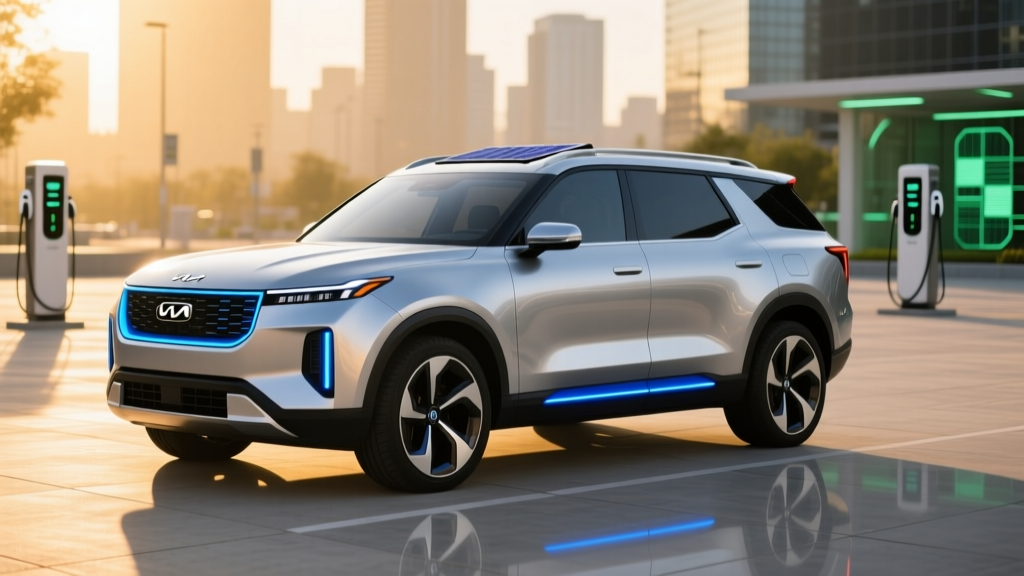
The Kia Telluride has dominated the three-row SUV segment since its 2020 debut, but one thing it has never offered is electrification. That changes with the upcoming third-generation model. Industry reports and Kia's own product roadmap confirm that a 2027 hybrid Telluride is in development, likely arriving in showrooms by late 2026 as an early 2027 model-year vehicle. What remains unconfirmed is whether Kia will offer a conventional hybrid (HEV), a plug-in hybrid (PHEV), or both.
Based on Kia's current hybrid strategy — the Sorento already offers both HEV and PHEV variants — the Telluride is expected to follow suit. The hybrid system will likely share architecture with the Sorento Hybrid and PHEV but tuned for the Telluride's larger mass and towing requirements.
Note: As of this writing, Kia has not released official specifications for the 2027 hybrid Telluride. All figures below are based on the current Sorento hybrid platform, Kia's published product plans, and credible industry reporting. We will update this guide when official specs are confirmed.
HEV vs PHEV: Which Hybrid Telluride Makes Sense?
| Feature | Conventional Hybrid (HEV) | Plug-in Hybrid (PHEV) |
|---|---|---|
| Plug in to charge? | No — charges via regenerative braking and engine | Yes — plug in for electric-only driving |
| Electric-only range | None (electric assist only at low speeds) | Expected 30–40 miles |
| Battery size | ~1.5–2.0 kWh (small buffer) | ~13–18 kWh usable |
| Home charging needed? | No | Recommended (Level 2, ~2–4 hours) |
| DC fast charging? | No | Unlikely — most Kia PHEVs are AC-only |
| Federal tax credit | Not eligible for §30D credit | May qualify for partial §30D credit (up to $7,500) |
| Best for | Drivers without home charging access | Drivers with home charging and short commutes |
The distinction matters enormously. A conventional hybrid Telluride would work exactly like a Toyota Highlander Hybrid — you fill it with gas and drive. The hybrid system recovers energy during braking and assists the engine, improving fuel economy without any change to your fueling habits. A PHEV Telluride, by contrast, would let you complete most daily commutes on electricity alone, with the gas engine as backup for longer trips. But it only delivers value if you can charge at home overnight.
Expected MPG and Electric Range
Since official EPA figures aren't yet published on fueleconomy.gov, we can project based on the mechanically similar Sorento Hybrid and the current gas Telluride's efficiency.
| Configuration | City MPG | Highway MPG | Combined MPG | Electric-Only Range | MPGe (PHEV) |
|---|---|---|---|---|---|
| Gas Telluride (2026, AWD) | 18 | 24 | 21 | N/A | N/A |
| Telluride HEV (projected, AWD) | 30–33 | 27–30 | 29–31 | N/A | N/A |
| Telluride PHEV (projected, AWD) | 33–36 (gas) | 30–33 (gas) | 32–34 (gas) | 30–40 mi | 75–85 |
Real-world MPG note: Hybrids typically exceed their EPA city estimates in stop-and-go traffic because regenerative braking recovers more energy at lower speeds. However, highway MPG often falls slightly below the EPA sticker, especially at sustained 75–80 mph speeds or with a full load of passengers and cargo. Expect the hybrid Telluride HEV to deliver roughly 31–34 MPG in city driving and 26–29 MPG on the highway in mixed real-world use. For the PHEV, electric-only range will drop to approximately 25–33 miles in cold weather (below 40°F) due to cabin heating demands and reduced battery efficiency.
Powertrain and Performance Specs
| Specification | HEV (Projected) | PHEV (Projected) |
|---|---|---|
| Engine | 1.6L turbocharged 4-cylinder | 1.6L turbocharged 4-cylinder |
| Electric motor | ~47 kW (63 hp) | ~72–90 kW (97–120 hp) |
| Combined system output | ~230–250 hp | ~270–310 hp |
| Transmission | 6-speed automatic | 6-speed automatic |
| Drivetrain | AWD (expected standard) | AWD (expected standard) |
| Battery capacity | ~1.5–2.0 kWh | ~13–18 kWh (usable) |
| Battery chemistry | NMC (lithium-ion) | NMC (lithium-ion) |
| 0–60 mph (est.) | ~7.5–8.0 seconds | ~6.5–7.5 seconds |
| Towing capacity | ~5,000 lbs (expected) | ~4,500–5,000 lbs (expected) |
Kia's 1.6-liter turbocharged hybrid powertrain is the same family used in the Sorento Hybrid and Sportage Hybrid, but the Telluride's greater curb weight — likely 4,600–4,900 lbs for the hybrid — means the system will be tuned for more low-end torque. The PHEV variant, with its larger electric motor, should offer noticeably stronger acceleration from a stop, where electric torque delivery is immediate.
One critical question is towing. The current gas Telluride tows up to 5,500 lbs (5,000 lbs with standard equipment). Hybrid systems add weight and complexity, and towing at maximum capacity will significantly reduce fuel economy — expect the HEV to drop to roughly 18–22 MPG when pulling a heavy trailer, similar to the gas model under the same load.
Pricing, Tax Credits, and Incentives
Kia has not announced pricing, but we can estimate based on the current Telluride lineup and the hybrid premium Kia charges on the Sorento.
- 2026 Gas Telluride MSRP: $37,585 (LX) to $54,285 (SX Prestige X-Pro)
- Sorento Hybrid premium over gas: ~$1,500–$2,500
- Sorento PHEV premium over gas: ~$7,000–$9,000
Applying those premiums, a 2027 hybrid Telluride HEV would likely start around $39,500–$41,000, while the PHEV variant could start in the $45,000–$48,000 range before destination charges.
Federal Tax Credit Eligibility (§30D)
The conventional HEV Telluride will not qualify for the federal §30D clean vehicle tax credit — that credit is reserved for plug-in vehicles with sufficient battery capacity.
The PHEV Telluride may qualify, but eligibility under current IRS rules depends on several factors that change frequently:
- MSRP cap: SUVs must have an MSRP at or below $80,000 — the Telluride PHEV should clear this easily
- Buyer income cap: Modified adjusted gross income must not exceed $150,000 (single), $225,000 (head of household), or $300,000 (joint filing)
- Battery sourcing: Critical minerals and battery components must meet escalating domestic-sourcing thresholds that tighten each year through 2029
- Point-of-sale transfer: Eligible buyers can transfer the credit to the dealer at purchase, reducing the upfront price rather than waiting for a tax refund
The battery-sourcing requirements are the wildcard. Several PHEVs and EVs have lost partial or full credit eligibility as rules tighten. Consult a tax professional and check the IRS qualified vehicle list at the time of purchase.
Battery Warranty, Reliability, and Replacement Cost
Kia's Hybrid Battery Warranty: Kia covers hybrid, PHEV, and EV battery packs with a 10-year / 100,000-mile warranty (in most states; California-emissions states may see extended terms). This warranty covers defects and capacity loss below a specified threshold — typically 70% of original capacity for PHEV packs. The conventional HEV's smaller battery is also covered under this same warranty.
Hybrid battery reliability has improved dramatically over the past decade. Toyota's hybrid systems, the industry benchmark, routinely exceed 200,000 miles without battery replacement. Kia's hybrid technology is newer to market, but the Sorento Hybrid has shown no systemic battery failure patterns since its introduction.
If a battery replacement is needed out of warranty, expect the following costs based on current Kia hybrid service pricing:
- HEV battery replacement: $2,000–$3,500 (smaller pack, simpler design)
- PHEV battery replacement: $5,000–$8,000 (larger pack, more cells)
For context, a conventional 12V battery replacement in any vehicle runs $150–$300. The hybrid traction battery is a completely separate system.
Who Should Buy the Hybrid Telluride — and Who Shouldn't
Choose the HEV Telluride if:
- You want better fuel economy without changing your fueling routine
- You don't have access to home or workplace charging
- You frequently take long road trips and don't want to plan around charging stops
- You tow occasionally and want maximum simplicity
Choose the PHEV Telluride if:
- You can install a Level 2 charger at home (240V outlet or hardwired unit)
- Your daily commute is under 35 miles round-trip (you'd rarely use gas on weekdays)
- You want EV-like daily driving with gas-engine flexibility for road trips
- You qualify for the federal tax credit, offsetting the higher purchase price
Choose a full EV instead (like the Kia EV9) if:
- You have reliable home charging and your daily driving is under 250 miles
- You want zero tailpipe emissions and minimal maintenance (no oil changes, no engine)
- You qualify for the full $7,500 federal tax credit on an eligible EV
Stick with the gas Telluride if:
- You want the lowest upfront purchase price
- You plan to keep the vehicle for only 2–3 years (hybrid premium may not pay back)
- You regularly tow near maximum capacity where hybrid fuel savings diminish
How the Hybrid Telluride Compares to Rivals
The three-row hybrid SUV segment is competitive. Here's how the projected Telluride Hybrid stacks up against current benchmarks:
| Spec | 2027 Telluride HEV (proj.) | 2026 Toyota Highlander Hybrid | 2026 Mazda CX-90 PHEV |
|---|---|---|---|
| Combined MPG | 29–31 | 35 | 25 (gas) / 56 MPGe (elec) |
| Combined HP | 230–250 | 243 | 323 |
| Third-row seat | Yes | Yes | Yes |
| Starting MSRP | $39,500–$41,000 | $40,720 | $49,945 |
| Battery warranty | 10 yr / 100,000 mi | 10 yr / 150,000 mi | 8 yr / 100,000 mi |
| Towing capacity | ~5,000 lbs | 3,500 lbs | 3,500 lbs |
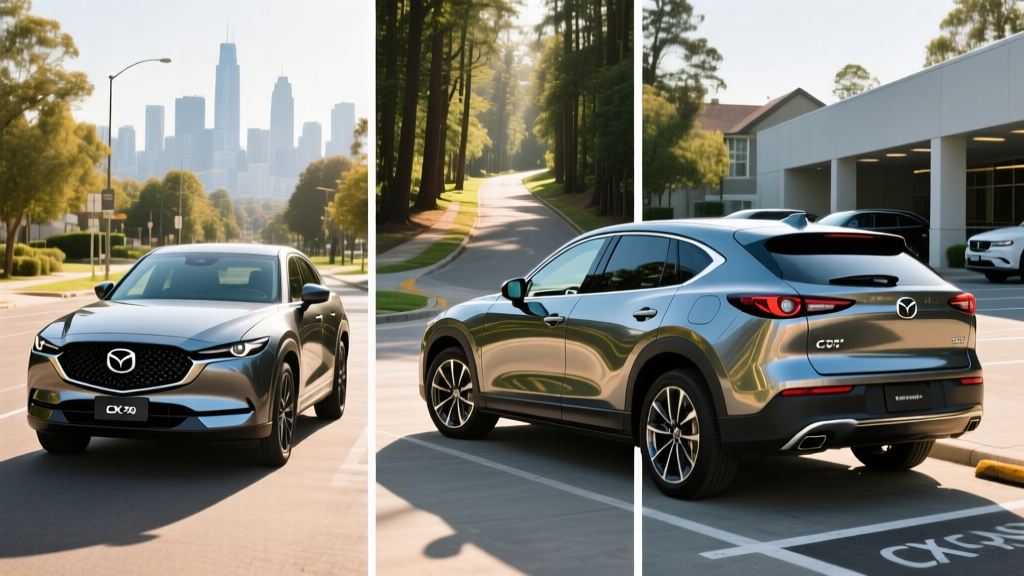
The Highlander Hybrid leads in fuel economy, but its third row is cramped and towing is limited to 3,500 lbs. The CX-90 PHEV offers more power and a premium interior but at a significantly higher price. The hybrid Telluride's advantage, if Kia executes as expected, will be combining genuine three-row usability, strong towing, and hybrid efficiency at a competitive price — the same formula that made the gas Telluride a perennial best-seller.
Frequently Asked Questions
How many MPG does the 2027 hybrid Telluride get?
Official EPA numbers are not yet published. Based on the Sorento Hybrid's efficiency and the Telluride's larger mass, we project the HEV variant at approximately 30–33 MPG city, 27–30 MPG highway, and 29–31 MPG combined. The PHEV variant would achieve similar gas-only MPG with an additional 30–40 miles of electric-only range. Real-world results will vary based on driving style, terrain, temperature, and passenger load.
How far can the PHEV Telluride go on electric only?
We estimate 30–40 miles of electric-only range for the PHEV variant, based on the Sorento PHEV's 32-mile EPA rating and the Telluride's expected larger battery pack (13–18 kWh usable). Cold weather (below 40°F) will reduce this to roughly 25–33 miles due to increased cabin heating demand and reduced battery efficiency.
Does the hybrid Telluride need to be plugged in?
The conventional hybrid (HEV) does not need to be plugged in — it charges its small battery through regenerative braking and the gas engine. The plug-in hybrid (PHEV) does benefit from being plugged in to access its electric-only range, though it will still operate as a regular hybrid if you never plug it in.
Is the hybrid Telluride reliable, and what does a battery replacement cost?
Kia's hybrid system has shown strong reliability since its introduction in the Sorento and Niro lines. The hybrid battery is covered by a 10-year/100,000-mile warranty. Out-of-warranty replacement costs are estimated at $2,000–$3,500 for the HEV pack and $5,000–$8,000 for the PHEV pack. For comparison, Toyota's hybrid batteries routinely last 200,000+ miles without replacement.
Does the 2027 hybrid Telluride qualify for a tax credit?
The conventional HEV variant does not qualify for the federal §30D clean vehicle tax credit. The PHEV variant may qualify for up to $7,500, depending on your income, the vehicle's MSRP (must be ≤$80,000 for SUVs), and battery-sourcing compliance at the time of purchase. Check the current IRS qualified vehicle list before buying, as eligibility changes. Some states also offer additional incentives for PHEVs — check your state's energy office or AFDC state incentive database.
When will the 2027 hybrid Telluride be available?
Kia has not announced an exact on-sale date. Based on the typical product cycle and industry reporting, the third-generation Telluride — including hybrid variants — is expected to debut in late 2026 as a 2027 model-year vehicle. We will update this article when Kia confirms timing and specifications.