Quick Verdict: A Hybrid Pilot Is Coming — Here's What to Expect
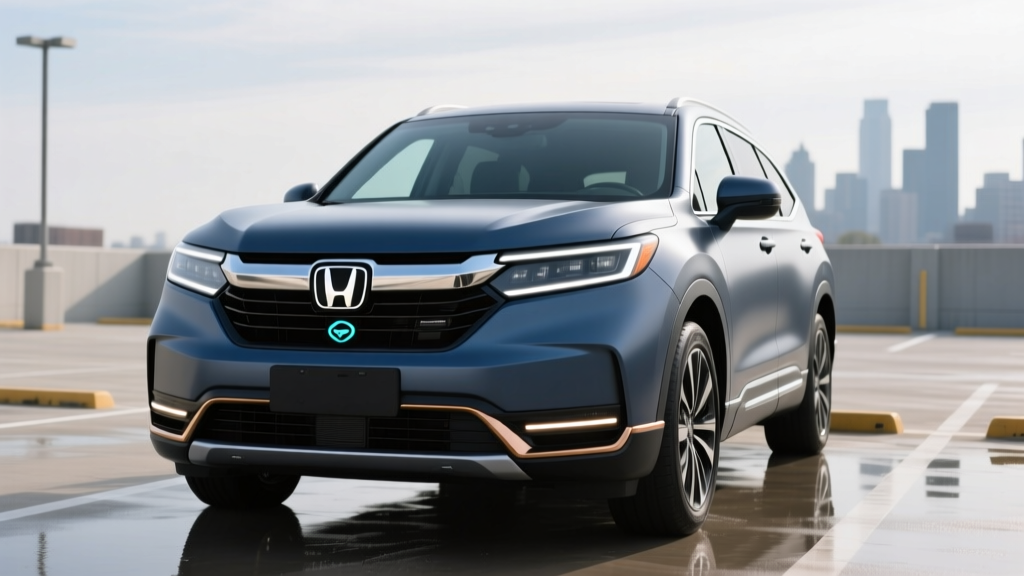
Honda has not sold a hybrid version of its three-row Pilot SUV since the early 2000s, and that drought is poised to end. Industry reports and Honda's own electrification roadmap point to a 2027 Honda Pilot Hybrid arriving as either a conventional hybrid (HEV), a plug-in hybrid (PHEV), or both. With the current fourth-generation Pilot (redesigned for 2023) expected to receive a mid-cycle refresh around the 2026–2027 model year, a hybrid powertrain would slot naturally into that update.
This preview is based on Honda's confirmed hybrid technology (the two-motor system already in the CR-V Hybrid and Accord Hybrid), current regulatory filings, and competitive positioning. All specs below are preliminary estimates and will be updated once Honda publishes official figures. If you're cross-shopping a three-row family hauler and want to reduce fuel costs without going full EV, the Pilot Hybrid is worth tracking.
HEV vs. PHEV: Which Pilot Hybrid Makes Sense?
Before we dig into specs, it's critical to understand the two hybrid flavors Honda could offer. Conventional hybrids and plug-in hybrids solve different problems, and confusing them is the single most common mistake hybrid shoppers make.
Conventional Hybrid (HEV)
- No plug required — the battery recharges via regenerative braking and the engine
- Small battery (~1.0–1.5 kWh)
- Improves MPG across all driving conditions, especially city
- Lower cost, simpler ownership
- Example: Honda CR-V Hybrid, Toyota Highlander Hybrid
Plug-In Hybrid (PHEV)
- Plugs in to charge — provides 25–40 miles of electric-only driving
- Larger battery (~15–20 kWh)
- Gas engine kicks in for longer trips — no range anxiety
- May qualify for federal tax credit (up to $7,500 under §30D)
- Example: Toyota RAV4 Prime, Hyundai Tucson PHEV
Honda's current US hybrid lineup uses conventional HEV systems exclusively. However, Honda has sold PHEVs in other markets (notably the Clarity PHEV, discontinued in the US after 2021) and has the engineering capability to offer a Pilot PHEV. Our analysis covers both scenarios.
Estimated Powertrain and Performance
The most likely hybrid system for the 2027 Pilot is an evolution of Honda's two-motor hybrid architecture, scaled up from the CR-V Hybrid to handle a 4,500+ lb three-row SUV. Here's what we expect based on Honda's current e:HEV platform and the competitive landscape:
| Specification | HEV (Estimated) | PHEV (Estimated) |
|---|---|---|
| Engine | 2.0L 4-cyl Atkinson cycle | 2.0L 4-cyl Atkinson cycle |
| Combined Horsepower | ~250–270 hp | ~290–310 hp |
| Electric Motors | Two-motor system (drive + generator) | Two-motor system (higher output) |
| Battery Capacity | ~1.3 kWh (lithium-ion) | ~17–20 kWh (lithium-ion) |
| Transmission | e-CVT (direct drive) | e-CVT (direct drive) |
| Drivetrain | AWD (standard) | AWD (standard) |
| 0–60 mph (est.) | ~7.0–7.5 sec | ~6.0–6.5 sec |
| Towing Capacity (est.) | 3,500–5,000 lbs | 3,500–5,000 lbs |
For context, the current gas-only Pilot's 3.5L V6 produces 285 hp and 262 lb-ft of torque. Honda's hybrid system prioritizes low-end electric torque, so the hybrid Pilot should feel more responsive in city driving despite potentially matching or slightly trailing the V6 on peak horsepower.
Fuel Economy: Estimated MPG and Real-World Expectations
This is the headline number for most hybrid buyers. The current gas-only Pilot AWD is rated at 19 city / 25 highway / 21 combined MPG (EPA). A hybrid variant should deliver a substantial improvement, particularly in stop-and-go city driving where Honda's two-motor system excels.
| Configuration | City | Highway | Combined |
|---|---|---|---|
| Current Pilot AWD (gas, 2025) | 19 | 25 | 21 |
| Pilot HEV AWD (est.) | 28–32 | 27–30 | 28–31 |
| Pilot PHEV AWD (est., gas mode) | 30–35 | 28–32 | 30–33 |
| Pilot PHEV (est., MPGe combined) | 70–80 MPGe (electric + gas combined) | ||
For the PHEV variant, electric-only range is estimated at 30–40 miles — enough to cover most daily commutes and school runs without using a drop of gasoline. Total combined range (electric + full gas tank) should exceed 500 miles.
PHEV Charging: Battery, Charge Times, and DC Fast-Charge Capability
If Honda offers a PHEV Pilot, charging logistics become a key ownership consideration. Here's what to expect based on Honda's PHEV history and the current market:
| Charging Level | Power | 0–100% Time (est.) | Connector |
|---|---|---|---|
| Level 1 (120V household outlet) | 1.4 kW | ~14–16 hours | J1772 |
| Level 2 (240V home charger) | 7.2 kW | ~2.5–3 hours | J1772 |
| DC Fast Charging | Unlikely / TBD | N/A | N/A |
Important distinction — kW vs kWh: The battery capacity is measured in kWh (kilowatt-hours, the energy stored — think of it as the "tank size"). The charger output is measured in kW (kilowatts, the rate of energy flow — think of it as the "pump speed"). A 7.2 kW Level 2 charger filling a ~18 kWh battery takes roughly 2.5 hours (18 ÷ 7.2 = 2.5, plus charging losses).
Most PHEVs in this class — including the Toyota RAV4 Prime and Hyundai Tucson PHEV — do not support DC fast charging. Honda's previous Clarity PHEV also lacked DC fast-charge capability. We expect the Pilot PHEV to follow this pattern: Level 2 at home is the intended use case, and a 2.5-hour charge time is practical for overnight top-ups. If Honda breaks with tradition and adds DC fast charging (even at 50 kW), it would be a significant competitive advantage for apartment dwellers and road-trippers.
Pricing, Trims, and Tax Credit Eligibility
The current 2025 Honda Pilot starts at $38,485 (LX AWD) and tops out around $55,670 (Elite AWD), per Honda's official pricing. A hybrid variant will command a premium, but Honda has historically kept hybrid upcharges modest.
| Trim (Estimated) | HEV MSRP (est.) | PHEV MSRP (est.) |
|---|---|---|
| Sport / EX-L Hybrid | $44,000–$46,000 | $50,000–$53,000 |
| Touring Hybrid | $48,000–$50,000 | $54,000–$57,000 |
| Elite Hybrid | $52,000–$55,000 | $58,000–$62,000 |
Federal Tax Credit: Does the Pilot Hybrid Qualify?
This depends heavily on which variant you buy and where it's built:
- Conventional HEV: Does not qualify for the federal §30D clean vehicle credit. Conventional hybrids are not eligible — only BEVs and PHEVs with sufficient battery capacity qualify.
- PHEV variant: May qualify for up to $7,500 under IRS §30D rules, but several conditions apply:
- MSRP cap: SUVs must be under $80,000 — the Pilot PHEV should clear this easily.
- Income cap: Buyer AGI must not exceed $150,000 (single) / $300,000 (joint).
- Battery sourcing: Critical minerals and battery components must meet phased-in percentage thresholds from US or FTA-partner countries. Honda's supply chain has been shifting toward compliance, but this is the most uncertain variable.
- Point-of-sale transfer: As of 2024, the credit can be transferred to the dealer at purchase, reducing your out-of-pocket cost immediately rather than waiting for tax filing.
Because battery-sourcing requirements tighten each year and Honda's supply chain details for the 2027 Pilot are not yet public, we cannot confirm exact credit eligibility. Consult a tax professional and check the IRS's updated qualified vehicle list closer to launch.
Battery Warranty, Reliability, and Replacement Cost
Reliability outlook: Honda's two-motor hybrid system has been in production since 2014 (Accord Hybrid) and is now in its third generation. The system eliminates the traditional transmission entirely — there's no torque converter, no planetary gearset, and no multi-speed gearbox to fail. The electric drive motor handles most acceleration, with the gas engine acting primarily as a generator at lower speeds and engaging directly via a lock-up clutch only at highway cruising speeds. This simplicity is a reliability advantage.
NHTSA complaint databases show minimal hybrid-system-related issues for Honda's current hybrid models. The IIHS has not yet tested a hybrid Pilot, but the current gas Pilot earned a Top Safety Pick+ rating, and the hybrid variant will share the same body structure.
Battery replacement cost: If the hybrid battery fails outside warranty, replacement costs for Honda's current hybrid batteries range from $2,500 to $4,500 (parts and labor) depending on the model. A PHEV battery, being significantly larger, could cost $6,000 to $9,000 to replace. However, modern lithium-ion hybrid batteries routinely last 150,000–200,000+ miles with minimal degradation, and out-of-warranty failures before 200K miles are uncommon.
2027 Honda Pilot Hybrid vs. the Competition
The three-row hybrid SUV segment is crowded. Here's how the estimated Pilot Hybrid stacks up against key rivals:
| Model | Combined MPG | HP | Starting MSRP |
|---|---|---|---|
| Toyota Grand Highlander Hybrid | 36 (HEV) / 94 MPGe (PHEV) | 245 (HEV) / 304 (PHEV) | $45,020 / $58,775 |
| Kia Sorento Hybrid | 35 (HEV) / 79 MPGe (PHEV) | 227 (HEV) / 261 (PHEV) | $38,190 / $50,290 |
| Hyundai Santa Fe Hybrid | 34 (HEV) | 230 | $40,850 |
| 2027 Honda Pilot Hybrid (est.) | 28–31 (HEV) / 70–80 MPGe (PHEV) | 250–270 / 290–310 | $44,000–$46,000 / $50,000–$53,000 |
The Pilot Hybrid likely won't lead the segment in MPG — Honda's hybrid systems prioritize driving feel and power delivery over maximum efficiency. But the Pilot's advantages have always been interior space (best-in-class third-row roominess), Honda Sensing safety tech, and resale value. A hybrid powertrain would address the model's biggest weakness: its 21 MPG combined rating, which trails nearly every competitor.
✓ Pros
- Significant MPG improvement over gas Pilot (30–50% better city MPG)
- Strong low-end torque from electric motors — smoother than V6
- Proven Honda hybrid reliability track record
- Class-leading interior space and third-row comfort
- Honda Sensing ADAS suite standard
- No charging required (HEV version)
✗ Cons
- Estimated MPG trails Toyota Grand Highlander Hybrid
- $4,000–$7,000 hybrid premium over gas Pilot
- PHEV may lack DC fast charging
- PHEV tax credit eligibility uncertain (sourcing rules)
- Towing capacity may decrease vs. gas V6 (TBD)
- Not yet on sale — specs unconfirmed
Who Should Choose the Pilot Hybrid vs. a Full EV or Gas SUV?
Decision Framework
Choose the Pilot HEV (conventional hybrid) if:
- You can't charge at home (apartment, street parking, no garage)
- You want better MPG with zero behavioral change — just drive it like a normal SUV
- You take frequent road trips and don't want to plan around charging stops
- You want the lowest upfront cost among electrified three-row options
Choose the Pilot PHEV if:
- You can install a Level 2 charger at home and most daily driving is under 35 miles
- You want EV-like commuting with gas-engine backup for long trips
- You may qualify for the $7,500 federal tax credit (income and sourcing requirements met)
- You want the strongest acceleration (PHEV models typically have more combined HP)
Choose a full BEV (like the Kia EV9 or Tesla Model X) instead if:
- You have reliable home charging and rarely drive more than 250 miles in a single day
- You want to eliminate gasoline costs entirely and minimize maintenance
- You qualify for the full $7,500 federal EV tax credit
- You're willing to plan road trips around DC fast-charging infrastructure
Stick with the gas Pilot if:
- You drive very few miles annually (under 8,000) — the hybrid premium won't pay back
- You regularly tow near the 5,000-lb limit and want proven V6 towing confidence
- You plan to keep the vehicle under 5 years and want the lowest purchase price
Frequently Asked Questions
How many MPG does the 2027 Honda Pilot Hybrid get?
Based on Honda's current hybrid technology and the Pilot's size/weight, we estimate 28–31 MPG combined for the HEV and 30–33 MPG combined (gas-only mode) for the PHEV. The PHEV also delivers an estimated 70–80 MPGe when combining electric and gas operation. These are estimates pending official EPA certification.
How far can the Pilot PHEV go on electric only?
We estimate 30–40 miles of electric-only range for a PHEV variant, based on an ~18 kWh battery and the efficiency of comparable PHEV SUVs. This covers most daily commutes, school runs, and errands without using gasoline.
Is the Honda Pilot Hybrid reliable?
Honda's two-motor hybrid system has been in production since 2014 and is considered one of the most reliable hybrid architectures on the market. It uses fewer moving parts than a conventional transmission, and Honda's hybrid battery warranty covers 8 years/100,000 miles (10 years/150,000 miles in CARB states). Battery replacement outside warranty costs an estimated $2,500–$4,500 (HEV) or $6,000–$9,000 (PHEV), but failures before 200,000 miles are rare.
Does the 2027 Honda Pilot Hybrid qualify for a tax credit?
The conventional HEV version does not qualify for the federal §30D credit. A PHEV version may qualify for up to $7,500, subject to buyer income limits ($150K single / $300K joint AGI), MSRP caps (under $80K for SUVs), and battery critical-mineral/component sourcing requirements. Eligibility depends on Honda's supply chain at time of sale — check the IRS qualified vehicle list when the vehicle launches. Some states offer additional hybrid or PHEV rebates; check your state's energy office for details.
When will the 2027 Honda Pilot Hybrid be available?
Honda has not confirmed an exact on-sale date. Based on the typical mid-cycle refresh timeline for the fourth-generation Pilot (introduced for 2023), a hybrid variant could arrive in showrooms in late 2026 or early 2027 as a 2027 model-year vehicle. We'll update this article when Honda makes an official announcement.