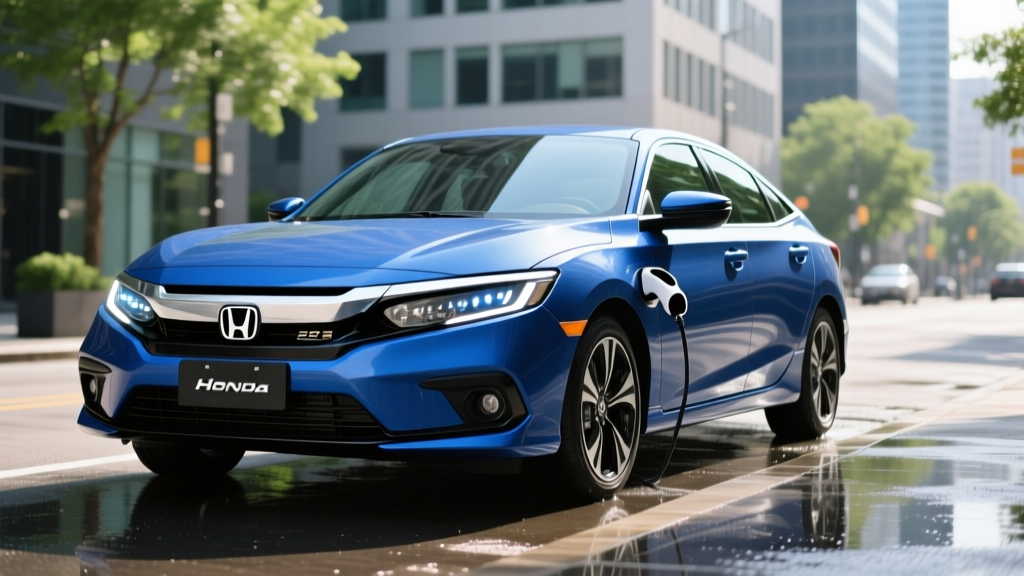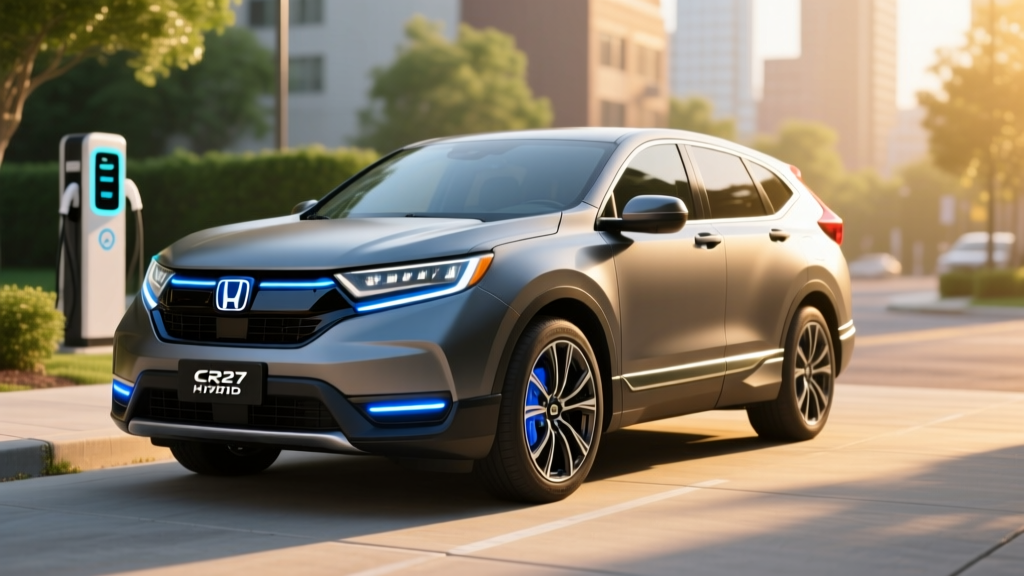
The compact SUV segment is crowded, but few nameplates carry the cargo-hauling, family-hauling weight of the Honda CR-V. For 2027, Honda continues its two-track strategy: a turbocharged gas model alongside the electrified 2027 Honda CR-V Hybrid. The hybrid carries over the fourth-generation two-motor system that debuted with the current generation, pairing a 2.0-liter Atkinson-cycle four-cylinder with twin electric motors for a combined 204 horsepower and an EPA-estimated 40 MPG combined on front-wheel-drive trims.
But the real question buyers ask is whether the CR-V Hybrid is the right bridge between a gas-only SUV and a full battery-electric vehicle — or whether Honda's decision not to offer a plug-in hybrid (PHEV) variant leaves it vulnerable to rivals like the Toyota RAV4 Prime. This review breaks down the numbers, real-world driving impressions, and ownership economics you need to decide.
2027 Honda CR-V Hybrid Powertrain and Performance
The 2027 CR-V Hybrid uses Honda's fourth-generation two-motor hybrid system. Here's how the hardware stacks up:
| Specification | Detail |
|---|---|
| Engine | 2.0L Atkinson-cycle 4-cylinder (146 hp, 134 lb-ft) |
| Electric Motors | Dual-motor system (184 hp, 247 lb-ft combined motor output) |
| Combined System Output | 204 hp / 247 lb-ft torque |
| Transmission | Direct-drive (no traditional CVT or gears) |
| Drivetrain Options | FWD or Real Time AWD™ |
| 0–60 mph | ~7.6 seconds (est.) |
| Towing Capacity | 1,000 lbs |
The direct-drive system is a hallmark of Honda's hybrid architecture. Instead of a belt-driven CVT, the system uses a clutch to mechanically connect the engine to the wheels only at sustained highway speeds where the engine's efficiency is highest. At lower speeds and during acceleration, the electric motors do the heavy lifting, which gives the CR-V Hybrid a more linear, EV-like torque feel off the line compared to the turbo gas model.
With 204 combined horsepower, the CR-V Hybrid isn't a performance SUV — a fully loaded Kia Sportage Hybrid delivers 226 hp and the turbocharged RAV4 Hybrid makes 219 hp — but 247 lb-ft of electric torque available from near-zero RPM makes it feel responsive around town and confident on highway merges. The AWD model adds a rear-mounted motor for traction, not performance, and trims a tick off acceleration times.
EPA Fuel Economy: City, Highway, and Combined MPG
Fuel economy is the headline reason buyers choose the hybrid over the turbo gas CR-V. According to fueleconomy.gov, the 2027 CR-V Hybrid achieves:
| Drivetrain | City MPG | Highway MPG | Combined MPG |
|---|---|---|---|
| FWD (Sport / Sport Touring) | 43 | 36 | 40 |
| AWD (Sport / Sport Touring) | 40 | 34 | 37 |
For comparison, the turbocharged gas CR-V AWD is rated at 27 city / 32 highway / 29 combined — a roughly 28% combined fuel economy advantage for the hybrid. That translates to roughly $500–$700 in annual fuel savings for a driver covering 15,000 miles per year at $3.40/gallon, depending on driving mix.
Real-World MPG vs. EPA Sticker
Honda's hybrid system is one of the most consistent performers in real-world driving. Because the electric motors handle low-speed and stop-and-go driving — exactly where internal combustion engines are least efficient — the CR-V Hybrid tends to meet or exceed its EPA city rating in actual use. Drivers in suburban and urban environments frequently report 42–45 MPG on the FWD model in mixed city commuting.
Highway driving is where the gap narrows. At sustained 75+ mph speeds, the engine engages directly via the clutch, and the hybrid system loses its electric-motor advantage. Expect 33–35 MPG on the FWD model during long highway trips, slightly below the EPA highway figure. In cold weather (below 30°F), the engine runs more frequently to generate cabin heat and maintain battery temperature, which can drop city MPG into the high 30s for FWD models until the powertrain warms up.
HEV vs. PHEV: Why the CR-V Hybrid Isn't a Plug-In
This is the single most common question in our inbox: "Does the 2027 CR-V Hybrid plug in?" The answer is no. The CR-V Hybrid is a conventional hybrid electric vehicle (HEV). It charges its small battery pack through regenerative braking and the gasoline engine — you never plug it in, and it has no meaningful electric-only driving range.
Here's how the two hybrid categories compare:
Conventional Hybrid (HEV)
- Battery: ~1.0–1.5 kWh (small)
- Charging: Self-charging via regen + engine
- Electric-only range: ~1 mile or less (low speed only)
- Plug required: No
- Example: CR-V Hybrid, RAV4 Hybrid
Plug-In Hybrid (PHEV)
- Battery: 14–20+ kWh (large)
- Charging: Plug into Level 1/Level 2
- Electric-only range: 25–45 miles
- Plug required: Yes (for EV mode)
- Example: RAV4 Prime, Sportage PHEV
Honda does not currently offer a CR-V PHEV in the United States. If electric-only commuting is a priority, you'll need to look at the Toyota RAV4 Prime (42 miles EV range, 94 MPGe) or the Kia Sportage PHEV (34 miles EV range). The trade-off is price: those PHEVs start $6,000–$10,000 higher than the CR-V Hybrid and carry heavier curb weights that reduce cargo efficiency when the battery is depleted.
Hybrid vs. PHEV vs. Full EV: Which Fits Your Life?
The CR-V Hybrid occupies a specific lane in the electrification spectrum. Here's a practical decision framework:
Choose the CR-V Hybrid (HEV) if:
- You don't have reliable access to home or workplace charging
- You want better fuel economy without changing your refueling habits
- Your budget tops out around $40,000–$43,000
- You take frequent long road trips and don't want to plan around charging stops
- You want a proven, low-complexity hybrid system with strong resale value
Choose a PHEV (RAV4 Prime, Sportage PHEV) if:
- You can charge at home (Level 2 preferred) and your commute is under 40 miles round-trip
- You want EV-mode daily driving but gas-engine flexibility for road trips
- You qualify for the federal §30D tax credit (up to $7,500 for eligible PHEVs)
Choose a Full EV (Ioniq 5, Model Y, Equinox EV) if:
- You have reliable home Level 2 charging and minimal range-anxiety triggers
- Your daily driving is under 250 miles and you road-trip fewer than 4–5 times a year
- You want the lowest per-mile fuel cost and minimal maintenance
2027 CR-V Hybrid Pricing, Trims, and Tax Credits
The CR-V Hybrid is available in two trims for 2027: Sport and Sport Touring. Both are available with FWD or AWD.
| Trim | FWD | AWD |
|---|---|---|
| Sport | $36,395 | $37,895 |
| Sport Touring | $40,495 | $41,995 |
Destination charge: ~$1,395 additional. Pricing based on Honda's announced 2027 MSRP; verify with your dealer.
Federal Tax Credit Eligibility
Here's the bottom line: the 2027 Honda CR-V Hybrid does not qualify for the federal §30D clean vehicle tax credit. Under current IRS rules, the §30D credit applies to plug-in electric vehicles and fuel-cell vehicles that meet battery-capacity, critical-mineral sourcing, MSRP cap, and buyer income requirements. Conventional hybrids (HEVs) are not eligible.
Some states and municipalities offer their own incentives for hybrid vehicles — typically $500–$1,500 rebates or HOV-lane access — but these vary by jurisdiction. Check your state's energy or environmental agency website for current programs. If you want a hybrid-family SUV that qualifies for the full $7,500 federal credit, you'd need to look at PHEV alternatives like the RAV4 Prime (subject to sourcing and income eligibility).
Battery Warranty, Reliability, and Replacement Cost
Hybrid battery longevity is consistently the top concern among first-time hybrid buyers. Here's what Honda covers:
- Hybrid battery (IMA battery): 8 years / 100,000 miles (10 years / 150,000 miles in CARB states including CA, NY, MA, and others)
- Hybrid system components (power control unit, electric motors, DC-DC converter): 8 years / 100,000 miles
- Limited vehicle warranty: 3 years / 36,000 miles bumper-to-bumper; 5 years / 60,000 miles powertrain
Honda's hybrid battery warranty is competitive with Toyota's (10 years / 150,000 miles across all states for Toyota). The CR-V Hybrid's battery pack is small (~1.1 kWh) compared to PHEV or BEV packs, which means lower replacement cost if failure occurs outside warranty.
How Long Will the Hybrid Battery Last?
Honda's fourth-generation hybrid system has proven durable in real-world use. The small nickel-metal-hydride (NiMH) or lithium-ion pack (depending on trim year) undergoes shallow charge/discharge cycles — it rarely goes below 40% or above 80% state of charge — which minimizes degradation stress. Based on owner reports and fleet data from earlier Honda hybrid models, the CR-V Hybrid battery typically lasts 150,000–200,000+ miles before capacity loss becomes noticeable enough to affect fuel economy.
Battery Replacement Cost
If the hybrid battery fails outside warranty coverage, expect a replacement cost of $2,000–$4,000 including parts and labor at a Honda dealer. Independent hybrid specialists and refurbished battery options can bring that down to $1,200–$2,500. This is significantly less than a PHEV or full EV battery replacement ($8,000–$20,000+) because the pack is far smaller. For context, the gas CR-V's turbocharged engine and CVT transmission represent comparable long-term repair risks at similar cost levels.
Honda's hybrid reliability track record is strong. The CR-V Hybrid earned a predicted reliability score of 81/100 from J.D. Power for the current generation, and IIHS has named the CR-V a Top Safety Pick when equipped with LED projector headlights (Sport Touring trim).
What It's Like to Live With: Cargo, Tech, and Daily Driving
The hybrid powertrain doesn't compromise cargo space. The CR-V Hybrid offers 36.3 cubic feet behind the second row and 76.5 cubic feet with the rear seats folded — identical to the gas model. The battery pack is positioned under the cargo floor without intruding into the load area.
The Sport Touring trim includes a 9-inch touchscreen with wireless Apple CarPlay and Android Auto, a 10.2-inch digital instrument cluster, wireless phone charging, a Bose 12-speaker audio system, and Honda's full Honda Sensing® suite (adaptive cruise control, lane-keeping assist, blind-spot monitoring, and rear cross-traffic alert). The base Sport trim uses a 7-inch screen with wired smartphone integration.
One-pedal-like driving is available via steering-wheel-mounted paddle selectors that adjust regenerative braking intensity across four levels. It won't bring the CR-V Hybrid to a complete stop like a full EV's one-pedal mode, but Level 3 and 4 regen are strong enough to handle most suburban deceleration without touching the brake pedal.
Pros and Cons at a Glance
Pros
- 40 MPG combined (FWD) — top-tier for the segment
- Strong electric torque feel around town
- No plug-in required — zero habit change
- Full cargo capacity retained vs. gas model
- Excellent Honda Sensing safety suite standard
- Proven hybrid reliability and strong resale value
Cons
- No PHEV option — no electric-only commuting
- No federal tax credit eligibility
- 1,000-lb towing limit (gas model: 1,500 lbs)
- Highway MPG drops noticeably above 75 mph
- Base Sport trim's 7-inch screen feels dated
- AWD hybrid costs $1,500 more than FWD
Frequently Asked Questions
How many MPG does the 2027 Honda CR-V Hybrid get?
The FWD CR-V Hybrid achieves an EPA-estimated 43 city / 36 highway / 40 combined MPG. The AWD model is rated at 40 city / 34 highway / 37 combined. Real-world city driving often exceeds EPA estimates by 2–5 MPG thanks to the hybrid system's electric-motor dominance at low speeds.
Does the 2027 CR-V Hybrid plug in?
No. The CR-V Hybrid is a conventional self-charging hybrid (HEV). It recharges its small battery through regenerative braking and the gasoline engine. There is no plug, no charging port, and no meaningful electric-only driving range. If you want a plug-in Honda SUV, you would need to look at a different model or brand.
Is the CR-V Hybrid reliable, and what does a battery replacement cost?
Yes. Honda's hybrid system has a strong reliability record with predicted scores in the low 80s out of 100. The hybrid battery is covered for 8 years/100,000 miles (10 years/150,000 miles in CARB states). Out-of-warranty replacement costs $2,000–$4,000 at a dealer, or $1,200–$2,500 through independent specialists using refurbished packs.
Does the 2027 CR-V Hybrid qualify for a federal tax credit?
No. The federal §30D clean vehicle credit applies only to plug-in electric vehicles (PHEVs and BEVs) and fuel-cell vehicles. Conventional hybrids like the CR-V Hybrid are not eligible. Check your state and local programs for possible hybrid incentives, which vary by jurisdiction.
Hybrid vs. PHEV vs. EV — which should I choose?
Choose the CR-V Hybrid if you want better fuel economy without changing your refueling habits or needing home charging. Choose a PHEV (like the RAV4 Prime) if you can charge at home and want 25–42 miles of electric-only commuting with gas backup. Choose a full EV if you have reliable home charging, drive under 250 miles daily, and want the lowest per-mile energy cost with zero tailpipe emissions.
How does the CR-V Hybrid compare to the RAV4 Hybrid?
The Toyota RAV4 Hybrid offers 219 hp and 41 MPG combined (AWD standard) starting around $34,000, with the RAV4 Prime PHEV variant offering 42 miles of EV range at ~$44,500. The CR-V Hybrid offers slightly more cargo space and a more refined ride, but less power and no plug-in option. Both are excellent — the choice often comes down to whether you want a PHEV option (Toyota) or prioritize interior refinement and cargo flexibility (Honda).