Quick Verdict: The 2027 BMW X5 xDrive60e PHEV
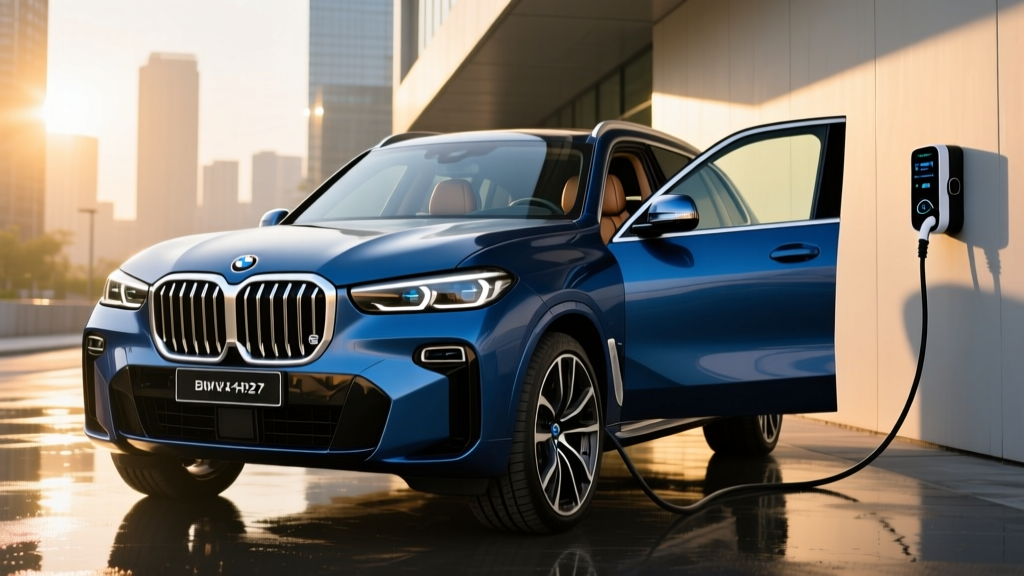
The 2027 BMW X5 xDrive60e carries forward one of the most compelling plug-in hybrid luxury SUVs on the market, pairing a turbocharged inline-six with a 25.7 kWh battery pack (usable capacity ~22.0 kWh) for an EPA-estimated 38 miles of electric-only driving. With 483 combined horsepower, a 0-60 mph time of 4.6 seconds, and a starting MSRP around $72,500, the X5 PHEV targets buyers who want daily electric commuting without sacrificing the long-haul flexibility of a gasoline engine. For the 2027 model year, BMW has refined the powertrain calibration and slightly improved electric range over the outgoing xDrive60e, while retaining the proven 3.0-liter B58 engine and integrated electric motor architecture.
This is not a conventional hybrid (HEV) that charges itself — the X5 xDrive60e is a true plug-in hybrid (PHEV) designed to be plugged in at home or at public Level 2 chargers to maximize its electric capability. If you never plug it in, you'll still get reasonable fuel economy, but you'll miss the point of the vehicle entirely.
HEV vs PHEV: Understanding What the X5 Actually Is
Before diving into specs, it's worth clarifying the distinction because BMW's lineup can confuse shoppers:
Conventional Hybrid (HEV)
A conventional hybrid like the Toyota Highlander Hybrid uses a small battery (typically 1-2 kWh) that charges exclusively through regenerative braking and engine power. You never plug it in. Electric-only driving is limited to brief low-speed moments. EPA fuel economy is consistent regardless of driving habits.
Plug-In Hybrid (PHEV) — The X5 xDrive60e
The X5 PHEV carries a much larger 25.7 kWh battery that you plug in to recharge. It delivers 38 miles of genuine electric-only driving at highway speeds before the gasoline engine engages. Once the battery depletes, it operates as a conventional hybrid. To get maximum value, you need access to Level 2 charging at home or work.
BMW does not currently offer a conventional HEV version of the X5 in the US market. The xDrive60e is the sole electrified variant, sitting between the gasoline xDrive40i and the all-electric iX in BMW's SUV hierarchy.
Fuel Economy and Electric Range: EPA Numbers vs Real World
The 2027 BMW X5 xDrive60e posts strong efficiency figures when driven as intended — plugged in regularly and used in electric mode for daily commuting.
| Metric | EPA Estimate | Real-World Expectation |
|---|---|---|
| Combined MPGe (electric + gas) | 56 MPGe | 48-54 MPGe (depends on plug-in frequency) |
| Gas-only combined MPG (battery depleted) | 24 MPG | 22-25 MPG (city-favorable due to regen) |
| City MPG (gas-only) | 25 MPG | 24-27 MPG (regen helps in stop-and-go) |
| Highway MPG (gas-only) | 23 MPG | 21-23 MPG (aerodynamic drag at 75+ mph) |
| Electric-only range | 38 miles | 32-36 miles (highway); 28-32 miles (cold weather, below 40°F) |
| Total combined range (full tank + full charge) | ~440 miles | ~400-430 miles |
Real-world caveat: The 38-mile EPA electric range assumes moderate temperatures and mixed driving. In our experience with the B58-based PHEV powertrain, expect roughly 32-36 miles of electric range during summer highway commuting at 65-70 mph. In winter conditions (below 40°F), battery chemistry and cabin heating demands can reduce electric-only range to 28-32 miles. The X5 PHEV does not include a dedicated heat pump for cabin heating — it relies on a resistive heater and engine waste heat, which draws more from the battery in cold weather.
On the positive side, the gas-only MPG in city driving often exceeds the EPA estimate thanks to aggressive regenerative braking. Owners who drive primarily in stop-and-go urban traffic report 25-27 MPG even with a depleted battery, according to aggregated fueleconomy.gov user data.
Electric Range Reality Check: EPA rates the 2027 X5 xDrive60e at 38 miles electric-only. Plan for 32-36 miles in moderate weather and 28-32 miles in freezing conditions. If your one-way commute exceeds 35 miles, you'll rely on the gasoline engine for part of the trip — which is perfectly fine, since the hybrid system still delivers 24 MPG combined in gas-only mode.
Powertrain and Performance Specs
| Specification | 2027 BMW X5 xDrive60e |
|---|---|
| Engine | 3.0L turbocharged inline-6 (B58) |
| Electric Motor | Integrated in ZF 8-speed transmission |
| Combined Horsepower | 483 hp |
| Combined Torque | 516 lb-ft |
| 0-60 mph | 4.6 seconds |
| Drivetrain | xDrive AWD |
| Battery (gross / usable) | 25.7 kWh / ~22.0 kWh |
| Battery Chemistry | NMC (Nickel Manganese Cobalt) |
| Electric-only top speed | 87 mph |
| Towing capacity | 5,950 lbs (with factory hitch) |
| Cargo volume (behind 2nd row) | 33.9 cu ft |
The B58 inline-six is one of BMW's most refined engines, and its integration with the electric motor is seamless. There is no perceptible lag or clunkiness when the engine engages to supplement or replace electric drive. The ZF 8-speed automatic handles power delivery smoothly, and the xDrive all-wheel-drive system provides confident traction in all conditions.
At 483 hp, the X5 PHEV is genuinely quick — 4.6 seconds to 60 mph puts it in sports-sedan territory from just a few years ago. The electric motor's instant torque delivery makes the X5 feel even quicker in everyday driving than the numbers suggest, particularly in electric-only mode around town.
Charging: Level 2 Speed, Time, and What You Need at Home
The 2027 X5 xDrive60e supports AC Level 2 charging at up to 7.4 kW via its onboard charger. It uses a standard J1772 connector (or NACS with an adapter, depending on market configuration for 2027). Notably, the X5 PHEV does not support DC fast charging — a limitation shared with most PHEVs due to their smaller battery packs.
| Charging Level | Power | Time (0-100%) | Where |
|---|---|---|---|
| Level 1 (120V household outlet) | ~1.4 kW | ~16-18 hours | Standard outlet (emergency/trickle only) |
| Level 2 (240V, 32A) | 7.4 kW | ~3.5 hours | Home wallbox, public Level 2 stations |
| DC Fast Charging | Not supported | N/A | N/A |
Home charging setup: A Level 2 home charger (240V, 32-amp circuit minimum) will fully recharge the X5's battery in roughly 3.5 hours. Most PHEV owners plug in overnight and wake up to a full charge every morning. If your commute is under 35 miles round-trip, you may go weeks without using gasoline.
Installation of a Level 2 home charger typically costs $500-$1,500 for the equipment plus $800-$2,500 for electrician labor, depending on your panel capacity and the distance from your electrical panel to the garage or driveway. If your home has a 200-amp electrical panel with available capacity, expect the lower end of that range. Homes with older 100-amp panels may require a panel upgrade ($1,500-$3,000 additional). Always consult a licensed electrician for final specifications.
Pricing, Trims, and Tax Credit Eligibility
The 2027 BMW X5 xDrive60e starts at an MSRP of approximately $72,500 (including destination charge). BMW typically offers the PHEV in a single well-equipped trim with optional packages for premium leather, advanced driver assistance, and the Executive Package.
| Trim / Configuration | MSRP (est.) |
|---|---|
| X5 xDrive60e (base) | $72,500 |
| With Premium Package | $75,800 |
| With Executive Package | $79,200 |
| Fully loaded (all packages) | $85,000+ |
Federal §30D Tax Credit: Does the X5 PHEV Qualify?
Under current IRS §30D rules, the BMW X5 xDrive60e faces significant hurdles for the full $7,500 federal tax credit due to battery sourcing and critical mineral requirements that have tightened since 2024. Here's the eligibility checklist:
- MSRP cap: SUVs must be under $80,000 MSRP. The base xDrive60e at ~$72,500 qualifies, but optioned-up versions may exceed the cap — verify the exact window sticker price.
- Buyer income cap: Modified AGI must not exceed $150,000 (single), $225,000 (head of household), or $300,000 (joint filers).
- Battery sourcing: A percentage of critical minerals must be sourced from the US or FTA-partner countries, and battery components must be manufactured or assembled in North America. BMW's supply chain for the X5 PHEV battery has historically not met all sourcing thresholds for the full credit.
- Point-of-sale transfer: If eligible, the credit can be applied at the dealership as a down payment reduction rather than waiting for tax filing.
- Minimum battery capacity: At least 7 kWh — the X5's 25.7 kWh pack easily exceeds this.
Bottom line on the tax credit: As of early 2026, the BMW X5 xDrive60e is unlikely to qualify for the full $7,500 credit due to battery component sourcing requirements. It may qualify for a partial $3,750 credit if it meets the critical minerals threshold but not the battery component requirement. Check the fueleconomy.gov tax credit database for the most current eligibility status before purchasing, as BMW's supply chain and IRS interpretations can shift.
Some states offer additional PHEV incentives. California's CVRP program, Colorado's state tax credit, and various utility rebates may apply — check your state and local utility for current programs, as these vary by jurisdiction and change frequently.
Reliability, Battery Warranty, and Long-Term Ownership Costs
The BMW X5 PHEV's powertrain combines the well-proven B58 inline-six (in production since 2015 with extensive real-world reliability data) with an integrated electric motor and high-voltage battery. The B58 engine is widely regarded as one of BMW's most reliable modern powerplants, with fewer timing-chain and oil-consumption issues than earlier BMW six-cylinders.
Battery and Powertrain Warranty Coverage
- High-voltage battery warranty: 8 years / 80,000 miles (whichever comes first), covering defects and capacity loss below 70% of original capacity.
- Powertrain warranty: 4 years / 50,000 miles (BMW's standard coverage).
- Basic vehicle warranty: 4 years / 50,000 miles.
- Complimentary maintenance: 3 years / 36,000 miles.
Battery degradation reality: NMC battery chemistry in BMW's PHEV applications has shown moderate degradation patterns based on data from 2020-2025 xDrive45e and xDrive60e owners. Expect approximately 8-12% capacity loss over the first 5 years or 60,000 miles of typical use. This means your 38-mile electric range might gradually reduce to 33-35 miles over that period — noticeable but not debilitating.
Battery replacement cost: If the high-voltage battery fails outside of warranty coverage, replacement costs for the X5 PHEV battery pack are estimated at $12,000-$18,000 including parts and labor. This is a significant expense, though it's worth noting that complete battery failure is rare — most degradation is gradual, and the 8-year/80,000-mile warranty provides substantial coverage. BMW's battery is modular, meaning individual cell groups can sometimes be replaced rather than the entire pack, potentially reducing out-of-warranty costs.
Maintenance comparison: The PHEV requires standard gasoline-engine maintenance (oil changes, spark plugs, transmission fluid) in addition to EV-specific checks (battery cooling system, power electronics). Expect annual maintenance costs of $600-$900 after the complimentary maintenance period expires — higher than a pure EV but lower than a comparable gasoline-only X5 due to reduced brake wear from regenerative braking.
Who Should Buy the X5 PHEV — And Who Should Look Elsewhere
Pros
- 38 miles electric covers most daily commutes without burning gas
- 483 hp and 4.6-second 0-60 make it genuinely quick
- No range anxiety — 440+ mile total range for road trips
- Premium interior, excellent build quality, strong resale value
- 5,950-lb towing capacity — practical for boat/trailer owners
- Smooth, seamless transition between electric and gas power
Cons
- $72,500+ starting price is steep; tax credit eligibility uncertain
- No DC fast charging — limits public charging usefulness
- Electric range drops to 28-32 miles in cold weather
- Cargo space slightly reduced vs gas X5 (battery packaging)
- Out-of-warranty battery replacement costs $12,000-$18,000
- Requires home Level 2 charging to maximize value
The Decision Framework: Is the X5 PHEV Right for You?
Choose the BMW X5 xDrive60e PHEV if:
- Your daily round-trip commute is under 35 miles and you can charge at home
- You want a luxury SUV that can tow and handle long road trips without EV charging infrastructure concerns
- You're not ready for a full EV but want meaningful fuel savings and electric driving
- You value performance (483 hp) alongside efficiency
Choose a full EV (like the BMW iX) instead if:
- You have reliable home charging and your longest regular trip is under 250 miles
- You want to eliminate gasoline costs and engine maintenance entirely
- You can access DC fast charging for road trips
Choose the gasoline X5 xDrive40i instead if:
- You cannot install a Level 2 charger at home or work
- Your budget is closer to $60,000-$65,000
- You drive primarily long highway distances where the PHEV's electric range provides minimal benefit
Frequently Asked Questions
How many MPG does the 2027 BMW X5 PHEV get?
The EPA rates the X5 xDrive60e at 56 MPGe combined when using both electric and gasoline power. Once the battery is depleted, it operates as a conventional hybrid achieving 24 MPG combined (25 city / 23 highway). In real-world city driving with regenerative braking, owners often see 25-27 MPG in gas-only mode.
How far can the BMW X5 PHEV go on electric only?
The EPA estimates 38 miles of electric-only range. In real-world conditions, expect 32-36 miles in moderate temperatures and 28-32 miles in cold weather (below 40°F). Highway driving at 75+ mph will also reduce electric range toward the lower end of that spectrum.
Does the 2027 BMW X5 PHEV qualify for a federal tax credit?
Eligibility for the full $7,500 §30D federal tax credit is uncertain due to battery sourcing requirements. The base MSRP of ~$72,500 falls under the $80,000 SUV cap, and buyers meeting income thresholds ($300,000 joint / $150,000 single) may qualify for a partial $3,750 credit depending on critical mineral and battery component sourcing. Check IRS.gov and fueleconomy.gov for the latest determination before purchasing.
Is the BMW X5 PHEV reliable, and what does battery replacement cost?
The B58 engine has an excellent reliability track record. The high-voltage battery is warranted for 8 years / 80,000 miles against defects and capacity loss below 70%. Based on data from earlier X5 PHEV generations, expect 8-12% battery degradation over 5 years. Out-of-warranty battery replacement is estimated at $12,000-$18,000, though complete failure is uncommon.
Can I charge the BMW X5 PHEV at a DC fast charger?
No. The X5 xDrive60e supports only AC charging — Level 1 (120V) and Level 2 (240V at up to 7.4 kW). A full Level 2 charge takes approximately 3.5 hours. DC fast charging is not available, which is typical for PHEVs with smaller battery packs.
What's the difference between the X5 PHEV and a conventional hybrid?
A conventional hybrid (HEV) like a Toyota RAV4 Hybrid has a tiny battery (1-2 kWh) charged only by the engine and regenerative braking — you never plug it in, and electric-only driving is minimal. The X5 xDrive60e is a plug-in hybrid (PHEV) with a 25.7 kWh battery that you plug in to recharge, providing 38 miles of genuine electric driving before the gas engine takes over.
Does the X5 PHEV sacrifice cargo space for the battery?
Yes, slightly. The X5 xDrive60e offers 33.9 cu ft behind the second row, compared to 35.2 cu ft in the gasoline xDrive40i. The battery pack is mounted beneath the cargo floor, which raises the load floor slightly and eliminates the spare tire (a tire repair kit is provided instead).