Quick Verdict: The Tiguan Goes Plug-In for 2026
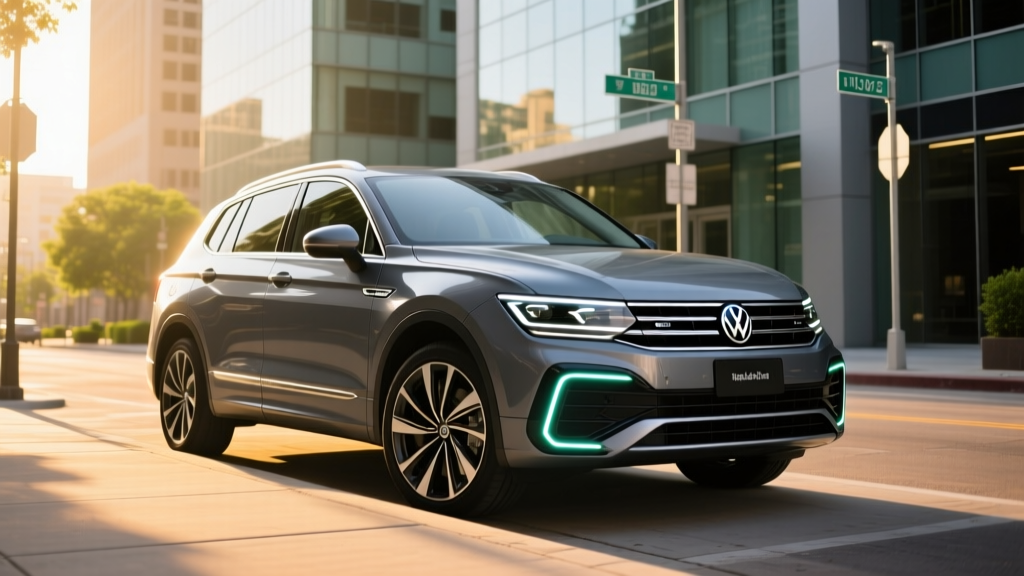
The third-generation Volkswagen Tiguan arrives for 2026 with a major powertrain shift: a plug-in hybrid (PHEV) variant joins the lineup, replacing the conventional hybrid that VW offered in select European markets. Built on the updated MQB Evo platform, the 2026 Volkswagen Tiguan hybrid — officially badged as the Tiguan eHybrid — pairs a turbocharged 1.5-liter four-cylinder with an electric motor and a 19.7 kWh lithium-ion battery to deliver an EPA-estimated 33 miles of electric-only driving and up to 84 MPGe when operating in electric mode.
For compact SUV shoppers weighing a PHEV against a full battery-electric vehicle (BEV) or a conventional hybrid (HEV), the Tiguan eHybrid occupies a pragmatic middle ground. You get genuine daily electric commuting without range anxiety on longer trips, all wrapped in a package that retains VW's familiar driving dynamics and cargo practicality. But the pricing and tax-credit picture requires careful attention before you sign.
HEV vs PHEV: What the 2026 Tiguan Actually Offers
A common source of confusion is the difference between a conventional hybrid (HEV) and a plug-in hybrid (PHEV). The 2026 Tiguan sold in the U.S. as the "hybrid" model is specifically a PHEV — meaning it has a larger battery that you plug in to charge, and it can drive on electricity alone for a meaningful distance.
Conventional Hybrid (HEV) vs Plug-In Hybrid (PHEV)
| Feature | HEV (Conventional) | PHEV (Tiguan eHybrid) |
|---|---|---|
| Plugs in? | No — charges via regenerative braking and engine | Yes — plug in to maximize electric range |
| Electric-only range | ~1-2 miles at low speed | EPA 33 miles |
| Battery size | ~1-2 kWh | 19.7 kWh (usable ~15.5 kWh) |
| Federal tax credit | None | Up to $3,750 (see eligibility below) |
| Gas engine still present? | Yes | Yes — seamless fallback |
Volkswagen does not currently offer a conventional (non-plug-in) hybrid Tiguan in the U.S. market for 2026. If you see "Tiguan hybrid" in marketing, it refers to the eHybrid PHEV.
Fuel Economy & Electric Range: The Real Numbers
The headline spec for any PHEV buyer is how far it goes on electricity and what happens once the battery depletes. Here's the breakdown based on EPA data from fueleconomy.gov:
| Mode | City | Highway | Combined |
|---|---|---|---|
| Electric + Gas (MPGe) | 88 MPGe | 80 MPGe | 84 MPGe |
| Gas Only (after battery depleted) | 35 MPG | 34 MPG | 35 MPG |
| Electric-only range | 33 miles (EPA estimated) | ||
| Total combined range | ~440 miles (electric + 11.9-gal tank) | ||
⚡ Real-World Efficiency vs EPA Sticker
EPA estimates assume a mix of driving conditions. In practice, PHEVs behave differently depending on your habits:
- City commuting with nightly charging: Expect to use almost zero gasoline if your round-trip commute is under 30 miles. Many PHEV owners report going months between fill-ups.
- Highway road trips: Once the battery depletes, the Tiguan eHybrid operates as a conventional hybrid at ~35 MPG combined. At sustained 75-80 mph, expect closer to 32-33 MPG due to aerodynamic drag and the added weight of the battery pack.
- Cold weather (below 32°F): Electric range drops 20-30% in freezing temperatures due to cabin heating demands and reduced battery efficiency. Plan for ~23-26 miles of electric range in January, not 33.
- Regenerative braking benefit: In stop-and-go city driving, the Tiguan's regen system recaptures energy effectively, which is why city MPG often meets or slightly exceeds highway figures — the opposite of a gas-only car.
Powertrain & Performance Specs
The Tiguan eHybrid combines VW's latest EA211 evo2 1.5-liter turbocharged four-cylinder engine with an integrated electric motor mounted in the six-speed DSG automatic transmission. The result is a combined system output that delivers confident acceleration without sacrificing efficiency.
| Specification | 2026 Tiguan eHybrid |
|---|---|
| Gas engine | 1.5L turbocharged I4 (EA211 evo2) |
| Engine output | 130 hp / 184 lb-ft torque |
| Electric motor | 85 kW (114 hp) integrated in DSG |
| Combined system output | 241 hp / 295 lb-ft torque |
| Transmission | 6-speed DSG automatic |
| Drivetrain | Front-wheel drive (FWD) |
| 0-60 mph | ~7.2 seconds (manufacturer est.) |
| Battery capacity | 19.7 kWh gross / ~15.5 kWh usable |
| Battery chemistry | NMC (Nickel Manganese Cobalt) |
| Fuel tank | 11.9 gallons |
| Cargo volume (behind 2nd row) | ~33 cu ft (slightly reduced vs gas model due to battery) |
The 241 combined horsepower puts the Tiguan eHybrid ahead of the gas-only Tiguan's 174 hp and gives it passing confidence that the conventional model lacks. The instant electric torque fills in the low-end gap that small turbo engines typically exhibit, making the PHEV feel notably quicker in daily driving despite its ~300-pound weight penalty from the battery.
Charging: How Long and What You Need
One of the most important questions for PHEV buyers is whether the vehicle supports DC fast charging. Here's the honest answer for the Tiguan eHybrid:
| Charging Method | Power | 0-100% Time | Connector |
|---|---|---|---|
| Level 1 (120V household outlet) | ~1.4 kW | ~11-12 hours | J1772 |
| Level 2 (240V home/public) | ~3.6 kW (max onboard charger) | ~4.5 hours | J1772 |
| DC Fast Charging | Not available | N/A | N/A |
⚠ No DC Fast Charging
The 2026 Tiguan eHybrid does not support DC fast charging. This is typical for PHEVs with smaller batteries — the 19.7 kWh pack simply doesn't warrant the added cost and weight of DC charging hardware. For daily use, this isn't a practical limitation: plug in at home overnight on Level 2, and you'll wake up to a full charge every morning. A standard 120V outlet (Level 1) can also replenish the battery overnight if your daily electric driving is under ~15 miles, though it takes 11+ hours for a full charge.
Home charging setup: A Level 2 home charger (240V, 16-amp circuit minimum) is strongly recommended for PHEV ownership. Installation typically costs $500-$1,500 depending on your electrical panel's proximity to the charging location. Consult a licensed electrician to confirm your panel has capacity for a new 20-amp dedicated circuit. The Tiguan's onboard charger maxes out at 3.6 kW, so a 40-amp Level 2 charger (like a ChargePoint Home Flex) will work perfectly but won't charge any faster than a lower-amperage unit.
Pricing, Trims & Federal Tax Credit
The 2026 Tiguan eHybrid is positioned in the upper-middle of the compact SUV segment. Here's what you can expect at the dealership:
| Trim | MSRP (est.) | Key Features |
|---|---|---|
| SE eHybrid | ~$39,500 | 19.7 kWh PHEV, 12.9" display, IQ.DRIVE, heated seats |
| SEL eHybrid | ~$43,500 | Panoramic roof, leather, nav, adaptive cruise, power liftgate |
Note: Pricing is estimated based on VW's announcement and may vary at time of sale. Destination charge (~$1,350) additional.
Federal Tax Credit: §30D Eligibility
Under the current IRS §30D Clean Vehicle Credit rules for 2026, the Tiguan eHybrid may qualify for a partial federal tax credit of up to $3,750 — not the full $7,500. The reduced amount is because the vehicle's battery likely meets only one of the two sourcing requirements (critical minerals or battery components), not both.
§30D Tax Credit Checklist — 2026 Rules
- MSRP cap: SUVs must be under $80,000 — Tiguan eHybrid qualifies ✓
- Buyer income cap: AGI must not exceed $150,000 (single) / $300,000 (joint) ✓
- Battery sourcing: Partial compliance — likely qualifies for $3,750 of the $7,500 maximum
- Final assembly: Must be assembled in North America — verify VIN via fueleconomy.gov
- Point-of-sale transfer: You can transfer the credit to the dealer for an immediate price reduction at purchase
Important: Tax credit eligibility changes frequently based on Treasury Department sourcing determinations. Always verify current eligibility on the IRS website and consult a tax professional before purchasing.
Battery Warranty, Reliability & Replacement Cost
Battery longevity is consistently the top concern for hybrid and PHEV buyers. Volkswagen backs the Tiguan eHybrid's high-voltage battery with a competitive warranty, and the MQB platform's hybrid components have been proven across millions of vehicles in the VW Group portfolio (including the Golf GTE and Passat GTE in Europe).
🔋 Battery & Powertrain Warranty
| High-voltage battery: | 8 years / 100,000 miles (whichever comes first) |
| Capacity retention threshold: | 70% of original capacity (warranty covers degradation below this level) |
| Powertrain (engine + motor + DSG): | 4 years / 50,000 miles (VW standard powertrain warranty) |
| Bumper-to-bumper: | 4 years / 50,000 miles |
| Estimated out-of-warranty battery replacement: | $5,000 - $8,000 (based on comparable VW Group PHEV battery packs) |
PHEV batteries are smaller and less stressed than full EV batteries. With 19.7 kWh and a conservative usable buffer (~15.5 kWh), the cells experience shallower charge-discharge cycles, which extends their lifespan. Most PHEV batteries outlast the vehicle itself under normal use.
Reliability outlook: The 1.5L EA211 evo2 engine is one of VW's most widely deployed powerplants globally, and the DSG-integrated electric motor architecture has been in production since 2020 across the VW Group. While VW as a brand has historically scored mid-to-below-average in Consumer Reports reliability rankings, the hybrid-specific components (battery, electric motor, power electronics) have proven robust. The primary risk areas remain VW's infotainment electronics and minor build-quality issues rather than the hybrid powertrain itself.
Tiguan eHybrid vs Full EV vs Gas: Which Fits You?
The decision between a PHEV, a full battery-electric vehicle, and a conventional gas car depends on your specific driving patterns, charging access, and budget. Here's a practical decision framework:
Decision Framework: Which Powertrain Is Right for You?
Choose the Tiguan eHybrid (PHEV) if:
- You can charge at home (Level 1 or Level 2) every night
- Your daily commute is under 35 miles round-trip
- You take road trips several times per year and don't want to plan around charging stations
- You want to reduce gasoline consumption by 60-80% without going fully electric
- You live in an apartment or area where public DC charging is unreliable
Choose a full EV (like the VW ID.4 or Tesla Model Y) if:
- You have reliable home Level 2 charging
- You want zero gasoline expenses and minimal maintenance (no oil changes, no transmission fluid)
- Your daily driving is under 200 miles and you're comfortable planning road-trip charging stops
- You want to maximize the federal tax credit ($7,500 on qualifying models)
Choose a gas-only SUV if:
- You cannot charge at home and have limited public charging access
- Your budget is strictly under $35,000
- You drive very low annual miles (<5,000/year) where fuel savings won't offset the PHEV price premium
Pros, Cons & Bottom Line
✓ Pros
- 33 miles electric covers most daily commutes gas-free
- 241 hp system output — significantly quicker than gas Tiguan
- 35 MPG gas-only is excellent for a compact SUV
- No range anxiety — gas engine provides 440+ mile total range
- Level 2 home charging fully replenishes in ~4.5 hours (overnight is effortless)
- Strong cargo capacity retained vs gas model
✗ Cons
- No DC fast charging — public charging is Level 2 only
- FWD only — no AWD option on the eHybrid (gas Tiguan offers 4MOTION)
- ~$39,500 starting price is $5,000+ above gas Tiguan
- Federal tax credit likely limited to $3,750, not $7,500
- 3.6 kW onboard charger is slow compared to some PHEV competitors (Toyota RAV4 PHEV charges at 6.6 kW)
- VW's infotainment software has drawn criticism for responsiveness
The 2026 Volkswagen Tiguan eHybrid makes a compelling case for suburban families who want to electrify their daily driving without the commitment of a full EV. The 33-mile electric range is well-calibrated for the average American commute, and the 35 MPG fallback when the battery depletes means you're never stranded or inefficient. The main trade-offs — no AWD, no DC fast charging, and a modest tax credit — are worth weighing against your specific needs.
Frequently Asked Questions
How many MPG does the 2026 Tiguan hybrid get?
The Tiguan eHybrid achieves an EPA-estimated 84 MPGe combined when operating in electric+gas mode, and 35 MPG combined (35 city / 34 highway) after the battery is depleted and it operates as a conventional hybrid. In real-world city driving with regular charging, many owners will use very little gasoline at all.
How far can the Tiguan eHybrid go on electric only?
The EPA estimates 33 miles of electric-only range. In real-world conditions, expect 28-33 miles in mild weather and 23-26 miles in freezing temperatures. This is sufficient for most daily commutes and errands without using any gasoline.
Does the 2026 Tiguan hybrid qualify for a tax credit?
Under current 2026 IRS §30D rules, the Tiguan eHybrid likely qualifies for up to $3,750 in federal tax credits (not the full $7,500), subject to buyer income limits ($150K single / $300K joint AGI) and North American final assembly requirements. The credit can be transferred to the dealer at point of sale for an immediate price reduction. Always verify current eligibility at irs.gov before purchasing.
Is the Tiguan hybrid reliable? What does a battery replacement cost?
The hybrid powertrain uses proven VW Group components shared across millions of vehicles. The high-voltage battery is warrantied for 8 years / 100,000 miles with a 70% capacity retention guarantee. Out-of-warranty replacement is estimated at $5,000-$8,000, though most PHEV batteries outlast the vehicle. PHEV batteries are smaller and experience less stress than full EV batteries, contributing to their longevity.
Do I need to plug in the Tiguan eHybrid?
You don't have to plug it in — the gas engine will operate the vehicle just fine without charging. But if you never plug in, you're carrying 600+ pounds of battery weight for no benefit and getting only 35 MPG instead of the 84 MPGe the vehicle is designed for. To get the value from a PHEV, nightly charging (even on a standard 120V outlet) is strongly recommended.
Can the Tiguan eHybrid use DC fast chargers?
No. The Tiguan eHybrid charges only via Level 1 (120V) or Level 2 (240V) using a J1772 connector. DC fast charging is not supported, which is standard for PHEVs with batteries under 20 kWh. Home Level 2 charging fully replenishes the battery in approximately 4.5 hours.
Does the Tiguan eHybrid have all-wheel drive?
No. The 2026 Tiguan eHybrid is front-wheel drive only. If AWD is a priority (for snow or off-pavement driving), you'll need to choose the gas-only Tiguan with 4MOTION or look at AWD PHEV competitors like the Toyota RAV4 Prime or Subaru Crosstrek Hybrid.